
What Are Winter Simmer Pot Recipes?
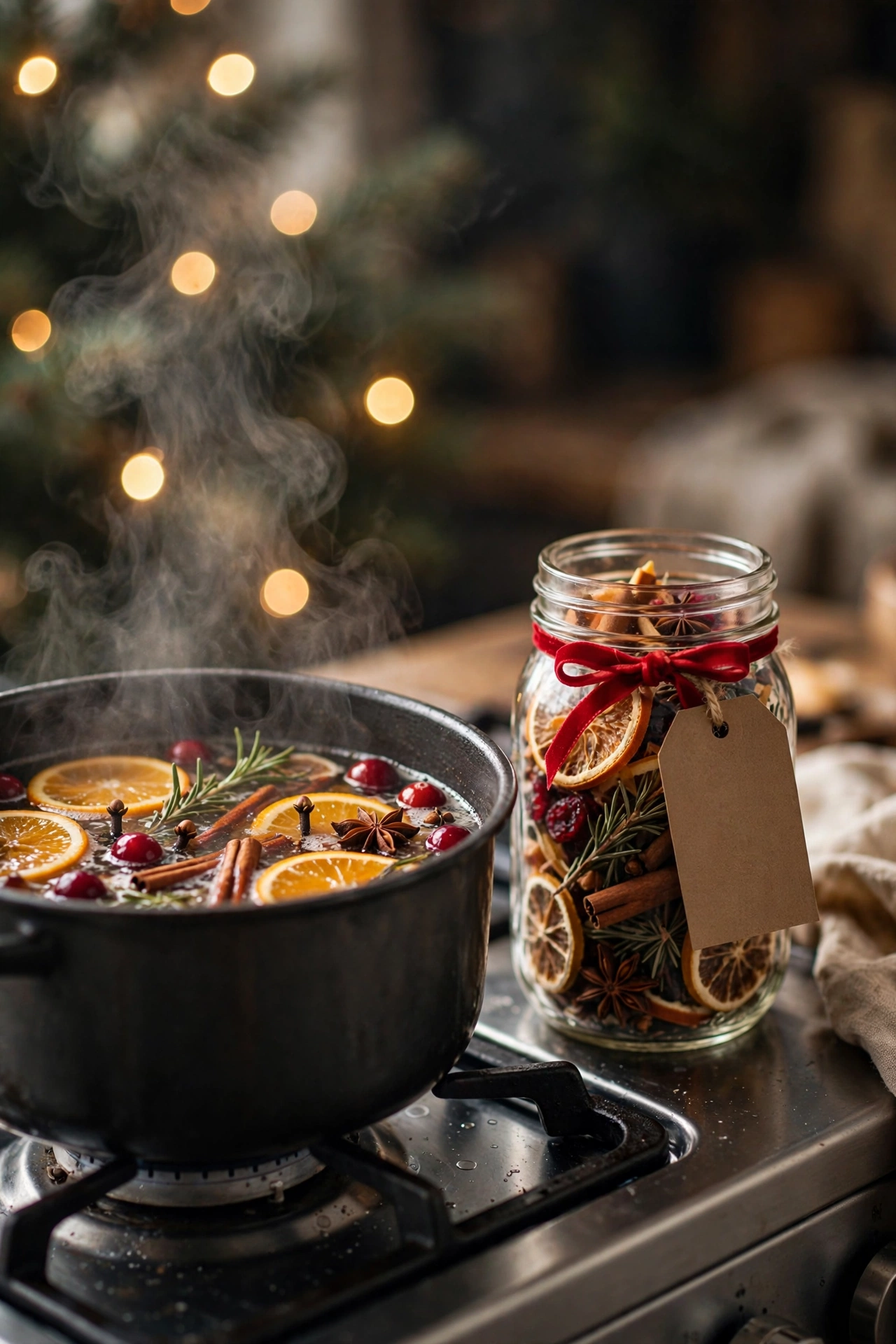
A winter simmer pot is the simplest recipe you'll ever make: a pot of water filled with fruit, spices, and herbs, simmered gently on the stove. As it heats, it releases wave after wave of fragrance — orange, cinnamon, clove, pine — until your whole home smells like the holidays.
Some people call it stovetop potpourri, and that's exactly what it is. There's no baking, no chopping skills required, and almost no way to mess it up. You fill a pot, turn on the heat, and within twenty minutes your kitchen smells like a Christmas market.
These cozy little recipes are having a real moment. Pinterest's trend data shows "simmer pot recipes" climbing fast, with Pin saves up 50% month over month through the fall season. Home cooks are rediscovering what grandmothers always knew: the fastest way to make a house feel like the holidays isn't decorating — it's scent.
Why Does a Simmer Pot Make Your Home Smell So Good?
It comes down to simple kitchen science. Citrus peels, cinnamon bark, cloves, and pine needles are packed with natural aromatic oils. Heat coaxes those oils out, and the rising steam carries them through the air and into every corner of your home.
Unlike a scented candle, a simmer pot has real depth. A candle gives you one flat note. A simmer pot layers bright citrus over warm spice over green pine, and the blend shifts and deepens as the hours pass. It smells alive in a way no candle can match.
There are practical perks too. Winter air gets dry from heating systems, and a simmering pot adds gentle humidity back into the room — your skin and sinuses will thank you. There's no flame to worry about like with candles, no synthetic fragrance, and no soot on your walls. Just water, fruit, and spices doing what they've done for centuries.
And then there's the emotional part. Scent is wired directly to memory. One whiff of orange and clove, and most people are instantly transported to childhood Christmases — a tree in the corner, cookies in the oven, family in the next room. A simmer pot doesn't just freshen your home. It sets a mood.
What Ingredients Do You Need for a Winter Simmer Pot?
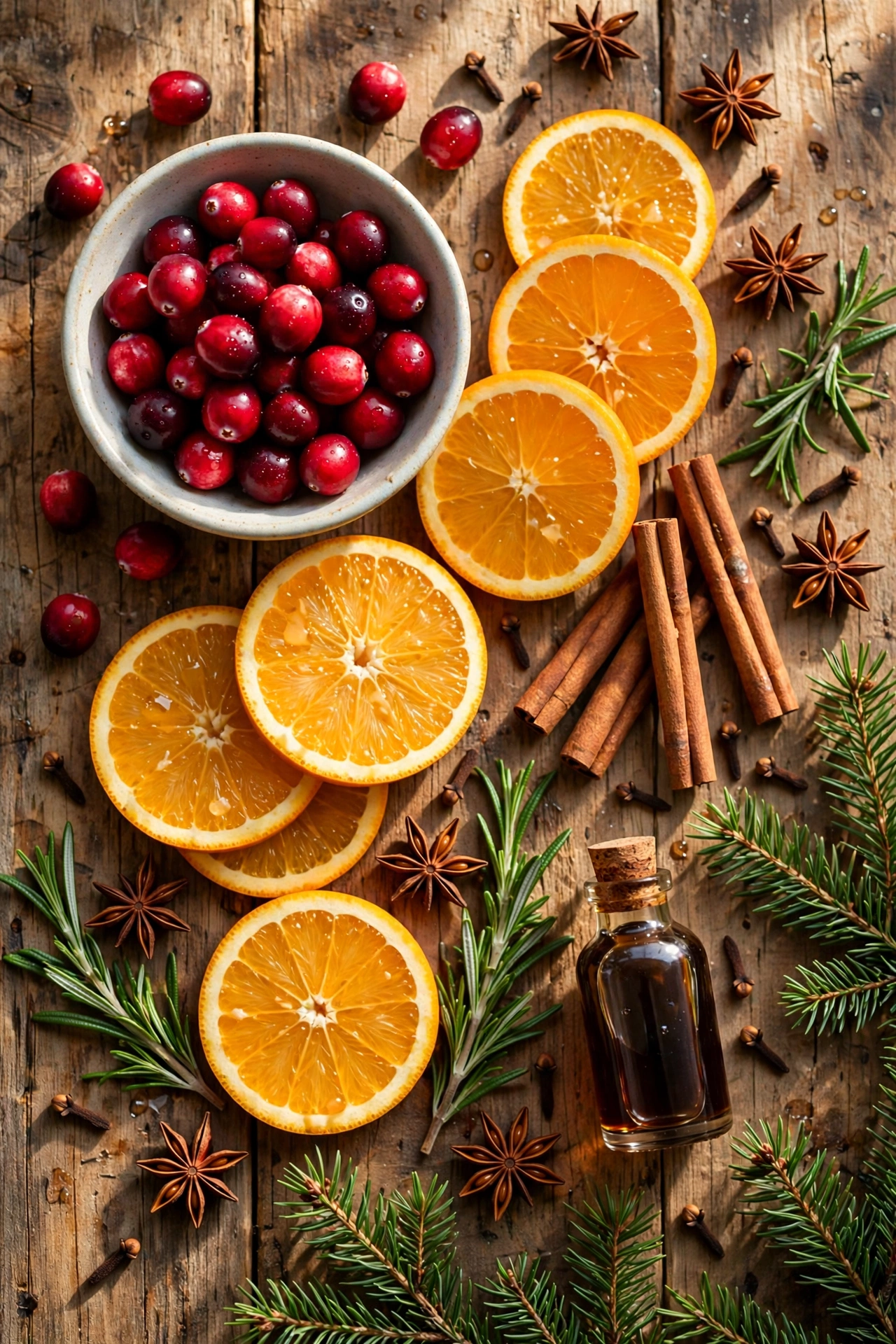
Every simmer pot starts from the same simple formula: fruit + spice + herbs + water. Here's the classic base that makes one full pot:
For one standard simmer pot, you will need:
- 1 large orange, sliced into rounds
- 1 cup fresh cranberries
- 3–4 cinnamon sticks
- 1 tablespoon whole cloves
- 2–3 whole star anise
- 1 teaspoon pure vanilla extract
- 3–4 sprigs of fresh rosemary or a few small pine sprigs
- 6–8 cups of water
Each ingredient has a job. The orange brings bright, sunny citrus that cuts through winter heaviness. Cranberries add a jewel-red color and a subtle tart fruitiness. Cinnamon sticks are the backbone — warm, sweet, and unmistakably holiday. Whole cloves add deep, almost smoky warmth (a little goes a long way). Star anise brings a whisper of licorice-like sweetness and looks beautiful floating in the pot. Vanilla rounds everything out with creamy softness. The rosemary or pine adds that fresh, green, just-cut-Christmas-tree note.
The beauty of this formula is its flexibility. Out of cranberries? Use apple slices. No star anise? Skip it. The pot forgives almost everything, which makes it perfect for using up whatever fruit and spices you have on hand.
Which Fruits, Spices, and Herbs Work Best?
Not every ingredient earns its place in the pot. Here's what works best, and why:
Best fruits: Oranges are the champion — their thick peels hold up for hours and release tons of fragrance. Clementines, lemons, and grapefruit work well too. Apples add a sweet, orchard-like warmth. Fresh cranberries are gorgeous and hold their shape. Dried fruits work in a pinch, though fresh gives a brighter scent.
Best spices: Cinnamon sticks are essential — they're the backbone of nearly every blend. Whole cloves bring deep warmth (use them sparingly; too many turn medicinal). Star anise adds exotic sweetness and looks stunning. Allspice berries, whole nutmeg, and cardamom pods are wonderful supporting players. Always use whole spices, never ground — ground spices make the water cloudy and muddy the scent.
Best herbs and greens: Fresh rosemary is the workhorse — piney, fragrant, and sturdy. Real pine, cedar, or fir sprigs (pesticide-free) give you that true Christmas-tree scent. Juniper berries add a crisp, gin-like freshness. Bay leaves contribute a subtle savory depth. Fresh ginger slices add cozy warmth with a little zing.
What to avoid: Ground or powdered spices (cloudy water, dull scent). Delicate flowers like rose petals, which turn brown and slimy fast. Anything past its prime — if fruit is moldy or herbs are slimy, the pot will smell off, not festive. And skip artificial extracts beyond vanilla; they smell flat compared to the real ingredients.
What Equipment Do You Need for a Simmer Pot?
This might be the shortest equipment list on this entire website:
- A large pot, Dutch oven, or stockpot (3 quarts or bigger)
- A sharp knife and cutting board for slicing fruit
- Measuring cups and spoons
- Mason jars or gift bags (only if you're making the gift version)
- A ladle or large spoon for stirring
That's genuinely everything. No special gadgets, no thermometers, nothing to buy. If you want to set one up and walk away for longer stretches, a slow cooker works beautifully too — set it on low with the lid off or ajar, and it hums along safely for hours.
One tip: pick a pot you don't mind dedicating to the cause. Simmering spices can leave a faint scent and slight discoloration in the pot, especially lighter-colored enamel. An older stockpot is perfect for the job.
How Do You Make a Winter Simmer Pot Step by Step?
Five minutes of prep, then the stove does all the work. Here's the full process:
Step 1: Fill the pot. Add 6–8 cups of water to your pot — about three-quarters full. You need enough water to keep everything floating freely, with room to top up later.
Step 2: Add the fruit. Slice the orange into 1/4-inch rounds and drop them in, along with the cranberries. The fruit goes in first so it settles at the bottom and releases its juices as it heats.
Step 3: Add the spices. Toss in the cinnamon sticks, whole cloves, and star anise. Give everything one gentle stir. Don't crush the spices — whole is the goal.
Step 4: Add the herbs and vanilla. Lay the rosemary or pine sprigs on top, then stir in the vanilla extract. The vanilla goes in last because its delicate scent evaporates fastest; adding it late keeps it present longer.
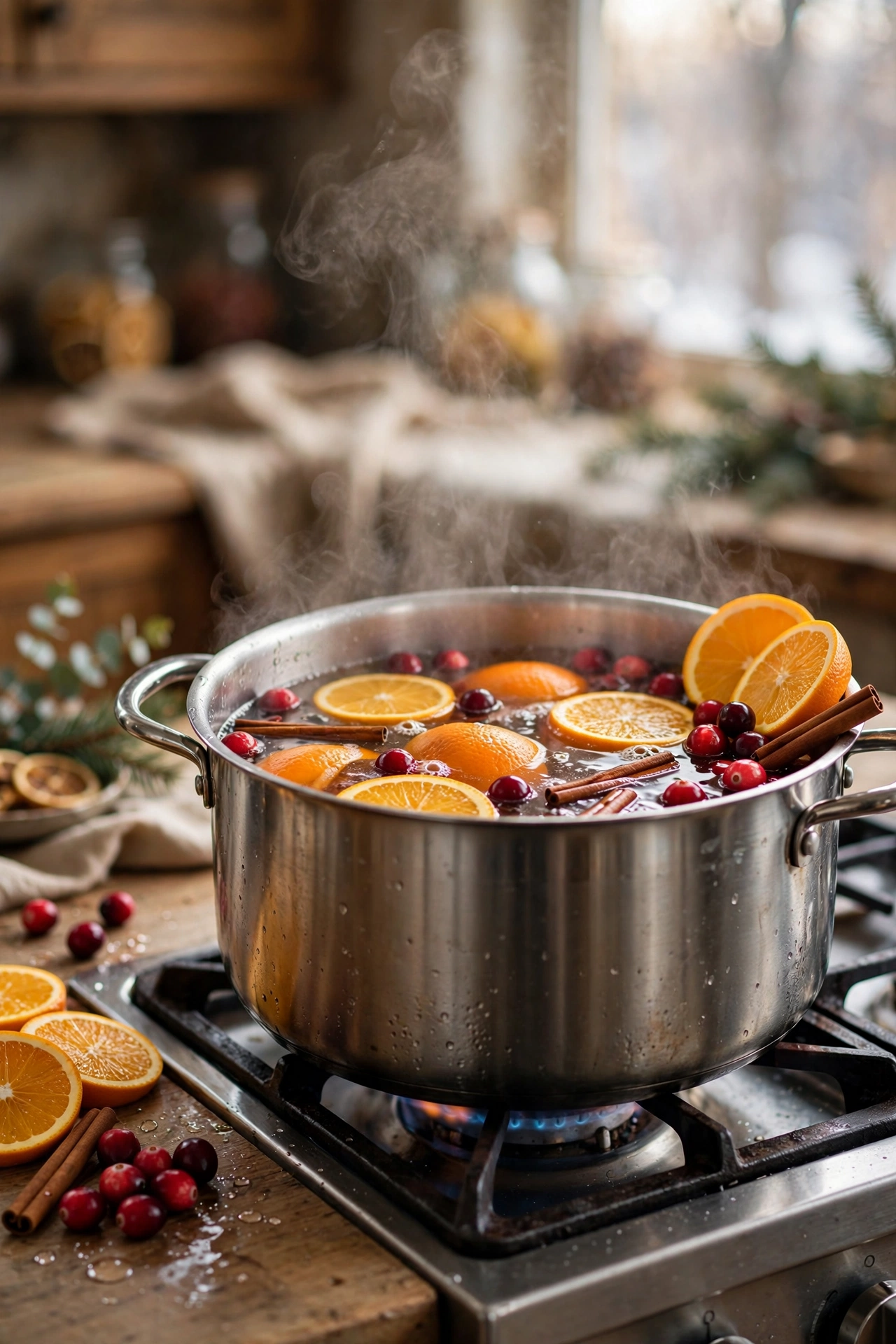
Step 5: Bring to a gentle simmer. Place the pot over medium heat and bring it just to the point where tiny bubbles break the surface. Then immediately reduce the heat to the lowest setting. You want a lazy, barely-there simmer — not a rolling boil.
Step 6: Let it work its magic. Leave the pot uncovered on the lowest heat. Within 20–30 minutes, the fragrance will start drifting through your home. The longer it simmers, the deeper the scent gets.
Step 7: Top up the water. This is the most important step. Check the water level every 30–45 minutes and add more as needed. Never let the pot boil dry — scorched fruit and spices smell terrible, and a dry pot can damage your cookware.
Step 8: Simmer for hours. A single pot happily simmers for 2–4 hours, or even all day if you keep topping up the water. Start it an hour or two before guests arrive, and your home will smell incredible when they walk in.
Step 9: Never leave it unattended. Treat a simmer pot like a lit candle. If you leave the house or go to bed, turn it off. No scent is worth a safety risk.
Step 10: Cool and decide — reuse or discard. When you're done, let the pot cool. You can refrigerate the whole mixture and reuse it the next day (see the FAQs). After 2–3 days of simmering, the fruit breaks down and the scent fades — that's when it's time to compost it and start fresh.
How Do You Keep the Scent Going All Day?
A simmer pot can fragrance your home from morning to night if you follow these habits:
1. Keep the heat low and steady. A gentle simmer releases scent continuously. High heat burns through the aromatic oils fast and can turn the smell bitter.
2. Top up the water religiously. Every 30–45 minutes, check the level. As water evaporates, the ingredients concentrate — and if the pot runs dry, everything scorches. Keep a kettle of hot water nearby for quick refills.
3. Refresh halfway through. After 3–4 hours, toss in a few fresh orange slices and another cinnamon stick. The original ingredients lose strength over time, and fresh additions bring the scent roaring back.
4. Refrigerate and reuse. At the end of the day, let the pot cool, cover it, and refrigerate. The next morning, top up the water and simmer again. Most blends stay fragrant for 2–3 days of reuse.
5. Start before you need it. Scent builds gradually. If guests arrive at 6, start the pot at 4. For Christmas morning magic, start it when you wake up — by the time presents are opened, the whole house smells like the holidays.
What Are the Most Common Simmer Pot Mistakes?
Simmer pots are forgiving, but these mistakes will ruin the experience:
Boiling instead of simmering. A rolling boil cooks the fruit too aggressively and can make the whole pot smell bitter and cooked rather than fresh and fragrant. Gentle bubbles are all you need.
Letting the water run dry. This is the big one. A dry pot scorches the fruit and spices, fills the house with a burnt smell, and can damage your cookware. Set a timer on your phone every 30 minutes as a reminder.
Walking away for hours. A simmer pot is not a set-it-and-forget-it appliance. Never leave it simmering while you leave the house or go to sleep. Turn it off — you can always start it again tomorrow.
Using ground spices. Ground cinnamon and clove turn the water murky brown and produce a dull, muddy scent. Whole spices stay beautiful and smell clean and bright.
Overdoing the cloves. Cloves are powerful. A tablespoon is plenty for a full pot. Too many, and your home smells like a dentist's office instead of Christmas.
Reusing the blend too long. After 2–3 days, the fruit breaks down and the scent turns flat or slightly sour. When it stops smelling wonderful, compost it and start fresh. Ingredients are cheap — a tired pot isn't worth it.
Simmering with the lid on. A covered pot traps the steam — and the scent — inside. Keep the lid off so the fragrance can escape into the room. That's the whole point.
Variation 1: How Do You Make a Classic Christmas Simmer Pot?
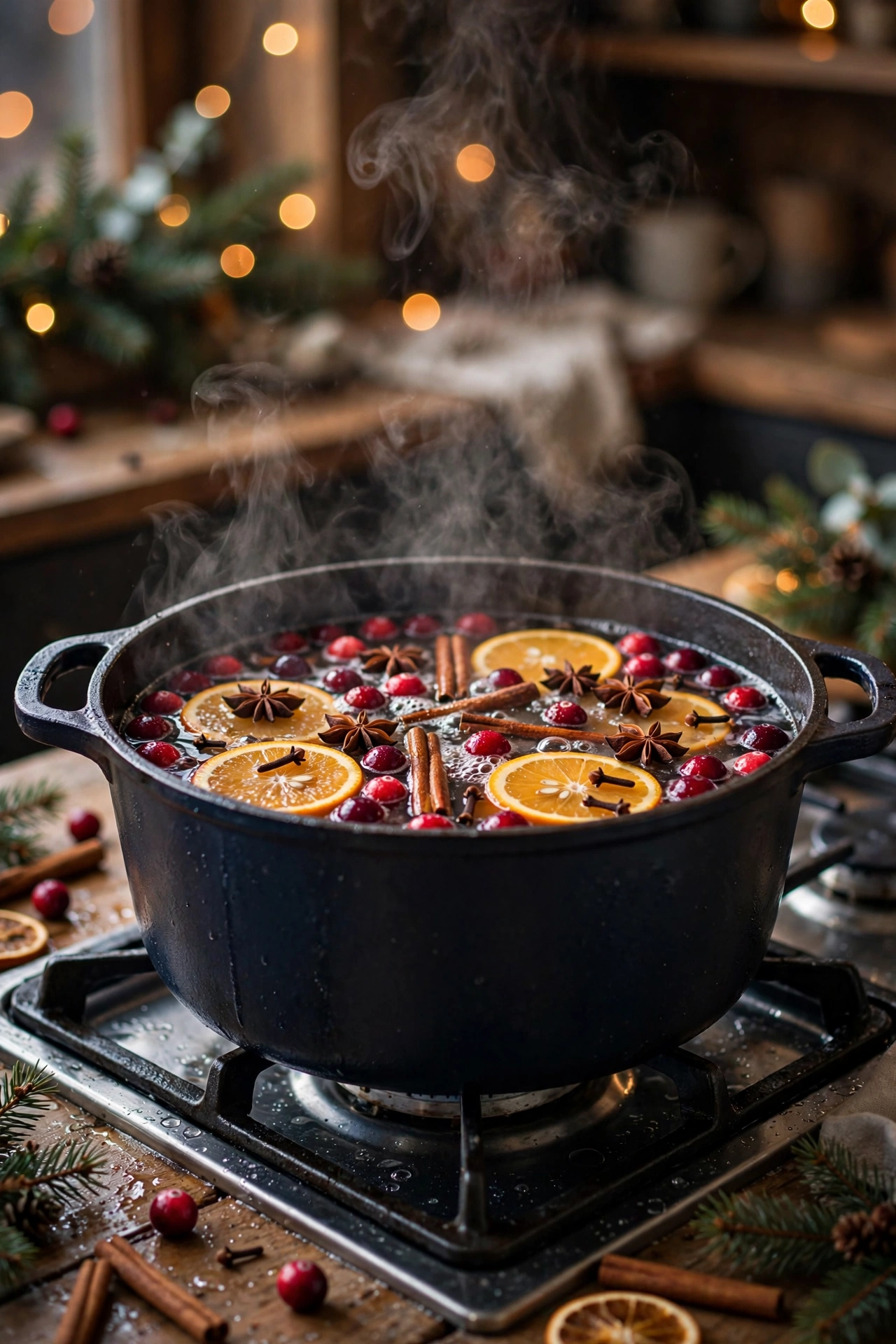
This is the quintessential holiday blend — the one that smells like Christmas morning in a pot. It follows the base recipe exactly: orange slices, fresh cranberries, cinnamon sticks, whole cloves, star anise, vanilla, and pine or rosemary sprigs.
What makes it "classic" is the balance. The orange and cranberry bring brightness, the cinnamon and clove bring warmth, and the pine brings that unmistakable Christmas-tree freshness. If you only ever make one simmer pot in your life, make this one. Simmer it on Christmas Eve while you wrap presents, and thank me later.
Variation 2: How Do You Make a Cozy Apple Spice Simmer Pot?
Swap the orange for 1 large apple, sliced into rounds, and the cranberries for 1/2 cup of dried apple rings if you like. Keep the cinnamon sticks, but trade the star anise for 1 teaspoon of whole allspice berries and add 2 bay leaves and 1 tablespoon of fresh sliced ginger.
This blend smells like a farmhouse kitchen in October — warm apple orchards, spiced cider, wool blankets. It's slightly sweeter and softer than the Christmas blend, which makes it perfect for everyday winter simmering, not just the holidays. Pair it with an actual mug of apple cider and a good book.
Variation 3: How Do You Make a Winter Forest Simmer Pot?
Skip the fruit entirely for this one. Fill the pot with generous handfuls of fresh pine, cedar, or fir sprigs (pesticide-free), a small handful of juniper berries, 3–4 sprigs of rosemary, a lemon sliced into rounds, and 2–3 cinnamon sticks.
This is the freshest, greenest blend — like walking through a snowy evergreen forest. It's less sweet than the fruit-based pots, which makes it wonderful for people who find cinnamon-heavy scents too rich. It also pairs beautifully with a real Christmas tree, layering natural pine over pine.
Variation 4: How Do You Make a Vanilla Chai Simmer Pot?
Combine 2 vanilla beans (split lengthwise) or 2 teaspoons of vanilla extract with 4–5 cardamom pods (lightly crushed), 1 tablespoon of sliced fresh ginger, 3 cinnamon sticks, 1 teaspoon of whole cloves, and the peel of 1 orange (just the peel, in wide strips).
This one smells like a cozy café — creamy vanilla, exotic cardamom, warming ginger. It's sophisticated and a little unexpected, and guests always ask what it is. If you love chai lattes, you'll love this simmering on your stove. Add a splash of milk to your actual chai and the whole house joins in.
Variation 5: How Do You Make a Christmas Stovetop Potpourri Gift in a Jar?
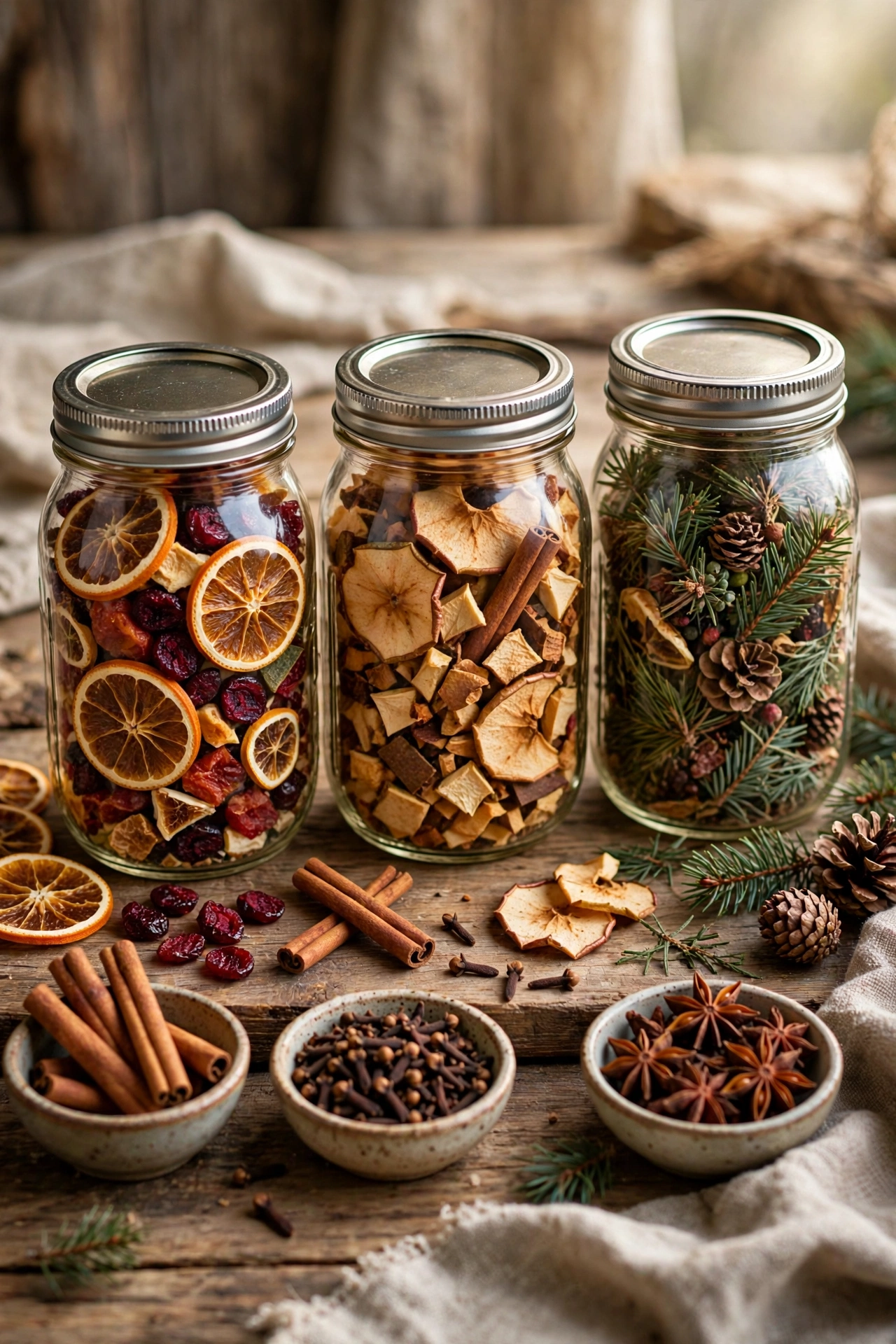
This is the variation that turns a simmer pot into a heartfelt, budget-friendly Christmas gift. You assemble the dry ingredients in a mason jar, tie on a ribbon and a tag with instructions, and give someone the gift of a fragrant home.
What goes in the jar (1-quart mason jar):
- 1 cup dried orange slices
- 1/2 cup dried cranberries
- 3 cinnamon sticks
- 1 tablespoon whole cloves
- 3 whole star anise
- 2 small pine sprigs or 2 sprigs dried rosemary (optional)
How to dry the orange slices: Slice oranges 1/4-inch thick, arrange on a parchment-lined baking sheet, and bake at 200°F (95°C) for 2–3 hours, flipping halfway, until completely dry and crisp. Let them cool fully before jarring.
How to assemble: Layer the ingredients in the jar for a pretty striped look — orange slices standing upright against the glass look especially nice. Seal tightly, tie a ribbon around the lid, and attach a handwritten tag that reads: "Empty into a pot, cover with water, and simmer on low. Top up water as needed. Merry Christmas!"
Why it works as a gift: It costs just a few dollars per jar, it looks gorgeous, it's consumable (no clutter), and it's genuinely useful through the whole winter. Make a dozen in an afternoon and you've covered teachers, neighbors, coworkers, and hostess gifts in one go. Dried-ingredient jars keep for 6–12 months in a cool, dark place, so you can make them well ahead of the holiday rush.
How Do You Store Simmer Pot Ingredients?
Proper storage means your ingredients are ready whenever the mood strikes.
Fresh ingredients: Store citrus in the refrigerator crisper drawer, where it keeps for 2–3 weeks. Fresh cranberries last 3–4 weeks refrigerated in their original bag. Fresh herbs like rosemary keep about a week wrapped in a damp paper towel inside a bag. Pine and cedar sprigs stay fresh for 1–2 weeks in a cool spot, or longer in the fridge.
Dried ingredients: Dried orange slices, dried cranberries, cinnamon sticks, cloves, and star anise all keep for 6–12 months in airtight jars stored in a cool, dark cupboard. Keep them away from heat and sunlight, which fade both color and scent. This is exactly how you stock up for gift-jar season — buy and dry in November, assemble gifts in December.
Assembled gift jars: Sealed mason jars of the dried blend keep for 6–12 months. Store them somewhere cool and dark until gifting. Once the recipient opens the jar and simmers the contents, the usual simmer-pot rules apply.
One rule for all of it: If anything looks moldy or smells off before you start, throw it out. A simmer pot amplifies whatever you put in it — fresh ingredients in, wonderful scent out.
Can You Freeze Simmer Pot Mixes?
Yes, and freezer packs are one of the smartest simmer-pot tricks there is.
How to make freezer packs: Combine all the fresh ingredients for one pot — sliced orange, cranberries, cinnamon sticks, cloves, star anise, rosemary — in a gallon-size freezer bag. Squeeze out the air, seal, label with the blend name and date, and freeze. They keep for up to 3 months.
How to use them: Dump the frozen contents straight into the pot, add water, and simmer. No thawing needed. The frozen fruit actually releases its scent beautifully as it heats.
Why bother? Cranberries and fresh citrus are cheapest in season. Buy them in November and December, pack a dozen freezer bags in one afternoon, and you'll have instant simmer pots ready all winter long. They also make wonderful gifts — hand someone a freezer bag with a ribbon and a tag, and you've given them months of cozy fragrance.
How Do You Enjoy a Winter Simmer Pot?
A simmer pot isn't served on a plate — it's served to the whole house. Here's how to get the most out of the cozy atmosphere it creates:
- Before guests arrive — start the pot 1–2 hours before a dinner party or holiday gathering. The scent is the first thing people notice, and it says "welcome" better than any decoration.
- Christmas morning — put it on when you wake up. By the time the presents are opened, the house smells like the holidays themselves.
- Holiday baking sessions — simmer a pot while gingerbread or sugar cookies bake. The layered scents of baking and spice are pure magic together.
- Cozy nights in — a simmer pot, a mug of hot cocoa or mulled cider, a blanket, and a movie. That's a perfect winter evening.
- Decorating the tree — the pine notes in the pot harmonize with a real Christmas tree and make decorating feel like an event.
- The gift moment — when you give someone a stovetop potpourri jar, include an invitation: "Simmer this tonight." It's a gift that creates an experience, not just an object.
Think of the simmer pot as the background music of your home during the holidays — always there, setting the tone, making everything feel a little more special.
Winter Simmer Pot FAQs
How long does a simmer pot last?
One batch of ingredients stays fragrant through 2–3 days of simmering if you refrigerate the pot overnight between uses and refresh with a few new orange slices and a cinnamon stick each day. After that, the fruit breaks down and it's time for a fresh batch.
Can I reuse the same simmer pot the next day?
Yes. Let the pot cool completely, cover it, and refrigerate overnight. The next day, top up with fresh water and simmer again. Most blends actually smell deeper on day two as the flavors meld.
Is it safe to leave a simmer pot on while I leave the house?
No. Never leave a simmer pot simmering unattended, and always turn it off before bed. Treat it like a lit candle. If you want longer unsupervised simmering, use a slow cooker on low instead — it's designed for that.
Can I use a slow cooker instead of the stovetop?
Absolutely. Add everything to the slow cooker, fill with water, and set it on low with the lid off or ajar. It simmers gently and safely for hours, and many people prefer it for all-day fragrance. Just remember to top up the water.
Do simmer pots add moisture to the air?
Yes, and that's a genuine benefit in winter. Heated indoor air gets very dry, and a simmering pot releases gentle humidity along with the fragrance. Your skin, sinuses, and houseplants will all appreciate it.
Will a simmer pot stain my pot?
It can leave light discoloration, especially on white enamel. The tannins in spices and fruit tint the interior over time. Use an older pot you don't mind dedicating to simmer duty, and scrub with baking soda or Bar Keeper's Friend if staining bothers you.
Can I drink the simmer pot liquid?
No. Simmer pot blends aren't made to food-safety standards for drinking — the same spices simmer for hours, pine sprigs aren't food-grade, and the water isn't clean. If you want a drinkable version, make mulled cider or wassail instead, which uses similar flavors in a proper recipe.
What if I can't find fresh cranberries?
Dried cranberries work fine — use 1/2 cup. You can also substitute extra orange slices, apple slices, or even a handful of pomegranate seeds. The pot is flexible; use what you can find.
Are simmer pots safe around pets?
Use some caution. Strong concentrations of certain essential oils and spices — particularly clove and citrus oils — can irritate cats, dogs, and birds. Simmer in a ventilated area, keep pets from drinking the water, and watch for signs of discomfort like sneezing or restlessness. When in doubt, ask your vet.
How do I make my house smell like Christmas fast?
Start the classic Christmas blend 1–2 hours before you need the scent, and add an extra cinnamon stick and a few more orange slices than usual. Keep the heat at a steady gentle simmer with the lid off. For an instant boost, simmer a small saucepan of just cinnamon sticks and orange peels while the main pot gets going.
Final Thoughts
A winter simmer pot might be the highest-reward, lowest-effort recipe in existence. Five minutes of slicing, a pot of water, and your home smells like the best parts of the holidays for hours. No baking skills, no special equipment, no stress.
Start with the classic Christmas blend and let it become part of your holiday rhythm — simmering while you decorate, while cookies bake, while family gathers. Then try the winter forest for something fresh, the vanilla chai for cozy nights, and the gift jars for everyone on your list.
This winter, let your home smell as good as the season feels.
If you enjoyed this winter blend, try our fall simmering pot recipes for cozy autumn fragrance. Then make a Christmas stovetop potpourri gift to share the season’s scent with someone you love.