
Golumpki Soup: Deconstructed Polish Stuffed Cabbage Soup
SEO Title: Golumpki Soup Recipe — Easy Polish Stuffed Cabbage Soup
What Makes This the Best Golumpki Soup Recipe?
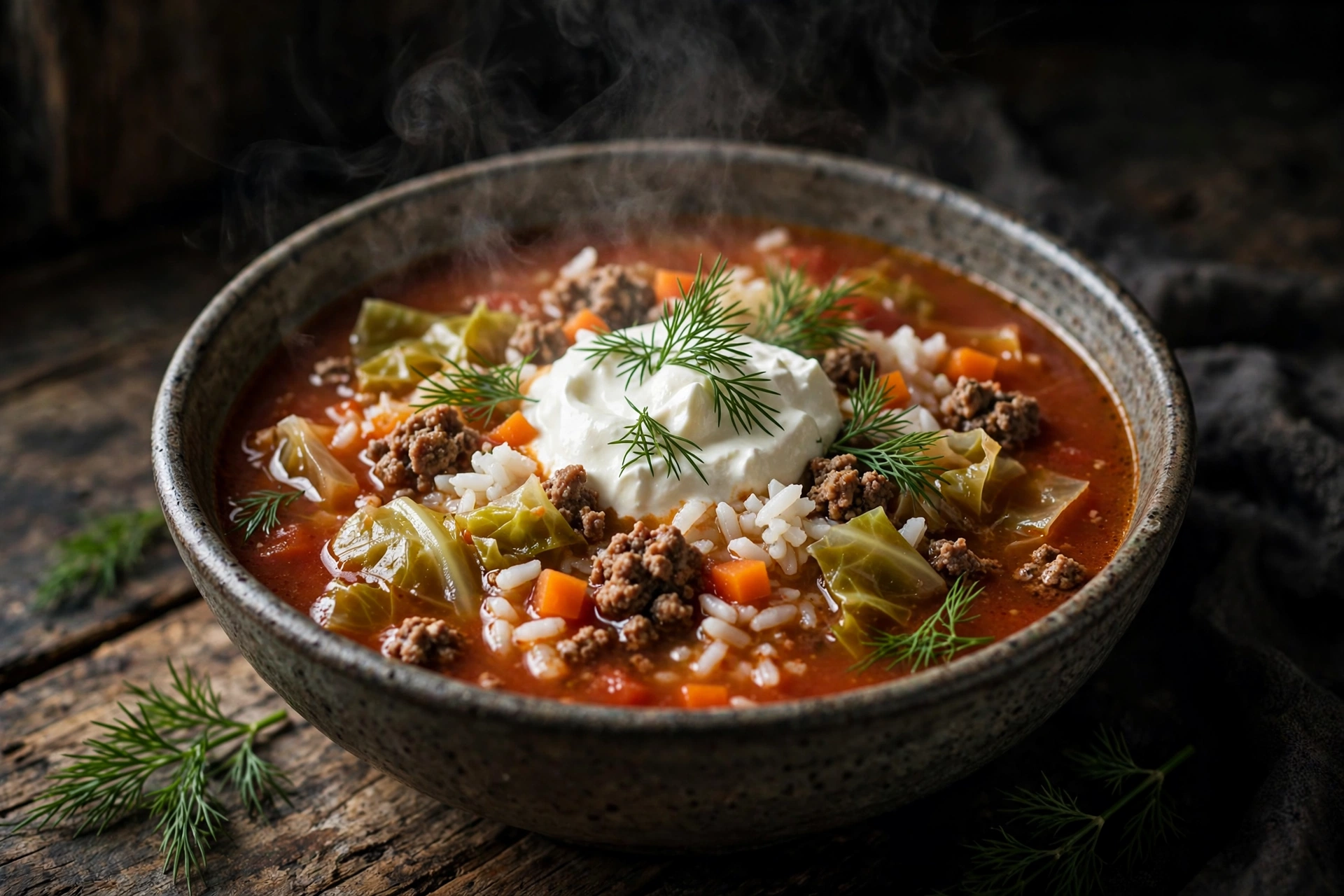
Imagine all the cozy flavor of Polish stuffed cabbage rolls — savory ground meat, tender rice, sweet cabbage, and tangy tomato sauce — without a single minute of rolling, tucking, or toothpick-wrangling. That is exactly what this golumpki soup delivers. Every classic flavor lands in your bowl, but the whole thing cooks in one pot in under an hour.
Traditional golumpki (also spelled golabki) take real effort. You blanch whole cabbage leaves, mix the filling, roll each leaf into a neat parcel, nestle them in a baking dish, and bake. It is a labor of love, and it is wonderful — but nobody has time for that on a Tuesday. This soup captures the soul of the dish with weeknight-friendly effort.
What makes this version the best? Three things. First, the cabbage goes in two stages — some cooks down into the broth for deep flavor, and some goes in near the end so it stays tender-crisp. Second, the meat gets properly browned and seasoned before the broth goes in, so every spoonful tastes rich and beefy, not bland and boiled. Third, the rice cooks right in the pot, soaking up the tomatoey broth until each grain tastes like the inside of a stuffed cabbage roll.
It is hearty enough to be dinner on its own, it feeds a crowd for pennies, and the leftovers might be even better than day one. If you love Eastern European comfort food, this soup belongs in your regular rotation.
What Are Golumpki, and Why Turn Them Into Soup?
Golumpki — pronounced go-WOOM-key — are Poland's beloved stuffed cabbage rolls. The name comes from the Polish word "golabki," which means "little pigeons," a nod to the plump, rounded shape of the rolls. Each one wraps a savory filling of ground meat (usually beef, pork, or a mix), cooked rice, and sauteed onion in a tender cabbage leaf, then simmers or bakes in a tomato-based sauce until everything melds together.
Polish families have made golumpki for generations. They show up at Christmas Eve tables, Easter dinners, weddings, and Sunday suppers. Every family has its own version — some add mushrooms, some use sauerkraut in the sauce, some swear by a beef-pork blend. But the heart of the dish never changes: humble ingredients, slow-cooked until they taste like home.
So why turn them into soup? Because rolling cabbage leaves is fiddly, time-consuming work. Blanching a whole head of cabbage, peeling the leaves without tearing them, trimming the thick ribs, rolling each parcel tight — it can take an hour before the dish even hits the oven. The soup version skips all of that. You chop the cabbage, brown the meat, and let the pot do the work. You get the same flavor profile — sweet cabbage, savory meat, tomato tang — in about 50 minutes with one pot to wash.
Golumpki soup has become popular for exactly that reason. It keeps the soul of the original while fitting real life. It is also incredibly forgiving: there are no rolls to fall apart, no leaves to tear. Just chop, simmer, and serve.
What Ingredients Do You Need for Golumpki Soup?
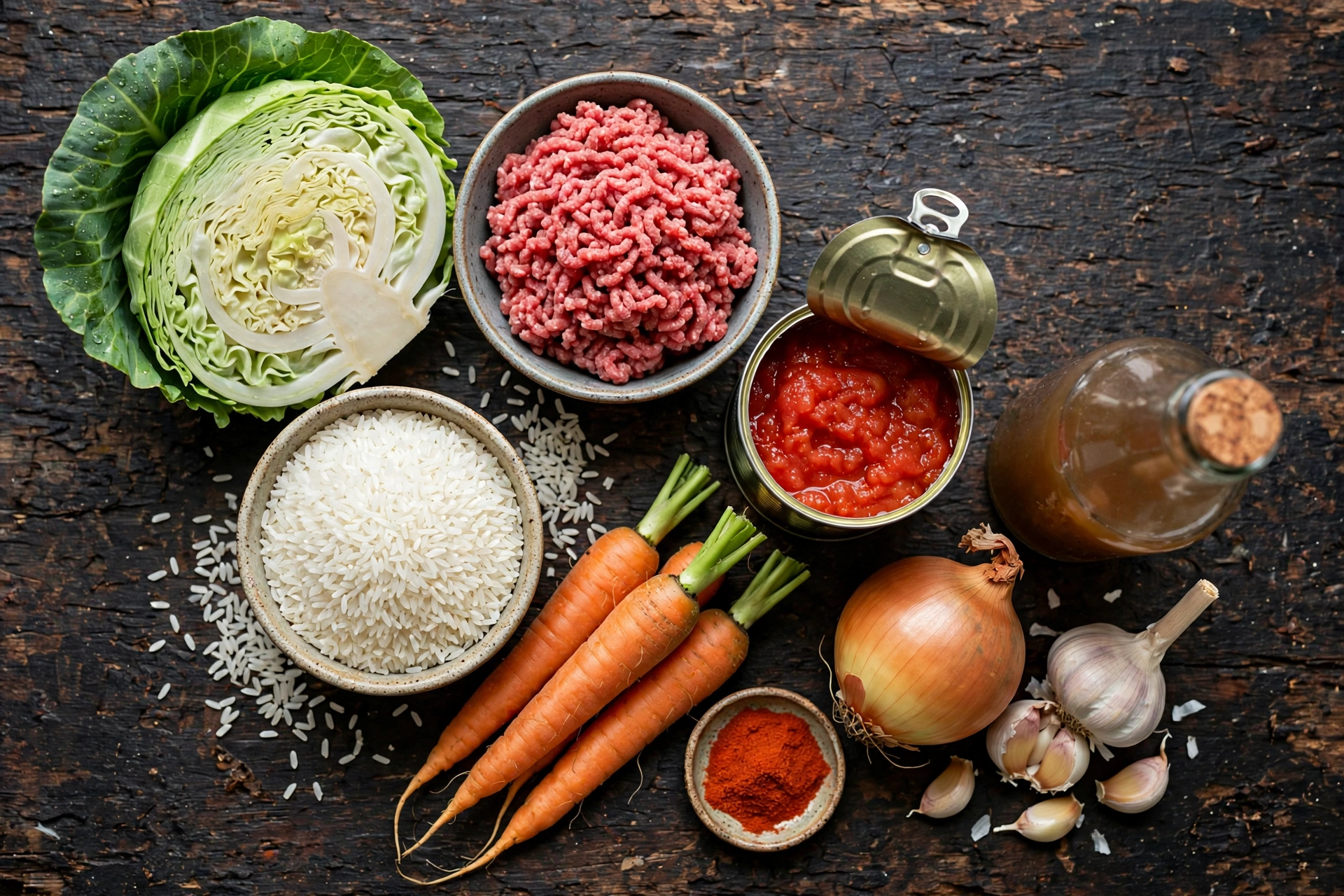
This recipe uses simple, affordable ingredients. Most are pantry staples, and the fresh items are cheap year-round.
For the Soup
- 1 1/2 pounds ground beef (80/20), or a 50/50 mix of ground beef and ground pork
- 1 teaspoon kosher salt, plus more to taste
- 1/2 teaspoon freshly ground black pepper, plus more to taste
- 1 tablespoon olive oil
- 1 large yellow onion, diced
- 3 garlic cloves, minced
- 1 medium head green cabbage (about 2 pounds), chopped into 1-inch pieces
- 2 medium carrots, peeled and diced
- 1 (28-ounce) can crushed tomatoes
- 1 (14.5-ounce) can diced tomatoes
- 6 cups beef broth (low-sodium preferred)
- 1 tablespoon tomato paste
- 1 tablespoon brown sugar
- 1 tablespoon apple cider vinegar (or white vinegar)
- 2 bay leaves
- 1 teaspoon dried thyme
- 1 teaspoon paprika (sweet or smoked)
- 3/4 cup uncooked long-grain white rice
- 2 tablespoons chopped fresh dill or parsley, for serving (optional but lovely)
- Sour cream, for serving (optional)
Ingredient Notes That Actually Matter
Ground beef and pork blend: Traditional golumpki use a mix of beef and pork. The pork adds fat and tenderness that pure beef cannot match. If you only have beef, use 80/20 so the meat stays juicy. Ground turkey works too, but add an extra tablespoon of olive oil since it is leaner.
Green cabbage: Standard green cabbage is the classic choice — sweet, sturdy, and affordable. Savoy cabbage also works and turns silkier. Skip red cabbage; it will turn the broth an unappetizing purple-gray color.
Crushed plus diced tomatoes: The crushed tomatoes melt into the broth and give it body, while the diced tomatoes add little bursts of texture. Using both gives you the best of both worlds. Fire-roasted diced tomatoes add a nice smoky depth if you can find them.
Brown sugar and vinegar: This sweet-sour balance is the signature of Polish cooking. The sugar tames the acidity of the tomatoes, and the vinegar brightens everything up. Do not skip either one — without them, the soup tastes flat and one-dimensional.
Long-grain white rice: It holds its shape better than short-grain rice, which can turn mushy. Rinse the rice before adding it to wash off excess starch — this keeps the broth from getting gummy.
What Equipment Do You Need?
One big pot handles everything. Here is the short list:
- Large Dutch oven or stockpot (6 to 8 quarts): Cabbage takes up a lot of space before it wilts down, so go bigger than you think you need. A heavy bottom prevents scorching during the long simmer.
- Wooden spoon: For breaking up the meat and stirring.
- Sharp chef's knife and cutting board: Chopping a whole head of cabbage goes fast with a sharp knife.
- Ladle and bowls: For serving this hearty soup in style.
How Do You Make Golumpki Soup?
The method is simple: brown, build, simmer, finish. Here is every step in detail.
Step 1: Brown the meat
Heat the olive oil in your pot over medium-high heat. Add the ground beef (or beef-pork mix), breaking it into small crumbles with a wooden spoon. Season with the salt and pepper. Cook for 8 to 10 minutes, stirring occasionally, until the meat is deeply browned with crispy edges. Do not rush this step — browning builds the savory foundation of the whole soup. If the meat releases a lot of fat, spoon off all but about a tablespoon.
Step 2: Soften the aromatics
Add the diced onion to the pot with the meat. Cook for 5 minutes, stirring often, until the onion softens and turns translucent. Add the garlic and cook for 1 more minute until fragrant. Stir in the tomato paste and cook for 2 minutes, letting it darken slightly. This caramelizes the paste and removes its raw, tinny taste.
Step 3: Add tomatoes, broth, and seasonings
Pour in the crushed tomatoes, diced tomatoes, and beef broth. Add the brown sugar, vinegar, bay leaves, thyme, and paprika. Stir everything together, scraping up any browned bits from the bottom of the pot. Bring to a boil over high heat.
Step 4: Add half the cabbage and simmer
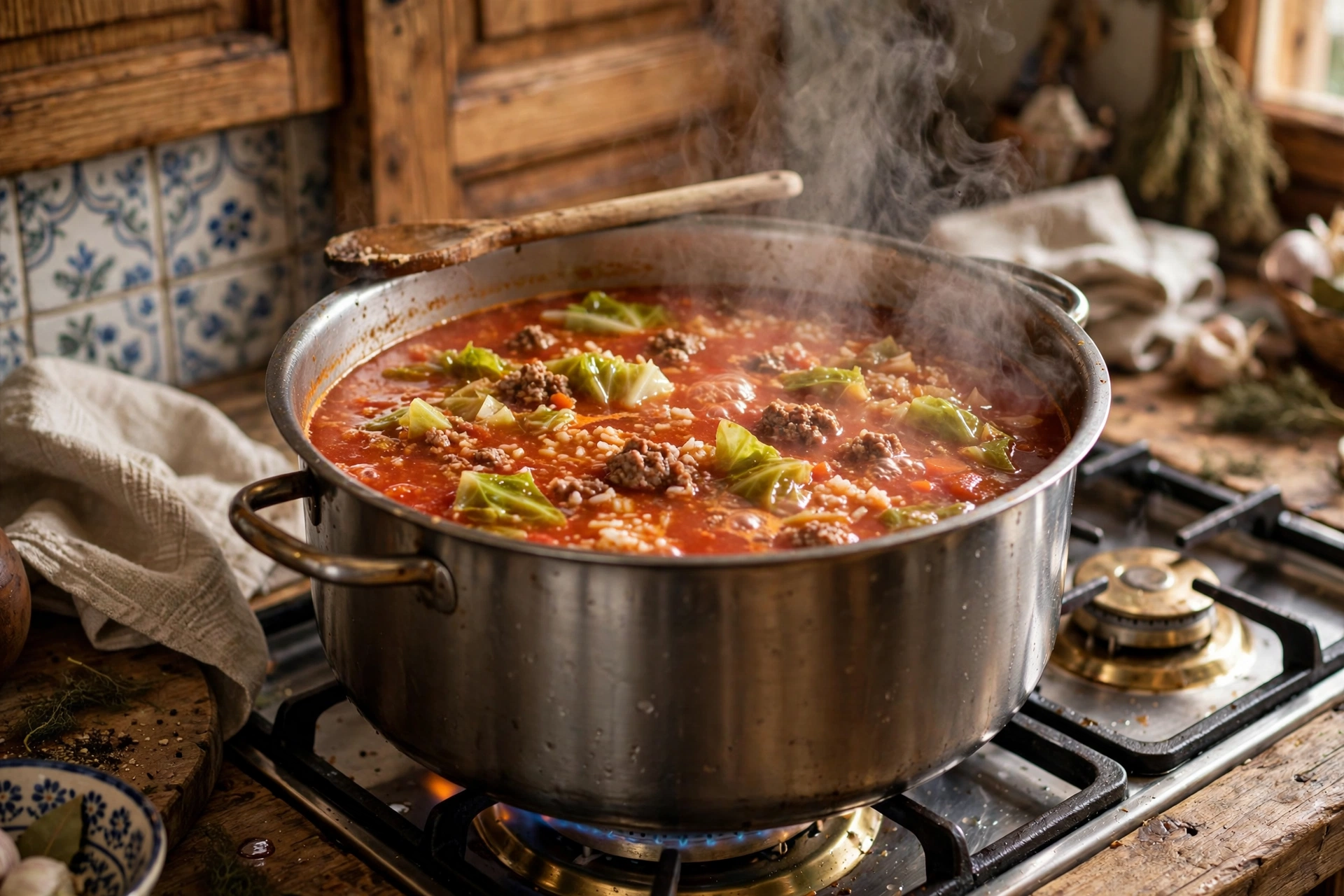
Once boiling, stir in half of the chopped cabbage — about 4 cups. It will look like a mountain, but it wilts fast. Reduce the heat to low, cover, and simmer for 15 minutes. This first batch of cabbage melts into the broth and gives it that sweet, deep cabbage flavor.
Step 5: Add the rice
Stir in the rinsed rice. Cover and simmer for 15 more minutes, stirring once halfway through so the rice does not stick to the bottom. The rice will absorb broth and swell up, thickening the soup naturally.
Step 6: Add the remaining cabbage and carrots
Stir in the rest of the cabbage and the diced carrots. The pot will look full again — that is fine. Cover and simmer for 15 to 20 more minutes, until the second batch of cabbage is tender but still has a little bite, the carrots are soft, and the rice is fully cooked. Fish out the bay leaves.
Step 7: Taste and finish
This is the most important step. Taste the broth. Does it need more salt? Add it. Too acidic? Add another teaspoon of brown sugar. Flat? A splash more vinegar wakes it up. Polish cooking lives in that sweet-sour-savory balance, so adjust until it sings. Ladle into bowls and top with fresh dill and a dollop of sour cream if you like.
What Are the Secrets to the Best Golumpki Soup?
Small techniques make a big difference in this soup. Here is what separates a good pot from a great one.
Brown the meat hard. Pale, steamed ground meat makes a bland soup. Let the meat sit undisturbed for a few minutes at a time so it develops a deep brown crust. Those caramelized bits dissolve into the broth and give it a rich, meaty depth you cannot get any other way.
Add the cabbage in two stages. This is the signature trick of this recipe. The first half cooks down completely and flavors the broth. The second half goes in near the end, so it stays tender with a pleasant bite. One-stage cabbage either disappears into mush or stays squeaky and raw-tasting. Two stages give you both flavor and texture.
Nail the sweet-sour balance. Golumpki soup should taste savory first, with a gentle sweet-tart background from the tomatoes, sugar, and vinegar. If the tomatoes you used are very acidic, you may need an extra teaspoon of brown sugar. If the soup tastes flat, a splash of vinegar brings it to life. Taste, adjust, taste again.
Rinse the rice. Unrinsed rice releases extra starch that can make the broth gummy and cloudy. A quick rinse under cold water takes 30 seconds and keeps the broth clean-tasting. It also helps the grains stay separate instead of clumping.
Do not overcook the rice. Rice keeps absorbing liquid even after you turn off the heat. Pull the soup off the burner when the rice is just tender — it will soften a touch more as it rests. Mushy, blown-out rice grains make the soup feel heavy and porridge-like.
Rest before serving. Let the pot sit off the heat for 10 minutes before ladling. The flavors settle, the broth thickens slightly, and the soup goes from "hot ingredients in liquid" to a unified, harmonious dish.
What Mistakes Should You Avoid?
- 1. Crowding the meat so it steams instead of browning. If you dump all the meat in at once and stir constantly, it releases water and steams in its own juices. You get gray, rubbery crumbles with no flavor. Let the meat sit still for 3 to 4 minutes per side before breaking it up, and brown in two batches if your pot is small.
- 2. Adding all the cabbage at once. A whole head of chopped cabbage added at the start cooks down to almost nothing by the end — you lose all texture. The two-stage method exists for a reason. The late addition keeps the soup hearty and gives you something to chew.
- 3. Skipping the vinegar and sugar. It is tempting to leave out "just a tablespoon" of each. Do not. Polish stuffed cabbage flavor depends on that sweet-sour backbone. Without it, the soup tastes like plain tomato-beef soup — fine, but not golumpki.
- 4. Using the wrong rice or too much of it. Short-grain or instant rice turns to mush in this soup. Stick with long-grain white rice, and do not eyeball extra — too much rice soaks up all the broth and turns your soup into a casserole. Measure the 3/4 cup.
- 5. Under-seasoning the broth. Cabbage and rice both dilute seasoning as they cook. The broth should taste boldly seasoned — a little saltier and tangier than you think it needs — because the cabbage and rice will mellow it out. Taste at the end and adjust aggressively.
- 6. Boiling hard after the rice goes in. A violent boil breaks the rice grains apart and makes them release too much starch. Once the rice is in, keep the heat at a gentle simmer with the lid on. Lazy bubbles, not a rolling boil.
How Can You Change Up This Recipe? 5 Tasty Variations
- 1. How do you make a pork and sauerkraut version? Use all ground pork instead of beef, and stir in 1 cup of drained, chopped sauerkraut with the second batch of cabbage. The sauerkraut adds authentic Polish tang and extra depth. Reduce the vinegar to 1 teaspoon since the kraut brings its own acidity. This tastes like the old-country version grandmothers make.
- 2. Can you make a vegetarian golumpki soup? Absolutely. Skip the meat and use 8 cups of vegetable broth. Add 2 cups of chopped mushrooms (browned first in olive oil for depth) and a 15-ounce can of white beans, drained. Bump up the paprika to 2 teaspoons and add 1 teaspoon of smoked paprika for meaty flavor. It is hearty, satisfying, and completely meat-free.
- 3. What about a spicy version? Add 1 diced jalapeno with the onion and 1/2 teaspoon of red pepper flakes with the seasonings. A teaspoon of hot smoked paprika instead of sweet paprika adds warmth without overwhelming the classic flavor. The heat plays beautifully against the sweet cabbage and tangy tomatoes.
- 4. How do you make it in a slow cooker? Brown the meat, onion, and garlic on the stove first (do not skip this), then transfer everything except the rice and second batch of cabbage to a 6-quart slow cooker. Cook on low for 6 hours or high for 3 hours. Stir in the rice and remaining cabbage during the last hour. This is perfect for days when you want dinner waiting for you.
- 5. Can you make a low-carb version without rice? Yes — swap the rice for 3 cups of cauliflower rice, stirred in during the last 10 minutes of cooking. It soaks up the tomato broth and mimics the texture of rice surprisingly well. You can also add an extra half head of cabbage to keep the soup hearty. All the classic flavor, none of the carbs.
How Do You Store and Reheat Leftovers?
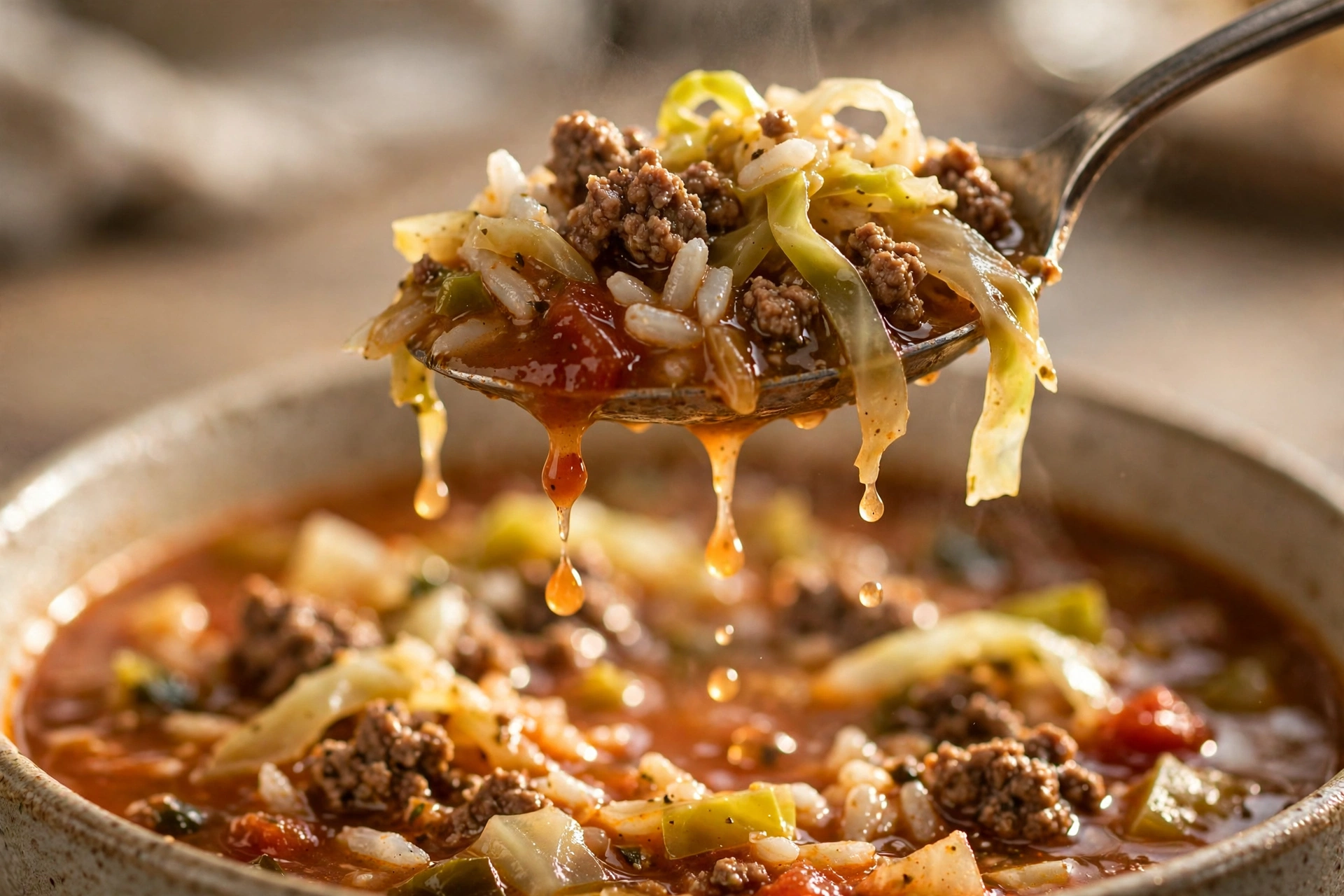
Golumpki soup is one of those magical dishes that tastes even better the next day. The flavors meld overnight and the broth gets richer.
Refrigerator: Cool the soup to room temperature within 2 hours, then refrigerate in airtight containers for up to 5 days. The rice will keep absorbing broth, so the soup thickens — that is normal and delicious.
Freezer: This soup freezes beautifully for up to 3 months. One tip: the rice can get a little soft after freezing and thawing. For the best texture, you can freeze the soup before adding the rice, then cook fresh rice when you reheat. But honestly, most people freeze the finished soup and still love it — just expect slightly softer rice.
Reheating: Warm gently on the stove over medium-low heat, stirring occasionally. Add a splash of beef broth or water to loosen it up, since the rice thickens the soup in storage. Heat until steaming hot all the way through. In the microwave, heat in 2-minute bursts, stirring between each, until hot.
What Should You Serve With Golumpki Soup?
This soup is a meal in a bowl, but the right sides turn it into a feast.
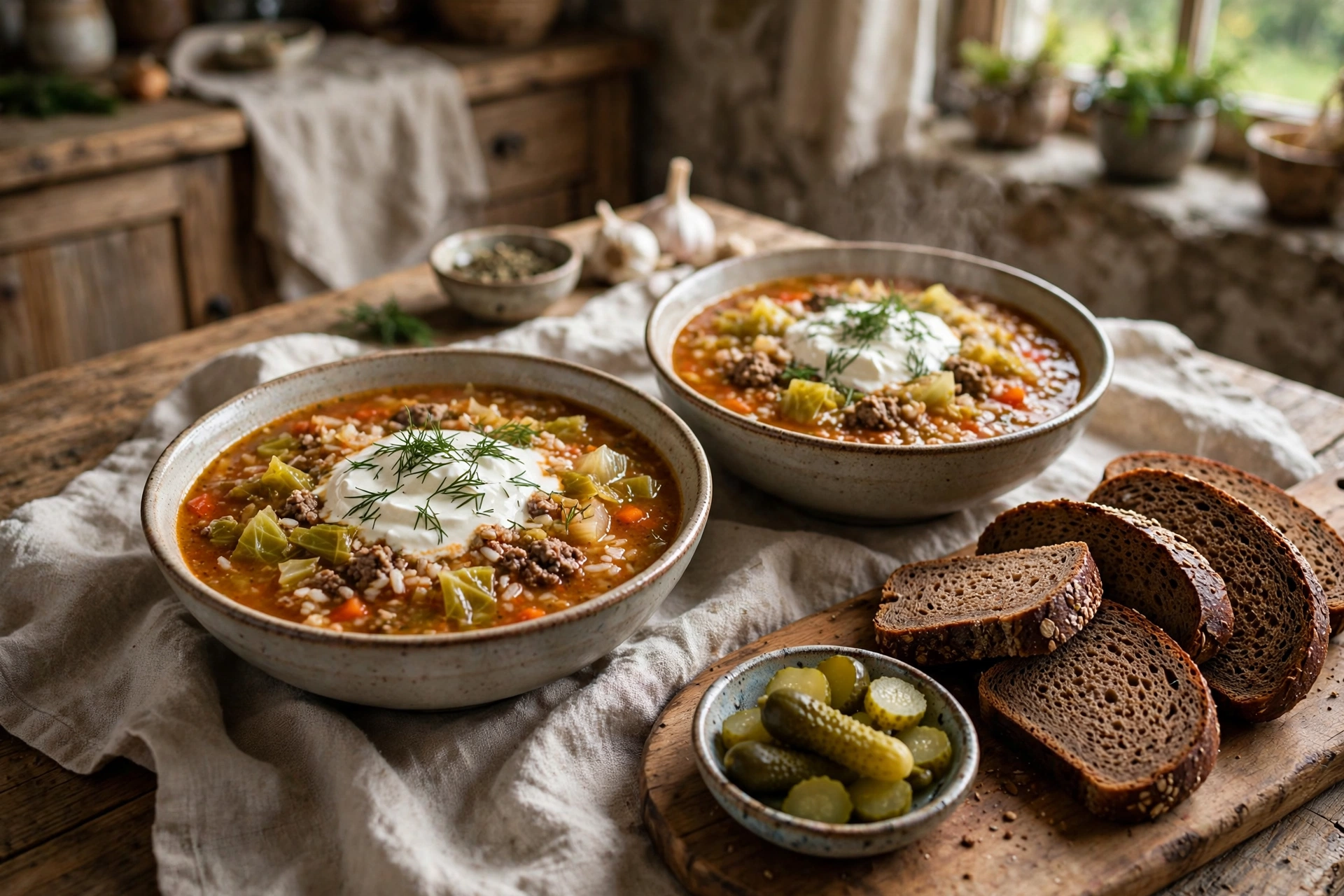
Crusty rye bread is the classic partner — perfect for sopping up the tomatoey broth. A dark Polish rye with butter is as authentic as it gets. Crusty sourdough or warm dinner rolls work too.
A dollop of sour cream on top is traditional and highly recommended. It cools the tang of the tomatoes and adds creamy richness. A sprinkle of fresh dill over the sour cream looks beautiful and tastes even better.
For a fuller spread, add a simple cucumber salad with sour cream and dill — cool, crisp, and refreshing against the hearty soup. Pickled beets or a jar of good dill pickles on the side also fit the Eastern European theme perfectly.
To drink, try a cold Polish lager, or keep it family-friendly with sparkling apple cider. For dessert after this filling meal, something light works best — fresh fruit, or small Polish chrusciki (angel wing pastries) if you want to stay on theme.
Frequently Asked Questions
What does "golumpki" mean?
Golumpki (more commonly spelled "golabki" in Polish) means "little pigeons." The name is a playful reference to the plump, rounded shape of the stuffed cabbage rolls. Pronounce it "go-WOOM-key." Despite the name, there is no pigeon involved — the filling is ground meat and rice wrapped in cabbage leaves.
Is golumpki soup the same as stuffed cabbage rolls?
Not exactly, but it captures the same flavors. Traditional golumpki are individual cabbage leaves stuffed with a meat-and-rice filling, rolled up, and baked in tomato sauce. Golumpki soup deconstructs all of those elements — chopped cabbage, browned meat, rice, tomato broth — into a one-pot soup. Same taste profile, a fraction of the work, no rolling required.
Can I use ground turkey instead of beef?
Yes. Ground turkey works well, but it is leaner, so add an extra tablespoon of olive oil when browning to keep it from sticking and drying out. Season it a little more aggressively too — turkey is milder than beef, so an extra pinch of salt, pepper, and paprika helps. Ground chicken works the same way.
Why is my soup too acidic?
Canned tomatoes vary a lot in acidity. If your soup tastes sharp or sour, add brown sugar a teaspoon at a time until it balances out. A pinch of baking soda (just 1/4 teaspoon) can also neutralize excess acidity without adding sweetness — stir it in and let the fizzing stop before tasting. Using a tablespoon of tomato paste that has been well caramelized also adds sweetness that counters acidity.
Can I make golumpki soup ahead of time?
Yes, and you should — it tastes better on day two. Make the full recipe, cool it, and refrigerate for up to 5 days. The flavors deepen overnight. Just know the rice keeps absorbing liquid, so have extra broth on hand to loosen the soup when you reheat. For the absolute best texture, some cooks make the soup base ahead and add freshly cooked rice when serving.
What kind of cabbage is best?
Plain green cabbage is the traditional and best choice — it turns sweet and tender without falling apart. Savoy cabbage is a good second option with a silkier texture. Avoid red cabbage (it discolors the broth) and napa cabbage (it turns to mush too quickly). Choose a firm, heavy head with crisp leaves for the freshest flavor.
Can I add potatoes to golumpki soup?
You can. Dice 2 medium potatoes into 1/2-inch cubes and add them with the first batch of cabbage — they need the full simmer time to cook through. Potatoes make the soup even heartier and stretch it further, which is great for feeding a crowd. They do absorb broth, so you may want to add an extra cup of beef broth.
How do I keep the rice from getting mushy?
Three rules: use long-grain white rice (not instant or short-grain), rinse it before adding, and do not overcook it. Add the rice at the stage the recipe indicates, keep the simmer gentle, and pull the pot off the heat when the grains are just tender. Remember the rice keeps softening as the soup rests and again when reheated, so slightly firm at serving time is perfect.
Is golumpki soup gluten-free?
It can be. The soup itself is naturally gluten-free as long as your beef broth is certified gluten-free (some brands contain hidden gluten). Rice, cabbage, tomatoes, and meat are all naturally gluten-free. Just double-check your broth label and your paprika and spice blends for anti-caking additives containing wheat.
Can I double this recipe?
Absolutely — it doubles beautifully for crowds or meal prep. Use a 10- to 12-quart stockpot so the cabbage has room to wilt down. Keep all ratios the same. The cooking times stay roughly the same, though the pot may take a few extra minutes to come to a boil at each stage. This is a fantastic recipe for feeding a big family gathering.
Final Thoughts
Golumpki soup takes one of Poland's most beloved dishes and makes it weeknight-friendly without losing its soul. You still get the sweet cabbage, the savory browned meat, the tender rice, and that signature sweet-sour tomato broth — just without the rolling, tucking, and fiddling.
This is humble food at its best: affordable ingredients, one pot, and flavors that taste like they took all day. Make a big batch, share it with people you love, and do not be surprised when someone asks for the recipe. Some dishes earn their place at the table through sheer deliciousness, and this is one of them. Smacznego — enjoy your meal.
When the weather turns cold, there is nothing cozier than a pot of soup simmering on the stove. If this golumpki soup hit the spot, you will also love our Stove Top Chicken and Dumplings for another one-pot winter classic — and do not forget a batch of Salted Honey Butter Parker House Rolls for sopping up every last drop of broth.