The Best Cinnamon Focaccia Recipe (Sweet, Gooey & Irresistible)
SEO Title: Easy Cinnamon Focaccia Recipe: Sweet, Gooey & Foolproof
Meta Description: This easy cinnamon focaccia recipe bakes up soft, airy, and swirled with cinnamon sugar — like a giant cinnamon roll in focaccia form. Foolproof and delicious.
Why Is This the Best Cinnamon Focaccia Recipe You'll Ever Try?
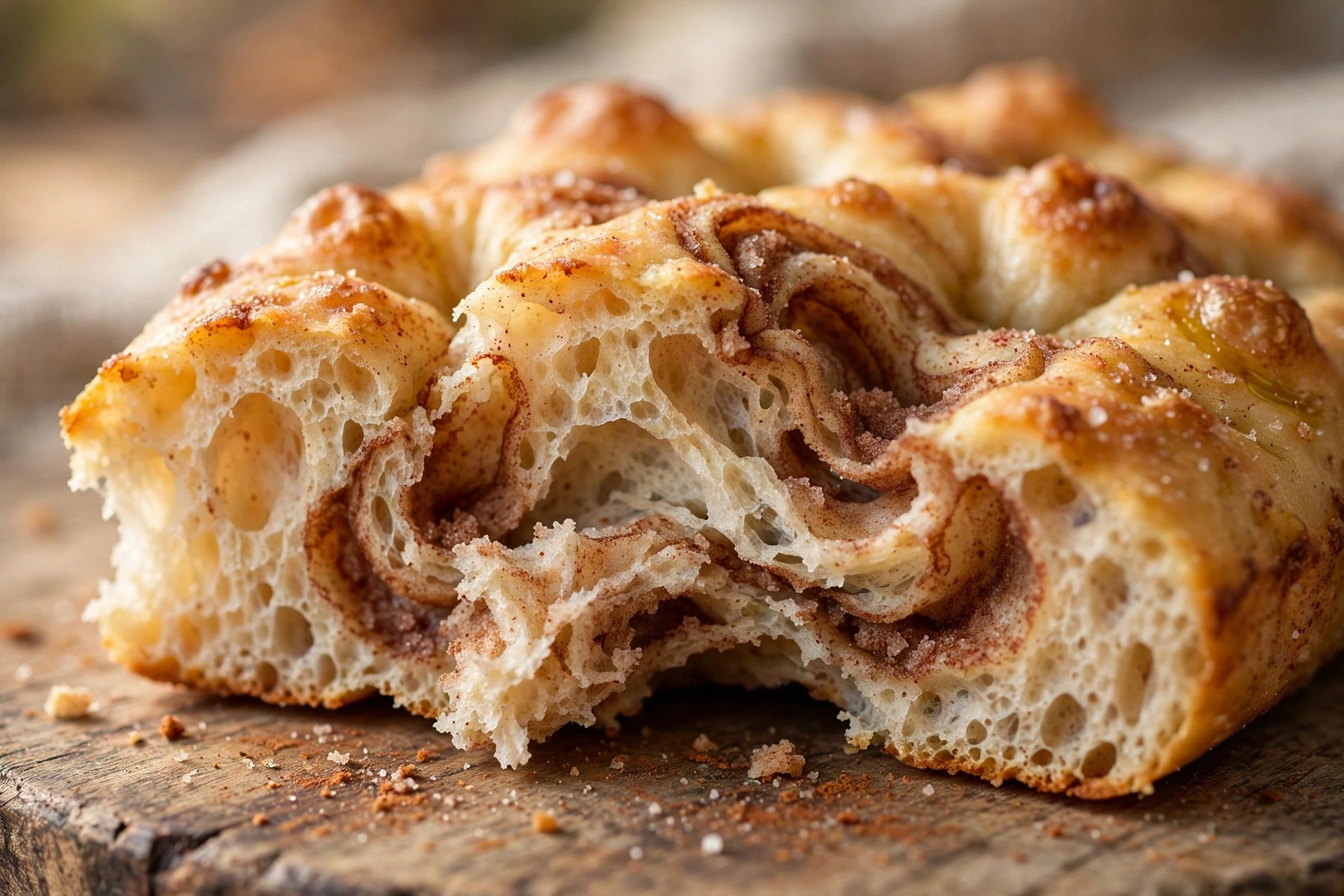
Imagine pulling a golden, bubbling pan from the oven and breathing in warm cinnamon, melted butter, and caramelized brown sugar. Now imagine tearing off a piece and finding a cloud-soft crumb shot through with gooey cinnamon swirls, the top crackling with a sugary crust. That is exactly what this cinnamon focaccia delivers, and it does it with a fraction of the fuss of homemade cinnamon rolls.
Most sweet bread recipes demand rolling, shaping, slicing, and second-guessing. This one skips all of that. You mix a simple no-knead dough, let time do the heavy lifting, stretch it into a pan, dimple it with your fingertips, and shower it with cinnamon sugar and butter. Every bite tastes like the best part of a cinnamon roll: the soft, gooey center.
What makes this version stand out? First, the dough hydrates overnight in the fridge, which builds deep flavor you simply cannot get from a quick dough. It finishes with an optional warm glaze that soaks into every crevice.
If you can stir a bowl and poke dough with your fingers, you can bake this. And once you taste that first warm square, with cinnamon sugar crunching on top and pillowy bread underneath, you will understand why bakers call sweet focaccia the easiest impressive bake in their repertoire.
What Exactly Is Cinnamon Focaccia?
Cinnamon focaccia is a sweet twist on classic Italian focaccia, the dimpled flatbread famous for its olive oil, airy holes, and chewy-crisp crust. Instead of rosemary and sea salt, this version leans into dessert territory: the dough gets enriched with a little sugar, then topped generously with butter, cinnamon, and brown sugar before baking. Some bakers call it a cinnamon roll focaccia because it borrows the soul of a cinnamon roll — warm spice, buttery sweetness, gooey texture — and marries it to focaccia's famously easy, hands-off method.
Traditional focaccia relies on a wet, sticky dough and a long, slow rise. That high hydration is what creates the open, bubbly crumb with big irregular holes. In the sweet version, those same holes become flavor traps: melted butter and cinnamon sugar sink into every dimple and pocket, so the topping is not just sitting on the surface — it is baked into the bread itself. When you dimple the dough, you are not only making it look like focaccia; you are creating reservoirs for caramelization.
You spread the dough in a pan, poke it, top it, and bake. The whole thing emerges as one glorious slab you can cut into squares or tear into rustic pieces. Serve it warm for breakfast, as an afternoon snack with coffee, or as a simple dessert with a scoop of vanilla ice cream.
Think of cinnamon focaccia as the laid-back cousin of the cinnamon roll: all the cozy flavor, none of the stress.
Why Is Cinnamon Focaccia So Popular Right Now?
Sweet focaccia has exploded across bakeries and home kitchens, and cinnamon focaccia sits at the top of the trend. A few forces came together to make it a star. First, the no-knead, high-hydration dough movement taught home bakers that incredible bread does not require a stand mixer or strong arms — just a bowl, a spoon, and patience. Cinnamon focaccia rides that wave perfectly because the method is nearly identical to the savory focaccia recipes people already trust.
Second, it photographs beautifully. Those deep golden dimples filled with glistening cinnamon butter look irresistible in a photo, and the pull-apart texture makes for the kind of close-up shots that stop thumbs mid-scroll.
Third, it answers a real craving. People adore cinnamon rolls but many find them intimidating or too time-consuming for a weekday. Cinnamon focaccia delivers the same warm-spice comfort in a format that fits a busy schedule: mix the dough in five minutes the night before, then bake it fresh in the morning.
Finally, it is endlessly adaptable, which keeps the idea fresh. Bakers swap the glaze, add apples or pecans, or turn it into a holiday showpiece. When a recipe is this flexible, this photogenic, and this easy, popularity is not a mystery — it is inevitable.
What Ingredients Do You Need for Cinnamon Focaccia?
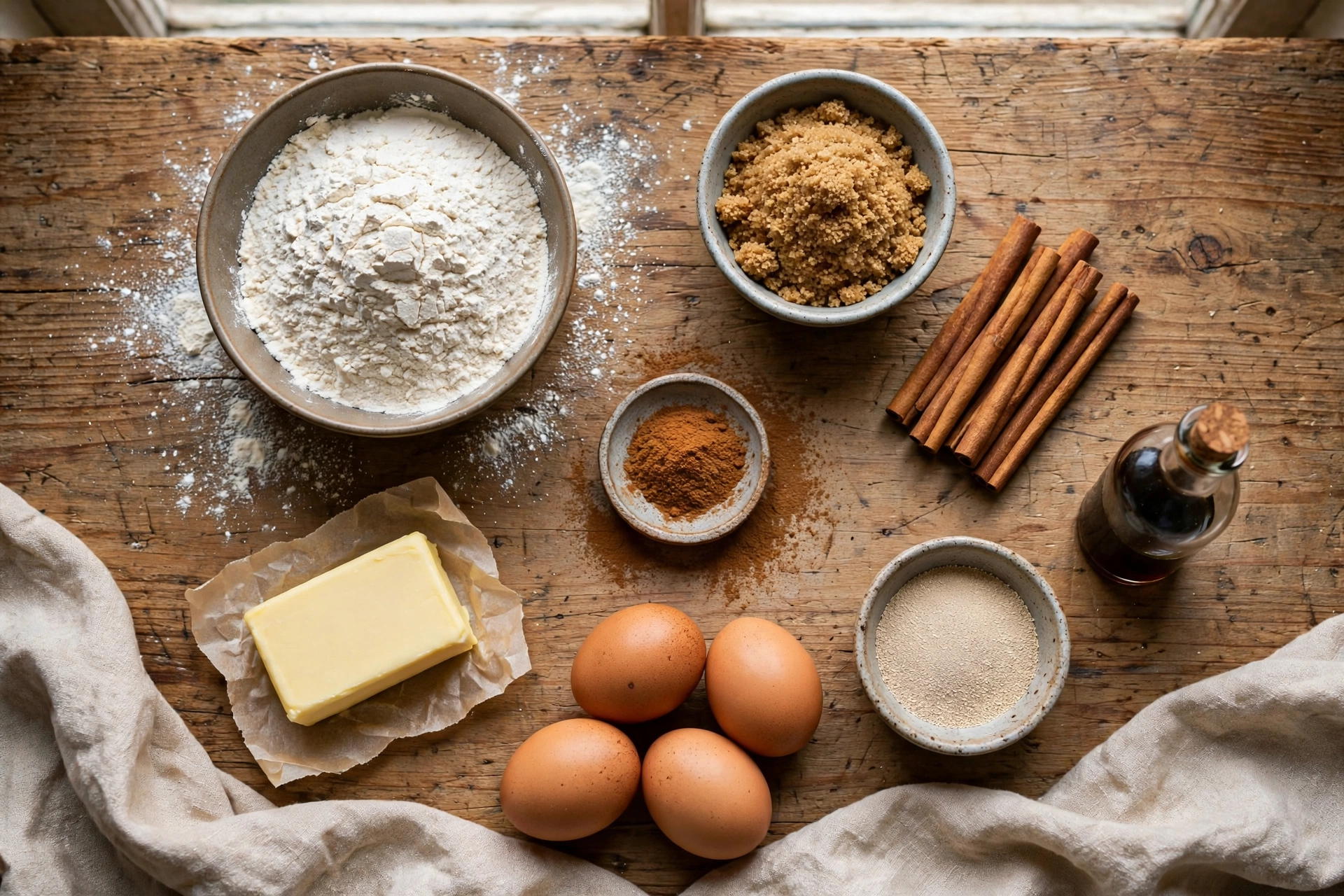
This recipe keeps the pantry list short and familiar. You probably own most of these already, which is part of its charm. Measure carefully, especially the flour and water, because focaccia dough is wetter than typical bread dough — and that wetness is the whole secret.
For the dough:
- 500 g (about 4 cups) bread flour, plus a little extra for dusting
- 2 teaspoons fine sea salt
- 2 teaspoons instant dry yeast (one standard 7 g packet)
- 2 tablespoons granulated sugar
- 400 ml (about 1⅔ cups) lukewarm water (around 100°F / 38°C)
- 60 ml (¼ cup) olive oil, plus 2 extra tablespoons for the pan and drizzling
- 1 teaspoon vanilla extract (optional, but lovely)
For the cinnamon sugar topping:
- 100 g (½ cup) packed light brown sugar
- 2 tablespoons ground cinnamon (use a fresh, fragrant one — it matters)
- ¼ teaspoon fine sea salt
- 80 g (about 5½ tablespoons) unsalted butter, melted
For the glaze (optional but highly recommended):
- 120 g (1 cup) powdered sugar, sifted
- 2–3 tablespoons whole milk or heavy cream
- ½ teaspoon vanilla extract
- Pinch of ground cinnamon for dusting
A quick word on flour: bread flour gives the chewiest, tallest result because of its higher protein, but all-purpose flour works too — your focaccia will just be a touch softer and less lofty. Use whichever you have; do not let flour choice stop you from baking. For the cinnamon, Ceylon ("true") cinnamon tastes sweeter and more delicate, while cassia cinnamon is bolder and more familiar — the classic cinnamon-roll flavor most of us grew up with. Either one shines here, so pick your favorite.
What Equipment Do You Need for Cinnamon Focaccia?
One of the best things about this recipe is how little gear it demands. No stand mixer, no bread machine, no special molds. Here is the full list:
- Large mixing bowl (at least 4-quart capacity — the dough rises a lot)
- Wooden spoon or sturdy spatula for stirring
- Kitchen scale (highly recommended for accuracy) or measuring cups
- Plastic wrap or a clean shower cap to cover the bowl
- 9×13-inch (23×33 cm) metal baking pan — light-colored metal gives the most even browning
- Parchment paper (optional, but makes lifting the baked focaccia out effortless)
- Small bowl for mixing the cinnamon sugar
- Pastry brush or spoon for spreading melted butter
- Instant-read thermometer (optional, for checking water temperature and doneness)
- Wire cooling rack
If you only own a glass or ceramic 9×13 dish, that works — just add about 5 extra minutes to the bake and expect slightly softer edges. A half-sheet pan also works for a thinner, crisper focaccia; reduce the bake time by about 5 minutes and watch it closely near the end.
How Do You Make Cinnamon Focaccia Step by Step?
This is the full method, broken into clear stages. Read through once before you start so the timing feels natural. Total hands-on time is under 30 minutes; the fridge and oven do the rest.
Step 1: Mix the dough the night before
In your large bowl, whisk together the bread flour, salt, instant yeast, and granulated sugar. Pour in the lukewarm water, the ¼ cup of olive oil, and the vanilla extract. Stir with a wooden spoon until no dry flour remains. The dough will look shaggy, lumpy, and very wet — that is exactly right. Do not knead it. Scrape down the sides, cover the bowl tightly with plastic wrap, and slide it into the refrigerator for 12 to 18 hours. This slow, cold ferment builds flavor and structure with zero effort.
Step 2: Prepare the pan
The next day, pour 1 tablespoon of olive oil into your 9×13-inch pan and spread it over the bottom and sides with your fingers or a paper towel. If using parchment, press a sheet into the oiled pan so it sticks. The oil does two jobs: it prevents sticking and fries the bottom of the dough into a crisp, golden crust.
Step 3: Stretch the dough into the pan
Scrape the cold dough into the prepared pan — it will be bubbly and jiggly, full of air from its long rest. With oiled hands, gently press and stretch it toward the corners. It will resist and spring back; that is normal. Cover the pan loosely and let it rest 20 minutes, then stretch again. After two or three rounds of rest-and-stretch over about an hour, the dough will relax and fill the pan. Let it proof, covered, until puffy and nearly doubled, about 1 to 1½ hours in a warm kitchen.
Step 4: Dimple the dough
Preheat your oven to 425°F (220°C) with a rack in the lower third. Drizzle the remaining tablespoon of olive oil over the risen dough. Now the fun part: oil your fingertips and press straight down into the dough, all the way to the bottom of the pan, making deep dimples about 1½ inches apart across the whole surface. Do not be timid — shallow pokes disappear during baking. You should hear little pops of air escaping, and the dough should look like a moonscape when you finish.
Step 5: Add the cinnamon sugar topping
In a small bowl, stir together the brown sugar, ground cinnamon, and salt. Drizzle the melted butter evenly over the dimpled dough, letting it pool into the dimples. Sprinkle the cinnamon sugar mixture generously over the entire surface, pressing it lightly into the dimples with your fingertips. Every dimple should hold a little reservoir of buttery cinnamon sugar — those will caramelize into the gooey pockets everyone fights over.
Step 6: Bake until deeply golden
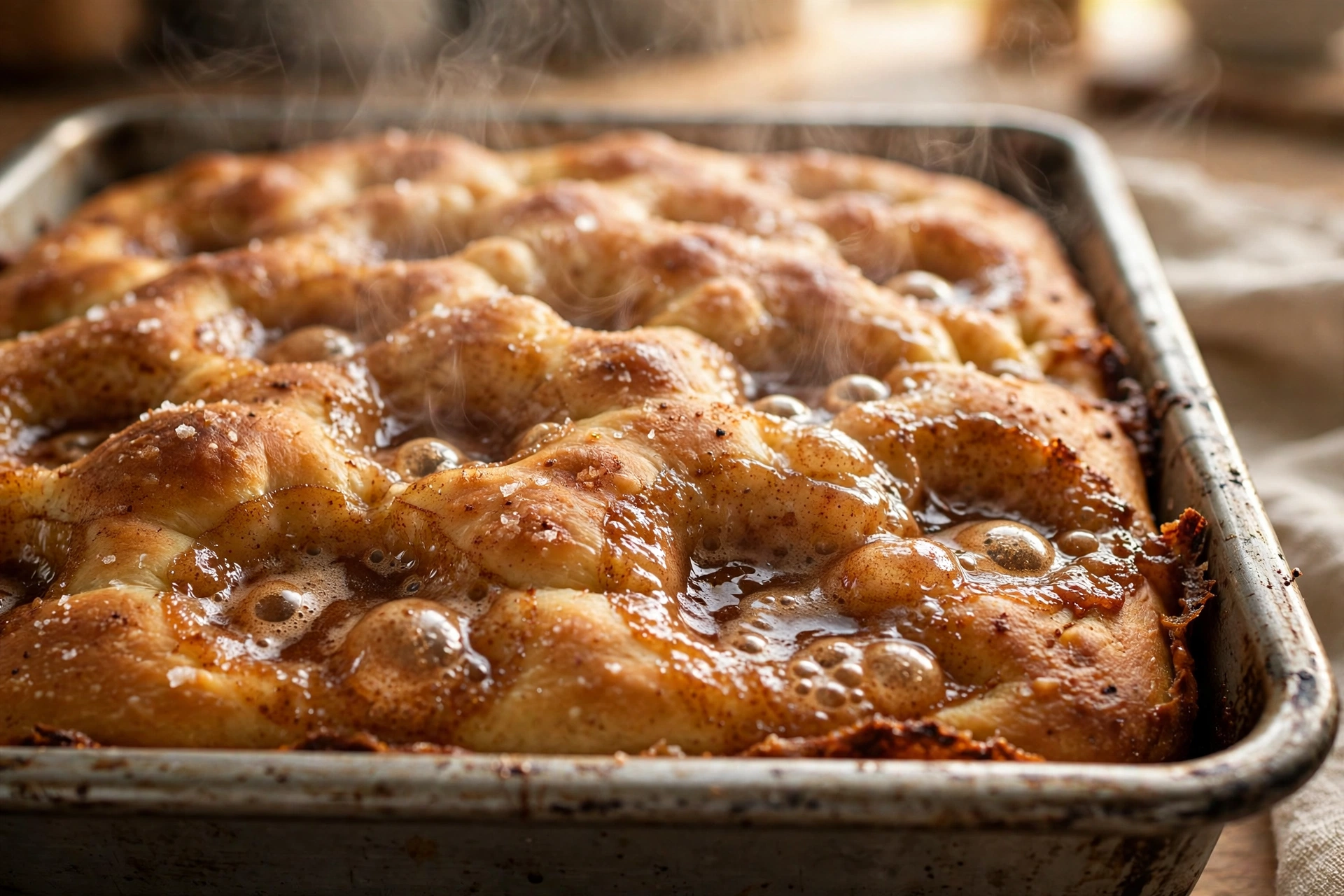
Slide the pan into the oven and bake for 22 to 28 minutes, until the top is deeply golden brown and the edges pull slightly away from the pan. The sugar will bubble and the kitchen will smell incredible. A thermometer inserted into the thickest part should read 200–205°F (93–96°C).
Step 7: Glaze while warm
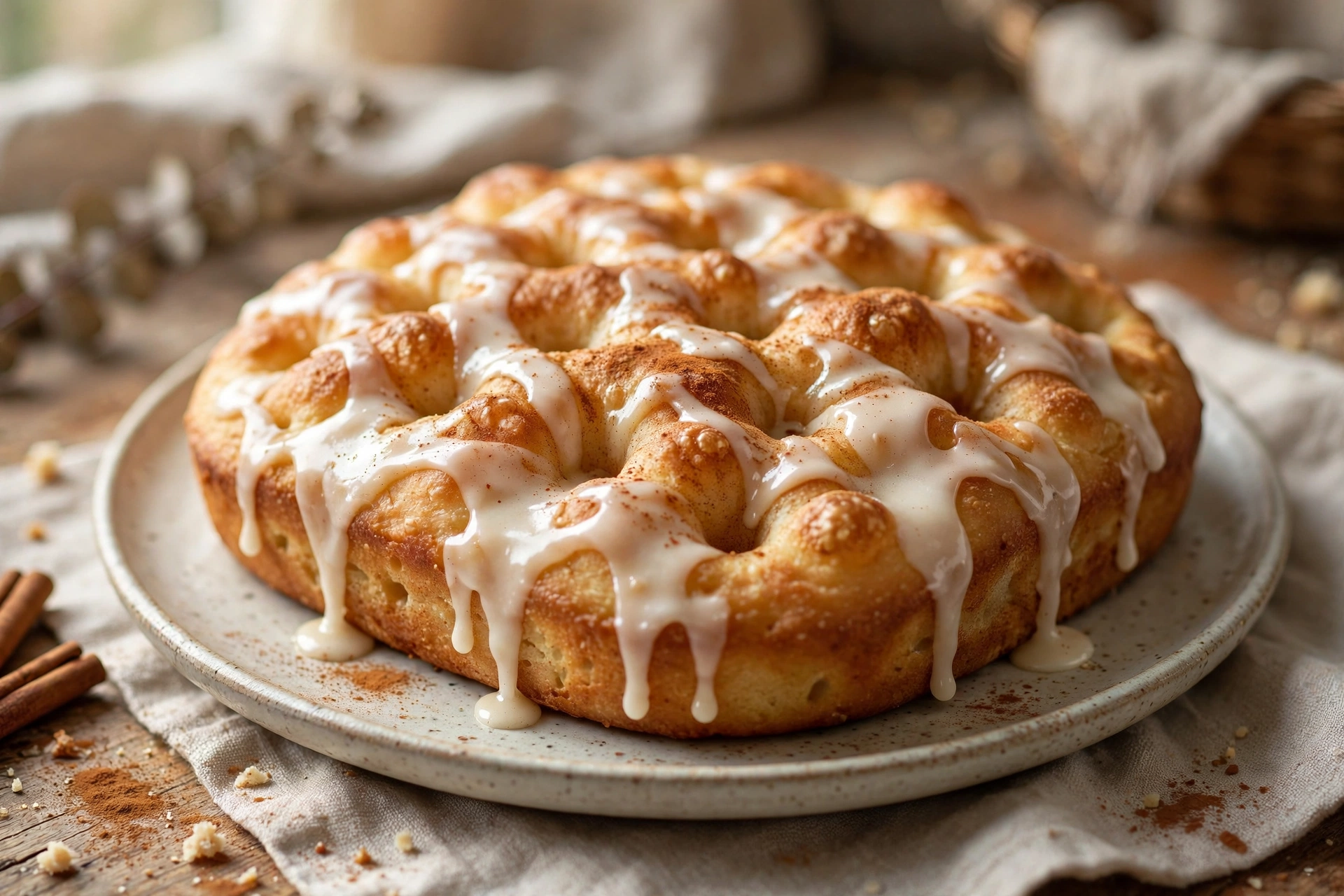
Let the focaccia cool in the pan for 10 minutes — just long enough that the caramel sets slightly but the bread is still warm. Whisk the powdered sugar, milk, and vanilla into a thick but pourable glaze. Drizzle it over the warm focaccia in zigzags, letting it sink into the dimples. Dust with a pinch of cinnamon. The residual heat melts the glaze into every crevice.
Step 8: Slice and serve
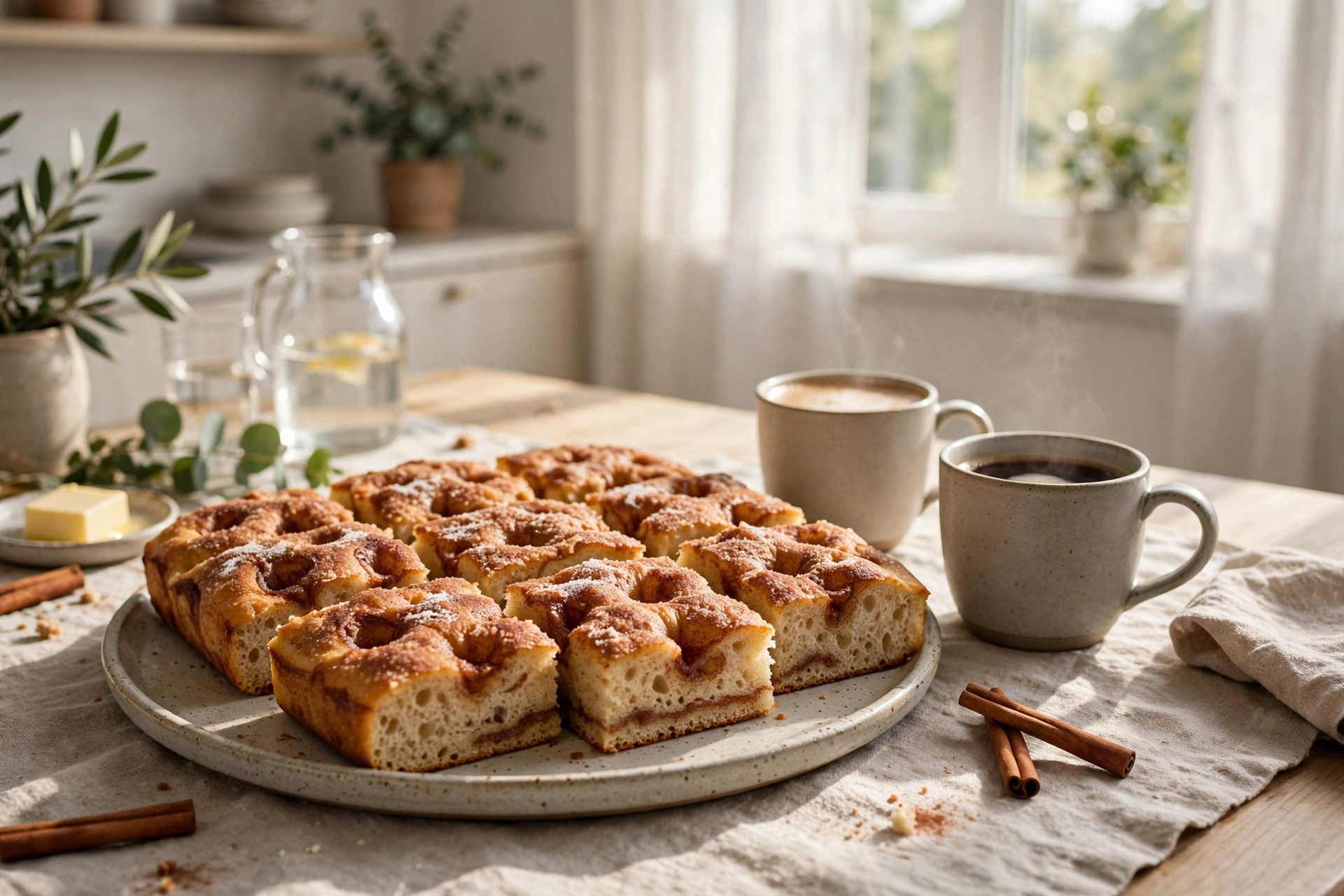
Run a knife around the edges, lift the focaccia out using the parchment, and cut into 12 generous squares. Serve warm.
What Are the Pro Tips for Bakery-Quality Cinnamon Focaccia?
Small details separate good cinnamon focaccia from unforgettable cinnamon focaccia. These are the tricks professional bakers use, adapted for a home kitchen.
Weigh your flour. A cup of flour can vary by 30 grams depending on how you scoop, and focaccia dough is sensitive to hydration. A kitchen scale removes the guesswork and gives you the same perfect dough every time.
Do not skimp on the dimpling. Shallow dimples are the number-one reason homemade focaccia looks flat. Press your oiled fingers firmly all the way to the pan bottom. Deep dimples trap the cinnamon butter instead of letting it slide off, and they create the dramatic craggy texture that makes this bread so appealing.
Always use melted butter for the topping. It flows into every dimple and mixes with the sugar to form a caramel layer as it bakes.
Bake it dark. Pale focaccia is underbaked focaccia. Aim for a deep golden-brown top with darker caramelized edges — that color equals flavor. Trust the color more than the clock.
Salt the topping. That tiny ¼ teaspoon of salt in the cinnamon sugar sounds odd in a sweet recipe, but it sharpens the cinnamon flavor and keeps the sweetness from tasting flat. Do not skip it.
Glaze in two passes. Drizzle half the glaze over the warm focaccia, wait five minutes, then drizzle the rest. The first layer soaks in; the second sits prettily on top. You get flavor in every bite and a bakery-style finish.
Serve it the day it is baked for peak texture, but know that leftovers revive beautifully (see the storage section). Honestly, day-two focaccia warmed in the oven with a fresh drizzle of glaze might be even better — the flavors meld overnight.
What Common Mistakes Should You Avoid?
Even forgiving recipes have traps. Here are the six mistakes that trip up cinnamon focaccia bakers most often — and how to dodge each one.
- 1. Using water that is too hot. Water above 120°F (49°C) can kill yeast on contact, leaving you with a dense, flat brick. Aim for lukewarm — about 100°F (38°C), roughly the temperature of warm bath water. If you do not own a thermometer, test a drop on your wrist; it should feel comfortably warm, not hot.
- 2. Under-proofing the dough in the pan. Impatience here costs you the airy crumb. The dough should look visibly puffy, jiggly, and nearly doubled before it goes into the oven. In a cool kitchen this can take a full 90 minutes. If you bake too early, the focaccia turns out dense and bready instead of light and open.
- 3. Dimpling too gently. Tentative pokes vanish in the oven's heat. Press hard, straight down to the pan, and space the dimples close together. You want valleys deep enough to hold a teaspoon of melted butter each. This single technique makes the biggest visual and textural difference.
- 4. Adding the glaze to a cold focaccia. Glaze poured over cold bread just sits on top in a pasty layer. Glaze poured over warm bread melts slightly and seeps into every dimple, flavoring the crumb itself. The 10-minute rest after baking is the sweet spot — cool enough that the glaze does not slide off, warm enough that it absorbs.
- 5. Overloading with sugar. It is tempting to double the topping, but too much sugar draws moisture out of the dough and can make the center gummy. It can also burn before the bread finishes baking, leaving bitter black spots. Stick to the measured amounts; the bread is already generously sweet.
- 6. Cutting into it immediately. Fresh from the oven, the crumb is still setting and the caramel is molten. Slicing too soon gives you a gummy interior and a sticky mess. Wait at least 15 minutes. The focaccia will still be wonderfully warm, and the texture will be far better.
What Are the Best Cinnamon Focaccia Variations to Try?
Once you master the base recipe, the fun begins. These five variations all build on the same dough and method — only the topping or a mix-in changes.
- 1. Cream Cheese Glaze Cinnamon Focaccia. Swap the simple vanilla glaze for a tangy cream cheese version: beat 4 oz (115 g) softened cream cheese with ½ cup powdered sugar, 2 tablespoons milk, and ½ teaspoon vanilla until silky. Spread it over the warm focaccia. The slight tang cuts the sweetness beautifully and tastes exactly like a premium cinnamon roll.
- 2. Apple Pie Cinnamon Focaccia. Fold one peeled, finely diced apple (Honeycrisp or Granny Smith) into the dough during the final stretch, then top with the standard cinnamon sugar. The apple pieces soften into jammy pockets as they bake. Finish with a caramel drizzle instead of vanilla glaze for full apple-pie vibes.
- 3. Brown Butter Pecan Cinnamon Focaccia. Brown the 80 g of butter in a small saucepan until it smells nutty and the milk solids turn amber, then drizzle it over the dimpled dough. Scatter ¾ cup chopped toasted pecans over the cinnamon sugar before baking. The nutty brown butter amplifies the caramel notes and adds welcome crunch.
- 4. Chocolate Chip Cinnamon Focaccia. Sprinkle 1 cup of semi-sweet chocolate chips over the cinnamon sugar topping before baking. They melt into gooey pockets that pair surprisingly well with cinnamon — think Mexican hot chocolate in bread form. A light vanilla glaze on top ties it together. Kids go wild for this one.
- 5. Pumpkin Spice Cinnamon Focaccia. Replace 1 tablespoon of the ground cinnamon in the topping with pumpkin pie spice, and whisk 3 tablespoons of pumpkin purée into the melted butter before drizzling. Top with a maple glaze (powdered sugar + maple syrup + a splash of milk). This is the ultimate fall version — bake it from September through Thanksgiving and watch it vanish.
How Do You Store and Reheat Cinnamon Focaccia?
Room temperature (up to 2 days): Cool the focaccia completely, then wrap it tightly in plastic wrap or store it in an airtight container. Unglazed focaccia keeps best; if you know you will have leftovers, glaze only the portion you plan to serve and glaze the rest fresh when reheating.
Refrigerator (up to 5 days): For longer storage, refrigerate the wrapped focaccia. The cold firms up the butter in the crumb, so it will taste best after reheating. This is a good option for the cream cheese glaze variation, which should be refrigerated because of the dairy.
Freezer (up to 3 months): Cinnamon focaccia freezes beautifully. Cut it into individual squares, wrap each square tightly in plastic wrap, then place them in a freezer bag with the air pressed out. Freeze unglazed for the best texture — you can always add fresh glaze after reheating. Thaw overnight in the refrigerator or on the counter for a couple of hours.
Reheating: The oven is your friend. Warm squares at 350°F (175°C) for 8–10 minutes (15 minutes from frozen, loosely tented with foil) until the edges crisp and the center turns gooey again. A toaster oven works perfectly for one or two pieces. For an extra treat, warm a square in a buttered skillet for a minute per side — the bottom caramelizes into a crisp, buttery crust that tastes freshly baked.
How Should You Serve Cinnamon Focaccia?
This bread is versatile enough to slide into almost any part of the day. Here are the serving ideas that get the most raves:
- Warm brunch centerpiece: Serve the whole slab on a wooden board, glaze dripping, with coffee and fresh fruit alongside. Let guests tear off their own pieces — interactive and impressive.
- With vanilla ice cream: A warm square topped with a scoop of vanilla ice cream and an extra drizzle of caramel sauce turns it into a proper dessert. The hot-cold contrast is unbeatable.
- Breakfast sandwich, dessert edition: Split a square horizontally and fill it with mascarpone or sweetened ricotta and sliced strawberries. It eats like a fancy pastry with a fraction of the work.
- Afternoon coffee break: A small square with a cappuccino or chai latte is pure comfort. The cinnamon in the bread echoes the spices in the drink.
- Holiday morning tradition: Bake it Christmas morning or for Easter brunch.
For drinks, pair it with cold milk (a classic for a reason), hot coffee, chai, or even a glass of cold brew with sweet cream. If you serve it as dessert after dinner, a small glass of dessert wine or spiced rum works wonderfully with the cinnamon.
Cinnamon Focaccia FAQs
Can I make cinnamon focaccia without an overnight rest?
Yes. Mix the dough and let it rise at warm room temperature for 2 to 3 hours, doing a few sets of gentle stretch-and-folds during the first hour. Then proceed with shaping and baking. The flavor will be milder and less complex than the overnight version, but the texture will still be soft and delicious. The cold ferment is about depth of flavor, not success or failure.
Can I use all-purpose flour instead of bread flour?
Absolutely. All-purpose flour produces a slightly softer, less chewy focaccia with a little less height, but it still works well. Keep the water amount the same; all-purpose absorbs a touch less, so the dough may feel slightly wetter. Do not add extra flour to "fix" it — wet dough is correct.
Why did my focaccia turn out dense instead of airy?
The most common culprit is under-proofing: the dough went into the oven before it had puffed up enough in the pan. Next time, give it the full 60 to 90 minutes until it looks jiggly and nearly doubled. Old or dead yeast is the second suspect — check the expiration date and proof a pinch in warm water with sugar; it should foam within 10 minutes. Finally, make sure you dimpled deeply; without dimples, the dough cannot expand into its signature open structure.
Can I make this recipe dairy-free?
Yes, with two swaps. Use a good vegan butter (stick form, not tub) in place of the dairy butter for the topping, and make the glaze with powdered sugar and oat milk or almond milk.
How do I know when the focaccia is fully baked?
Look for a deep golden-brown top with darker caramelized edges, and check that the bread pulls slightly away from the pan sides. The most reliable test is temperature: an instant-read thermometer in the center should read 200–205°F (93–96°C). If the top browns before the center is done, tent with foil and keep baking.
Is cinnamon focaccia the same as a cinnamon roll?
Not quite, though they share DNA. Cinnamon rolls are made from an enriched, kneaded dough that gets rolled with filling, sliced, and proofed in a tight spiral. Cinnamon focaccia uses a wetter, no-knead dough that gets dimpled rather than rolled, giving it focaccia's characteristic open, airy crumb. Think of it as the flavor of a cinnamon roll with the soul — and ease — of focaccia.
Can I add the glaze ahead of time?
You can glaze up to a day ahead; the glaze will set into a thin shell as it sits. However, for the prettiest finish and best texture, glaze within an hour of serving. If you are gifting or transporting the focaccia, glaze it after arrival for maximum wow factor.
What is the best cinnamon to use?
For the classic bold cinnamon-roll flavor, use cassia cinnamon — it is what most American recipes mean by "cinnamon." For a sweeter, more delicate and complex spice note, try Ceylon cinnamon. Whichever you choose, buy it from a store with good turnover; ground cinnamon loses its punch after about a year. If yours smells dusty rather than warm and sweet, it is time for a fresh jar.
Final Thoughts
Cinnamon focaccia is one of those rare recipes that overdelivers on every promise: minimal effort, maximum comfort, and a result that looks and tastes like you spent all day in the kitchen. The overnight method fits real life — five minutes of mixing tonight becomes a warm, cinnamon-swirled showpiece tomorrow. Whether you keep it classic with a simple vanilla glaze or dress it up with brown butter pecans and cream cheese frosting, the base never lets you down.
This is the kind of recipe that quietly becomes a tradition: the thing you bring to brunches, the smell that fills the house on slow weekend mornings, the pan that empties before it fully cools. So oil your fingertips, dimple with confidence, and do not skimp on the cinnamon sugar. Your future self — standing over a warm pan with coffee in hand — will thank you.
If you love getting creative with bread, try our decorated focaccia bread for a fun, savory twist on this recipe. You can also bake a batch of salted honey butter Parker House rolls to round out your next cozy dinner.