
25 Thanksgiving Turkey Recipes – The Ultimate Guide for Juicy, Flavor-Packed Holiday Turkey
Thanksgiving dinner isn’t complete without a beautifully roasted turkey taking center stage on the table. Whether you love a traditional butter-basted bird, a smoky Cajun version, a citrus-brined turkey, or creative stuffed flavors — this guide gives you 25 Thanksgiving turkey recipes to choose from. Each one is designed to be juicy, tender, and full of incredible flavor.

This article goes beyond basic turkey roasting. You’ll get classic options, brined recipes, stuffed turkey ideas, flavor variations, smoked & deep-fried turkey methods, plus expert tips to avoid dryness so your bird comes out perfect every time.
⭐ CLASSIC & TRADITIONAL TURKEY RECIPES (1–5)
1. Classic Roast Turkey
Ingredients:
- 1 whole turkey (12–16 lbs)
- ½ cup softened butter
- Salt & black pepper
- 1 onion (quartered)
- 1 lemon (halved)
- 3 garlic cloves
- 2 cups chicken broth
Instructions:
- Pat turkey dry, remove giblets.
- Rub butter, salt, pepper all over skin & under breast.
- Stuff cavity with onion, lemon, garlic.
- Roast at 325°F for 13–15 min per lb, basting halfway.
- Rest 20 minutes before carving.
2. Herb-Butter Roast Turkey
Ingredients:
- Turkey 10–18 lbs
- 1 cup butter
- 2 tbsp fresh rosemary + thyme + parsley
- 4 cloves garlic (minced)
- Salt, pepper
Instructions:
- Mix melted butter with herbs & garlic.
- Rub mixture under skin & outside.
- Roast uncovered until golden, tent if browning too fast.
3. Garlic & Herb Whole Turkey
Ingredients:
- 1 turkey
- 6 garlic cloves
- Fresh rosemary sprigs
- Olive oil
- Lemon zest
- Salt, pepper
Instructions:
- Create garlic herb paste with oil.
- Coat turkey thoroughly.
- Roast & baste with drippings.
4. Butter-Basted Thanksgiving Turkey
Ingredients:
- Turkey (12–20 lbs)
- 1 cup melted butter
- Salt, pepper
- Paprika (optional)
Instructions:
- Season turkey heavily.
- Baste every 30 minutes while roasting.
- Results = crispy golden skin.
5. Oven-Roasted Turkey With Pan Gravy
Ingredients:
- Roast using Classic recipe
- 3 tbsp flour
- 2 cups drippings + broth
Instructions:
- Whisk flour into warm drippings on stovetop.
- Add broth & simmer until thick.
🌿 FLAVORED & SEASONED TURKEYS (6–13)
6. Lemon Herb Turkey
Ingredients:
- Turkey
- 1 lemon sliced
- 1 cup butter
- 2 tbsp thyme + sage
- Salt, pepper
Instructions:
- Slide lemon slices under skin.
- Butter + herb rub outside.
7. Cajun Turkey
Ingredients:
- Turkey
- ⅓ cup Cajun seasoning
- Butter or oil
Instructions:
- Dry turkey, coat with seasoning.
- Roast or smoke.
🔥 Spicy & flavorful.
8. Garlic Rosemary Turkey
Ingredients:
- Turkey
- 1 cup olive oil
- 5 garlic cloves
- Rosemary sprigs
Instructions:
- Blend oil, garlic, rosemary → rub generously.
9. Paprika & Herb Spiced Turkey
Ingredients:
- Turkey
- 2 tbsp paprika
- 1 tbsp oregano
- Butter
Instructions:
- Coat evenly, roast until deep red color.
10. Chili-Lime Roasted Turkey
Ingredients:
- Turkey
- Chili powder
- Lime zest + juice
- Butter or oil
Instructions:
- Rub with chili + lime paste.
11. Brown Sugar & Maple Turkey
Ingredients:
- Turkey
- ¼ cup brown sugar
- ¼ cup maple syrup
- Butter
Instructions:
- Brush glaze during last 45 minutes.
12. Honey-Garlic Roast Turkey
Ingredients:
- Turkey
- ½ cup honey
- 4 garlic cloves
- Soy sauce (1 tbsp, optional)
Instructions:
- Heat glaze, brush periodically.
13. Rosemary Citrus Turkey
Ingredients:
- Turkey
- Oranges + lemons slices
- Olive oil
- Rosemary
Instructions:
- Stuff cavity with citrus slices + herbs.
🍎 STUFFED TURKEY RECIPES (14–18)
14. Traditional Bread Stuffed Turkey
Ingredients:
- 8 cups bread cubes
- 1 onion + 2 celery stalks
- Butter
- Sage, thyme
- Chicken broth
Instructions:
- Cook onion + celery in butter.
- Mix with bread + broth. Stuff turkey loosely.
15. Apple & Herb Stuffed Turkey
Add to stuffing:
- 1 chopped apple
- Fresh sage
Sweet & juicy.
16. Sausage Stuffing Turkey
Add:
- 1 lb cooked sausage
- Breadcrumbs
Hearty & savory.
17. Mushroom & Onion Stuffed Turkey
Add:
- Sautéed mushrooms + caramelized onions
Deep umami flavor.
18. Cranberry & Walnut Stuffing Turkey
Add:
- 1 cup dried cranberries
- ½ cup walnuts
Festive and flavorful.
🧂 BRINED TURKEY RECIPES (19–23)
19. Wet-Brined Turkey
Ingredients:
- Water + salt + sugar
- Bay leaves
- Peppercorns
Instructions:
- Submerge turkey 12–24 hours in brine.
20. Dry-Brined Turkey
Ingredients:
- Salt + pepper + garlic powder
- Lemon zest (optional)
Instructions:
- Rub turkey, refrigerate uncovered 24–48 hrs.
21. Apple Cider Brined Turkey
Add to brine:
- Apple cider
- Cinnamon stick
Holiday-sweet flavor.
22. Orange & Herb Brined Turkey
Add:
- Fresh orange slices
- Rosemary
Bright citrus flavor.
23. Brown Sugar Brined Turkey
Add:
- ½ cup brown sugar
- Black peppercorn
Sweet caramelization when roasted.
🔥 SPECIAL COOKING METHODS (24–25)
24. Smoked Turkey
Ingredients:
- Turkey
- Dry rub
- Wood chips
Instructions:
- Smoke at 225–250°F for ~30 min/lb.
- Baste with butter halfway.
25. Deep-Fried Turkey
Ingredients:
- Peanut oil for frying
- Cajun or salt seasoning
Instructions:
- Pat turkey completely dry!
- Heat oil to 350°F, lower turkey slowly.
- Fry 3–4 min per lb.
- Crispy skin → juicy meat inside.
⚠ Safety is extremely important.
8. Common Mistakes & Fixes
| Mistake | Fix |
|---|---|
| Dry turkey | Brine + don’t overcook |
| Bland flavor | Season under skin |
| Tough breast | Tent with foil halfway |
| Mushy stuffing | Bake separately if needed |
9. FAQ
How long to roast turkey?
13–15 minutes per lb at 325°F for unstuffed.
Internal temp?
165°F breast, 175°F thigh.
Butter or oil?
Butter = flavor, oil = crisp. Use both.
10. Final Thoughts
Turkey doesn’t have to be stressful — the right recipe makes it exciting. With these 25 Thanksgiving turkey recipes, you can keep things traditional or add bold new flavors. Whether you roast, brine, smoke, or stuff it, you’ll have a tender, juicy centerpiece ready to impress everyone at the table.
Bookmark this list, pick your favorite style, and enjoy a Thanksgiving meal worth remembering. 🦃✨
How Do You Choose the Right Size Turkey for Your Table?
You count your guests first, then you do simple math. Plan on about one and a half pounds of whole turkey per person. That amount covers the bones, gives everyone a generous serving, and leaves a little extra for the leftovers everyone secretly hopes for.
If your group loves dark meat and sandwiches the next day, you size up. A bigger bird also roasts more evenly than a tiny one stuffed into a small oven. But if your oven is small, you cook two smaller turkeys instead. They roast faster, carve easier, and give you double the drumsticks, which settles a lot of family debates.
You also think about your pan and your fridge. A very large turkey needs a sturdy roasting pan and days of thawing space. You measure your oven before you shop, not after. That one habit saves more Thanksgiving mornings than any recipe ever will.
What Is the Safest Way to Thaw a Turkey?
You thaw in the fridge whenever you can. The cold keeps the bird at a safe temperature the whole time, and you need roughly twenty-four hours for every four to five pounds. A fifteen-pound turkey takes about three to four days, so you mark the start date on your calendar.
Forgot to plan? You use the cold-water method instead. You keep the turkey in its sealed packaging, submerge it in cold water, and change the water every thirty minutes. This method needs about thirty minutes per pound, and you cook the bird right after it thaws.
You never thaw a turkey on the counter. The outside warms into the danger zone while the inside stays frozen, and bacteria love that situation. If both safe methods fail you, you can roast a turkey from frozen, though it takes about fifty percent longer and you remove the giblet bag partway through.
Should You Brine, Dry-Brine, or Skip It Entirely?
You dry-brine if you want the easiest path to seasoned, juicy meat. You salt the bird one to three days ahead and rest it uncovered in the fridge. The salt draws out moisture, dissolves into it, then pulls that seasoned liquid back in. The uncovered rest also dries the skin, and dry skin turns deeply crisp in the oven.
A wet brine works well too, especially for beginners who fear oversalting. The bird sits in seasoned water overnight, and it absorbs both moisture and flavor. The trade-offs are real, though. You need a huge container, lots of fridge space, and a strong bag that will not leak at 2 a.m.
You can skip brining if your turkey already comes enhanced or koshered, since those birds carry added salt. In that case, you season gently and let good roasting technique do the work. Whatever path you choose, you check the label first so you never double-salt dinner.
How Much Salt Should You Actually Use?
For a dry brine, you use about one teaspoon of kosher salt per pound of turkey. You sprinkle it everywhere, including inside the cavity and under the skin where you can reach. If you use table salt instead, you cut the amount back, because its finer grains pack more salt into every spoonful.

What Seasonings Give a Turkey the Most Flavor?
You start with salt and pepper, then you build layers. Soft butter mixed with garlic, thyme, sage, and rosemary slips under the skin and bastes the breast from inside. That butter layer protects the lean meat and carries flavor deep into every slice.
Citrus brightens the whole bird. You stuff the cavity with lemon and orange halves, onion wedges, and herb stems. They will not season the meat much, but they perfume it gently and make the pan drippings taste wonderful.
Smoked paprika adds color and a gentle warmth. A little brown sugar in a rub helps the skin caramelize into that deep golden finish everyone photographs. You keep sugar away from very high heat, though, because it burns fast and turns bitter.
How Do You Know When the Turkey Is Truly Done?
You trust a thermometer, not the clock and not the pop-up timer. The breast should reach 165 degrees in the thickest part, and the thigh should hit at least 165 to 175 where it meets the body. You check in two or three spots, because one careless reading near a bone can fool you.
Many cooks pull the turkey at 160 in the breast and let carryover heat finish the job during the rest. The temperature climbs a few degrees as the bird sits, so the meat lands right at the safe mark while staying juicy. If the juices run pink, you give it more time. Clear juices and firm flesh mean you are close.
You also watch the skin. Deep golden and crisp usually signals a well-roasted bird, but color alone can lie. A dark bird can still hide a raw thigh, and a pale bird can be fully cooked. The thermometer settles every argument.

What Are the Biggest Turkey Mistakes to Avoid?
You carve too soon, and the juices flood the board instead of staying in the meat. A rest of at least thirty minutes lets those juices settle back into the fibers. You tent the bird loosely with foil and use the time to finish gravy and sides.
You skip trussing decisions entirely. Tying the legs helps the bird cook evenly and look tidy, but a tight truss can slow the thighs. Many cooks now leave legs loose or tie them loosely so hot air flows around the joints.
You baste too often. Every oven opening drops the temperature and adds cooking time, and basting does little for a bird protected by butter under the skin. You close the door, trust the process, and baste once near the end if you love the ritual.
You also forget the giblets. The bag hides in the cavity, and more than one cook has roasted it inside. You check both ends of the bird before seasoning, and you save those giblets for gravy gold.
How Do You Carve and Serve Like a Pro?
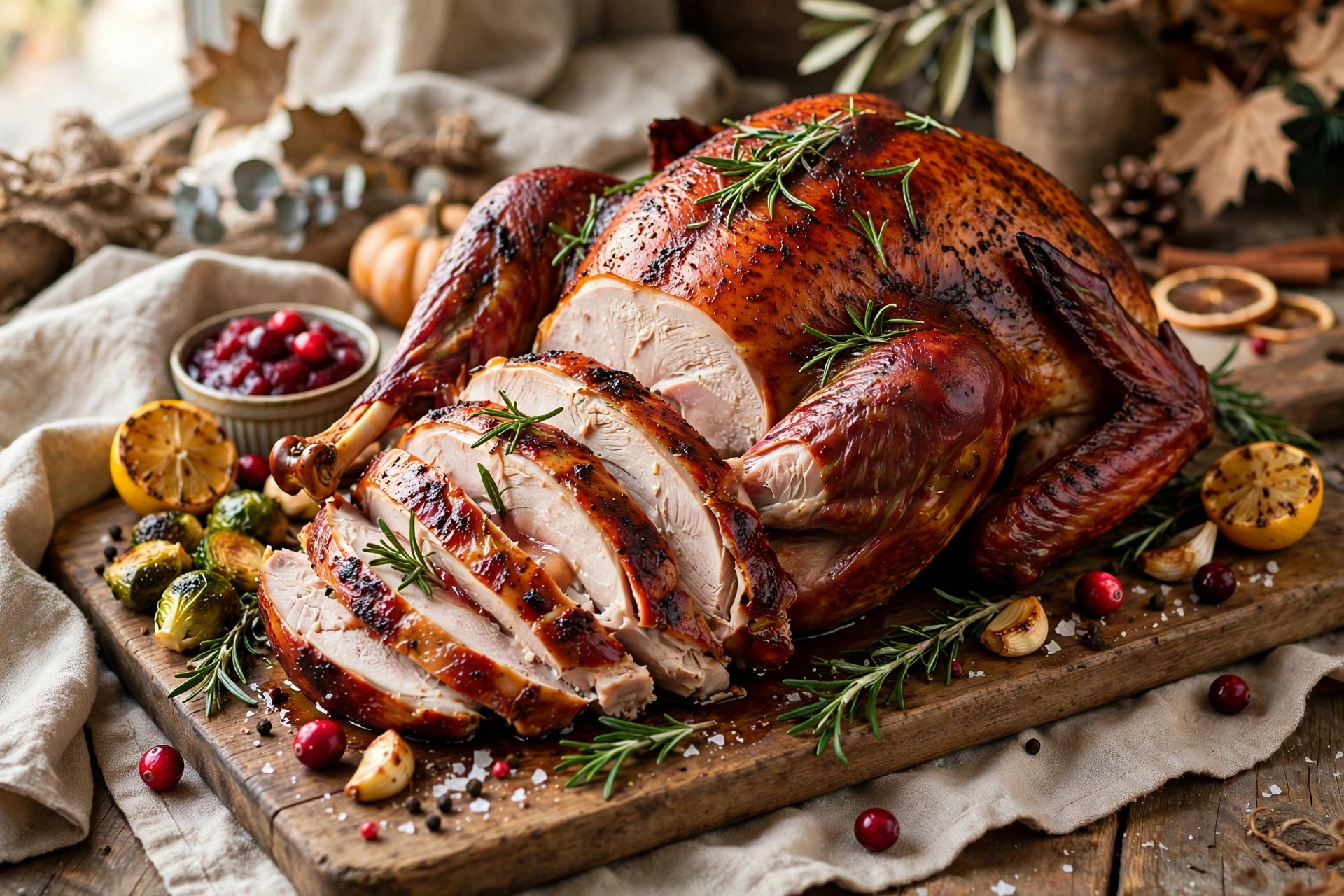
You rest the bird, then you set up a big board with a towel under it so nothing slides. You remove each breast half in one piece by cutting along the breastbone, then you slice across the grain into even pieces. Slicing whole breasts off the bone keeps the meat far juicier than carving at the table.
You separate the thighs and drumsticks at the joints, and you slice dark meat off the bone. Then you arrange everything on a warm platter in neat rows. A spoonful of hot gravy or pan juices over the top brings back the shine and warms the slices.
You warm your platter, too. Cold ceramic steals heat from the meat, while a platter warmed in a low oven keeps servings hot through seconds. It takes two minutes and makes a real difference at a crowded table.
How Do You Make Gravy From the Pan Drippings?
You pour the drippings into a measuring cup and let the fat rise to the top for a few minutes. Then you spoon off about a quarter cup of that fat back into the roasting pan and whisk in an equal amount of flour. You cook that paste over medium heat for two minutes, stirring the whole time, until it smells nutty and turns golden.
Next, you whisk in the defatted juices plus enough warm stock to reach about four cups. You pour slowly at first and whisk constantly, because that is how lumps never get a chance to form. The gravy simmers for five minutes, thickens into a glossy sauce, and then begs for salt, pepper, and a splash of the turkey’s resting juices from the cutting board.
If lumps appear anyway, you pour the gravy through a fine strainer and act like nothing happened. A tiny knob of butter whisked in at the end makes it shine. Gravy waits well in a thermos, by the way, which keeps it hot without crowding your stove.
What Pan and Rack Do You Actually Need?
You need a sturdy roasting pan that will not warp under a heavy bird. Thin disposable pans bend, spill, and have ruined more than one Thanksgiving in the driveway between oven and counter. If you use one, you set it on a baking sheet for support before the turkey ever goes in.
A rack lifts the bird so hot air circulates underneath, and the bottom skin gets a chance to cook instead of steaming in juices. No rack? You build one from thick onion slices, celery stalks, and carrot chunks. The vegetables flavor the drippings and become the best cook’s snack in the kitchen.
You also need real kitchen twine, a reliable thermometer, and a big cutting board with a juice groove. Those three humble tools do more for your turkey than any expensive gadget marketed every November.
How Do You Reheat Turkey Without Drying It Out?
You reheat slices gently in the liquid they lost. Arrange the meat in a baking dish, spoon over broth or leftover gravy, cover tightly with foil, and warm it in a 325 degree oven for about twenty minutes. The covered, steamy environment puts moisture back instead of stealing more.
The microwave works for single servings if you use half power and a damp paper towel over the plate. Short bursts with a rearranged pile beat one long blast every time. Fried rice, soup, and pot pie hide reheating completely, because the meat simmers in sauce and nobody notices anything.
You never reheat a whole leftover breast uncovered at high heat. That path leads straight back to the dry slices you worked so hard to avoid on the big day.
How Do You Time Everything So It All Finishes Together?
You work backward from the moment you want to sit down. The turkey needs its roast time plus at least thirty minutes of rest, and that rest is your golden window. While the bird rests, the oven is free for rolls, dressing, and casseroles that need high heat and crisp tops.
You write the plan down in simple blocks. Turkey in at ten, dressing prepped at noon, potatoes on the stove at one, gravy while the bird rests. A written plan sounds fussy until the doorbell starts ringing, and then it becomes the only calm voice in the kitchen.
You also stagger the small things. Cranberry sauce and drinks can be finished hours ahead and parked. Green vegetables cook in the final fifteen minutes so they stay bright. When everything lands within the same twenty minutes, the food tastes hot, the cook sits down, and the table actually works.
What Do You Do If the Turkey Browns Too Fast?
You tent the breast loosely with foil the moment it reaches the color you want. The foil shields the skin from direct heat while the rest of the bird keeps cooking. If only the wing tips darken, you wrap those little points in foil and let the rest ride. Color you love, kept exactly where you wanted it, is a sign of a cook who watched and adjusted instead of panicking.
How Do You Safely Store and Reheat Leftover Turkey?
You get the meat off the bones within two hours of the meal, because a turkey sitting out all evening becomes a risk nobody wants to take. You slice what remains, lay it in shallow containers so it chills fast, and add a spoonful of broth to keep it moist. Shallow and quick beats deep and slow every time.
Turkey keeps three to four days in the fridge. You reheat slices in a covered dish with broth or gravy at a gentle temperature until they steam, and they taste almost as good as the first serving. The microwave works for single plates if you use medium power and a damp paper towel over the top.
For longer storage, you freeze portions in flat bags with a little broth, and they keep well for two to three months. The carcass, meanwhile, becomes stock. You cover it with water, add onion ends and herb stems from the day, and let it simmer while you put your feet up. Tomorrow there is soup, and the holiday keeps giving.
What Is the One Tool Every Turkey Cook Should Own?
You already know the answer: a fast, reliable meat thermometer. It costs less than the turkey itself and removes every guess from the most important meal of the year. Clocks lie, oven dials drift, and pop-up timers answer to no one. A thermometer tells you the truth in ten seconds, and once you cook with one, you will never roast a holiday bird without it again.
Frequently Asked Questions
How Long Does a Turkey Need to Rest?
You rest it for at least thirty minutes, and a large bird can rest up to forty-five. The meat stays plenty warm, especially tented with foil. Resting lets juices redistribute, so slices stay moist instead of leaking onto the board.
Should You Stuff the Turkey or Bake Dressing Separately?
You bake dressing separately for safety and control. Stuffing inside the bird must reach 165 degrees, and by then the breast often overcooks. A separate pan gives you crisp edges, safe temperatures, and a turkey that roasts faster and more evenly.
How Do You Keep the Breast From Drying Out?
You butter under the skin, you avoid overcooking, and you slice only what you need. Some cooks roast the bird breast-down for the first hour, then flip it for browning. Others tent the breast with foil once it turns golden. A thermometer matters more than any trick.
What Should You Do With the Leftovers?
You carve all the meat off the bones the same night and refrigerate it in shallow containers. It keeps three to four days. You simmer slices gently in broth or gravy to reheat without drying, and you save the carcass for soup the next day.
Can You Roast a Turkey in a Bag or Slow Cooker?
An oven bag cooks faster and keeps meat moist, though the skin comes out softer. A slow cooker works for a small bone-in breast and gives very tender meat, but no crisp skin. Both methods suit busy cooks who value juicy meat over a showpiece finish.
Final Thoughts
A great Thanksgiving turkey asks for simple things: enough thawing time, honest seasoning, a thermometer, and a patient rest. You plan those four steps, and the bird takes care of the rest. This year, you carve with confidence and watch the platter empty itself. That is the best review any cook can get.



One Comment