
Gluten Free Pancake Recipe: How to Make Fluffy, Golden Pancakes That Never Fall Apart
If you’ve ever tried a gluten free pancake recipe and ended up with flat, crumbly, or gummy pancakes, you’re not alone. Gluten-free pancakes can feel tricky—but they don’t have to be.

This guide shows you exactly how to make gluten-free pancakes that are fluffy, soft, and restaurant-worthy, even if you’re cooking at home with basic ingredients. We’ll cover the best flours, smart techniques, common mistakes, and a foolproof recipe you can use again and again.
Whether you need a quick weekday breakfast or a cozy weekend treat, this post gives you everything you need to master gluten-free pancakes from scratch—without stress.
What Makes Gluten-Free Pancakes Different?
Traditional pancakes rely on gluten to trap air and hold structure. Gluten-free pancakes don’t have that safety net.
That’s why gluten-free pancakes need:
- The right flour blend
- Proper hydration
- Enough resting time
- Gentle cooking
Once you understand that, everything clicks.
Why Most Gluten-Free Pancake Recipes Fail
Here’s where many recipes go wrong:
- Too much flour, not enough moisture
- Overmixing the batter
- Skipping the resting time
- Using only one gluten-free flour
A good gluten free pancakes recipe balances softness and structure. Miss that balance, and pancakes fall apart or turn dense.
Best Flour for Gluten Free Pancakes
The Truth About Gluten-Free Flour
There is no single “perfect” flour. The best results come from blends.
Best Options (Ranked)
- Gluten-free all-purpose flour (with starches included)
- Best for beginners
- Consistent results
- Oat flour
- Soft and fluffy
- Great for fluffy gluten free pancakes
- Almond flour (combined with starch)
- Moist texture
- Needs eggs or binders
- Rice flour + tapioca starch
- Light, diner-style texture
- Ideal for restaurant-style gluten free pancakes
Avoid using only almond flour or coconut flour unless the recipe is designed for it.
How to Make Gluten Free Pancakes Fluffy
This is the most searched question—and for good reason.
Proven Tips That Work
- Use baking powder generously
- Add acid (vinegar or lemon juice) to activate lift
- Let batter rest 10–15 minutes
- Cook on medium-low heat
- Don’t overmix—lumps are okay
That rest time allows flour to hydrate, which is essential for structure.
Gluten Free Pancakes That Don’t Fall Apart
If your pancakes break when flipping, here’s why.
Fixes That Actually Help
- Always include a binder (eggs, flax egg, or yogurt substitute)
- Wait for bubbles AND set edges before flipping
- Use a nonstick skillet with light oil
- Flip once—no second guessing
These steps make gluten free pancakes that don’t fall apart, even for beginners.
Easy Gluten Free Pancake Recipe (One Bowl)
This is your go-to easy gluten free pancake recipe—simple, flexible, and reliable.

Ingredients
- 1 cup gluten-free all-purpose flour
- 2 teaspoons baking powder
- 1 tablespoon sugar (optional)
- ¼ teaspoon salt
- 1 cup milk (or dairy-free milk)
- 1 large egg
- 2 tablespoons oil or melted butter
- 1 teaspoon vanilla
Step-by-Step: Simple Gluten Free Pancake Recipe at Home
- Whisk dry ingredients in a bowl
- Add wet ingredients and stir gently
- Rest batter 10–15 minutes
- Heat pan over medium-low heat
- Cook pancakes until bubbles form
- Flip once and cook until golden
That’s it. No fancy equipment. Just one bowl gluten free pancakes that work.
Dairy-Free & No-Xanthan Gum Options
Dairy-Free Pancakes
- Use almond milk, oat milk, or coconut milk
- Swap butter for oil
This creates gluten free pancakes dairy free without losing softness.
Without Xanthan Gum
- Add an extra egg
- Use oat flour or psyllium husk
Perfect for gluten free pancakes without xanthan gum.
Restaurant-Style Gluten Free Pancakes at Home
Want tall, soft pancakes like a diner?

Restaurant Tricks
- Use milk + vinegar (buttermilk effect)
- Add one extra egg yolk
- Let batter rest longer (20 minutes)
- Cook slower than you think
These steps create restaurant-style gluten free pancakes with fluffy centers and crisp edges.
Common Mistakes to Avoid
- Cooking too hot
- Skipping rest time
- Overmixing batter
- Using single flours without balance
Avoid these and your best gluten free pancake recipe will never fail.
Storage, Freezing, and Reheating Tips
- Store cooked pancakes up to 3 days refrigerated
- Freeze with parchment between layers
- Reheat in toaster or skillet
Great for quick gluten free pancakes during busy mornings.
Weekend Gluten Free Breakfast Ideas
- Pancakes with fruit compote
- Pancakes with nut butter and honey
- Pancakes with yogurt and berries
Perfect weekend gluten free breakfast ideas that feel special but stay easy.
Final Thoughts: Why This Recipe Works
This gluten free pancake recipe focuses on balance—not shortcuts. It gives you fluffy texture, strong structure, and flexible options for different diets.
If you’ve struggled before, this approach changes everything.
Save it. Use it. Make it your go-to.

Tasty Variations to Try
Once you nail the base method, this batter becomes a blank canvas. Here are the variations my family requests on repeat:
- Blueberry burst: Fold 3/4 cup of fresh blueberries into the rested batter. Frozen berries work too — add them straight from the freezer so they don’t bleed color.
- Banana oat: Mash one very ripe banana into the wet ingredients and swap 1/4 cup of the flour blend for oat flour. If you love baking with oats, my carrot oatmeal breakfast cookies are another cozy way to use them.
- Pumpkin spice: Whisk 1/3 cup pumpkin puree and 1 teaspoon pumpkin pie spice into the wet ingredients, plus a splash more milk. For more fall ideas, browse my pumpkin breakfast recipes.
- Chocolate chip: Stir 1/3 cup mini chocolate chips into the batter and sprinkle a few extra onto each pancake right after ladling it into the pan.
- Lemon poppy seed: Add the zest of one lemon and 1 tablespoon of poppy seeds, then serve with powdered sugar and fresh berries.
Still building flipping confidence? My guide to how to make pancakes from scratch covers heat control, batter consistency, and the perfect flip.
Pro Tips for Perfect Pancakes Every Time
Small habits separate good pancakes from great ones:
- Measure flour correctly. Spoon it into the cup and level it off. Scooping packs in extra flour — the fastest route to dense, dry pancakes.
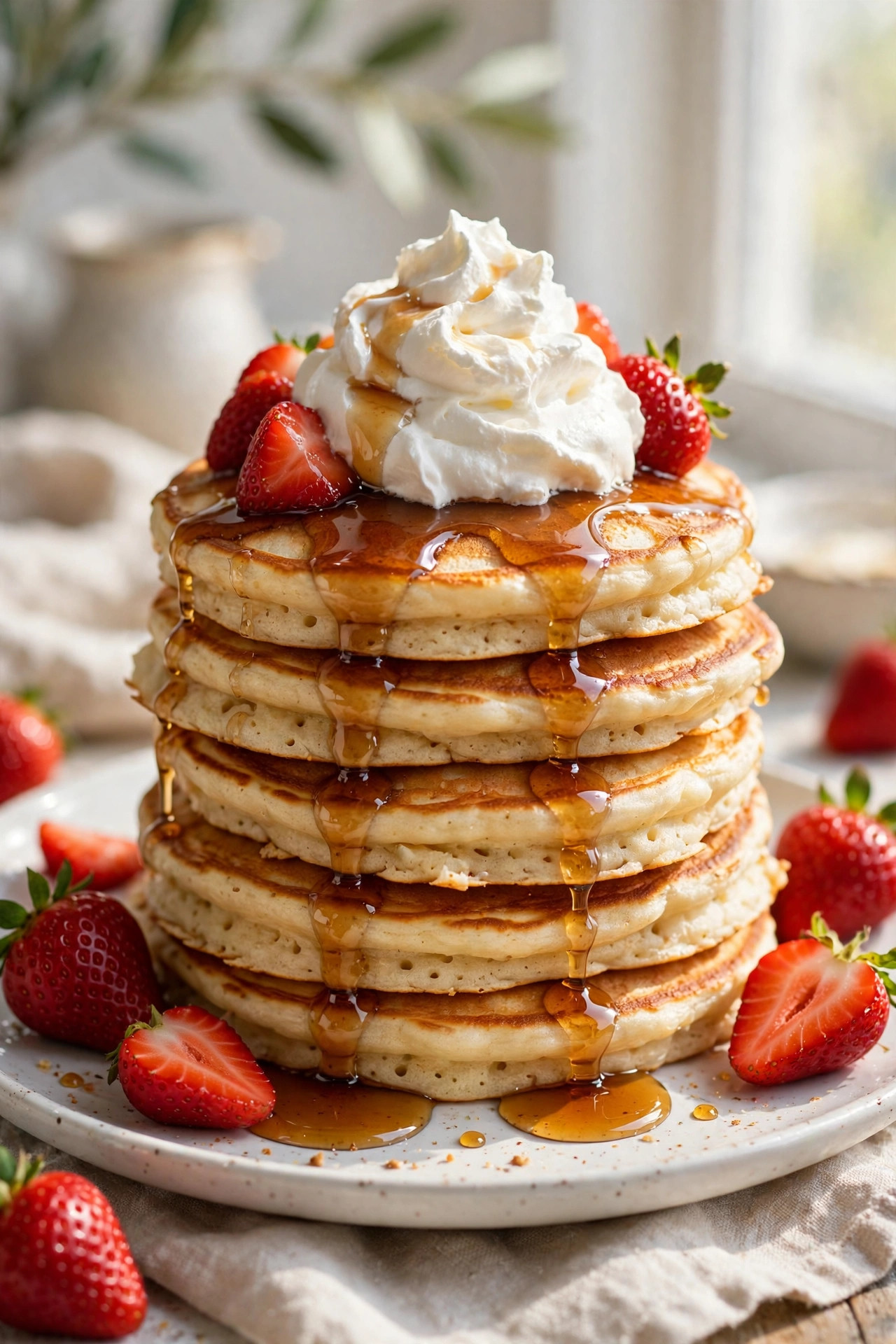
- Don’t skip the rest. Ten to fifteen minutes lets the starches hydrate and the batter thicken. You’ll watch it transform from thin to scoopable.
- Keep the heat moderate. Medium-low is the sweet spot. Too hot burns the outsides before the centers set; too cool turns them pale and tough.
- Use fresh baking powder. It loses power about six months after opening. Suddenly flat pancakes? An old can is usually the culprit.
- Stir gently. A few small lumps are fine — even welcome. Overmixing gums up the texture.
- Keep batches warm. Slide finished pancakes onto a plate in a 200°F oven while you cook the rest.
How to Store and Reheat Leftovers
This recipe doubles beautifully, so make extra. Refrigerate cooled pancakes in an airtight container with parchment between layers for up to 4 days. To freeze, lay them in a single layer on a baking sheet, freeze until firm (about an hour), then stack in a freezer bag with parchment between each. They keep up to 2 months.
Reheat in the toaster for the crispiest edges, warm in a dry skillet for a minute per side, or microwave a short stack for 30–45 seconds. From frozen, add a minute in the toaster or warm in a 350°F oven for 10 minutes.
Serving Ideas
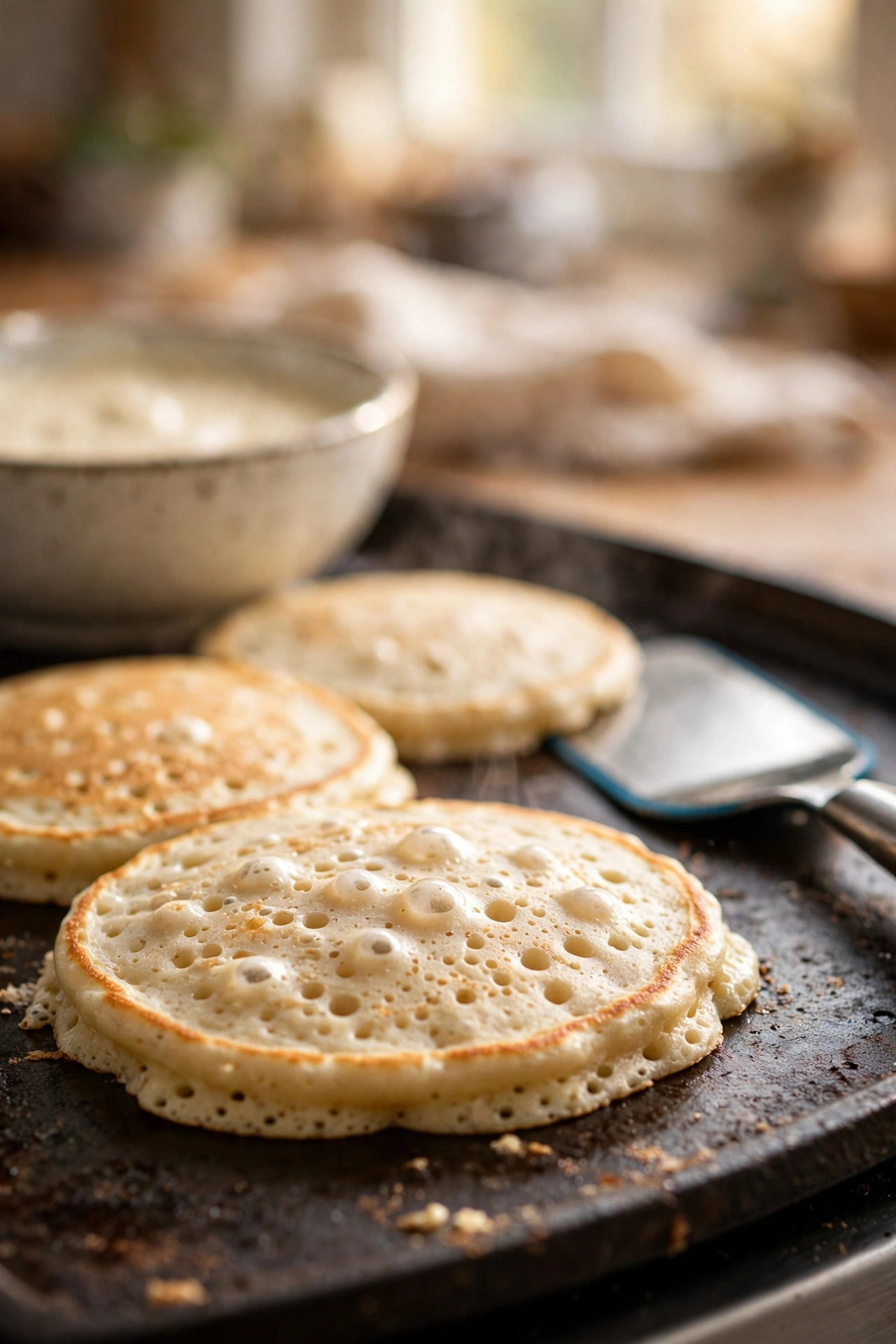
A tall stack deserves a great supporting cast. Try a spoonful of pumpkin fluff with warm maple syrup in the fall, or keep it classic with salted butter and fresh berries. A homemade cinnamon roll latte turns an ordinary Saturday into an occasion — and for a crowd, a DIY hot cocoa station keeps everyone happy while you flip.
Frequently Asked Questions
Can I make the batter ahead of time?
Yes. Mix, cover, and refrigerate overnight. The baking powder loses a little lift, so stir in 1/2 teaspoon of fresh baking powder in the morning before cooking.
Why did my pancakes turn out gummy?
Usually one of three things: overmixed batter, a pan that was too cool (so centers steamed instead of setting), or flour packed into the measuring cup.
Which gluten-free flour works best?
A 1:1 all-purpose gluten-free blend with xanthan gum already included gives the most reliable results. Oat flour adds tenderness; rice flour plus tapioca starch gives a light, diner-style crumb.
Can I make these dairy-free and egg-free?
Dairy-free is easy — use plant milk and oil instead of butter. For egg-free, try a flax egg (1 tablespoon ground flaxseed plus 3 tablespoons water, rested 5 minutes). The pancakes will be slightly more delicate, so flip gently.

