
What Makes This Cabbage Dumplings Recipe So Good?
Bite into a great dumpling and you know it instantly. The wrapper is tender but never soggy. The filling is juicy — actually juicy, the kind that makes you reach for a napkin. And the flavor hits that perfect balance of savory pork, sweet cabbage, and warm ginger.
This cabbage dumplings recipe delivers all of that, and it does it without any mystery. The secret is not a rare ingredient or a complicated technique. It is one simple step most home cooks skip: salting the cabbage and squeezing out the water before it ever meets the pork. That single move is the difference between dumplings that burst with juice and dumplings that turn out watery and bland.
You also get choices. This guide teaches you both classic cooking methods — crispy-bottomed pan-fried potstickers and delicate steamed dumplings — so you can pick your favorite or make a batch of each. You will learn a beginner-proof folding method that looks beautiful, plus the traditional pleated fold for when you are ready to show off.
Whether this is your first time making dumplings or your fiftieth, everything is here: the filling, the folding, two cooking methods, a killer dipping sauce, five variations, mistakes to avoid, and make-ahead freezer instructions. Roll up your sleeves. Dumpling night starts now.
What Are Cabbage Dumplings, Exactly?
Cabbage dumplings are small parcels of seasoned filling wrapped in thin wheat dough. They belong to a huge family of filled dumplings found across Asia, but this particular style — pork and cabbage — is the classic Chinese version known as jiaozi.
If you have eaten potstickers at a restaurant, you have eaten cabbage dumplings cooked the pan-fried way. The Chinese name for that style is guotie, which means "pot stick" — named for the golden, crispy bottom that forms when the dumpling fries in the pan. In Japan, the same dumpling is called gyoza, usually made a little smaller with a thinner wrapper and a punchier garlic flavor.
Cabbage is the traditional vegetable filling for a reason. Napa cabbage turns sweet and silky when cooked, and it lightens the rich pork so the filling tastes fresh instead of heavy. It also keeps the dumplings affordable — cabbage costs almost nothing and stretches a pound of pork into forty or more dumplings. Families in northern China have made pork and cabbage dumplings for generations, especially around Lunar New Year, when the whole family gathers to fold them together.
Once you learn this recipe, you own a technique, not just a dish. The same folding and cooking skills work for dozens of dumpling fillings.
What Ingredients Do You Need for Cabbage Dumplings?
This recipe makes about 40 dumplings — enough for 4 people as a main dish, or 6 to 8 as an appetizer. You can easily halve or double it.
For the filling, you will need:
- 1 pound (450g) ground pork (not lean — 80/20 gives the juiciest result)
- 4 cups finely chopped napa cabbage (about 1/2 a medium head)
- 1 teaspoon salt, plus more for the cabbage
- 3 green onions, finely chopped
- 1 tablespoon grated fresh ginger
- 2 cloves garlic, minced
- 2 tablespoons soy sauce
- 1 tablespoon Shaoxing wine (or dry sherry)
- 1 teaspoon sesame oil
- 1/2 teaspoon white pepper
- 1 teaspoon sugar
For wrapping and cooking:
- 40 round dumpling wrappers (store-bought, about 3 1/2 inches wide)
- 2 tablespoons neutral oil, for pan-frying
- Water, for sealing and steaming
For the classic dipping sauce:
- 3 tablespoons soy sauce
- 2 tablespoons black vinegar (or rice vinegar)
- 1 teaspoon chili oil (optional)
- 1 teaspoon finely chopped green onion
Each ingredient pulls its weight. The pork brings richness and the fat that makes the filling juicy. Napa cabbage adds sweetness and a tender bite. Salt does double duty — it draws water out of the cabbage and seasons the pork. Ginger and green onion cut through the richness with freshness. Shaoxing wine removes any raw pork smell and adds a subtle depth you will miss if you skip it. White pepper gives a gentle heat that black pepper cannot match. And the sugar? Just a teaspoon, but it rounds out every other flavor.
A note on wrappers: Store-bought wrappers save a huge amount of time and work perfectly. Look for them in the refrigerated section of Asian grocery stores, labeled "dumpling" or "gyoza" wrappers. Thaw them fully before using, and keep the stack covered with a damp towel so they do not dry out and crack.

What Equipment Do You Need to Make Cabbage Dumplings?
The list is short, and you probably own most of it already:
- A large mixing bowl
- A clean kitchen towel or cheesecloth (for squeezing the cabbage)
- A small bowl of water (for sealing the wrappers)
- A large nonstick skillet with a tight-fitting lid (for potstickers)
- A bamboo or metal steamer basket (for steamed dumplings)
- A small dipping bowl and chopsticks, for serving
That is the whole toolkit. No pasta maker, no special molds. A nonstick skillet matters more than anything else on this list — it is what guarantees those golden crispy bottoms release cleanly instead of tearing.
How Do You Make the Juicy Pork and Cabbage Filling?
This is where great dumplings are won or lost. Follow these steps exactly, especially the cabbage part.
Step 1: Salt and squeeze the cabbage. Place the chopped napa cabbage in a large bowl and toss it with 1 teaspoon of salt. Let it sit for 15 minutes. You will see a surprising amount of water pool at the bottom of the bowl. Now grab handfuls of the cabbage and squeeze hard over the sink, or wring it in a clean kitchen towel until no more liquid drips out. This is the single most important step in the entire recipe. Skip it, and your filling turns watery, your wrappers get soggy, and your dumplings fall apart.
Step 2: Season the pork. Put the ground pork in a large mixing bowl. Add the soy sauce, Shaoxing wine, sesame oil, white pepper, sugar, and remaining teaspoon of salt. Stir in one direction only — clockwise or counterclockwise, your choice — for about 2 minutes. This develops a sticky, springy texture called "myosin," and it helps the filling hold together and trap juices. The pork should look tacky and pull away from the sides of the bowl.
Step 3: Add the aromatics. Stir in the grated ginger, minced garlic, and chopped green onions. Mix for another 30 seconds until everything is evenly distributed.
Step 4: Fold in the cabbage. Add the squeezed cabbage to the pork mixture and mix gently until just combined. Do not overmix at this stage — you want the cabbage distributed, not beaten into mush.
Step 5: Rest the filling. Cover the bowl and refrigerate for at least 20 minutes (or up to overnight). Resting lets the flavors meld and firms up the filling, which makes the dumplings much easier to fold. Cold filling also helps the fat stay solid until cooking, and that fat is what creates the juicy burst when you bite in.
The juiciness test: Pinch off a small ball of filling and microwave it for 20 seconds. Taste it. It should taste slightly saltier than you expect — the wrapper dilutes the seasoning. Adjust the salt now, before you fold forty dumplings.
How Do You Fold Dumplings Like a Pro?
Folding looks intimidating, but it is a skill, not a talent. Your first five will look rough. Your twentieth will look great. Here are two methods — start with the easy one.
The beginner half-moon (no pleats):
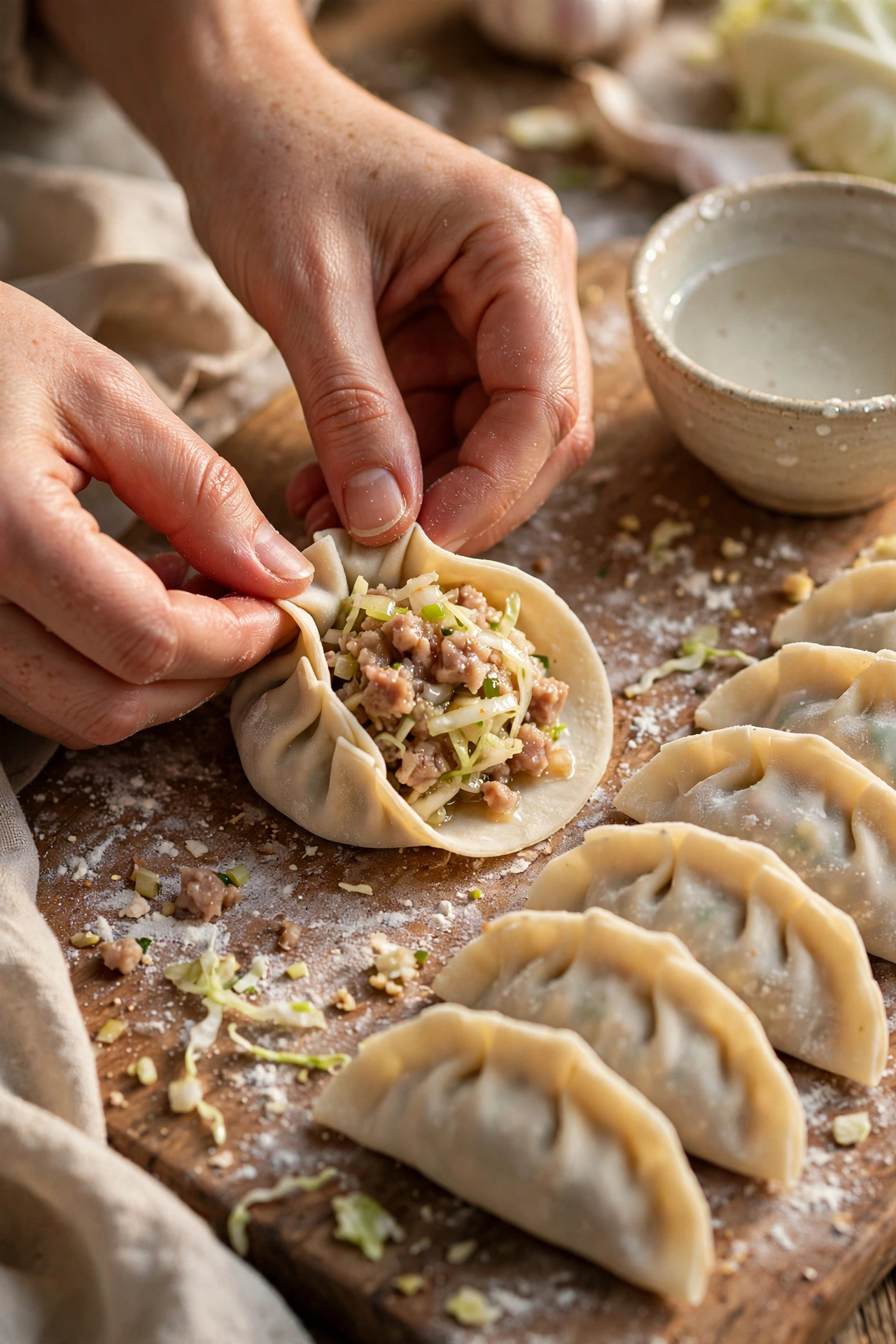
1. Hold a wrapper in your palm and place 1 tablespoon of filling in the center. Do not overfill — this is the number one beginner mistake.
2. Dip your finger in water and run it around the entire edge of the wrapper.
3. Fold the wrapper in half over the filling to make a half-moon. Press the edges together firmly, pushing out any air pockets as you go.
4. Press the sealed edge flat against the board, then crimp it with the tines of a fork for a decorative finish and an extra-strong seal.
The classic pleated crescent:
1. Place 1 tablespoon of filling slightly off-center on the wrapper.
2. Wet the edge with water. Fold the wrapper in half, but pinch only the very top center to seal it.
3. Starting from the top center, use your thumb and index finger to make 5 to 6 small pleats along one side of the wrapper, pressing each pleat firmly against the flat back edge as you go.
4. Squeeze the whole edge shut, pressing out air. Set the dumpling down so it stands upright on its flat bottom.
Folding rules that save you trouble:
- Keep unused wrappers under a damp towel at all times. Dry wrappers crack and will not seal.
- Work with cold filling. Warm filling softens the wrappers and makes them tear.
- Place finished dumplings on a lightly floured tray or parchment-lined baking sheet, not touching each other. They stick to everything.
- If a wrapper tears, do not panic. Patch it with a dab of water and a scrap of wrapper, or just refold it into the simple half-moon.
How Do You Cook Cabbage Dumplings Step by Step?
You have two classic options. Both start with raw, freshly folded dumplings. Try both and pick your favorite — or serve a platter with half of each.
Method 1: Pan-Fried Potstickers (Crispy Bottoms)
This is the famous fry-steam-fry method, and it gives you the best of both worlds: a shatteringly crisp golden base with a tender, juicy steamed top.
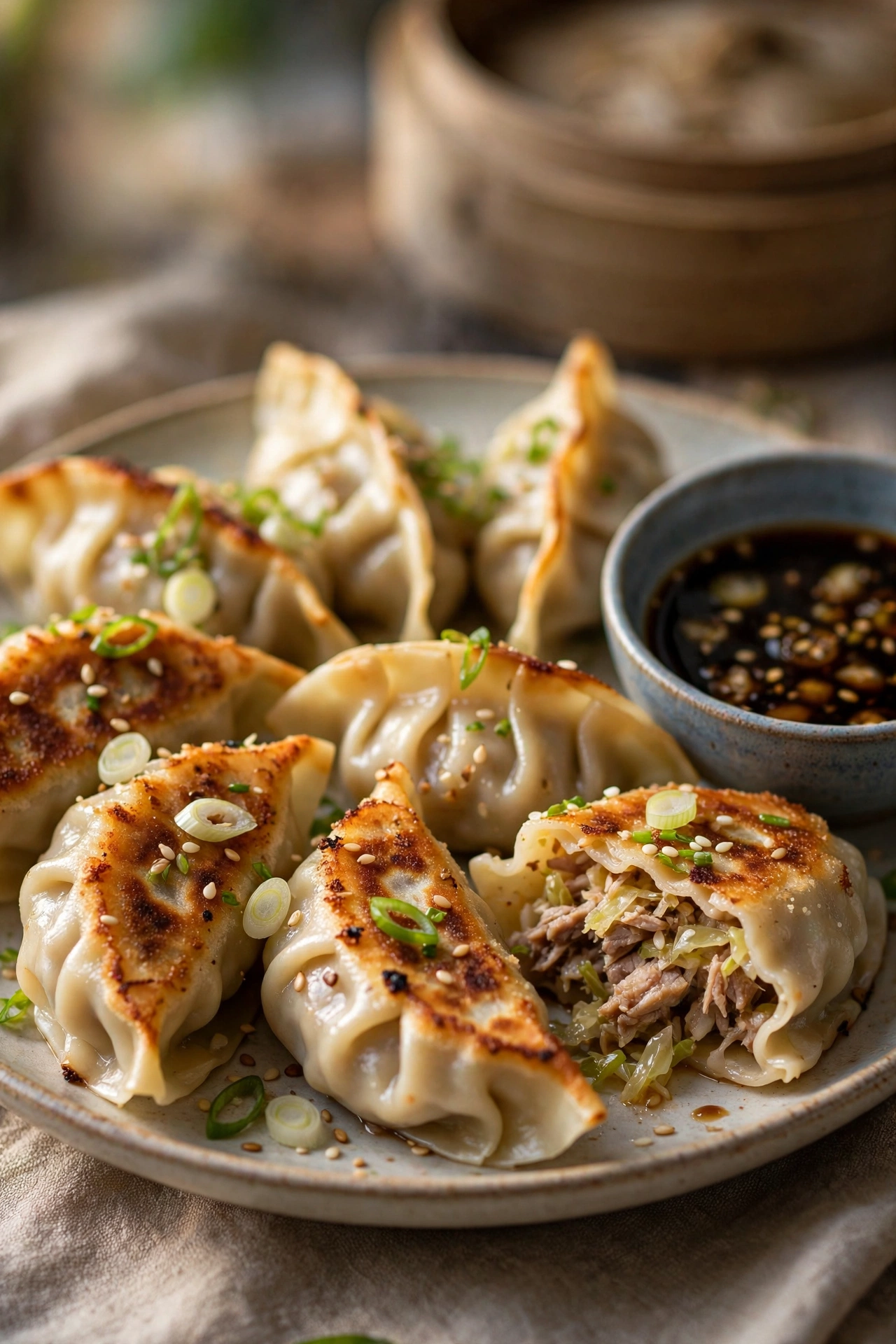
Step 1: Heat the pan. Heat 1 tablespoon of neutral oil in a large nonstick skillet over medium-high heat. When the oil shimmers, arrange the dumplings flat-side down in a single layer, leaving a little space between each one. Do not crowd the pan — cook in batches if needed.
Step 2: Sear the bottoms. Fry undisturbed for 2 to 3 minutes, until the bottoms turn deep golden brown. Peek at one by lifting it with a spatula. Patience here builds the crust.
Step 3: Steam. Carefully pour in 1/3 cup of water (it will sizzle and steam aggressively — stand back), then immediately cover with the lid. Reduce the heat to medium and steam for 5 to 6 minutes. The water cooks the filling through and softens the wrapper tops.
Step 4: Crisp again. Remove the lid and let any remaining water evaporate. Drizzle in 1 teaspoon of sesame oil around the edges and cook for 1 to 2 more minutes until the bottoms re-crisp. Slide the whole batch onto a plate, crispy-side up, and serve immediately.
Method 2: Steamed Dumplings (Tender and Delicate)
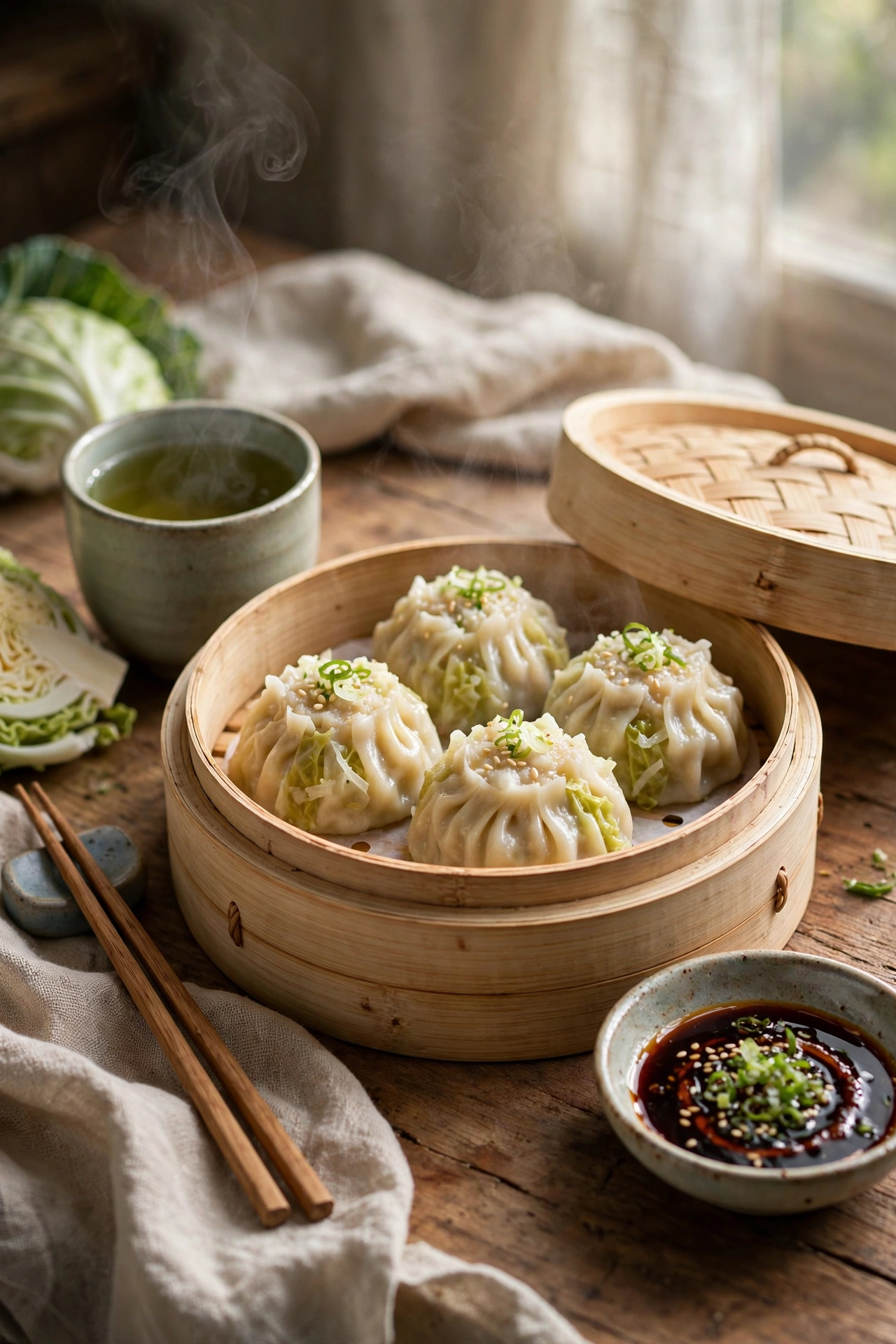
Step 1: Prepare the steamer. Line a bamboo steamer basket with parchment paper or cabbage leaves to prevent sticking. Bring an inch of water to a boil in a wok or pot that fits the steamer.
Step 2: Arrange the dumplings. Place the dumplings in the basket with at least 1 inch of space between them. They swell slightly as they cook.
Step 3: Steam. Set the basket over the boiling water, cover, and steam for 8 to 10 minutes. The wrappers will turn slightly translucent, and the filling should feel firm when you press a dumpling gently.
Step 4: Rest briefly. Turn off the heat and let the dumplings sit, covered, for 1 minute. This lets the wrappers set so they do not tear when you lift them. Serve hot with dipping sauce.
Which method should you choose? Pan-fried potstickers win on texture contrast and crowd appeal — that crispy base is unforgettable. Steamed dumplings are lighter, more delicate, and a little healthier. Honestly, make both. Your guests will fight over the crispy ones and quietly eat all the steamed ones too.
What Dipping Sauce Goes Best With Cabbage Dumplings?
A great dumpling deserves a great sauce, and this classic one takes sixty seconds to mix. The formula is simple: salty, sour, and a little heat.
Classic soy-vinegar dipping sauce:
- 3 tablespoons soy sauce
- 2 tablespoons Chinese black vinegar (or rice vinegar)
- 1 teaspoon chili oil or chili crisp
- 1 teaspoon finely chopped green onion
- A few drops of sesame oil
Stir everything together in a small bowl. The black vinegar is the key — its malty, complex sourness cuts through the richness of the pork in a way plain vinegar cannot. If you only buy one new ingredient for this recipe, make it black vinegar.
Two more sauces worth knowing:
- Ginger-scallion oil — Finely chop 2 green onions and 1 tablespoon of ginger. Pour 3 tablespoons of smoking-hot neutral oil over them, then stir in 1 tablespoon of soy sauce and a pinch of salt. Fragrant and addictive.
- Sweet chili soy — Mix 2 tablespoons of soy sauce with 1 tablespoon of sweet chili sauce and a squeeze of lime. Milder and crowd-friendly.
Set out small individual dipping bowls so everyone can mix their own ratio. Dumpling people have strong opinions about sauce.
What Are the Most Common Cabbage Dumpling Mistakes?
Dumpling failures almost always come from the same short list. Avoid these and you will be ahead of most home cooks:
Skipping the cabbage squeeze. Raw cabbage holds a shocking amount of water. If you mix it in unsalted and unsqueezed, that water leaks out during cooking and turns your filling into soup. Salt, rest, squeeze hard. Every time.
Overfilling the wrappers. A tablespoon of filling looks small, but it is the right amount. More than that and the wrapper cannot seal, the dumpling bursts open in the pan, and you lose all the juices you worked for.
A weak seal. Any gap in the edge lets water in and juices out. Wet the rim generously, press firmly, and push out air pockets. When in doubt, press twice.
Crowding the pan. Dumplings need space for steam to circulate and for bottoms to crisp. If they touch while cooking, they fuse into one giant dumpling blob. Cook in batches — it is worth the extra ten minutes.
Wrong heat. Too hot, and the bottoms burn before the filling cooks through. Too low, and the bottoms steam instead of crisping. Medium to medium-high is the sweet spot, and every stove is different, so watch your first batch closely.
Letting folded dumplings sit too long. Raw dumplings left at room temperature get sticky and tear. If you are not cooking within 30 minutes, cover the tray and refrigerate — or freeze them (see the storage section below).
Variation 1: How Do You Make Vegetarian Cabbage Dumplings?
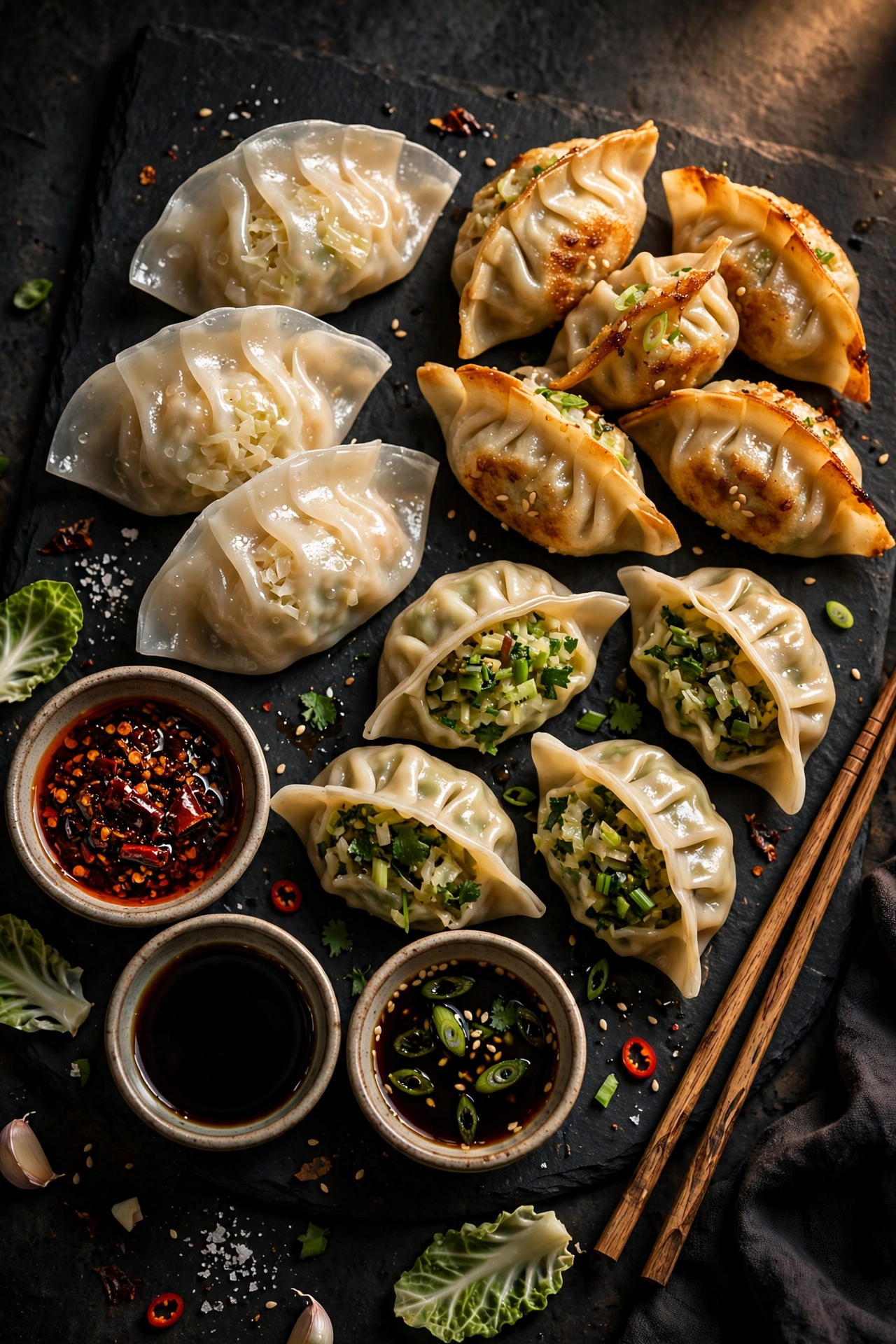
Swap the pork for a hearty mushroom and tofu filling. Finely chop 8 ounces of shiitake mushrooms and 7 ounces of firm tofu (pressed dry), then mix with the same salted-and-squeezed cabbage, ginger, green onions, soy sauce, sesame oil, and white pepper. Add 2 tablespoons of cornstarch to help the filling bind, since there is no meat protein to hold it together.
Sauté the mushrooms first for extra depth — raw mushrooms release water just like cabbage does. These dumplings are best steamed, which keeps the delicate filling intact. Even committed meat eaters go back for seconds.
Variation 2: How Do You Make Shrimp and Cabbage Dumplings?
Replace half the pork with 1/2 pound of peeled, deveined shrimp, roughly chopped by hand. Do not use a food processor — you want chunky pieces, not paste. Keep the cabbage, ginger, and seasonings the same, but add 1 teaspoon of grated lemon zest for brightness.
Shrimp dumplings cook a little faster, so steam for 7 to 8 minutes or pan-fry with slightly less water. The sweet pop of shrimp against the savory pork is the kind of combination that makes people ask for the recipe.
Variation 3: How Do You Make Spicy Chili Oil Cabbage Dumplings?
Make the classic pork and cabbage dumplings, then serve them drowned in sauce. Mix 3 tablespoons of chili crisp, 2 tablespoons of soy sauce, 1 tablespoon of black vinegar, 1 teaspoon of sugar, and 2 tablespoons of the hot dumpling cooking liquid. Toss freshly boiled or steamed dumplings in the sauce and top with chopped peanuts and cilantro.
This is the famous "red oil" style from Sichuan. It is fiery, numbing, and completely addictive. Warn your guests before they take a bite — then watch them reach for more anyway.
Variation 4: How Do You Make Chicken and Cabbage Dumplings?
Substitute 1 pound of ground chicken thigh for the pork. Chicken is leaner, so add 2 tablespoons of cold water and 1 tablespoon of cornstarch to the filling to keep it juicy — the starch traps moisture during cooking. Increase the ginger slightly and add a pinch of turmeric for warmth and color.
These are a great option for anyone who does not eat pork. Pan-fry them exactly like the classic version, but give them an extra minute of steaming to make sure the chicken cooks through.
Variation 5: How Do You Make Soup Dumpling-Style Cabbage Dumplings?
For dumplings that burst with soup when you bite them, add jellied stock to the filling. Simmer 1 cup of rich chicken stock with the pork bones or wings for an hour, strain it, and refrigerate overnight until it sets into a firm jelly. Dice the jelly and fold 1/2 cup of it into the finished pork and cabbage filling.
As the dumplings steam, the jelly melts back into hot soup inside each wrapper. Eat them with a spoon — bite a small hole, sip the soup, then eat the rest. Use the steamed method only; pan-frying risks bursting the delicate wrappers. This variation takes planning, but the payoff is pure theater at the dinner table.
How Do You Store and Freeze Cabbage Dumplings?
Dumplings are a meal-prep dream. A single folding session can stock your freezer for weeks.
In the refrigerator: Cooked dumplings keep for 3 to 4 days in an airtight container. Uncooked, freshly folded dumplings keep for up to 24 hours on a floured tray, covered tightly with plastic wrap. Do not stack them — they will fuse together.
To freeze uncooked dumplings (the best method): Arrange the folded dumplings on a parchment-lined baking sheet, making sure none touch. Freeze until rock solid, about 2 hours. Transfer the frozen dumplings to a freezer bag, press out the air, and label with the date. They keep for up to 3 months. Freezing them individually first means you can grab exactly as many as you need.
To cook from frozen: Do not thaw — thawed dumplings get sticky and tear. For potstickers, add 2 extra minutes to the steaming step and use a little more water. For steamed dumplings, add 3 to 4 minutes to the steaming time. The filling must reach 165°F (74°C) inside, so when in doubt, cut one open and check.
To reheat cooked dumplings: The skillet is your friend. Pan-fry leftover dumplings with a splash of water and a lid for 3 to 4 minutes until heated through and re-crisped. The microwave works in a pinch but turns the crispy bottoms soft — acceptable for lunch, sad for dinner guests.
What Do You Serve With Cabbage Dumplings?
Dumplings can be the whole meal, but the right sides turn them into a feast:
- Smashed cucumber salad — cold, garlicky, and vinegary. The classic cooling contrast to rich dumplings.
- Hot and sour soup — a bowl alongside makes the meal feel complete and restaurant-worthy.
- Egg fried rice — simple and filling when you are feeding a crowd.
- Stir-fried bok choy with garlic — light, green, and ready in five minutes.
- Seaweed egg drop soup — gentle and soothing, especially good with steamed dumplings.
- Chinese tea — jasmine or oolong cuts through the richness and keeps the palate fresh.
For a dumpling party, set up a folding station and let everyone make their own. Put out the filling, wrappers, and little bowls of water, then cook the dumplings in batches as people fold. It is interactive, a little messy, and the exact kind of dinner people remember.
Cabbage Dumplings FAQs
Should I use store-bought or homemade wrappers?
Store-bought wrappers are the smart choice for most cooks. They are consistent, thin, and save at least an hour of work. Homemade wrappers taste slightly better and hold pleats more beautifully, but the difference is small. Master the filling and folding first — you can always graduate to homemade wrappers later.
Why is my dumpling filling watery?
Almost always because the cabbage was not salted and squeezed. Cabbage is over 90 percent water, and salting draws it out before cooking. If your filling already looks wet, mix in a tablespoon of cornstarch to absorb the excess — it is a rescue, not a habit.
Can I cook dumplings in an air fryer?
You can, with compromises. Brush frozen or fresh dumplings lightly with oil and air fry at 375°F (190°C) for 8 to 10 minutes, flipping halfway. They come out crisp all over rather than just on the bottom. The texture is closer to a fried wonton than a true potsticker, but it is tasty and hands-off.
Can I make cabbage dumplings gluten-free?
Yes. Use gluten-free dumpling wrappers (available at Asian grocery stores and online) and swap the soy sauce for tamari. Gluten-free wrappers tear more easily, so handle them gently, seal with extra care, and favor steaming over pan-frying.
How many dumplings should I make per person?
Plan on 10 to 12 dumplings per person for a main dish, or 5 to 6 as an appetizer. This recipe makes about 40, which serves 4 as dinner. When in doubt, make extra — leftover dumplings freeze perfectly, and nobody has ever complained about too many dumplings.
Why did my potstickers stick to the pan?
Three usual causes: the pan was not nonstick, there was not enough oil, or you tried to move the dumplings before the crust set. Use a true nonstick skillet, a full tablespoon of oil, and do not touch the dumplings until the bottoms are deeply golden. They release on their own when the crust is ready.
Can I prepare the filling ahead of time?
Absolutely. The filling actually improves after a night in the refrigerator, as the flavors meld. Make it up to 24 hours ahead and keep it covered and chilled. Fold the dumplings the day you plan to cook them for the best wrapper texture.
What can I use instead of pork?
Ground chicken thigh is the closest swap — add a little cornstarch and water to keep it juicy. Ground turkey works but runs drier, so the same trick applies. For a richer option, use a mix of pork and shrimp (see Variation 2). For vegetarian, see Variation 1.
How do I know the filling is cooked through?
Cut one dumpling open and check that the pork is no longer pink and the juices run clear. For frozen dumplings, add extra steaming time rather than extra frying time — the steam is what cooks the center. An instant-read thermometer should read 165°F (74°C).
Final Thoughts
Cabbage dumplings reward a little effort with an outsized payoff. One bag of cabbage and a pound of pork becomes forty little packages of comfort — crispy or steamed, dunked in vinegar and chili oil, eaten too fast and regretted not at all.
Remember the two rules that matter most: squeeze the cabbage like you mean it, and do not overfill the wrappers. Everything else is practice, and practice is delicious.
Fold a batch this weekend. Freeze half for a future lazy dinner. And when someone asks where you learned to make dumplings this good, just smile.
If you love cozy cabbage comfort food, try our deconstructed Polish stuffed cabbage soup and our fluffy one-pot stove top chicken and dumplings — both are winter dinner winners.
📌 Love this recipe? Pin it on Pinterest to save it for later!


