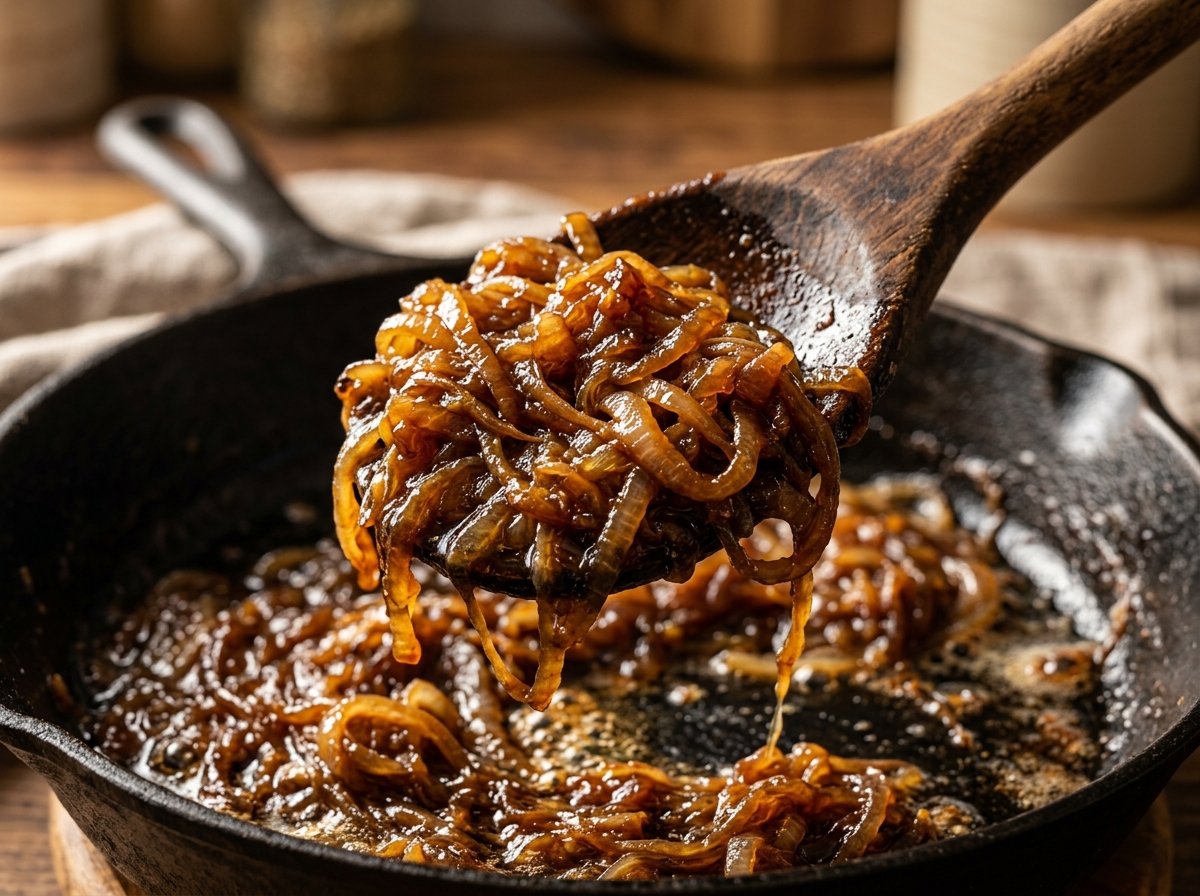
Caramelized onions are one of the easiest ways to elevate everyday meals. Slowly cooked until soft, golden brown, and naturally sweet, they add incredible depth of flavor to steaks, burgers, sandwiches, pizzas, pasta, and countless other dishes.
Unlike quickly sautéed onions, caramelized onions require patience. The slow cooking process allows the onions’ natural sugars to develop, creating a rich, buttery flavor that’s both savory and slightly sweet.
Why You’ll Love This Recipe
- Rich, sweet, and savory flavor
- Easy with just a few ingredients
- Perfect for meal prep
- Pairs with countless dishes
- Freezer-friendly
- Naturally gluten-free
- Restaurant-quality results at home
Your Shopping Guide
Main Ingredients
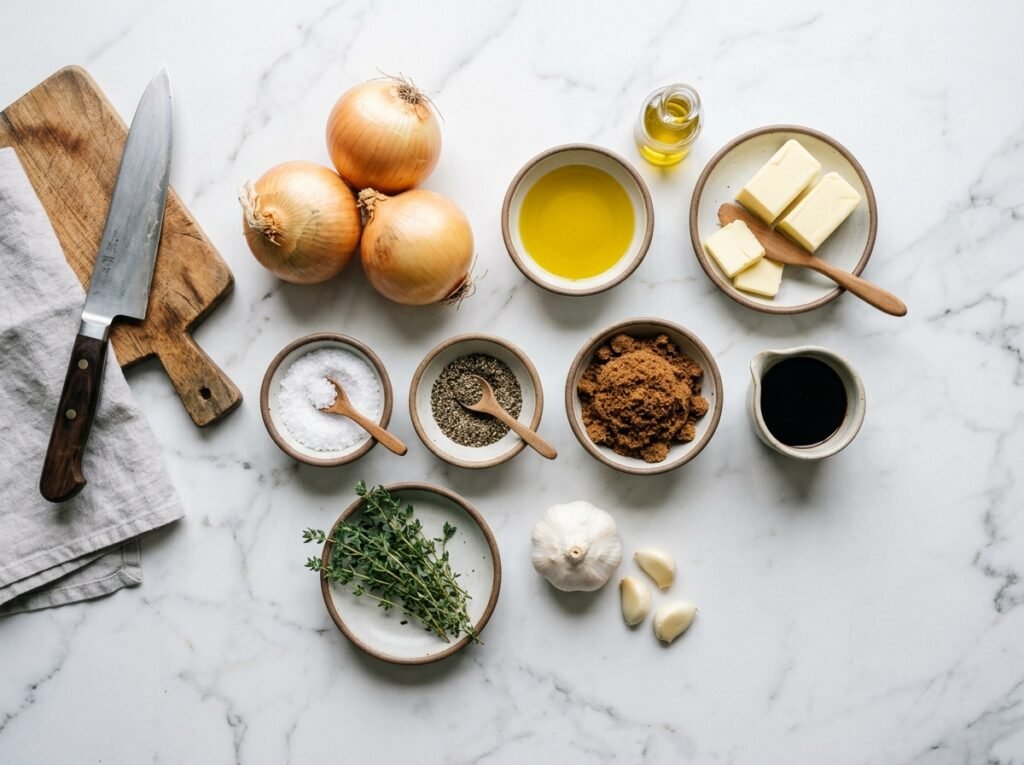
- 3 large yellow onions
- 2 tablespoons olive oil
- 1 tablespoon unsalted butter (optional)
- ½ teaspoon salt
- ¼ teaspoon black pepper
Optional Flavor Boosters
- 1 teaspoon brown sugar
- 1 teaspoon balsamic vinegar
- 1 teaspoon Worcestershire sauce
- Fresh thyme
- Garlic cloves
- Black pepper to taste
Toolbox for This Recipe
Gather these kitchen essentials before you begin:
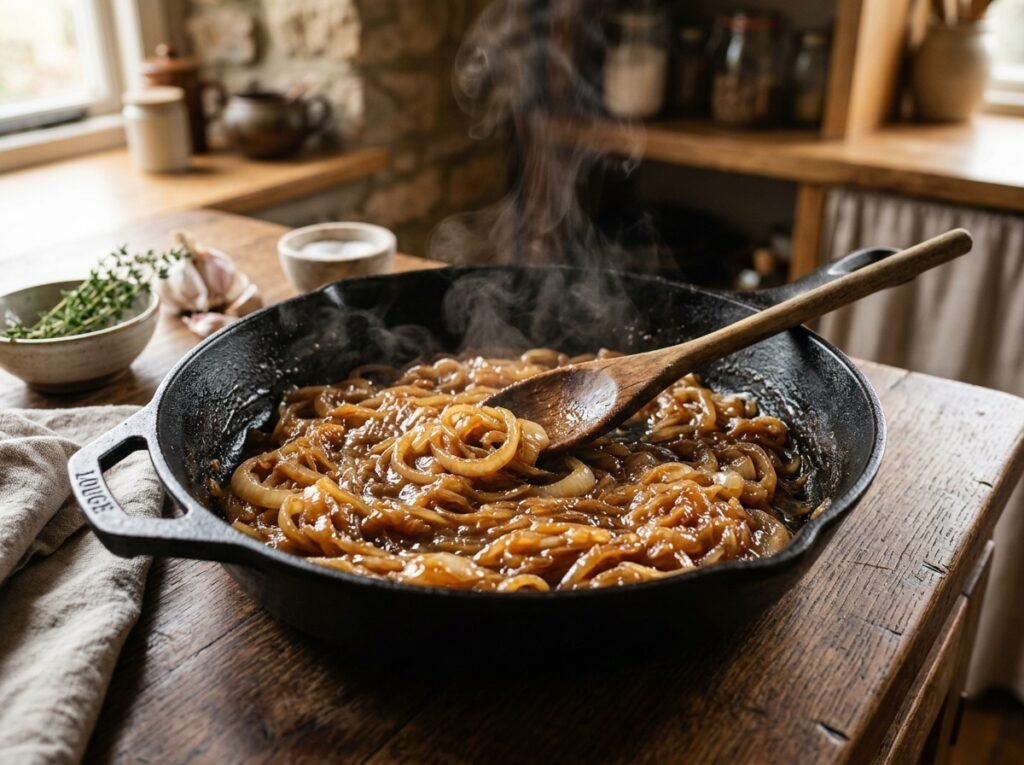
- Large heavy-bottomed skillet or cast iron pan
- Sharp chef’s knife
- Cutting board
- Wooden spoon or silicone spatula
- Measuring spoons
Caramelized Onions For Steak, Burgers, Sides: From Prep to Plate
Step 1: Prepare the Onions
Peel the onions and slice them into thin, even strips.
Uniform slices help the onions cook evenly.
Step 2: Heat Your Skillet
Place a large skillet over medium heat.
Add the olive oil and allow it to warm.
If using butter, wait until the final few minutes of cooking for the richest flavor.
Step 3: Add the Onions
Add the sliced onions to the skillet.
Stir to coat them evenly with the oil.
Spread them into an even layer.
Step 4: Season and Cook
Sprinkle the onions with salt and black pepper.
Cook over medium-low heat, stirring every 3–5 minutes.
As they soften, reduce the heat if necessary to prevent burning.
Step 5: Enhance Sweetness (Optional)
For slightly sweeter onions, stir in:
- Brown sugar
- Balsamic vinegar
These ingredients enhance the onions’ natural sweetness without overpowering their flavor.
Step 6: Slow and Steady Wins the Race
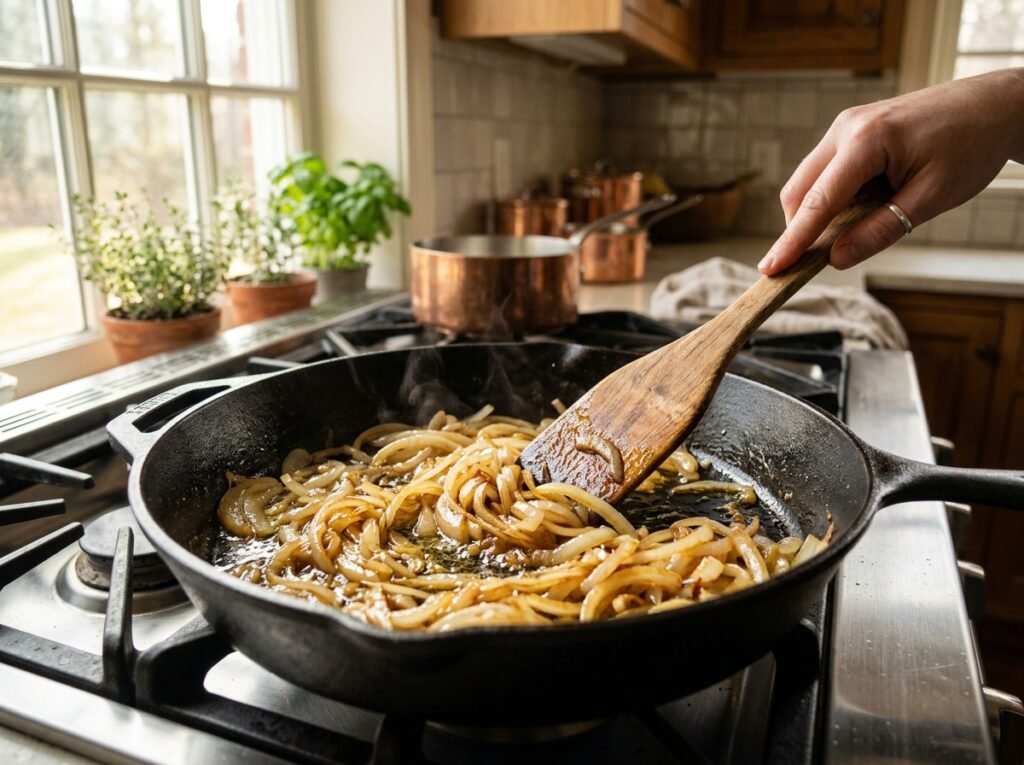
Continue cooking for 35–45 minutes, stirring occasionally.
The onions are ready when they become deep golden brown, very soft, and jam-like.
Patience is the secret to perfect caramelized onions.
Step 7: Finish with Butter (Optional)
Stir in the butter during the last 2–3 minutes of cooking.
This adds extra richness and a silky finish.
Taste and adjust the seasoning if needed.
Step 8: Serve and Enjoy
Serve warm over:
- Steaks
- Burgers
- Hot dogs
- Grilled chicken
- Pizza
- Sandwiches
- Pasta
- Mashed potatoes
They also make an excellent topping for omelets and grilled vegetables.
Quick Replacement Ideas
White Onions
Offer a milder, sweeter flavor.
Red Onions
Provide a slightly sweeter taste and beautiful color.
Sweet Onions
Such as Vidalia onions caramelize especially well thanks to their higher natural sugar content.
Vegan Version
Simply omit the butter or replace it with vegan butter.
Behind-the-Scenes Notes
Caramelization occurs when the natural sugars in onions slowly break down under gentle heat. This process creates their signature golden color and rich, sweet flavor. Cooking too quickly over high heat can burn the onions before they have time to caramelize properly, so patience is essential.
Keep-It-Fresh Plan
Refrigerator
Store cooled caramelized onions in an airtight container for up to 5 days.
Freezer
Freeze in small portions for up to 3 months.
Ice cube trays work well for freezing individual servings.
Reheating
Warm gently in a skillet over low heat or microwave until heated through.
Meal Prep Tip
Prepare a large batch and keep portions ready to add instant flavor to meals throughout the week.
Quick Q&A
Can I make caramelized onions in advance?
Yes. They store very well and often taste even better the next day after the flavors have developed.
What can I use caramelized onions on?
They’re delicious on burgers, steaks, grilled chicken, sandwiches, pizzas, pasta, baked potatoes, mashed potatoes, omelets, salads, and flatbreads.
How do I know when my onions are caramelized?
They should be soft, deep golden brown, glossy, and have a rich, naturally sweet flavor without burnt spots.
Can I add other ingredients while caramelizing onions?
Absolutely. Garlic, fresh thyme, rosemary, balsamic vinegar, Worcestershire sauce, or mushrooms are excellent additions during the final stages of cooking.
Final Thoughts
Caramelized Onions are a simple yet powerful ingredient that can transform everyday meals into something truly special. Their sweet, savory flavor pairs beautifully with meats, vegetables, sandwiches, and more.
With just a little patience and a handful of ingredients, you’ll have a versatile topping that’s worth making again and again.