
Mashed Potatoes Recipe: How Do You Make the Creamiest Homemade Mashed Potatoes?
Nothing says comfort food quite like a bowl of warm, creamy mashed potatoes. The best mashed potatoes recipe doesn’t need fancy ingredients or complicated techniques. You need good potatoes, plenty of butter, warm milk or cream, salt, and a little patience.
For fluffy mashed potatoes, choose potatoes that mash easily, cook them until tender, drain them well, and avoid overmixing. Adding warm butter and milk instead of cold dairy helps keep the potatoes smooth and creamy.
This homemade version works beautifully for weeknight dinners, Thanksgiving, Christmas, Sunday roasts, meatloaf, fried chicken, and almost any meal that needs a comforting side dish.
Why Is This Mashed Potatoes Recipe So Good?
A great bowl of mashed potatoes should be creamy, fluffy, buttery, and well seasoned.
The potatoes should feel smooth without becoming gluey. The butter should add richness, while warm milk or cream creates a soft, spoonable texture.
The secret isn’t one magic ingredient. It’s how you handle the potatoes.
Overworking cooked potatoes can make them sticky. Using cold milk can cool everything down. Not draining the potatoes properly can leave them watery.
Fortunately, these problems are easy to avoid.
This recipe keeps the process simple and gives you plenty of room to customize the flavor.
What Potatoes Are Best for Mashed Potatoes?
The potato you choose can change the final texture.
Russet Potatoes
Russets contain plenty of starch and relatively little moisture.
They create light, fluffy mashed potatoes and are an excellent choice when you want a classic texture.
Yukon Gold Potatoes
Yukon Gold potatoes have a naturally buttery flavor and creamy texture.
They are slightly less fluffy than russets but can produce incredibly rich mashed potatoes.
A Combination of Both
For many home cooks, combining russet and Yukon Gold potatoes gives you the best of both worlds.
The russets provide fluffiness, while the Yukon Gold potatoes contribute a naturally creamy texture and buttery flavor.
Waxy Potatoes
Red potatoes and other waxy varieties can also be mashed, especially if you like a denser, rustic texture.
They won’t usually produce the same fluffy result as russets.
What Ingredients Do You Need for This Mashed Potatoes Recipe?
You only need a handful of ingredients.
Main Ingredients
- 2 pounds potatoes
- 6 tablespoons unsalted butter
- 3/4 cup whole milk
- 1 teaspoon salt, plus more for the cooking water
- 1/2 teaspoon black pepper
Optional Additions
- 2 cloves roasted garlic
- 2 tablespoons cream cheese
- 2 tablespoons sour cream
- Fresh chives
- Fresh parsley
- Parmesan cheese
- Extra melted butter
The quality of these simple ingredients matters because there aren’t many of them.
If possible, use real butter and full-fat dairy for the richest flavor.
How Do You Make Mashed Potatoes?
Here’s the basic method.
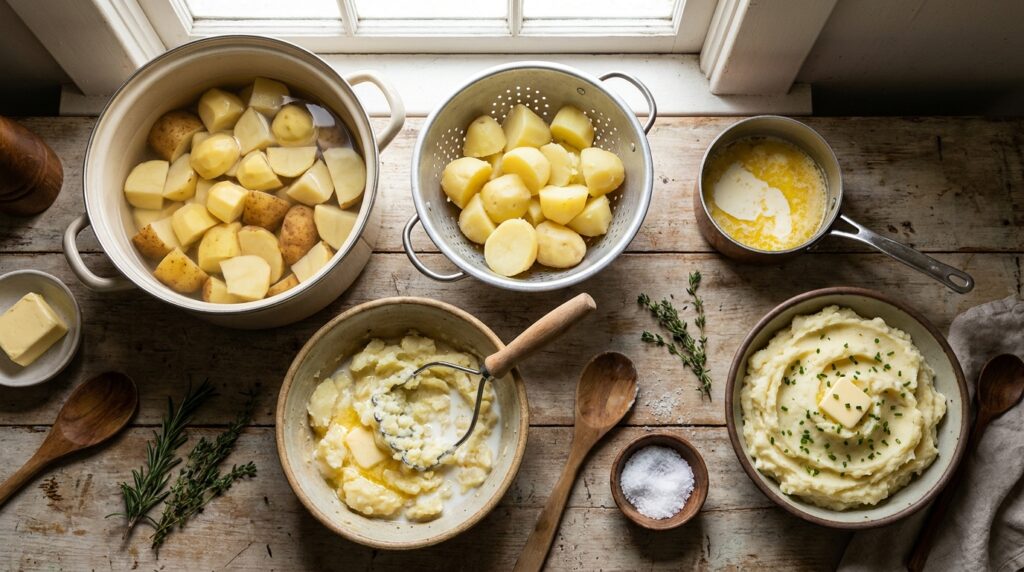
Step 1: Prepare the Potatoes
Peel the potatoes if you want completely smooth mashed potatoes.
Cut them into evenly sized chunks.
Try to keep the pieces similar in size so they cook at the same rate.
Step 2: Put Them in Cold Water
Place the potatoes in a large pot and cover them with cold water.
Add a generous pinch of salt.
Starting with cold water helps the potatoes cook more evenly.
Step 3: Boil Until Tender
Bring the water to a boil.
Reduce the heat and gently simmer until the potatoes are completely tender.
You should be able to slide a fork easily through the center.
Don’t stop when the outside is soft but the center is firm.
Step 4: Drain Thoroughly
Drain the potatoes in a colander.
Let them sit for a minute or two so excess moisture can escape.
You can also return them briefly to the warm pot over low heat to help evaporate leftover water.
Step 5: Warm the Dairy
While the potatoes cook, gently warm the milk and butter together.
Don’t boil the milk.
You simply want the butter melted and the mixture warm.
Step 6: Mash
Return the potatoes to the pot.
Mash them with a potato masher or ricer.
Add the warm butter and milk gradually.
Continue until you reach your preferred consistency.
Step 7: Season
Add salt and black pepper.
Taste.
If the potatoes taste flat, they probably need a little more salt.
Step 8: Serve
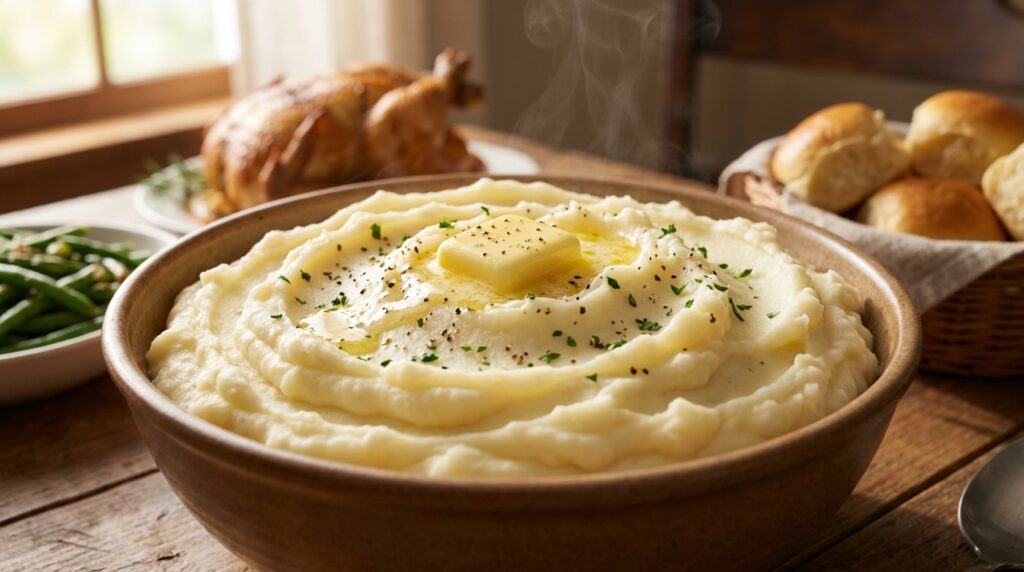
Transfer the mashed potatoes to a serving bowl.
Make a small well in the center and add a little melted butter.
Serve immediately.
How Do You Make Extra Creamy Mashed Potatoes?
If you want restaurant-style mashed potatoes, focus on texture.
A potato ricer is one of the best tools for creating exceptionally smooth mashed potatoes.
It breaks cooked potatoes into tiny pieces without forcing you to aggressively mash them.
Then gently fold in warm butter and cream.
Try This Richer Ratio
For every 2 pounds of potatoes, use:
- 8 tablespoons butter
- 1 cup warm heavy cream
- Salt to taste
This creates an extremely rich side dish.
You can reduce the butter or cream if you prefer a lighter version.
The important thing is to add the liquid gradually.
You can always add more.
You can’t easily remove it.
Should You Peel Potatoes Before Mashing?
That depends on the texture you want.
For Smooth Mashed Potatoes
Peel the potatoes before cooking.
This creates a silky, classic texture.
For Rustic Mashed Potatoes
Leave some or all of the skins on.
Red potatoes and thin-skinned Yukon Gold potatoes work especially well for this approach.
The skins add texture and a more homemade appearance.
Why Should You Start Potatoes in Cold Water?
Starting potatoes in cold water gives the outside and inside time to heat gradually.
If you drop large chunks directly into already boiling water, the exterior can become very soft before the center fully cooks.
Cold water helps promote more even cooking.
Make sure the potatoes are covered with water and cut into similar-sized pieces.
How Much Butter and Milk Should You Use?
There isn’t one perfect amount.
It depends on how rich and creamy you like your mashed potatoes.
For a balanced everyday version, start with:
2 pounds potatoes + 6 tablespoons butter + 3/4 cup milk
For richer potatoes:
2 pounds potatoes + 8 tablespoons butter + 1 cup cream
For a lighter version:
2 pounds potatoes + 3 to 4 tablespoons butter + 1/2 cup milk
Add the dairy slowly and stop when the texture looks right.
How Do You Make Garlic Mashed Potatoes?
Garlic can turn ordinary mashed potatoes into something special.
There are several ways to add it.
Roasted Garlic
Roasted garlic gives the potatoes a sweet, mellow garlic flavor.
Roast a whole garlic bulb until the cloves become soft and golden.
Squeeze the roasted cloves into the cooked potatoes before mashing.
Fresh Garlic
For stronger garlic flavor, finely mince fresh garlic and gently cook it in butter before adding the mixture to the potatoes.
Garlic Powder
Garlic powder is convenient and gives an even flavor.
Start with a small amount and adjust to taste.
Roasted garlic is my favorite for a holiday-style mashed potato dish because it adds flavor without overpowering the butter and potatoes.
How Do You Make Mashed Potatoes Without Milk?
You have several options.
Use Chicken or Vegetable Broth
Warm broth adds moisture and savory flavor.
Use Olive Oil
Replace butter and milk with good-quality olive oil for a dairy-free option.
Use Plant-Based Milk
Unsweetened oat, soy, or almond milk can work.
Choose an unsweetened variety without strong flavors.
Use Dairy-Free Butter
Combine dairy-free butter with plant-based milk for a closer match to traditional mashed potatoes.
Always check the flavor before adding too much. Some plant-based milks have a noticeable taste.

Can You Make Mashed Potatoes Ahead of Time?
Yes.
This is especially helpful for Thanksgiving, Christmas, Sunday dinner, or any meal where you need to prepare several dishes at once.
Make the mashed potatoes according to the recipe.
Transfer them to a heat-safe serving dish.
Cover and refrigerate if you’re making them significantly ahead of serving.
When you’re ready to reheat them, add a little warm milk, cream, or melted butter and gently stir until smooth.
Avoid reheating them aggressively because excessive heat can make the potatoes dry or gummy.
How Do You Reheat Mashed Potatoes?
There are several good methods.
Stovetop
Place the potatoes in a saucepan over low heat.
Add a splash of milk or cream.
Stir gently until heated through.
Oven
Transfer the mashed potatoes to a baking dish.
Add a few pieces of butter over the top.
Cover tightly with foil and heat until warm.
Slow Cooker
For large gatherings, a slow cooker can keep mashed potatoes warm.
Add a little extra butter or cream and stir occasionally.
This is especially useful when the main meal includes several dishes that need oven space.
What Can You Add to Mashed Potatoes?
Once you have the basic recipe down, you can create many different versions.
Cheesy Mashed Potatoes
Add shredded cheddar, Parmesan, Gruyère, or Monterey Jack.
Sour Cream Mashed Potatoes
Fold in a few tablespoons of sour cream for tang and richness.
Cream Cheese Mashed Potatoes
Cream cheese creates an extra-smooth texture and richer flavor.
Herb Mashed Potatoes
Add chopped:
- Chives
- Parsley
- Rosemary
- Thyme
- Green onions
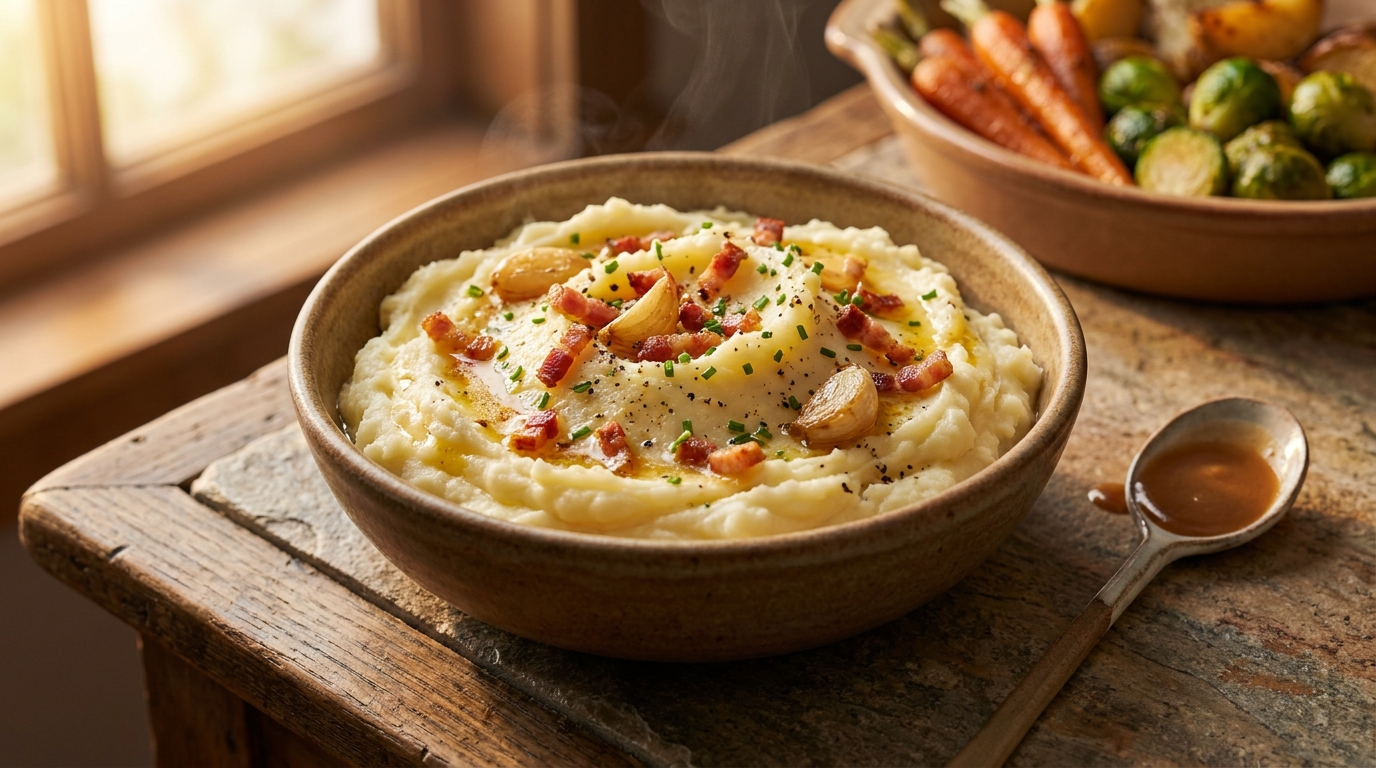
Bacon Mashed Potatoes
Fold crispy cooked bacon into the potatoes and finish with sliced green onions.
Parmesan Mashed Potatoes
Add finely grated Parmesan and a little garlic.
This version pairs especially well with roasted chicken and vegetables.
What Goes Well With Mashed Potatoes?
Mashed potatoes are one of the most versatile side dishes.
They pair naturally with:
- Roast chicken
- Turkey
- Meatloaf
- Fried chicken
- Pot roast
- Beef stew
- Pork chops
- Steak
- Sausage
- Grilled vegetables
- Mushroom gravy
- Brown gravy
For a classic comfort-food plate, serve mashed potatoes with meatloaf and green beans.
For Thanksgiving, pair them with turkey, gravy, stuffing, cranberry sauce, and roasted vegetables.
For a simple weeknight dinner, serve them with baked chicken and steamed broccoli.

What Are the Most Common Mashed Potato Mistakes?
Even a simple recipe can go wrong.
Here are the mistakes worth avoiding.
Using the Wrong Potatoes
Very waxy potatoes can create dense mashed potatoes.
Use russets, Yukon Golds, or a combination for a reliable result.
Boiling Until the Potatoes Fall Apart
Overcooked potatoes can absorb excess water.
Cook them until fork-tender, then drain immediately.
Not Draining Properly
Extra water can make mashed potatoes thin and bland.
Give the potatoes a moment to steam after draining.
Adding Cold Dairy
Cold milk or cream can cool the potatoes and make it harder to create a smooth texture.
Warm the dairy first.
Overmixing
This is perhaps the biggest mistake.
Aggressive mixing releases too much starch.
Instead, mash gently and fold in the dairy.
Underseasoning
Potatoes need salt.
Taste the finished dish before serving and adjust the seasoning.
Adding All the Liquid at Once
Start with part of the milk or cream.
Add more until you reach the texture you want.
How Do You Make Mashed Potatoes Fluffy?
For fluffy potatoes, choose russets or combine russets with Yukon Golds.
Cook them until tender but not waterlogged.
Drain well.
Use a potato ricer or masher.
Add warm butter and dairy gradually.
Most importantly, don’t whip or beat them aggressively.
A little gentle handling goes a long way.
How Do You Make Mashed Potatoes More Flavorful?
Start by seasoning the cooking water.
Then build flavor with butter, warm milk or cream, and freshly ground pepper.
From there, experiment with roasted garlic, herbs, cheese, caramelized onions, bacon, sour cream, or cream cheese.
Another easy trick is to brown the butter before adding it.
Brown butter gives mashed potatoes a nutty, rich flavor that feels a little more special without requiring many extra ingredients.

Mashed Potatoes Recipe FAQs
What is the best potato for mashed potatoes?
Russet potatoes produce light, fluffy mashed potatoes, while Yukon Gold potatoes create a naturally creamy and buttery texture. Using a combination of both is an excellent option.
Is it better to boil potatoes whole or cut them?
Cutting the potatoes into evenly sized pieces usually helps them cook more quickly and evenly.
Do you put salt in the water for mashed potatoes?
Yes. Salting the cooking water seasons the potatoes from the inside as they cook.
Why are my mashed potatoes gluey?
Overmixing is one of the main causes. Too much agitation releases starch and creates a sticky texture.
Using very waxy potatoes can also contribute to a dense result.
Can I use heavy cream instead of milk?
Absolutely. Heavy cream creates richer and more luxurious mashed potatoes.
Can I use sour cream?
Yes. Sour cream adds creaminess and a mild tang that works especially well with roasted garlic or fresh herbs.
Can I make mashed potatoes with a hand mixer?
You can, but use caution. Mix only briefly and at low speed. Overmixing can quickly turn potatoes gummy.
A potato masher or ricer gives you more control.
Why do you add warm milk to mashed potatoes?
Warm dairy blends more easily into hot potatoes and helps maintain their temperature.
Can I make mashed potatoes without butter?
Yes. Use olive oil, dairy-free butter, broth, or another flavorful fat if you prefer.
How can I make mashed potatoes creamy without making them watery?
Add the liquid gradually.
Start with less than you think you need, then add more until the potatoes reach the desired consistency.
Can mashed potatoes be frozen?
They can be frozen, although the texture may change slightly after thawing. Mashed potatoes containing plenty of butter and cream generally freeze better than very lean versions.
Easy Variations to Try
Once you’ve mastered this basic mashed potatoes recipe, don’t stop there.
Try a different version each time you make them.
For Thanksgiving
Add roasted garlic, butter, and cream.
For Steak Night
Make Parmesan mashed potatoes and serve them with mushroom gravy.
For a Weeknight Dinner
Keep things simple with butter, milk, salt, and pepper.
For a Holiday Party
Try cream cheese mashed potatoes with chives and browned butter.
For a Rustic Meal
Leave the potato skins on and add roasted garlic and fresh herbs.
For a Dairy-Free Table
Use olive oil and warm vegetable broth.
Final Thoughts
A great mashed potatoes recipe comes down to a few simple details: choose the right potatoes, cook them evenly, drain them well, use warm dairy, and avoid overmixing.
From there, you can make the recipe your own.
Keep it classic with butter and milk, add roasted garlic for deeper flavor, stir in cheese for richness, or finish the bowl with fresh herbs and browned butter.
Mashed potatoes are inexpensive, comforting, and easy enough for a weeknight while still being special enough for a holiday table.
Serve them with roast chicken, turkey, meatloaf, steak, vegetables, or a generous spoonful of gravy. Once you have this basic method down, you’ll always have an easy side dish ready when dinner needs a little extra comfort.