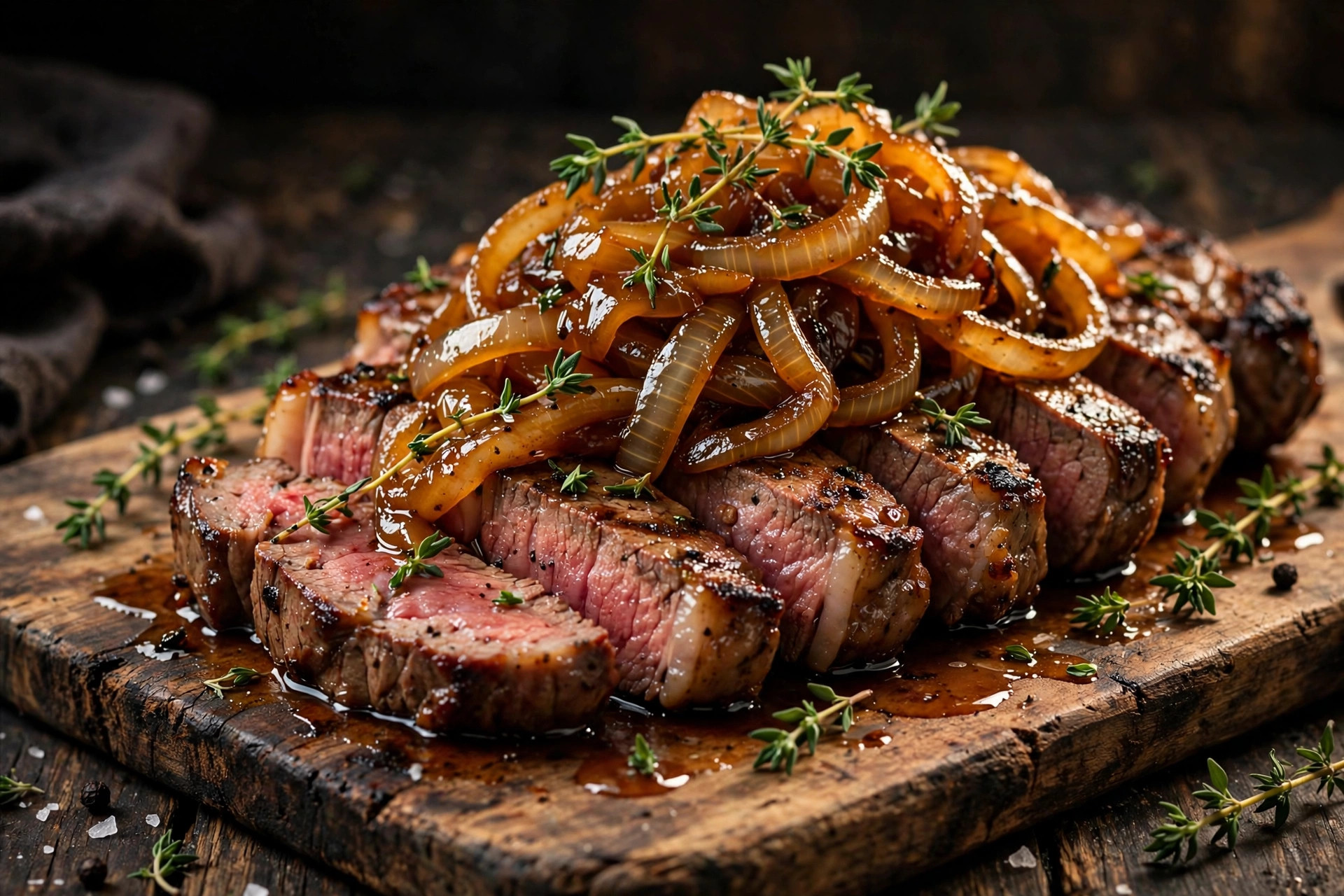
Caramelized onions are one of the easiest ways to elevate everyday meals. Slowly cooked until soft, golden brown, and naturally sweet, they add incredible depth of flavor to steaks, burgers, sandwiches, pizzas, pasta, and countless other dishes.
Unlike quickly sautéed onions, caramelized onions require patience. The slow cooking process allows the onions’ natural sugars to develop, creating a rich, buttery flavor that’s both savory and slightly sweet.
Why You’ll Love This Recipe
- Rich, sweet, and savory flavor
- Easy with just a few ingredients
- Perfect for meal prep
- Pairs with countless dishes
- Freezer-friendly
- Naturally gluten-free
- Restaurant-quality results at home
Your Shopping Guide
Main Ingredients
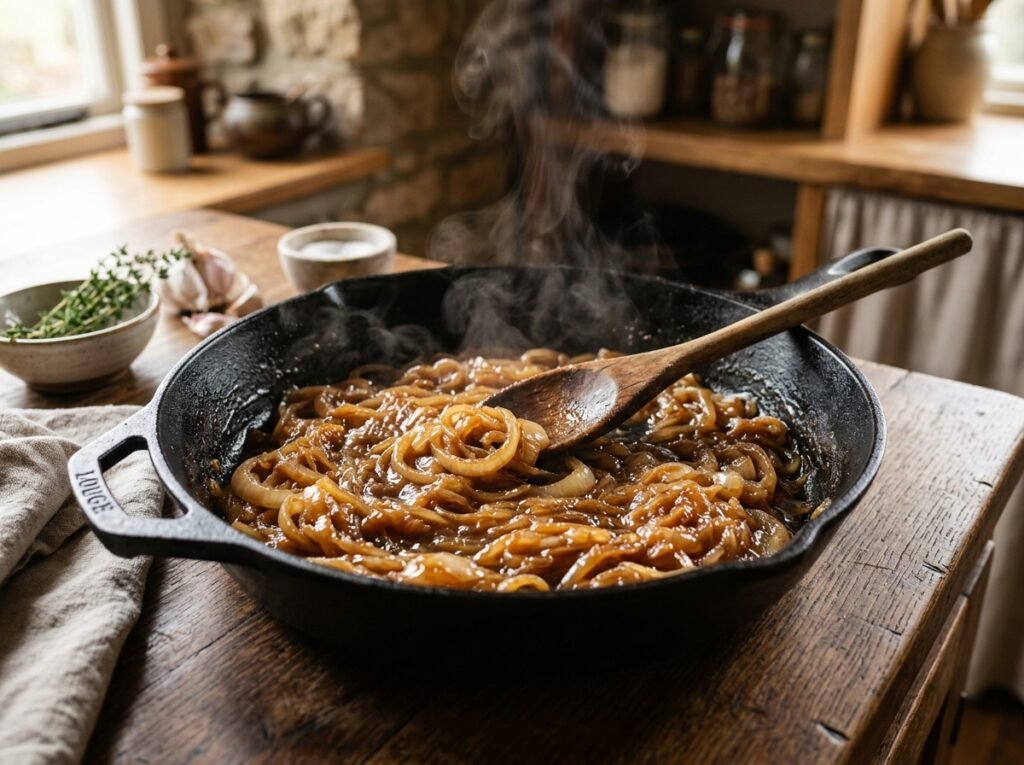
- 3 large yellow onions
- 2 tablespoons olive oil
- 1 tablespoon unsalted butter (optional)
- ½ teaspoon salt
- ¼ teaspoon black pepper
Optional Flavor Boosters
- 1 teaspoon brown sugar
- 1 teaspoon balsamic vinegar
- 1 teaspoon Worcestershire sauce
- Fresh thyme
- Garlic cloves
- Black pepper to taste
Toolbox for This Recipe
Gather these kitchen essentials before you begin:
- Large heavy-bottomed skillet or cast iron pan
- Sharp chef’s knife
- Cutting board
- Wooden spoon or silicone spatula
- Measuring spoons
Caramelized Onions For Steak, Burgers, Sides: From Prep to Plate
Step 1: Prepare the Onions
Peel the onions and slice them into thin, even strips.
Uniform slices help the onions cook evenly.
Step 2: Heat Your Skillet
Place a large skillet over medium heat.
Add the olive oil and allow it to warm.
If using butter, wait until the final few minutes of cooking for the richest flavor.
Step 3: Add the Onions
Add the sliced onions to the skillet.
Stir to coat them evenly with the oil.
Spread them into an even layer.
Step 4: Season and Cook
Sprinkle the onions with salt and black pepper.
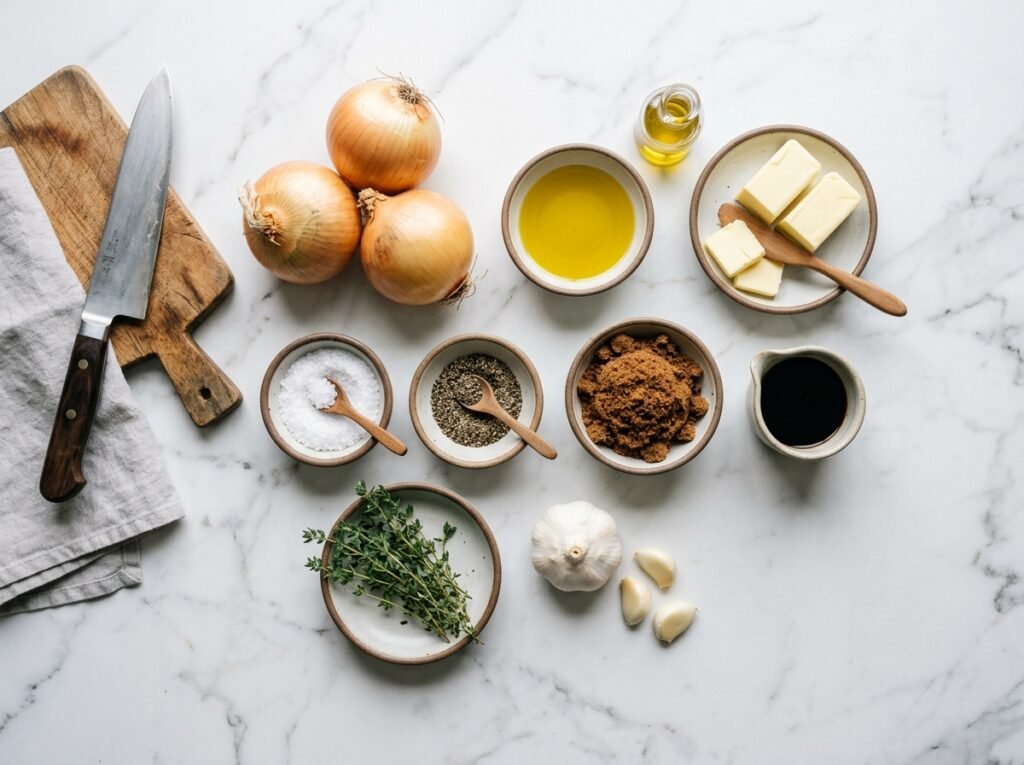
Cook over medium-low heat, stirring every 3–5 minutes.
As they soften, reduce the heat if necessary to prevent burning.
Step 5: Enhance Sweetness (Optional)
For slightly sweeter onions, stir in:
- Brown sugar
- Balsamic vinegar
These ingredients enhance the onions’ natural sweetness without overpowering their flavor.
Step 6: Slow and Steady Wins the Race
Continue cooking for 35–45 minutes, stirring occasionally.
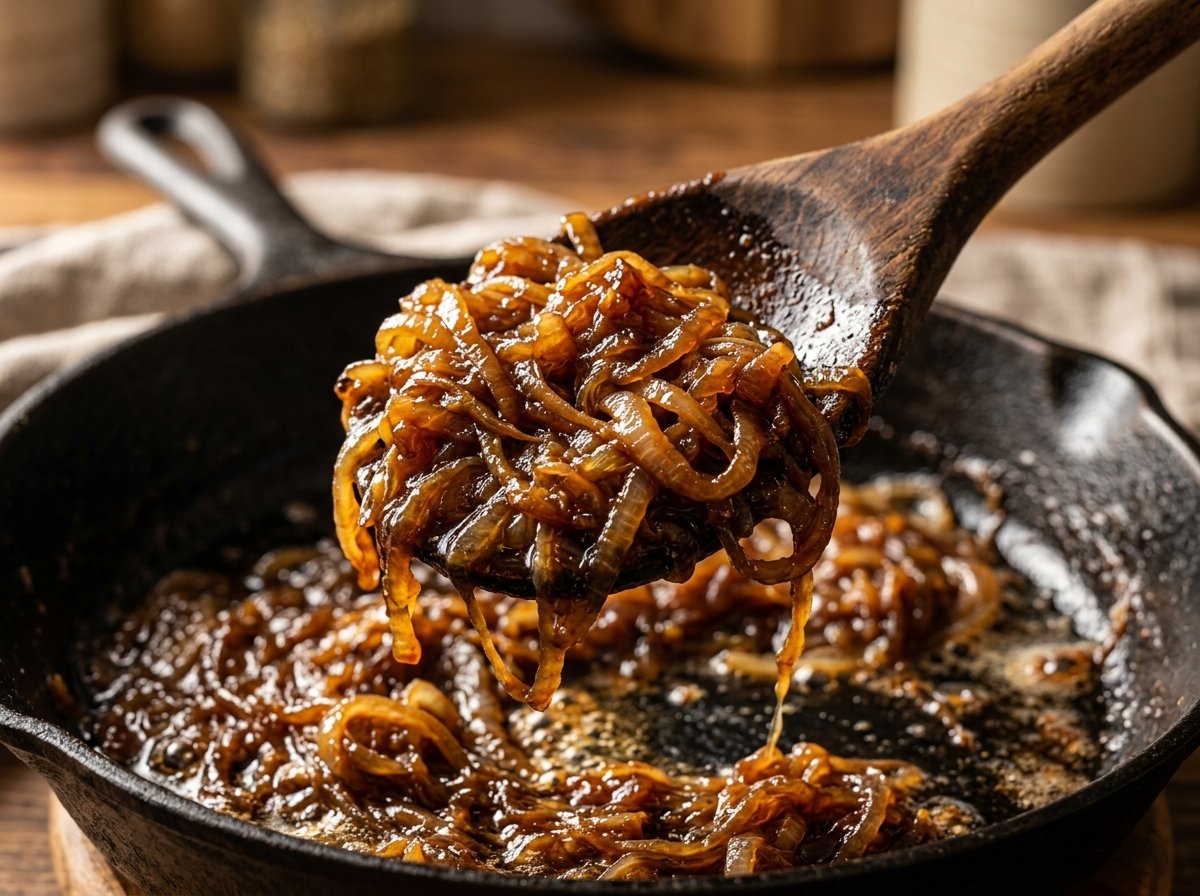
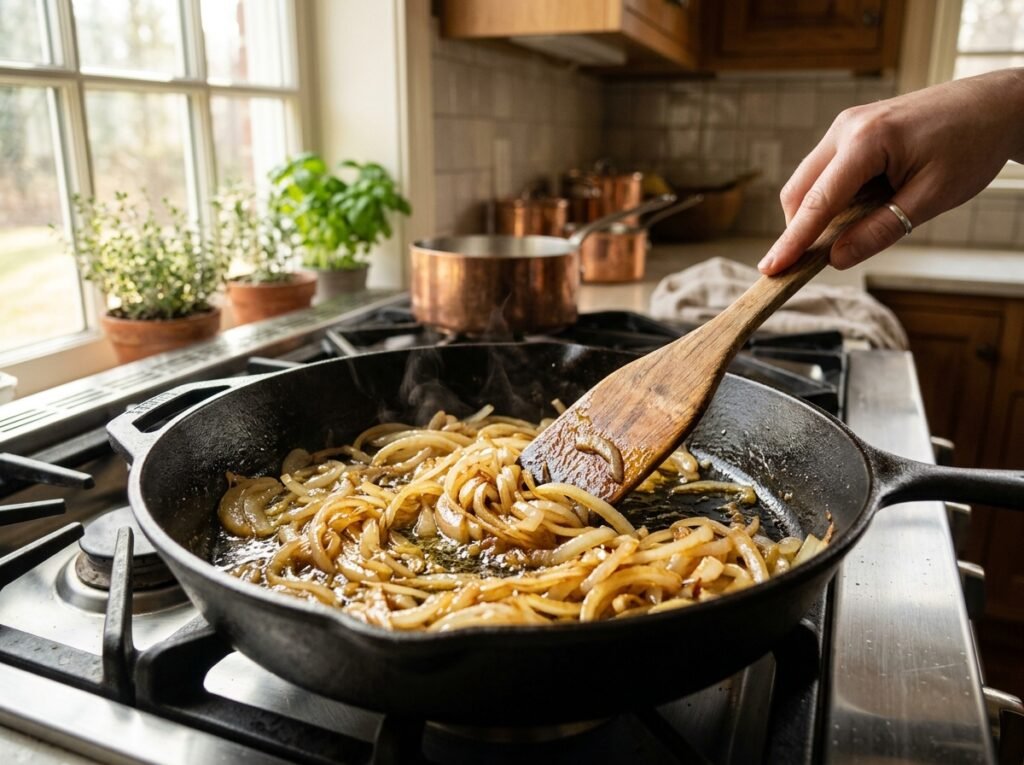
The onions are ready when they become deep golden brown, very soft, and jam-like.
Patience is the secret to perfect caramelized onions.
Step 7: Finish with Butter (Optional)
Stir in the butter during the last 2–3 minutes of cooking.
This adds extra richness and a silky finish.
Taste and adjust the seasoning if needed.
Step 8: Serve and Enjoy
Serve warm over:
- Steaks
- Burgers
- Hot dogs
- Grilled chicken
- Pizza
- Sandwiches
- Pasta
- Mashed potatoes
They also make an excellent topping for omelets and grilled vegetables.
Quick Replacement Ideas
White Onions
Offer a milder, sweeter flavor.
Red Onions
Provide a slightly sweeter taste and beautiful color.
Sweet Onions
Such as Vidalia onions caramelize especially well thanks to their higher natural sugar content.
Vegan Version
Simply omit the butter or replace it with vegan butter.
Behind-the-Scenes Notes
Caramelization occurs when the natural sugars in onions slowly break down under gentle heat. This process creates their signature golden color and rich, sweet flavor. Cooking too quickly over high heat can burn the onions before they have time to caramelize properly, so patience is essential.
Keep-It-Fresh Plan
Refrigerator
Store cooled caramelized onions in an airtight container for up to 5 days.
Freezer
Freeze in small portions for up to 3 months.
Ice cube trays work well for freezing individual servings.
Reheating
Warm gently in a skillet over low heat or microwave until heated through.
Meal Prep Tip
Prepare a large batch and keep portions ready to add instant flavor to meals throughout the week.
What Are the Secrets to Perfect Caramelized Onions?
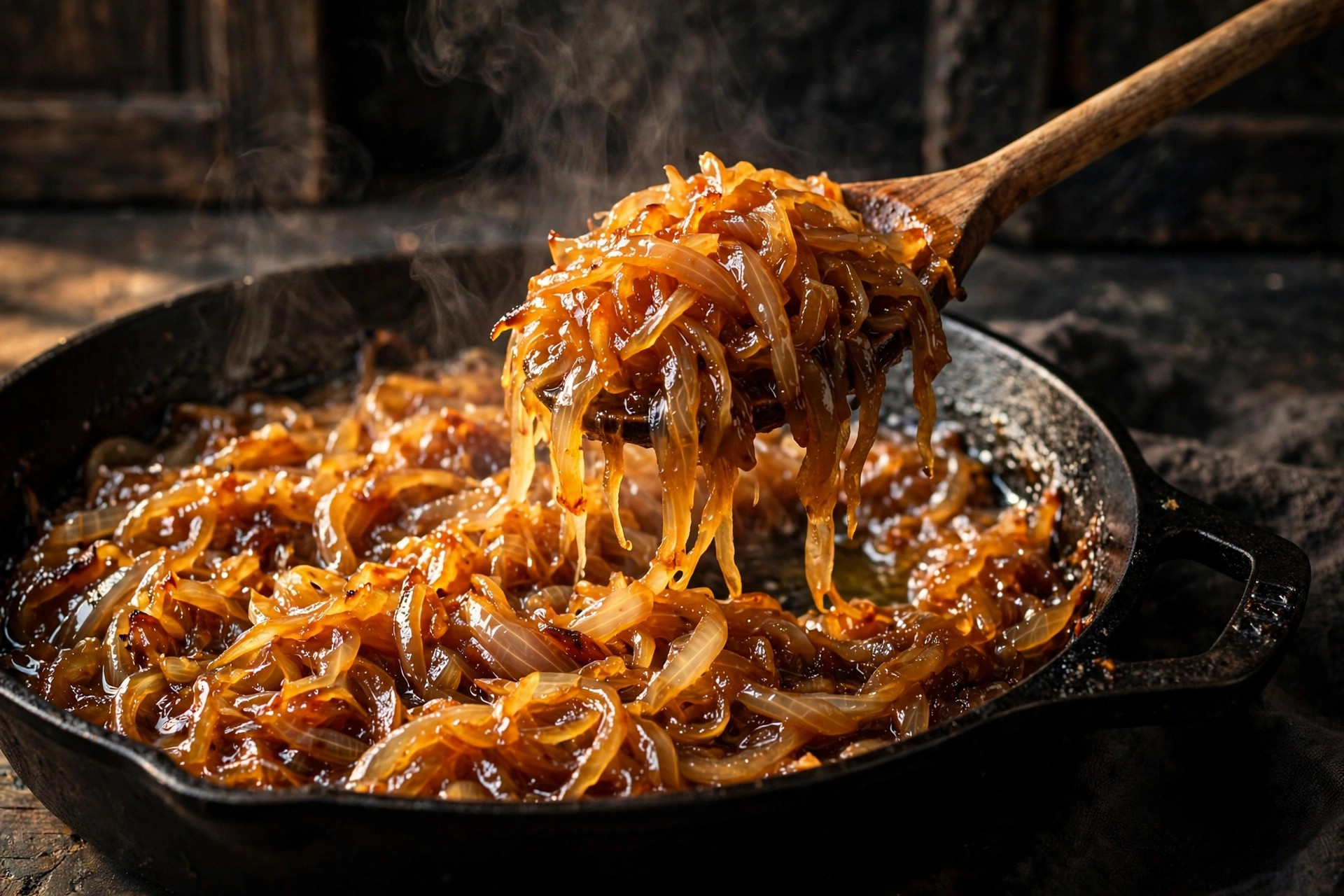
Great caramelized onions come down to three things: low heat, a heavy pan, and patience. Use a wide, heavy-bottomed skillet or cast iron pan so the onions spread in a thin layer — crowding them into a small pan steams them instead of caramelizing them. Keep the heat at medium-low and stir only every few minutes so the onions sit long enough to brown between stirs.
Salt the onions early. Salt pulls out moisture, which sounds backwards, but that moisture helps the onions soften evenly before the browning starts. If the pan starts looking dry or the browned bits on the bottom look like they might burn, splash in a tablespoon of water and scrape them up — those browned bits are pure flavor. Never walk away for long in the last 10 minutes; that is when they go from golden to burnt the fastest.
Yellow onions are the classic choice, but sweet onions like Vidalia caramelize even faster thanks to their higher sugar content. Red onions work too and give you a gorgeous deep color. Just slice them evenly — thick and thin pieces in the same batch means some burn while others stay raw.
How Can I Change Up the Flavor?
Once you master the basic method, try these twists. A splash of balsamic vinegar in the last 5 minutes adds a sweet-tart punch that is incredible on burgers. For a steakhouse feel, deglaze the pan with a few tablespoons of red wine or beef broth and let it cook down into a glossy glaze — perfect over our steak tips recipe or a classic steak frites recipe.
Fresh thyme or rosemary stirred in at the end gives the onions an herby depth that pairs beautifully with roast meats. A pinch of smoked paprika adds a subtle smokiness for BBQ-style burgers. And if you love heat, a few red pepper flakes in the last minutes of cooking wake the whole batch up.
What Else Can I Do With Caramelized Onions?
You already know they belong on steaks and burgers — but do not stop there. Fold them into mashed potatoes recipe for a side dish that tastes like it came from a restaurant, or pile them onto truffle fries recipe for the ultimate loaded fries. They are fantastic stirred into scrambled eggs, layered into grilled cheese sandwiches, or spooned over a baked potato with sour cream.
Try them on homemade pizza instead of raw onion, mix them into meatloaf for extra moisture and sweetness, or blend a spoonful into mayo with a squeeze of lemon for a burger spread that beats bottled sauce — or go all in with our Big Mac sauce recipe on your next homemade burger night. They also shine in savory tarts, French onion soup, and folded into an omelet. Keep a jar in the fridge and you will find yourself adding them to everything, from sausage and potato recipes to a simple bowl of white rice.
Caramelized Onion Troubleshooting
Why do my onions taste bitter?
Bitterness almost always means the heat was too high and some pieces scorched. Next time, lower the heat and stir a little more often. You cannot fix burnt onions, so start fresh rather than trying to save them.
How many onions do I need for a batch?
Onions shrink a lot — about 3 large onions cook down to roughly 1 to 1 and 1/2 cups. If you want enough for meal prep through the week, start with 5 or 6 large onions in your biggest skillet.
Can I caramelize onions in a slow cooker?
Yes. Fill the slow cooker with sliced onions, a little butter or oil, and salt, then cook on low for 8 to 10 hours, stirring once or twice. They will not get quite as deep a color as stovetop onions, but the flavor is excellent and the method is completely hands-off.
Can I make caramelized onions without any oil or butter?
You can use a nonstick pan with a few tablespoons of water or broth instead of fat. The result is a little less rich but still sweet and jammy. Add more liquid a splash at a time whenever the pan looks dry.
Why are my onions soft but not brown after 30 minutes?
They are probably crowded. Spread them into a thinner layer or work in two batches. More surface contact with the hot pan means faster, more even browning.
Quick Q&A
Can I make caramelized onions in advance?
Yes. They store very well and often taste even better the next day after the flavors have developed.
What can I use caramelized onions on?
They’re delicious on burgers, steaks, grilled chicken, sandwiches, pizzas, pasta, baked potatoes, mashed potatoes, omelets, salads, and flatbreads.
How do I know when my onions are caramelized?
They should be soft, deep golden brown, glossy, and have a rich, naturally sweet flavor without burnt spots.
Can I add other ingredients while caramelizing onions?
Absolutely. Garlic, fresh thyme, rosemary, balsamic vinegar, Worcestershire sauce, or mushrooms are excellent additions during the final stages of cooking.
Final Thoughts
Caramelized Onions are a simple yet powerful ingredient that can transform everyday meals into something truly special. Their sweet, savory flavor pairs beautifully with meats, vegetables, sandwiches, and more.
With just a little patience and a handful of ingredients, you’ll have a versatile topping that’s worth making again and again.