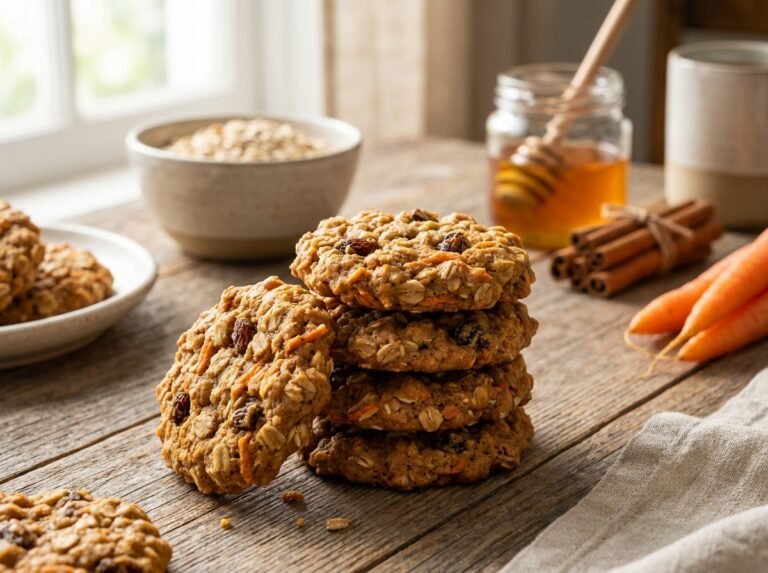
The Ultimate Guide to Xmas Cookies: Classic Recipes, Tips & Ideas
What Makes These Xmas Cookies the Best Holiday Treat?
Every December, kitchens everywhere fill with the same warm perfume: butter, vanilla, cinnamon, and sugar. Xmas cookies are more than dessert — they are the edible centerpiece of the holiday season. They show up on Santa’s plate, in gift tins for neighbors, at cookie exchanges, and on dessert tables next to the eggnog. When you bake them yourself, they carry something no store-bought box ever will: the feeling of the season, made by hand.
What makes this guide different from a random pile of recipes is that it treats xmas cookies as a craft. You get one rock-solid base recipe — a buttery cut-out sugar cookie dough that holds its shape and tastes like childhood — plus four more beloved classics: gingerbread, peanut butter blossoms, snickerdoodles, and chocolate crinkles. Each one is tested for reliability, written for real home kitchens, and explained the way a friend would explain it over the counter.
These recipes are also built to share. Every batch makes plenty, the doughs freeze well, and the decorating ideas scale from a quiet afternoon with one child to a full cookie exchange with twenty friends. Whether this is your first December with a rolling pin or your thirtieth, these xmas cookies will earn a permanent spot in your holiday rotation.
Why Are Xmas Cookies So Popular Every Holiday Season?
Xmas cookies have been a December ritual for centuries, and their popularity only grows. The tradition traces back to medieval Europe, where spiced cookies marked midwinter celebrations, and Dutch settlers brought the custom of holiday cookie baking to America. Somewhere along the way, leaving cookies for Santa turned a nice tradition into a non-negotiable one — no child in America will let December pass without it.
But nostalgia only explains part of it. Xmas cookies are popular because they are the perfect holiday project. Baking them is an activity and a gift in one: you spend an afternoon making them, then hand them out and watch people’s faces. A tin of homemade cookies says “I thought about you” in a way that a gift card never does, and it costs a fraction of the price.
They are also endlessly customizable. One dough becomes stars, trees, snowmen, and reindeer with nothing but cookie cutters and icing. Dietary needs are easy to accommodate — gluten-free, dairy-free, and nut-free versions of every classic exist and taste genuinely good. And in an era of elaborate holiday pressure, cookies remain democratic. You do not need a stand mixer worth hundreds of dollars or professional decorating skills. Flour, butter, sugar, an oven, and a little patience are the whole entry fee.
What Ingredients Do You Need for Classic Xmas Cookies?
This master shopping list covers the base sugar cookie dough plus all five variations in this guide. You will not need every item for every recipe — check each variation for its specific list — but buying from this list once sets you up for a full season of baking.
For the base cut-out sugar cookie dough:
- 3 cups all-purpose flour, spooned and leveled
- 1 tsp baking powder
- 1/2 tsp fine salt
- 1 cup (2 sticks) unsalted butter, softened to room temperature
- 1 cup granulated sugar
- 1 large egg, room temperature
- 2 tsp pure vanilla extract
- 1/2 tsp almond extract (optional but recommended)
For royal icing and decorating:
- 4 cups powdered sugar, sifted
- 3 tbsp meringue powder
- 6 to 8 tbsp lukewarm water
- 1 tsp vanilla extract or lemon juice
- Gel food coloring in red, green, white, and gold
- Assorted sprinkles, sanding sugar, and edible glitter
- Piping bags and small round piping tips (or zip-top bags with corners snipped)
For the gingerbread variation:
- 3 1/4 cups all-purpose flour
- 1 tsp baking soda
- 2 tsp ground ginger
- 1 tsp ground cinnamon
- 1/2 tsp ground cloves
- 1/2 tsp fine salt
- 3/4 cup (1 1/2 sticks) unsalted butter, softened
- 1/2 cup packed dark brown sugar
- 1 large egg
- 1/2 cup unsulphured molasses
For peanut butter blossoms:
- 1 3/4 cups all-purpose flour
- 1 tsp baking soda
- 1/2 tsp salt
- 1/2 cup (1 stick) unsalted butter, softened
- 1/2 cup creamy peanut butter
- 1/2 cup granulated sugar, plus 1/3 cup for rolling
- 1/2 cup packed light brown sugar
- 1 large egg
- 2 tbsp milk
- 1 tsp vanilla extract
- 24 to 30 chocolate kiss candies, unwrapped
For snickerdoodles:
- 2 3/4 cups all-purpose flour
- 2 tsp cream of tartar
- 1 tsp baking soda
- 1/2 tsp salt
- 1 cup (2 sticks) unsalted butter, softened
- 1 1/2 cups granulated sugar
- 2 large eggs
- 1 tsp vanilla extract
- 1/3 cup granulated sugar mixed with 2 tbsp ground cinnamon, for rolling
For chocolate crinkles:
- 1 cup unsweetened cocoa powder
- 2 cups granulated sugar
- 1/2 cup vegetable oil
- 4 large eggs
- 2 tsp vanilla extract
- 2 cups all-purpose flour
- 2 tsp baking powder
- 1/2 tsp salt
- 1 cup powdered sugar, for rolling
Worth having on hand for the whole season:
- Extra butter and eggs (holiday baking burns through them)
- Parchment paper and plastic wrap
- Holiday cookie cutters in a few shapes and sizes
- Airtight tins or containers for storage and gifting
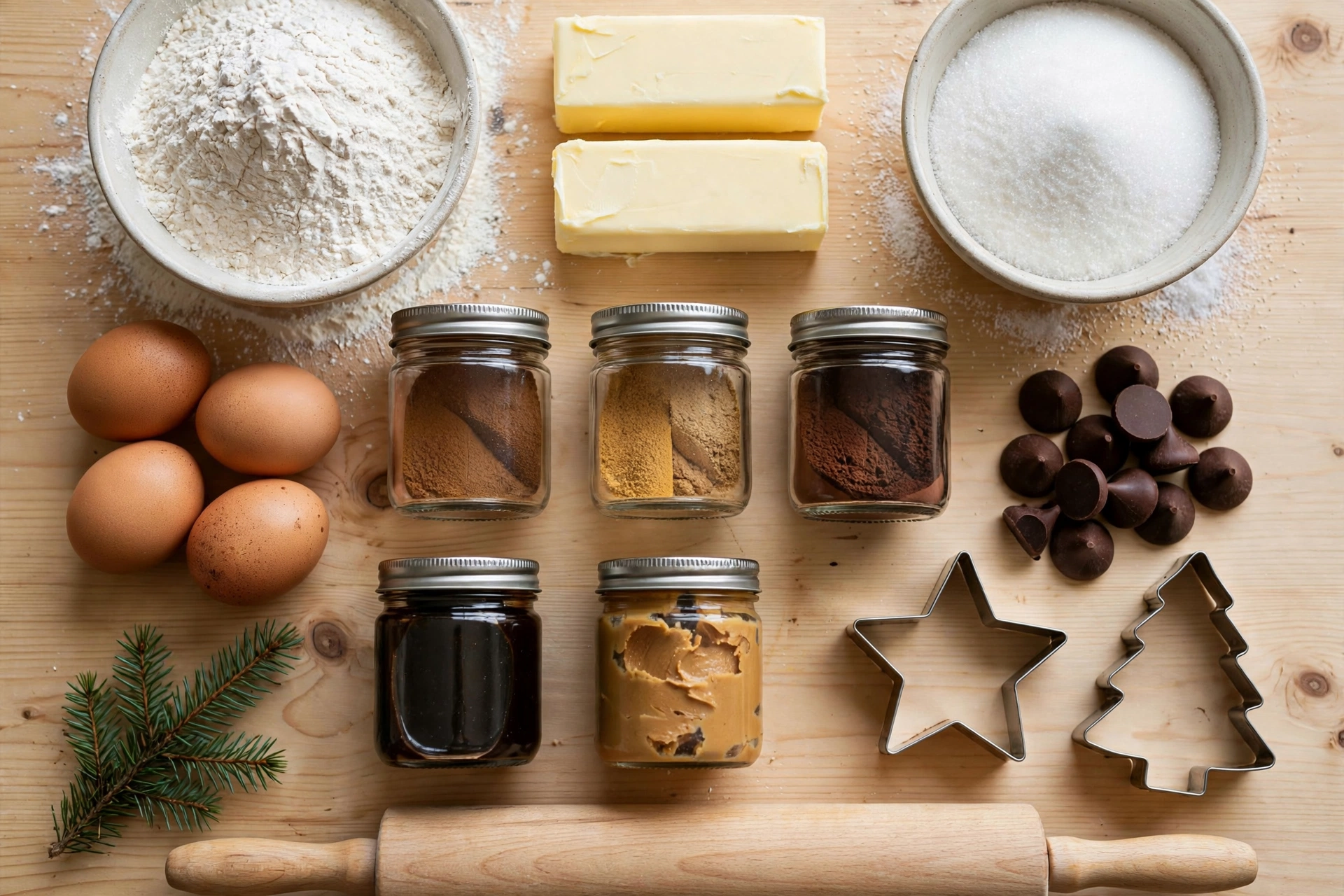
What Equipment Do You Need for Baking Xmas Cookies?
You can bake every cookie in this guide with basic kitchen tools. Fancy equipment helps, but none of it is required.
- Stand mixer or a sturdy hand mixer (a wooden spoon and determination also work)
- Large mixing bowls
- Measuring cups and spoons, plus a kitchen scale if you have one
- Rolling pin and a lightly floured work surface
- Holiday cookie cutters
- Baking sheets (heavy, light-colored ones bake most evenly)
- Parchment paper or silicone baking mats
- Wire cooling racks
- Piping bags with small round tips, or zip-top bags
- Squeeze bottles for flooding icing (optional but handy)
- Airtight containers and cookie tins for storage
- A small offset spatula for lifting cut-out shapes
How Do You Make Classic Xmas Cookies Step by Step?
This is the master method for the cut-out sugar cookies — the foundation of every decorated xmas cookie. The five variations below each follow their own adapted method, but the core techniques here (creaming, chilling, rolling, baking) apply to all of them.
Making the dough:
- Whisk the flour, baking powder, and salt together in a medium bowl and set aside.
- In a large bowl, beat the softened butter and granulated sugar with a mixer on medium-high speed for 3 to 4 minutes, until pale, fluffy, and noticeably increased in volume. This step builds the cookie’s structure — do not rush it.
- Beat in the egg, vanilla, and almond extract until fully combined, scraping down the bowl once halfway through.
- Add the dry ingredients in two additions, mixing on low speed just until the flour disappears. Stop the moment you no longer see streaks of flour.
- Divide the dough in half, flatten each half into a disk, wrap tightly in plastic wrap, and refrigerate for at least 1 hour (or up to 3 days).
Rolling, cutting, and baking:
- Preheat the oven to 350°F (175°C). Line baking sheets with parchment paper.
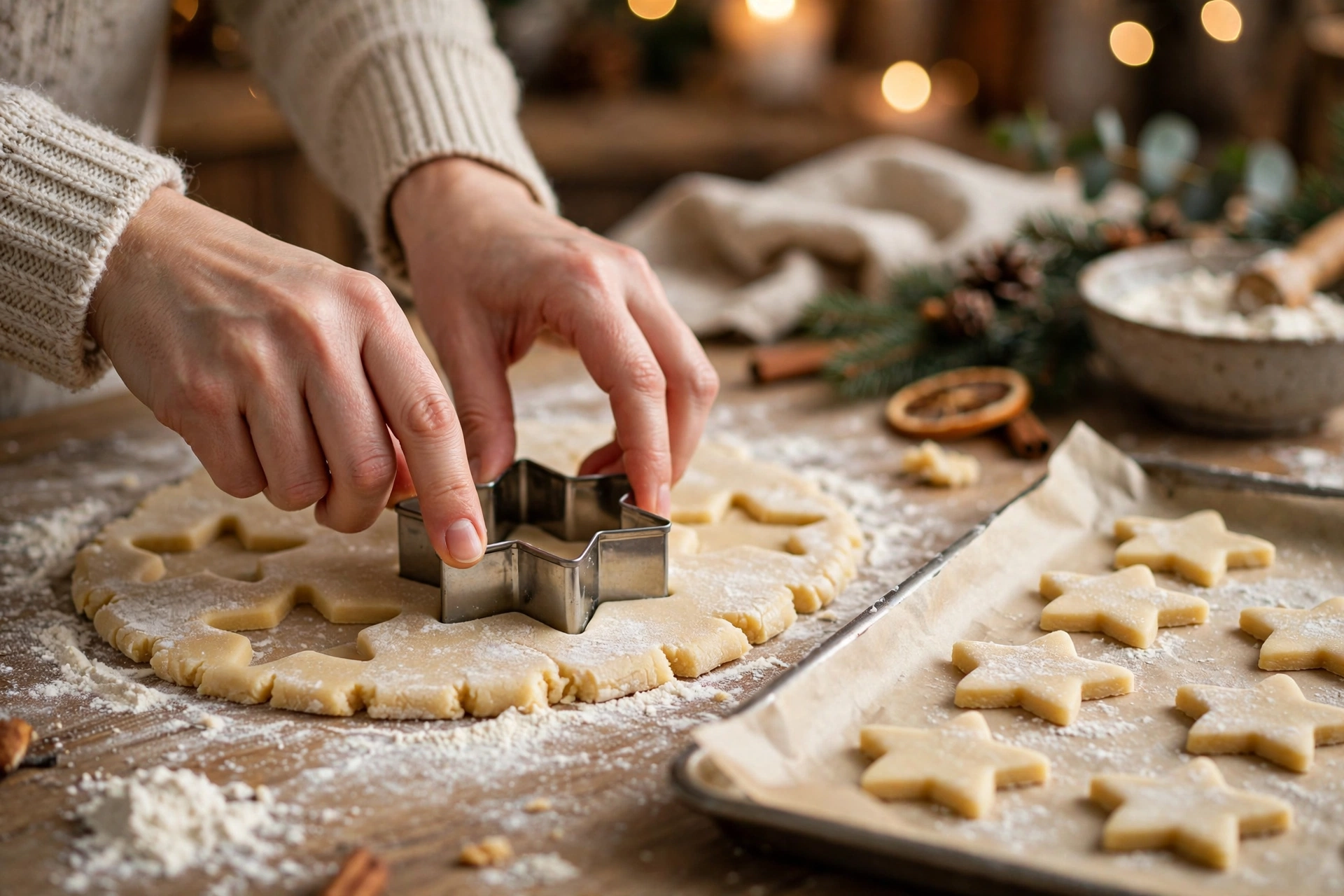
- Working with one disk at a time, roll the dough on a lightly floured surface to 1/4-inch thickness. For the sharpest shapes, roll the dough between two sheets of parchment — no extra flour needed.
- Cut out shapes with floured cookie cutters, cutting straight down without twisting. Transfer to the prepared baking sheets, spacing them 1 inch apart.
- Gather the scraps, re-roll once, and cut more shapes. Do not re-roll more than twice, or the cookies turn tough.
- Chill the cut shapes on their baking sheets for 10 minutes. This firms the butter back up and is the real secret to cookies that keep their crisp edges.
- Bake for 10 to 12 minutes, until the edges are just barely golden and the centers look set but pale. Underbaking slightly keeps them soft.
- Cool on the baking sheet for 5 minutes, then transfer to a wire rack to cool completely before decorating. Warm cookies melt icing on contact.
Making royal icing:
- Beat the powdered sugar, meringue powder, water, and vanilla on medium-high speed for 4 to 5 minutes, until glossy with stiff peaks.
- Divide into bowls and tint with gel coloring. For outlining, the icing should hold a peak; for flooding, thin it with water a few drops at a time until it flows like honey and smooths itself flat in about 10 seconds.
- Outline each cookie, then flood the interior and use a toothpick to guide the icing into corners and pop air bubbles.
- Add sprinkles while the icing is wet. Let decorated cookies dry uncovered for at least 8 hours (overnight is safest) before stacking or packaging.
What Are the Pro Tips for Perfect Xmas Cookies?
Chill everything, twice. Cold dough is the difference between crisp reindeer and melted blobs. Chill the dough before rolling, and chill the cut shapes before baking. If your kitchen is warm, work in batches and keep the rest of the dough in the fridge.
Weigh your flour. A cup of flour can vary by 30 percent depending on how you scoop it, and that swing is the difference between tender and tough cookies. Spoon flour into the cup and level it off, or better yet, use a scale: 1 cup of all-purpose flour weighs about 120 grams.
Soften butter properly. “Room temperature” means cool to the touch and giving slightly when pressed — about 65°F (18°C). Butter that is too warm or partially melted makes cookies spread. Cut it into pieces and leave it on the counter for 30 to 45 minutes; never microwave it.
Bake one test cookie first. Ovens lie. Bake a single cookie from each batch to check spread, browning, and timing before committing a full tray. Adjust the oven temperature or chill time based on what you see.
Use gel food coloring, not liquid. Liquid coloring thins royal icing and gives washed-out colors. Gel gives you deep reds and greens with just a drop or two, without changing the icing’s consistency.
Decorate in stages. Outline all your cookies first, then go back and flood them. By the time you finish outlining the last cookie, the first outlines have crusted enough to hold the flood icing neatly inside.
Save your scraps wisely. Leftover dough scraps make excellent “baker’s treat” cookies — just press them together, roll, cut into simple rounds, and bake. Nobody minds eating the misshapen ones while the pretty ones dry.
What Are the Most Common Mistakes When Baking Xmas Cookies?
1. Skipping the chill time. Warm, soft dough spreads in the oven, and your sharp star cut-outs turn into vague blobs. Chilling firms up the butter so the cookies hold their shape. It is the single most skipped step and the single biggest cause of disappointment.
2. Overbaking “just to be safe.” Cookies keep cooking on the hot baking sheet after you pull them from the oven. Take them out when the centers still look slightly underdone and pale — they will set as they cool. An extra two minutes is the difference between chewy and crunchy.
3. Overmixing after adding flour. Once flour meets liquid, gluten starts developing. Beat the dough past the point where the flour disappears and you get tough, dense cookies instead of tender ones. Mix on low, stop early, and finish by hand if needed.
4. Decorating warm cookies. Even slightly warm cookies melt royal icing into a sad, runny mess. Wait until the cookies are completely cool to the touch — not just “cool enough.” When in doubt, wait another 30 minutes.
5. Using old leaveners. Baking powder and baking soda lose strength after about 6 months once opened. Old leavener gives you flat, dense cookies no matter how perfect your technique is. Test baking powder by dropping a spoonful in hot water — it should fizz vigorously. Test baking soda in vinegar the same way.
6. Stacking decorated cookies too soon. Royal icing feels dry on top long before it is dry underneath. Stacking or bagging cookies after only a few hours smears the designs. Give them a full 8 hours at room temperature, or a full overnight dry, before packaging.

What Are 5 Classic Xmas Cookie Recipes to Try?
Variation 1: How Do You Make Perfect Gingerbread Xmas Cookies?
Gingerbread is the deep, spicy soul of the xmas cookie world. Start by whisking the flour, baking soda, ginger, cinnamon, cloves, and salt. Beat the softened butter with the dark brown sugar until fluffy, then beat in the egg and molasses until smooth. Add the dry ingredients on low speed just until combined. Divide, flatten into disks, wrap, and chill for at least 2 hours — molasses dough is sticky and needs the cold.
Roll to 1/4-inch thickness on a floured surface and cut into gingerbread people, stars, or houses. Bake at 350°F (175°C) for 9 to 11 minutes, until the edges are firm but the centers still look slightly soft. Cool completely, then decorate with royal icing: white squiggles for smiles and buttons, or full flooded designs for showpieces. Gingerbread keeps its snap for weeks in an airtight tin, and the flavor actually deepens after a day or two. For a softer, chewier version, underbake by a minute and store with a slice of bread in the tin.
Variation 2: What Is the Secret to Bakery-Style Peanut Butter Blossoms?
Peanut butter blossoms — those soft peanut butter cookies with a chocolate kiss pressed into the center — are a cookie exchange legend. Whisk the flour, baking soda, and salt. Beat the butter, peanut butter, granulated sugar, and brown sugar until creamy, then beat in the egg, milk, and vanilla. Add the dry ingredients on low until just combined, then chill the dough for 30 minutes so it scoops cleanly.
Roll tablespoon-sized balls, roll each in granulated sugar, and place 2 inches apart on parchment-lined sheets. Bake at 375°F (190°C) for 8 to 10 minutes, until puffed and lightly golden with small cracks. The moment they come out of the oven, press an unwrapped chocolate kiss firmly into the center of each cookie — the heat melts the base of the kiss just enough to fuse it in place. Cool completely on the pan before moving. The secret to the perfect blossom is timing: underbake slightly, press the kiss immediately, and do not touch the cookies again until they are fully cool, or the kisses will slide.
Variation 3: Can You Make Soft and Chewy Snickerdoodles for Christmas?
Snickerdoodles bring their cinnamon-sugar warmth to any xmas cookie platter, and they are one of the easiest cookies in this guide. Whisk the flour, cream of tartar, baking soda, and salt — the cream of tartar is what gives snickerdoodles their signature tangy flavor and pillowy chew, so do not skip it. Beat the butter and sugar until fluffy, beat in the eggs and vanilla, then add the dry ingredients on low.
Scoop 1 1/2-tablespoon balls and roll each generously in the cinnamon-sugar mixture. Bake at 375°F (190°C) for 9 to 11 minutes, until the edges are set but the centers still look soft and slightly puffy — they will settle into perfect chewy rounds as they cool. For a festive twist, add red and green sanding sugar to the cinnamon-sugar coating, or drizzle cooled cookies with white chocolate. Snickerdoodles freeze beautifully baked, and the dough balls freeze well too — roll in cinnamon sugar after thawing for the freshest flavor.
Variation 4: How Do You Get Those Beautiful Cracks on Chocolate Crinkles?
Chocolate crinkles earn their place on every xmas cookie tray with that dramatic black-and-white cracked surface. Whisk the cocoa, granulated sugar, and oil until smooth, then beat in the eggs one at a time and the vanilla. Stir in the flour, baking powder, and salt until just combined. The dough will be soft — chill it for at least 4 hours or overnight. This step is non-negotiable; warm crinkle dough is impossible to roll.
Scoop tablespoon-sized balls and roll each first in granulated sugar, then very generously in powdered sugar — the double coating is what creates the bold white cracks. Bake at 350°F (175°C) for 10 to 12 minutes, until the tops are cracked and the edges look set. Cool on the pan for 5 minutes before moving to a rack. The cracks form as the cookie puffs and the powdered sugar coating splits, so do not open the oven door early. For extra holiday flair, add 1 teaspoon of peppermint extract to the dough for chocolate-mint crinkles, or a pinch of espresso powder to deepen the chocolate flavor.
Variation 5: What About Classic Iced Sugar Cookies with a Twist?
This variation takes the base cut-out recipe and dresses it up three ways. First, the flavor twist: swap the almond extract for lemon, orange, or peppermint extract, and add a teaspoon of finely grated citrus zest to the dough. Second, the texture twist: after cutting your shapes, brush them lightly with beaten egg white and sprinkle with coarse sanding sugar before baking — you get sparkly, crisp-edged cookies that need no icing at all. Third, the chocolate twist: dip half of each baked, cooled cookie in melted dark or white chocolate, then add sprinkles before the chocolate sets.
These dressed-up sugar cookies are ideal when you want the look of decorated xmas cookies without a full royal icing session. The sanding-sugar version in particular is a great project for young kids: no piping bags, no drying time, just sparkle. All three versions store and freeze exactly like the base recipe.
How Do You Store Xmas Cookies (Fridge and Freezer)?
Room temperature: Most xmas cookies keep 1 to 2 weeks in an airtight container at room temperature. Layer them between sheets of parchment or wax paper so decorations do not stick. Keep crisp cookies (gingerbread, sugar cut-outs) separate from soft cookies (blossoms, snickerdoodles) — soft cookies release moisture that will make crisp ones go stale.
Refrigerator: The fridge is rarely the best home for baked cookies — the cold dries them out. The exception is cookies with cream cheese frosting or other perishable toppings, which need refrigeration and should be eaten within 4 to 5 days. Bring refrigerated cookies to room temperature before serving for the best flavor and texture.
Freezer: Almost all xmas cookies freeze beautifully for up to 3 months. Freeze undecorated cut-outs and gingerbread in rigid containers with parchment between layers. Freeze drop cookies (blossoms, snickerdoodles, crinkles) the same way. Thaw at room temperature for 1 to 2 hours — do not microwave them. Cookie dough also freezes well: shape drop-cookie dough into balls and freeze on a tray before bagging, or freeze cut-out dough as wrapped disks. Bake from frozen, adding 1 to 2 minutes to the baking time. Royal icing decorations should be added after thawing, not before freezing.
Cookie dough in the fridge: All five doughs in this guide keep 3 to 4 days refrigerated when wrapped tightly. This makes xmas cookies the ultimate make-ahead holiday project: mix doughs over a weekend, then bake and decorate across the week as time allows.
What Are the Best Serving Suggestions for Xmas Cookies?
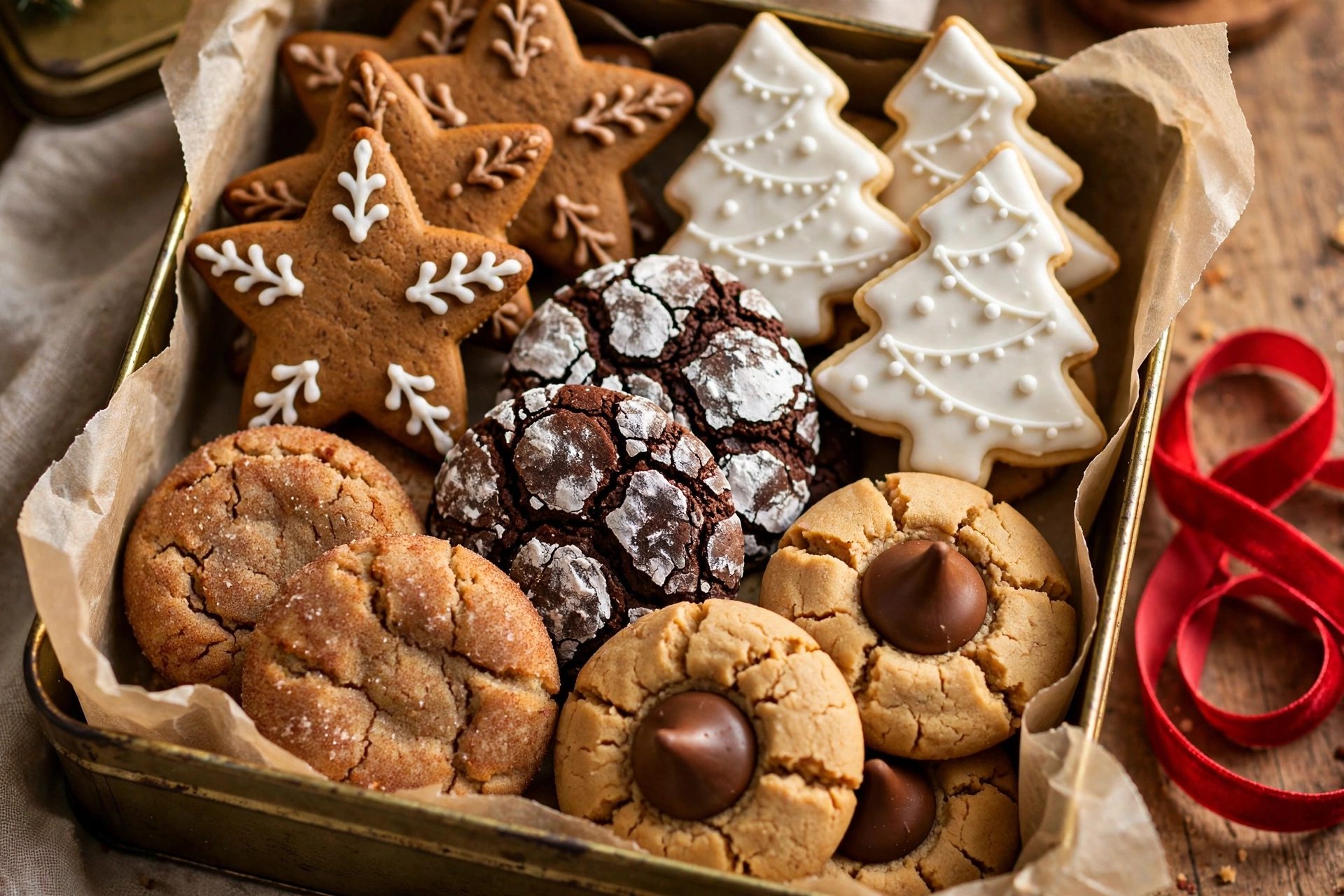
A cookie platter is all about contrast — of color, shape, and flavor. Arrange dark chocolate crinkles next to snowy white iced sugar cookies, tuck red-and-green decorated gingerbread between golden snickerdoodles, and crown the platter with a few peanut butter blossoms for height. Odd numbers of each type look more natural than neat rows, and a sprinkle of fresh cranberries and rosemary sprigs around the edges makes the whole thing look professionally styled in about thirty seconds.
For gifting, layer cookies in tins or sturdy boxes with parchment between layers and a handwritten tag. Include a mix of sturdy cookies on the bottom (gingerbread, sugar cut-outs) and delicate ones on top. A simple ribbon and a sprig of evergreen turn a ten-dollar tin into a gift people photograph.
At parties, set cookies out in waves rather than all at once — a fresh platter halfway through the evening feels generous and keeps the last cookies from going stale. Pair the platter with hot cocoa, mulled cider, coffee, or a glass of cold milk for the traditionalists. And always set aside a plate for Santa on Christmas Eve. Some traditions are not optional.

Xmas Cookies FAQs
Can I make xmas cookie dough ahead of time?
Yes — and you should. All five doughs in this guide refrigerate well for 3 to 4 days wrapped tightly in plastic, and most freeze for up to 3 months. Making dough ahead is the secret of stress-free holiday baking: mix several doughs on a weekend, then bake fresh batches across the month. Cut-out doughs actually roll better after a long chill, so ahead-of-time is not just convenient, it is better.
Why did my cut-out xmas cookies spread and lose their shape?
The usual culprit is warm dough or butter that was too soft to begin with. Chill the dough before rolling, chill the cut shapes on the baking sheet before they go in the oven, and make sure your butter was cool-room-temperature, not melty. Also check your oven temperature with a thermometer — an oven running hot melts the butter before the cookie structure sets. One test cookie per batch tells you everything.
How do I get royal icing to the right consistency?
Start thick and thin down. Your base icing should hold a stiff peak for outlining. For flooding, add water literally a few drops at a time and stir — it goes from too thick to too thin shockingly fast. The classic test: drizzle a ribbon of icing across the surface. If it smooths flat in about 10 seconds, it is perfect for flooding. If it holds its shape, it is outline consistency. Keep bowls covered with a damp towel while you work, since royal icing crusts in minutes.
Can I make these xmas cookies gluten-free?
Yes. A good 1-to-1 gluten-free baking flour blend (one that contains xanthan gum) substitutes cup-for-cup in all five recipes here. Chill gluten-free dough a little longer, since it tends to be softer, and handle cut-outs gently — they are more fragile before baking. The taste and texture are remarkably close to the originals, especially in spiced cookies like gingerbread and snickerdoodles where the spices carry the flavor.
How far in advance can I bake xmas cookies for gifting?
Bake sturdy cookies (sugar cut-outs, gingerbread, snickerdoodles) up to 2 weeks ahead and store airtight at room temperature — or up to 3 months ahead if you freeze them. Decorate with royal icing after thawing for the crispest designs. Assemble gift tins 1 to 2 days before giving them so everything tastes fresh. Peanut butter blossoms are best baked within a week of gifting since the chocolate kisses can bloom (develop a white coating) over longer storage, though they are still perfectly delicious.
What is the best way to mail xmas cookies?
Choose sturdy cookies: gingerbread, sugar cut-outs, and snickerdoodles ship far better than delicate blossoms or crinkles. Wrap pairs of cookies back-to-back in plastic wrap, cushion them in a rigid tin or box with crumpled parchment, and fill every gap so nothing shifts. Ship early in the week with the fastest service you can afford, and avoid chocolate-heavy cookies if the package will sit in heat. A slice of bread tucked in the tin keeps cookies soft in transit — just warn the recipient it is not part of the gift.
Can I freeze decorated xmas cookies?
You can, with care. Royal icing freezes reasonably well — freeze decorated cookies in a single layer on a tray until solid, then layer in a rigid container with parchment between layers for up to 1 month. Thaw uncovered at room temperature so condensation does not spot the icing. Colors may bleed slightly on thawing, especially dark reds. For showpiece cookies, freeze them undecorated and ice after thawing — the results are noticeably better.
My cookies came out hard as rocks — what went wrong?
Almost always overbaking, overmixing, or too much flour. Pull cookies when the centers look slightly underdone, mix only until the flour disappears, and measure flour by spooning and leveling (or weighing). If they are already baked and hard, seal them in a container with a slice of fresh bread overnight — the cookies absorb moisture from the bread and soften noticeably. It will not rescue truly burnt cookies, but it works wonders on merely overbaked ones.
Do I need meringue powder for royal icing?
Meringue powder is the easiest and safest option — it is pasteurized, shelf-stable, and gives reliable results. The alternative is fresh egg whites, which work but carry a small food safety risk and make a slightly less stable icing. If you go the egg white route, use pasteurized egg whites from a carton. There is no good substitute that gives true royal icing behavior; if you want to skip it entirely, use a simple powdered sugar glaze (powdered sugar + milk + vanilla) instead — it tastes great on xmas cookies, it just will not harden enough for stacking or intricate piping.
How many xmas cookies does each recipe make?
The base sugar cookie recipe makes about 36 medium cut-outs. Gingerbread makes about 30 cookies depending on cutter size. Peanut butter blossoms make 24 to 30. Snickerdoodles make about 36. Chocolate crinkles make about 36. For a cookie exchange where each guest takes home a dozen, plan on baking 3 to 4 full batches total across two or three varieties — this guide’s five recipes give you plenty to choose from.
Final Thoughts
Xmas cookies are one of the rare holiday traditions that get better the more casually you treat them. The imperfectly iced star your kid made tastes better than the bakery-perfect one, because it has a story. The slightly lopsided gingerbread man is the one everyone reaches for.
Pick one recipe from this guide and bake it this weekend — just one. Notice how good the kitchen smells, how the simple rhythm of scooping and rolling quiets a busy mind. Then, when December hits full stride, you will already have your favorite in rotation, your tins ready, and maybe a freezer full of dough waiting. That is what the season is supposed to feel like. Happy baking, and may your xmas cookies be merry and bright.
Once the cookies are cooling, make the moment extra cozy — our hot cocoa station turns a simple cookie plate into a full holiday experience, and the caramel apple bark is an easy edible gift to box up alongside your cookies. Bake a batch for the neighbors and watch them disappear.