
Cinnamon Roll Pumpkin Bread
This recipe exists because I couldn’t decide between making pumpkin bread or cinnamon rolls one fall weekend, and it turns out I didn’t have to choose. A ribbon of cinnamon-sugar swirls through a moist, spiced pumpkin loaf, and the whole thing gets finished with a simple glaze that soaks slightly into the warm crumb. It tastes like both desserts at once, and it’s a lot easier than making either one from scratch on its own.
The swirl is the part that makes this feel special, and it’s simpler than it looks — you layer the batter with a cinnamon-sugar-butter mixture in the pan, then drag a knife through it a few times to create that classic marbled pattern. No rolling, no proofing, no yeast dough involved anywhere in the process.
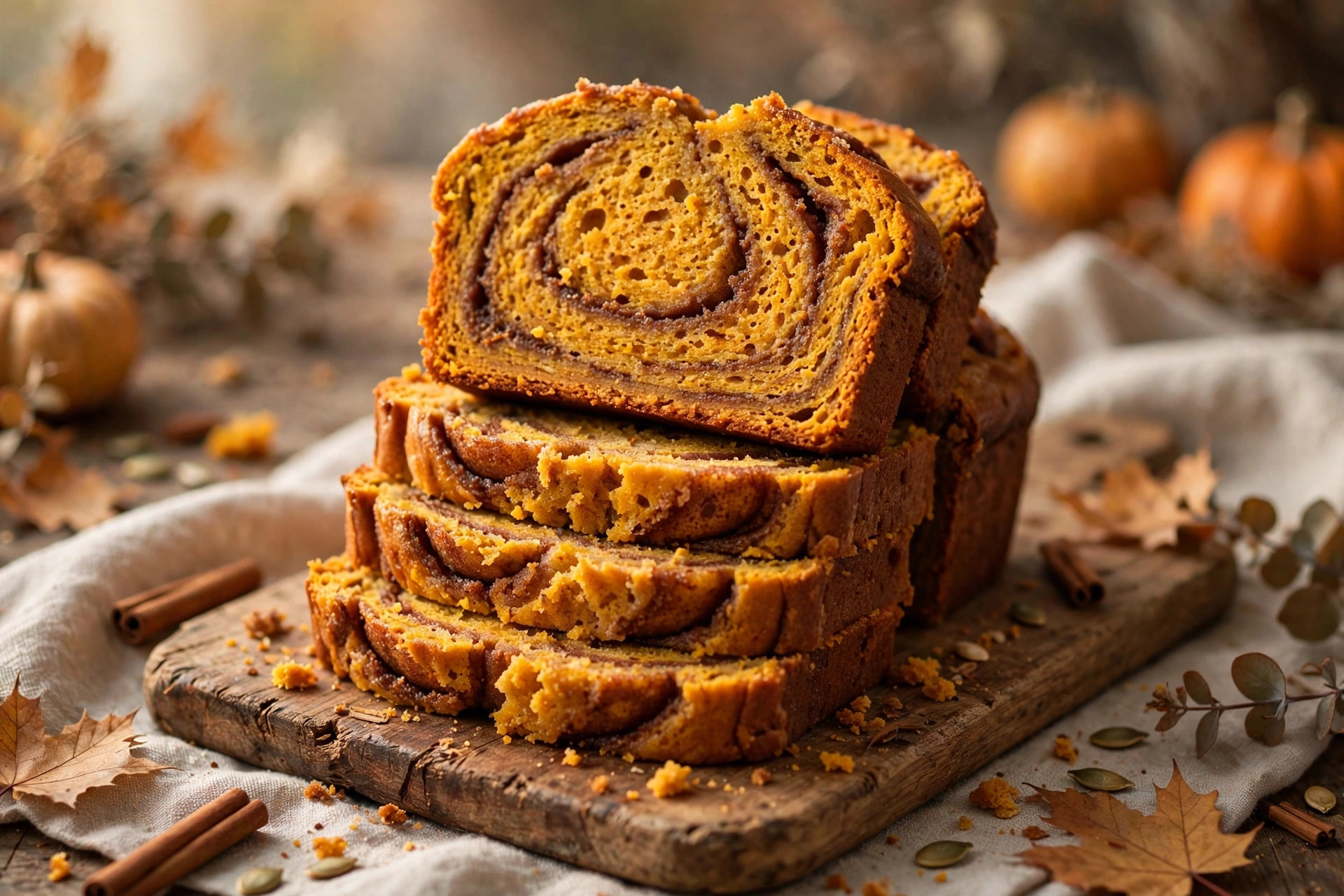
It bakes into a single loaf with a tender, moist crumb from the pumpkin, streaked through with pockets of cinnamon-sugar, and topped with a glaze that sets into a light, slightly crackly layer once it cools. It’s the kind of bread that makes the whole kitchen smell like fall while it bakes.

Why You’ll Love This Bread
- Combines moist pumpkin bread with a cinnamon roll swirl in one loaf
- No yeast, no rolling, no proofing — just a simple swirl technique
- Finished with a sweet glaze that sets into a light, crackly layer
- Makes the whole kitchen smell like fall while it bakes
A Quick Note on Ingredients
Use pure pumpkin puree here, not pumpkin pie filling — the pie filling version already contains sugar and spices, which will throw off the balance of this recipe. A single 15-ounce can of pure pumpkin puree is exactly the right amount.
For the swirl, the butter needs to be very soft, almost spreadable, so it mixes easily with the brown sugar and cinnamon into a paste you can drizzle. If it’s too firm, it will clump instead of swirling through the batter cleanly.

Ingredients
For the pumpkin bread:
- 1 3/4 cups all-purpose flour
- 1 teaspoon baking soda
- 1/2 teaspoon salt
- 1 teaspoon ground cinnamon
- 1/2 teaspoon ground nutmeg
- 1 1/2 cups granulated sugar
- 1/2 cup vegetable oil
- 2 large eggs
- 1 (15 oz) can pumpkin puree
- 1/4 cup water
For the cinnamon swirl:
- 3 tablespoons unsalted butter, very soft
- 1/2 cup brown sugar
- 1 tablespoon ground cinnamon
For the glaze:
- 1 cup powdered sugar
- 2 tablespoons milk
- 1/2 teaspoon vanilla extract
Instructions
1. Preheat and prep. Preheat the oven to 350°F. Grease a 9×5-inch loaf pan and line with parchment paper for easy removal.
2. Mix the dry ingredients. In a bowl, whisk together the flour, baking soda, salt, cinnamon, and nutmeg.
3. Mix the wet ingredients. In a separate large bowl, whisk together the sugar, oil, eggs, pumpkin puree, and water until smooth. Add the dry ingredients and stir until just combined.
4. Make the swirl mixture. In a small bowl, mash together the softened butter, brown sugar, and cinnamon until it forms a spreadable paste.
5. Layer and swirl. Pour half the pumpkin batter into the prepared pan. Dollop half the cinnamon swirl mixture over the batter, then repeat with the remaining batter and swirl mixture. Drag a knife through the batter in a zigzag pattern to create the marbled swirl.

6. Bake. Bake for 55-65 minutes, until a toothpick inserted in the center comes out clean or with just a few moist crumbs. Let cool in the pan for 15 minutes, then transfer to a wire rack to cool completely.
7. Glaze and serve. Once the bread is fully cooled, whisk together the powdered sugar, milk, and vanilla until smooth, then drizzle over the top. Let the glaze set for about 10 minutes before slicing.
Tips for the Best Cinnamon Roll Pumpkin Bread
- Use very soft butter for the swirl. Butter that’s too firm won’t spread and swirl properly through the batter — let it soften well beyond typical baking softness.
- Don’t overmix the batter. Stir just until the dry ingredients disappear into the wet ingredients — overmixing can make the loaf dense instead of tender.
- Wait for the bread to cool before glazing. Glazing while warm causes it to melt and soak in completely rather than setting into a distinct layer on top.
- Check doneness with a toothpick in a few spots. Because of the swirl, a toothpick inserted directly into a cinnamon pocket can look wet even when the bread is done — check in a couple of spots to be sure.
Variations
A handful of chopped pecans or walnuts folded into the batter adds a nice crunch against the soft crumb. For a cream cheese twist, swap the simple glaze for a cream cheese glaze made by beating 2 ounces of softened cream cheese into the powdered sugar mixture. If you want more spice, add a pinch of ground cloves or ginger to the batter along with the cinnamon and nutmeg.
Storage and Make-Ahead Tips
This bread keeps well wrapped tightly at room temperature for up to 4 days, or in the refrigerator for up to a week if it’s already glazed. It also freezes well for up to 3 months — freeze it unglazed, wrapped tightly in plastic wrap and foil, then thaw at room temperature and add the glaze just before serving.
Serving Suggestions
This bread is sweet enough to serve as dessert on its own, but it also works well for breakfast or brunch alongside a cup of coffee. A slice warmed slightly in the microwave for about 15 seconds brings back some of the fresh-baked softness and makes the glaze go slightly gooey again, which is worth doing even on day two or three.
For a more indulgent dessert, serve a warm slice with a small scoop of vanilla ice cream, letting it melt slightly into the glaze. If you’re bringing this to a fall gathering, it slices neatly and holds up well at room temperature for a few hours, making it an easy make-ahead option for a brunch spread or dessert table.

Can You Bake This Bread Ahead for the Holidays?
Yes — and a little planning makes it taste even better on the day you serve it. Bake the loaf one day ahead, let it cool completely, and wrap it tightly in plastic wrap without the glaze. The spices settle overnight and the crumb turns even more tender.
Glaze it the morning you plan to serve it. The fresh glaze sets into that light, crackly layer and looks like you just pulled the loaf from the oven. For a tangier finish, swap the simple glaze for the cream cheese icing from our cinnamon roll icing recipe — it pairs beautifully with the pumpkin spice.
If you are bringing this to a brunch or holiday table, slice it at home and arrange the slices on a platter. It travels well and needs no reheating. For a crowd-sized spread, bake two loaves side by side; they freeze beautifully, so you can work a week ahead without stress. If you want another make-ahead pumpkin option for the same table, this pumpkin fluff comes together in minutes and needs no baking at all.
What Pan Sizes Work Besides a Standard Loaf Pan?
A 9×5-inch loaf pan gives you the classic tall slices, but this batter is flexible. For an 8×8-inch square pan, pour in the batter and swirl the same way, then start checking for doneness around 40 minutes — the shallower layer bakes faster. Mini loaf pans (the 5×3-inch size) are perfect for gifting; fill each about two-thirds full and bake for 30–35 minutes.
Whatever pan you use, keep the layering method the same: batter, swirl mixture, batter, swirl mixture, then the knife drag. The same pan-swap logic works for other quick breads too — if you enjoy this loaf, our classic banana bread recipe bakes up just as well in mini loaves for sharing.
How Do You Get a More Defined Cinnamon Swirl?
The secret is contrast: you want the swirl mixture thick enough to hold its shape against the batter. If your paste looks runny, mash in another tablespoon of brown sugar until it holds soft peaks on the spoon. Dollop it in thick ribbons rather than thin drizzles — thin streaks melt into the batter and disappear.
Use a butter knife, not a toothpick, and drag it through in slow figure-eights instead of fast zigzags. Two or three passes are enough; more than that blends everything into a uniform cinnamon color. And here is a trick worth trying: chill the swirl paste for 10 minutes before layering. The cold paste keeps its shape longer in the oven, so the marbling stays bold instead of melting away.
Love that cinnamon swirl flavor? Our old fashioned cinnamon rolls recipe takes the same brown sugar and cinnamon combo into a soft, yeasted roll.
What Should You Serve With Pumpkin Bread?
A thick slice of this bread barely needs company, but the right pairing turns it into a full breakfast. Spread warm slices with salted butter or apple butter and serve them next to scrambled eggs for a sweet-savory brunch plate. For drinks, hot coffee is the classic match — or lean into the theme with a homemade cinnamon roll latte, which echoes the bread’s swirl flavor in the cup.
If you are building a fall breakfast spread, add fresh fruit and a savory egg dish to balance the sweetness. And when pumpkin season is in full swing, browse our pumpkin breakfast recipes for more ways to start a crisp autumn morning.
Frequently Asked Questions
Can I use pumpkin pie filling instead of puree?
No — pumpkin pie filling already contains added sugar and spices, which will throw off the flavor balance of this recipe. Use pure pumpkin puree instead.
Why did my cinnamon swirl sink to the bottom?
This can happen if the swirl mixture is too thin or the batter is overmixed and thinned out — keeping the swirl mixture more paste-like helps it stay layered through the batter.
Can I make this in muffin form instead of a loaf?
Yes — divide the batter and swirl mixture among a lined muffin tin and bake for about 18-22 minutes instead of the full loaf time.
Do I have to glaze it?
No, the bread is still delicious without the glaze, though the glaze adds sweetness and a nice finished look for serving.
Can I freeze this bread?
Yes — freeze it unglazed for up to 3 months, then thaw and add the glaze just before serving for the best texture.
Can I use homemade pumpkin puree instead of canned?
Yes, but drain it first. Homemade puree holds more water than canned, and that extra liquid can make the loaf gummy. Spread it on a paper-towel-lined plate for 15 minutes, or simmer it in a saucepan until it thickens to the texture of canned puree.
Why did my loaf crack on top?
A crack along the top is completely normal for quick breads — it happens when the outside sets before the inside finishes rising. It does not affect the taste or texture, and the glaze covers it anyway.
Can I add chocolate chips to this bread?
Absolutely. Fold 3/4 cup of semi-sweet chocolate chips into the batter before layering. They pair beautifully with the cinnamon swirl — just know the loaf will taste more like dessert and less like breakfast.
Will the cinnamon swirl keep the center from baking through?
No, as long as you test for doneness in the right spot. Poke the toothpick into the plain cake portion rather than a cinnamon pocket, since the swirl stays soft and can look wet even when the loaf is done. If the top browns too fast, tent it loosely with foil for the last 15 minutes.
If you make this, I’d love to know how it turns out — leave a comment and a star rating below, and let me know if you tried the cream cheese glaze.