
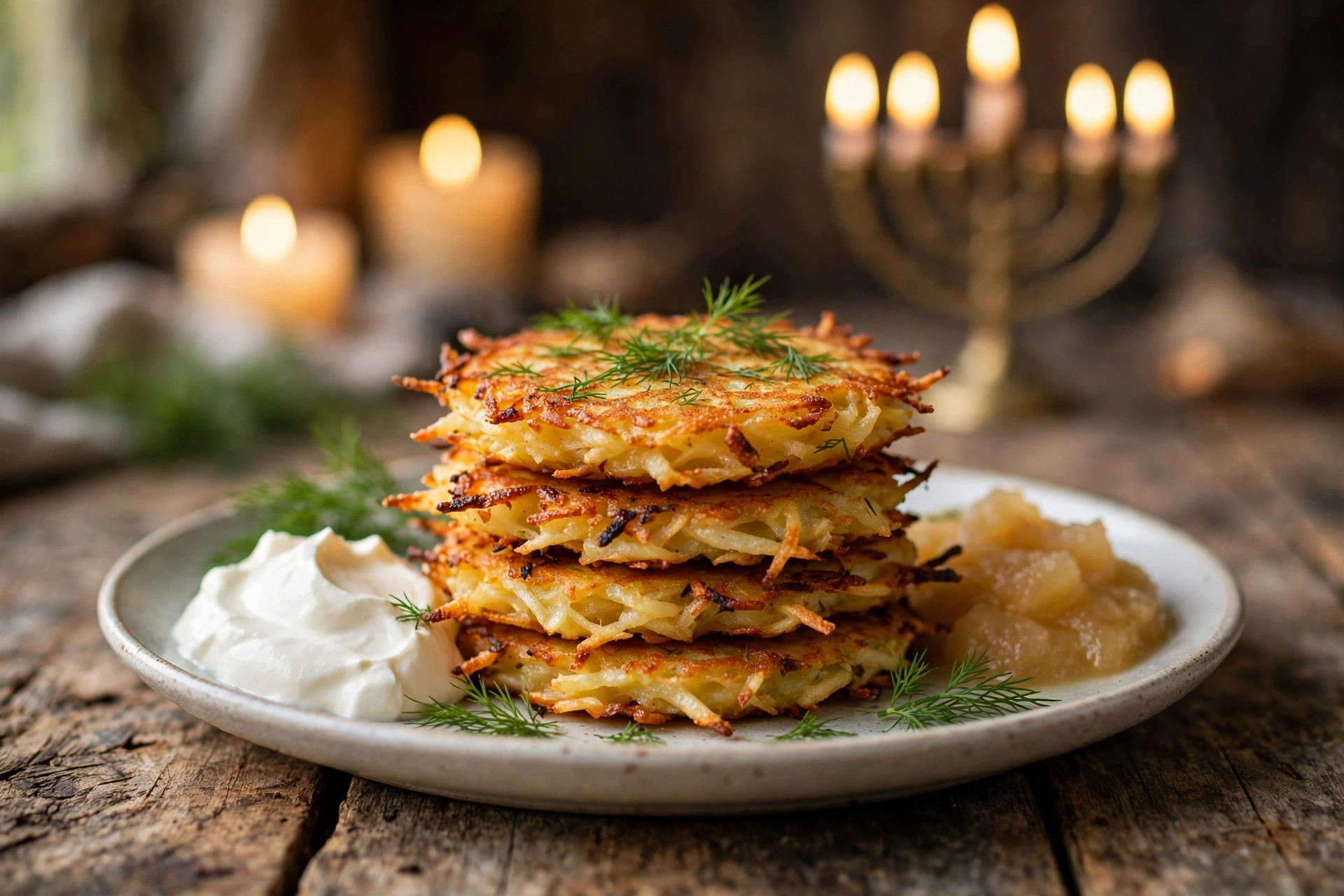
What Are Potato Latkes?
Potato latkes are thin, pan-fried potato pancakes with lacy, golden-brown edges and a tender center. Shredded potato and onion get mixed with egg, a little flour or matzo meal, and salt, then shaped into loose patties and fried in hot oil until deeply crisp. The outside shatters when you bite it. The inside stays soft and steamy. Served with cool sour cream and sweet applesauce, they are one of the most satisfying foods of the entire winter season. Latkes hold a special place on the Hanukkah table. Jewish families fry them in oil during the Festival of Lights to honor the story of the oil that burned for eight days. That tradition turns a simple potato pancake into a celebration dish, one that shows up alongside brisket, applesauce, and candles every December. But you do not need a holiday to make them. Latkes work just as well as a weekend brunch dish, a hearty side for roast chicken, or a snack you eat standing at the stove because you could not wait. This guide gives you the complete crispy latke method and everything around it. You will get the exact ingredient list with notes on which potatoes to buy, a step-by-step frying method with the oil temperature and timings that matter, and a clear answer on whether to use a food processor or a box grater. Then come the fixes for the two most common problems, soggy latkes and latkes that fall apart, followed by pro tips, seven variations including baked and air fryer versions, make-ahead and freezing instructions, serving ideas for Hanukkah and winter dinners, and answers to the questions people ask most. By the end, you will fry latkes that stay crisp from the first bite to the last.
Why You’ll Love These Crispy Potato Latkes
First, they come out genuinely crisp, not just brown. The recipe builds crispiness at every step: starchy russet potatoes, onion for flavor and moisture balance, and most importantly, squeezing the grated potatoes bone-dry before they ever touch the pan. Frying in properly hot oil does the rest. You get those lacy, frilly edges that shatter when you bite them, which is exactly what a great latke should feel like. Second, the method is simple once you know the two rules. Rule one: squeeze the potatoes dry. Rule two: keep the oil at the right temperature. That is really it. There is no complicated batter, no resting time, no special equipment. A box grater or a food processor, a heavy skillet, and a thermometer you trust are enough. The recipe walks you through the signs to watch for, so even a first-time fryer can nail it. Third, latkes are endlessly versatile at the table. Make them small and thin for appetizers at a Hanukkah party, or make them big and hearty as a side dish next to roast chicken or brisket. They slide into brunch with eggs and smoked salmon just as easily as they slide into a weeknight dinner with soup. One batch, a dozen jobs. Finally, they are a make-ahead dream. You can fry a full batch hours before guests arrive, or even weeks ahead, and bring them back to crisp in a hot oven. That makes latkes one of the smartest dishes for holiday entertaining, because the messy frying happens on your schedule, not during the party. For another cozy winter dinner to serve alongside your latkes, try this stove-top chicken and dumplings.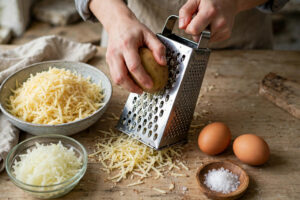
What Ingredients Do You Need for Potato Latkes?
This recipe makes about 12 to 14 latkes, enough for 4 to 6 people as a side dish. Every ingredient below earns its place, and the notes tell you where you have room to improvise.- Russet potatoes (2 pounds, about 4 medium): The star. Russets are starchy, and starch is what gives latkes their crisp edges and helps them hold together. Waxy potatoes like red or Yukon Gold make latkes that taste gummy, so reach for russets. Peel them just before grating.
- Yellow onion (1 medium): Grated right along with the potatoes, onion adds savory depth and moisture balance. It also helps slow the browning of the raw potatoes while you work.
- Large eggs (2): The binder. Eggs glue the shredded potato together so the latkes survive the flip. Beat them lightly before adding so they mix in evenly.
- All-purpose flour or matzo meal (1/4 cup): A small amount of starch absorbs the last traces of surface moisture and helps the latkes set. Matzo meal is the traditional choice and gives a slightly heartier texture; flour works just as well.
- Baking powder (1 teaspoon, optional): A little lift keeps the centers tender instead of dense. Skip it if you like your latkes extra thin and crunchy all the way through.
- Fine sea salt (1 and 1/2 teaspoons): Potatoes need confident seasoning. Salt the mixture well, then fry one test latke and adjust before frying the whole batch.
- Black pepper (1/2 teaspoon): Freshly ground adds a gentle bite. White pepper works too and keeps the color of the latkes cleaner.
- Neutral oil for frying (about 1 cup, plus more as needed): You need enough oil to come about 1/4 inch up the side of the pan. Vegetable, canola, or avocado oil all work. Save the olive oil for salads; it smokes too much at frying temperature.
- Lemon juice (1 tablespoon, optional): A splash stirred into the grated potatoes slows the graying that raw potatoes develop on contact with air. You will not taste it in the finished latkes.
- For serving: Applesauce and sour cream are the classics. Chopped chives or scallions, smoked salmon, and a sprinkle of flaky salt also belong on the table.

How Do You Make Crispy Potato Latkes?
The whole recipe takes about 45 minutes: 15 minutes of grating and prep, and 25 to 30 minutes of frying in batches. Read through the steps once, set up a draining station before you heat the oil, and work quickly once the potatoes are grated.Step 1: Grate the potatoes and onion
Peel the potatoes and grate them on the large holes of a box grater, or use the grating disk of a food processor for speed. Grate the onion the same way. You want long, thin shreds, not mush, so use the coarse side either way. Transfer everything to a large bowl as you go.Step 2: Squeeze out the liquid
This is the most important step in the entire recipe. Scoop the grated mixture into a clean kitchen towel or several layers of cheesecloth, gather the corners, and twist hard over the sink until no more liquid drips out. Really wring it. You should remove a surprising amount of starchy liquid, easily half a cup or more. Dry shreds fry up crisp; wet shreds steam and turn soggy. Return the squeezed potatoes to a dry bowl and stir in the lemon juice if you are using it.Step 3: Mix the batter
Add the beaten eggs, flour or matzo meal, baking powder if using, salt, and pepper to the squeezed potatoes. Toss with your hands or a fork until every shred is lightly coated. The mixture should look shaggy and loose, not like a dough. If it looks dry and will not hold a patty, add one more beaten egg.Step 4: Heat the oil
Pour about 1/4 inch of oil into a large heavy skillet, preferably cast iron, and heat over medium-high heat until it reaches 350 to 375 degrees Fahrenheit. If you do not have a thermometer, test it with a shred of potato: it should sizzle vigorously and turn golden within about a minute. If it browns in seconds, the oil is too hot; if it just sits there, the oil is too cool.Step 5: Shape the latkes
Scoop about 1/4 cup of the mixture per latke and press it into a loose patty about 3 inches wide and 1/2 inch thick. Do not pack it too tightly; a looser patty fries up lacier and crisper. Set shaped latkes on a plate while the oil finishes heating. Work in batches so you never crowd the pan.Step 6: Fry the first side
Carefully slide 3 to 4 latkes into the hot oil, leaving at least an inch of space between them. Press each one gently with a spatula to flatten it slightly. Fry for 3 to 4 minutes without moving them, until the edges turn deep golden brown and look crisp. Resist the urge to peek or nudge them early; undisturbed contact with the hot pan is what builds the crust.Step 7: Flip, finish, and drain
Flip each latke once with a thin spatula and fry the second side for 2 to 3 minutes, until golden brown and crisp. Lift them out with a slotted spatula, letting excess oil drip back into the pan, and transfer them to a wire rack set over a baking sheet. Sprinkle with a little extra salt while they are hot. A wire rack keeps the bottoms crisp; paper towels trap steam and soften them. Repeat with the remaining batter, adding more oil and letting it reheat between batches. Serve hot.Should You Grate Potatoes by Hand or Use a Food Processor?
Both work, and the best choice depends on how many latkes you are making. A box grater gives you slightly longer, more distinct shreds, which many cooks swear makes the crispiest edges. It is also one less thing to wash. The downside is time and knuckles: grating two pounds of potatoes by hand takes about 10 minutes of steady work. A food processor with the grating disk turns the same job into a 60-second task, which matters when you are doubling the recipe for a crowd. The shreds come out a little shorter and more uniform, but once you squeeze them dry and fry them in hot oil, the difference is small. Use the coarse grating disk, not the fine one, and feed the potatoes through with steady pressure so the shreds stay long. Either way, squeeze the grated potatoes dry the moment they are grated, because the clock starts ticking on browning as soon as the flesh hits the air.What Oil Temperature Makes Latkes Crispy?
The sweet spot is 350 to 375 degrees Fahrenheit, which is medium-high heat on most stoves. At this temperature, the outside of the latke sets and browns before the inside has time to absorb excess oil. The latke comes out crisp, not greasy. If the oil drops below about 325 degrees, the latkes sit in lukewarm oil and soak it up like sponges. This usually happens when you add too many latkes at once or skip reheating between batches. Fry in small batches of 3 to 4, and let the oil climb back to temperature for a minute or two between rounds. If the oil climbs past 400 degrees, the outsides burn before the insides cook through, and you get latkes that are dark on the surface and raw in the middle. Keep an instant-read or clip-on thermometer in the pan if you have one. If you are cooking by feel, adjust the burner up or down between batches and watch the sizzle: a steady, vigorous bubble around each latke means you are in the right zone.Why Are My Potato Latkes Soggy?
Soggy latkes almost always trace back to moisture or oil temperature. First, check the squeeze. If you only gave the grated potatoes a light press, they went into the pan carrying too much water, and water is the enemy of crisp. Next time, wring the towel until it stops dripping completely, and do not skip this step for any variation, sweet potato and zucchini versions carry even more water than russets. Second, check the oil temperature. Lukewarm oil makes greasy latkes every time. Fry a test latke first: if it takes more than 4 minutes to brown, or if it looks pale and oily when you lift it out, the oil was too cool. Let the pan reheat between batches, fry fewer latkes at a time, and keep that thermometer in the oil. A steady sizzle around each latke is the sound of crispiness happening. Third, check the draining. Latkes drained on paper towels sit in their own steam and soften from the bottom up. Drain them on a wire rack set over a baking sheet instead, so air circulates underneath. If you are holding latkes for a crowd, park the rack in a 200-degree oven; the low heat keeps them crisp without overcooking them. And serve them soon. Even perfect latkes soften as they sit, so time the frying to finish about 15 minutes before you sit down to eat.Why Do My Latkes Fall Apart?
Latkes fall apart for one of three reasons: not enough binder, too much moisture, or handling them too roughly. Start with the eggs. Two pounds of potatoes need two large eggs and the flour or matzo meal to hold together. If your mixture looks dry and crumbly and will not form a patty, add another beaten egg. If it looks wet and loose, you did not squeeze hard enough, so go back and wring the potatoes again. Handling matters too. Shape the patties loosely but firmly enough to hold, slide them into the oil gently, and flip each latke only once. Every extra flip is a chance for the shreds to separate. Let the first side develop a real crust before you touch it; a well-browned crust is structural, and it holds the latke together when you turn it. Finally, make sure the pan is not crowded. Latkes that touch each other steam at the contact points and never form a crust there, so give every latke its own space.
What Are the Best Pro Tips for Crispy Latkes?
Squeeze the potatoes until they stop dripping. This single step decides whether your latkes are crisp or soggy. A clean kitchen towel twisted hard over the sink removes far more liquid than pressing with paper towels. When you think you are done squeezing, squeeze again. Fry a test latke first. Before you commit the whole batch, fry one latke and taste it. Too bland? Add more salt to the mixture. Falling apart? Add another egg. This two-minute test saves you from discovering problems in batch number three. Keep the shreds long and loose. Pack the patties just firmly enough to hold together. Loose, shaggy latkes fry up with lacy, frilly edges that get extra crisp. Dense, tightly packed patties turn out heavy and doughy in the middle. Do not move the latkes while they fry. Once a latke hits the oil, leave it alone for 3 to 4 minutes. Constant nudging breaks the crust before it forms. The edges will tell you when it is ready to flip: they turn deep golden and look dry and crisp. Salt them the second they leave the oil. A pinch of fine salt or flaky sea salt on hot latkes sticks to the surface and seasons every bite. Salt added later just bounces off. Reheat in the oven, never the microwave. The microwave turns crisp latkes rubbery in seconds. A 400-degree oven for 8 to 10 minutes brings leftover or make-ahead latkes back to full crunch. Spread them in a single layer on a wire rack so the bottoms crisp too.What Are the Best Potato Latke Variations?
Sweet potato latkes: Swap half or all of the russets for peeled sweet potatoes. They fry up with gorgeous caramelized edges and a sweet-savory flavor that pairs beautifully with sour cream and a drizzle of hot honey. Sweet potatoes hold a little more water, so squeeze them extra hard and add an extra tablespoon of flour. Zucchini latkes: Replace half the potato with grated zucchini for a lighter, greener latke. Zucchini releases a flood of water, so salt the grated zucchini, let it sit 10 minutes, then squeeze it as hard as you squeeze the potatoes. These make a lovely summer-to-winter bridge dish and a great way to use a late harvest. Carrot and parsnip latkes: Use a mix of grated carrot, parsnip, and potato for latkes with a sweet, earthy flavor and beautiful golden color. The root vegetables caramelize nicely in the hot oil. Serve these with herbed sour cream and a squeeze of lemon. Baked latkes: For a lighter version, heat the oven to 425 degrees and line a baking sheet with parchment brushed generously with oil. Shape the latkes, brush their tops with oil, and bake 20 minutes, flip, then bake 15 to 20 minutes more until crisp and golden. They will not be quite as shatteringly crisp as fried latkes, but they are close, and there is no stovetop splatter. Air fryer latkes: Preheat the air fryer to 400 degrees. Shape the latkes a little thinner than usual, spray both sides with oil, and cook in a single layer for 12 to 14 minutes, flipping halfway, until crisp and golden. Work in batches and do not stack them. The texture lands somewhere between baked and fried. Mini latkes for appetizers: Scoop just a tablespoon of mixture per latke and fry them into two-bite rounds. They cook faster, about 2 minutes per side, and they make perfect party bites topped with a dab of sour cream, a curl of smoked salmon, and a snip of chives. Cheesy latkes: Stir 1/2 cup of finely grated sharp cheddar or Parmesan into the mixture. The cheese melts into the shreds and fries into crispy, caramelized bits at the edges. These are dangerously good straight off the rack.Can You Make Potato Latkes Ahead of Time?
Yes, and for holiday cooking you probably should. Latkes are one of the best make-ahead fried foods because they reheat beautifully. Fry the full batch up to 3 days ahead, cool the latkes completely on a wire rack, and store them in a single layer or with parchment between layers in an airtight container in the refrigerator. When guests arrive, spread them on a wire rack set over a baking sheet and reheat in a 400-degree oven for 8 to 10 minutes, until hot and crisp again. Nobody will guess they were not fried fresh. For freezing, cool the fried latkes completely, then freeze them in a single layer on a baking sheet until firm, about 2 hours. Transfer the frozen latkes to a freezer bag with the air pressed out. They keep for up to 2 months. Reheat straight from frozen on a wire rack in a 425-degree oven for 12 to 15 minutes, no thawing needed. The edges come back remarkably crisp. What about making the raw mixture ahead? Do not. Grated raw potatoes brown and weep liquid within an hour, and the mixture only gets wetter and grayer as it sits. If you need to prep ahead, peel and grate the potatoes, squeeze them dry, and store the squeezed shreds tossed with a little lemon juice in the coldest part of the fridge for up to a few hours, covered tightly. Mix in the eggs, flour, and seasonings right before you heat the oil.
How Do You Serve Potato Latkes?
The classic pairing is non-negotiable for many families: warm, crisp latkes with cool applesauce and a dollop of sour cream. The sweet-tart applesauce cuts the richness of the fried potato, and the sour cream adds cool tang. Put out big bowls of both and let people build their own plates. Chopped chives or scallions, flaky sea salt, and lemon wedges round out the traditional spread. For a Hanukkah dinner, latkes shine next to a slow-cooked main. This crockpot turkey breast is a perfect partner: the turkey cooks hands-free all day while you fry the latkes, and the crisp potatoes balance the tender meat. Add a simple green salad and a basket of warm sweet focaccia bread for sopping up juices, and the holiday table is done. For brunch, go bigger. Set out a latke toppings bar with smoked salmon, creme fraiche or sour cream, capers, diced red onion, chopped dill, and lemon wedges, and let everyone build their own. Latkes play the role that bagels usually play, and the combination of crisp potato, silky salmon, and tangy cream is hard to beat. This apple cider donut bread makes a sweet counterpoint on the same table. For drinks, keep it seasonal and simple. A mug of hot apple cider alongside the latkes doubles down on the apple theme and keeps everyone warm, and for dessert later, this dutch apple pie continues the apple thread all the way to the end of the meal.Potato Latke FAQ
What kind of potatoes are best for latkes?
Russets. Their high starch content gives latkes crisp edges and helps the shreds bind together. Waxy potatoes like red bliss or Yukon Gold have less starch and more water, which makes latkes gummy and prone to falling apart. If russets are all you can find, you are in luck; they are also the cheapest option.Why do my grated potatoes turn gray?
Raw potatoes oxidize on contact with air, just like cut apples do. It is harmless and the gray color mostly disappears during frying, but you can slow it down by working quickly and tossing the grated potatoes with a tablespoon of lemon juice. Grating the onion along with the potatoes helps too, since onion juice slows the browning.Can I make latkes without eggs?
You can, but they will be more fragile. Replace each egg with 2 tablespoons of the starchy liquid you squeezed from the potatoes, or use a commercial egg replacer. Let the squeezed liquid sit for a few minutes, pour off the water, and use the white starch that settles at the bottom. Handle the latkes gently and flip only once.How do I keep latkes warm and crisp for a party?
Hold them on a wire rack set over a baking sheet in a 200-degree oven for up to 2 hours. The low heat keeps them warm without overcooking, and the rack keeps the bottoms crisp. Do not stack them and do not cover them; trapped steam is what makes latkes go soft.Can I bake latkes instead of frying them?
Yes. Bake at 425 degrees on an oiled, parchment-lined sheet for about 20 minutes, flip, and bake 15 to 20 minutes more. Brush or spray the latkes with oil before baking for the best browning. They will be crisp but not quite as lacy as the fried version.What is the difference between latkes and hash browns?
Both are fried shredded potatoes, but latkes include egg and flour or matzo meal as binders, plus grated onion mixed right in, which makes them hold together as distinct pancakes with a tender interior. Hash browns are usually just seasoned shredded potato pressed into the pan. Latkes also fry into thinner, lacier patties with more surface crunch.How long do leftover latkes last?
Store leftover latkes in an airtight container in the refrigerator for up to 4 days. Reheat them on a wire rack in a 400-degree oven for 8 to 10 minutes to bring back the crunch. For longer storage, freeze them for up to 2 months and reheat straight from frozen at 425 degrees.Ready to Make Crispy Potato Latkes Tonight?
This is the kind of recipe that turns an ordinary winter evening into something a little special: a few humble potatoes, a hot skillet, and 45 minutes of your time. Squeeze the potatoes dry, keep the oil at 350 to 375 degrees, fry in small batches, and drain on a wire rack. Do that, and you will pull golden, lacy-edged latkes out of the pan every single time. Set out the applesauce and sour cream, call everyone to the table, and watch them disappear.Planning a bigger holiday menu? Our air fryer Christmas recipes cover savory mains and sides, and our Christmas cookie bars make an easy make-ahead dessert.