

Easy Focaccia Recipe (No Kneading Skill Required)
Focaccia has a reputation for being a real bread-baking project, the kind of thing you attempt once you’ve already mastered a basic loaf. I want to talk you out of that idea, because this version is genuinely one of the easiest breads I make, and it comes out looking like it took real skill every single time.
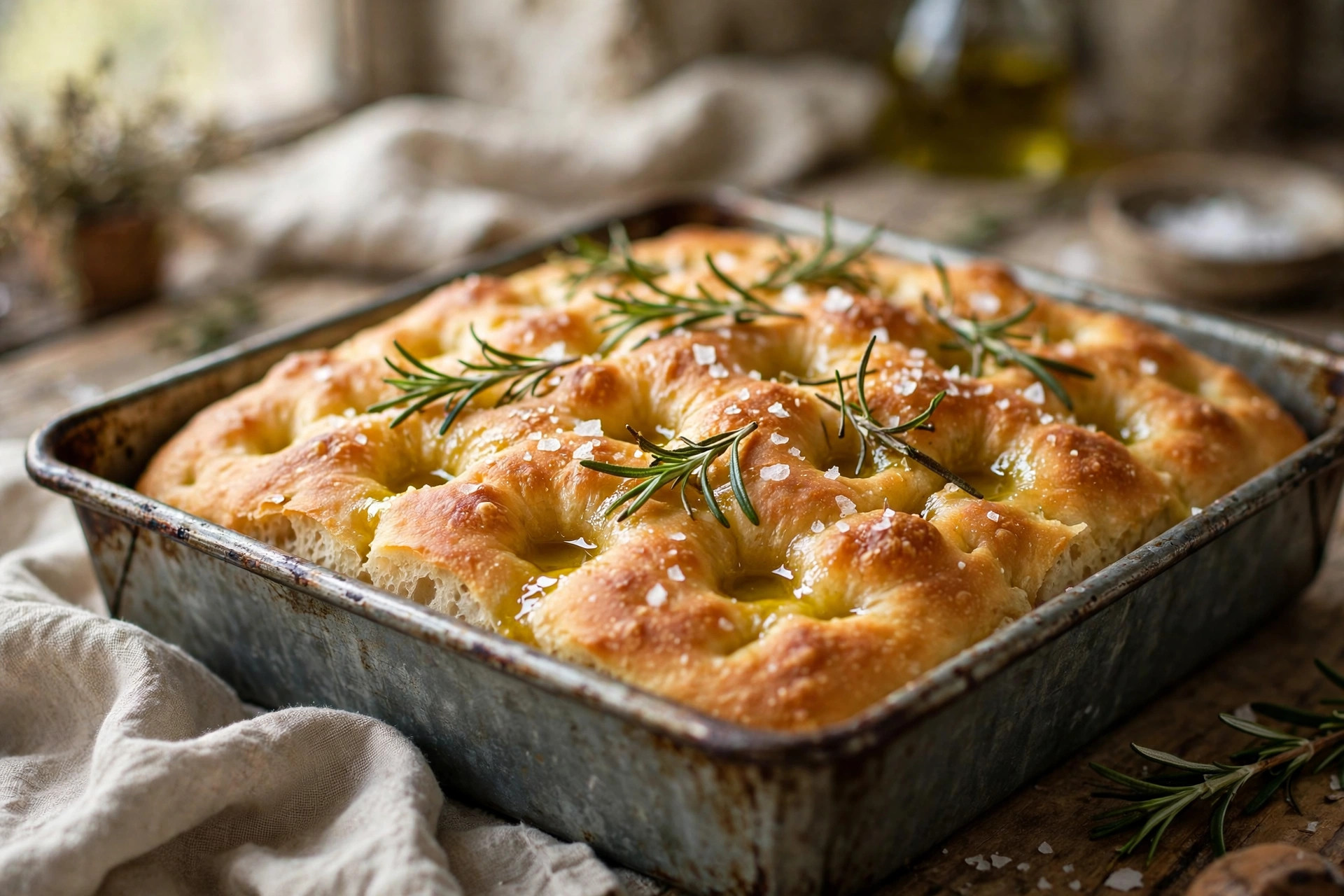
The trick is that focaccia dough is wet and sticky by design, which means it doesn’t need the kind of careful kneading a tighter dough would. You mix it, let it rise, stretch it into a pan with oiled fingers, and let the oven do the rest. The dimples you press into the top before baking aren’t just decorative — they hold little pools of olive oil that crisp up as it bakes, which is a big part of why focaccia tastes the way it does.
This recipe makes one large pan, with a crackly, olive-oil-crisped bottom and a soft, airy interior full of irregular holes — exactly what you’re looking for whether you’re eating it plain, dipping it in more olive oil, or slicing it for sandwiches.

Why You’ll Love This Focaccia
- No kneading required — just mix, rise, and stretch into the pan
- Crispy, olive-oil-crisped bottom with a soft, airy interior
- Forgiving for beginners, since the sticky dough hides small mistakes
- Easy to customize with different herbs and toppings
A Quick Note on Ingredients
This dough is intentionally wet — much wetter than a typical bread dough — so don’t be tempted to add extra flour if it looks sticky in the bowl. That stickiness is exactly what gives focaccia its open, airy crumb once it bakes.
Good olive oil matters more here than in most baking, since it’s both an ingredient in the dough and a major part of the flavor and texture on top. Use the best olive oil you’re comfortable using generously, since a thin drizzle won’t give you the same crisp, golden bottom.

Ingredients
- 4 cups all-purpose flour
- 2 1/4 teaspoons (1 packet) active dry yeast
- 2 teaspoons salt
- 1 3/4 cups warm water
- 1/3 cup olive oil, divided, plus more for drizzling
- 1 tablespoon fresh rosemary, chopped
- Flaky sea salt, for topping
Instructions
1. Activate the yeast. Combine the warm water and yeast in a large bowl and let sit for 5-10 minutes, until it looks foamy on top. If it doesn’t foam, your yeast may be inactive and you’ll want to start over with a fresh packet.
2. Mix the dough. Add the flour, salt, and 2 tablespoons of the olive oil to the yeast mixture. Stir with a wooden spoon or spatula until a shaggy, sticky dough forms — no kneading needed.
3. Let it rise. Cover the bowl with plastic wrap or a damp towel and let rise in a warm spot for 1-1.5 hours, until roughly doubled in size.
4. Prepare the pan. Generously coat a 9×13-inch baking pan with olive oil. Transfer the dough to the pan and gently stretch it toward the edges with oiled fingers — it doesn’t need to fill the pan completely at this point.

5. Second rise. Cover the pan loosely and let the dough rest for 30-45 minutes, until it has relaxed enough to stretch further and looks puffy.
6. Dimple and top. Preheat the oven to 425°F. Drizzle a generous amount of olive oil over the dough, then press your fingertips deep into the dough to create dimples across the entire surface. Sprinkle with rosemary and flaky sea salt.
7. Bake. Bake for 20-25 minutes, until deeply golden brown on top and around the edges. Let cool in the pan for 10 minutes before slicing.
Tips for the Best Focaccia Every Time
- Don’t skip the second rise. Letting the dough relax in the pan before dimpling makes it much easier to stretch without tearing or springing back.
- Be generous with the olive oil. Both in the dough and on top — it’s what gives focaccia its crisp, golden bottom and rich flavor.
- Dimple deeply. Press your fingertips all the way to the bottom of the pan when dimpling — shallow dimples won’t hold the olive oil pools that make focaccia what it is.
- Use a warm spot for rising. A slightly warm, draft-free spot (like an oven with just the light on) speeds up rising time, especially in a cold kitchen.
Variations
Cherry tomatoes and thinly sliced red onion pressed into the dough before baking make a colorful, slightly sweet variation. For a cheesier version, sprinkle grated parmesan over the top along with the rosemary before baking. Garlic lovers can whisk a few cloves of minced garlic into the olive oil used for drizzling on top for extra flavor in every bite.
Storage and Make-Ahead Tips
Focaccia is best the day it’s baked, but it keeps well wrapped tightly at room temperature for up to 2 days, or in the freezer for up to 2 months. To refresh day-old focaccia, warm it in a 350°F oven for 5-10 minutes, which brings back most of the crisp texture. The dough itself can also be made a day ahead and left to rise slowly in the refrigerator overnight, then brought to room temperature before shaping.
What to Serve With It
Focaccia works well in almost any role a good bread can fill. Torn into pieces, it’s an easy accompaniment to a bowl of soup or a simple pasta dinner, soaking up sauce in a way that a crusty baguette can’t quite match. Sliced horizontally, it also makes an excellent sandwich bread — the sturdy crumb holds up well to fillings without falling apart, and the olive oil flavor pairs nicely with something like mozzarella, tomato, and basil.
For an appetizer spread, cut it into squares and serve alongside a small dish of good olive oil and balsamic vinegar for dipping, or set it out with a cheese board where its herby, slightly salty flavor complements both mild and sharp cheeses. Leftover focaccia also makes surprisingly good croutons — cube it, toss with a little olive oil, and toast in the oven until crisp.

Frequently Asked Questions
Why is my focaccia dough so sticky?
That’s completely normal — focaccia dough is meant to be much wetter than a typical bread dough, and that stickiness is what gives it an airy, open crumb.
Can I make this without a stand mixer?
Yes, this recipe is designed to be mixed entirely by hand with a spoon or spatula — no mixer or kneading required.
Why didn’t my dough rise?
This usually means the yeast wasn’t active — check that your yeast is fresh and that the water used to activate it was warm, not hot, since very hot water can kill the yeast.
Can I freeze focaccia?
Yes — wrap it tightly and freeze for up to 2 months, then thaw and reheat in the oven to bring back the crisp texture.
What can I serve with focaccia?
It works well alongside soup or pasta, as a sandwich bread, or on its own with a simple dish of good olive oil for dipping.
If you make this, I’d love to know how it turns out — leave a comment and a star rating below, and let me know which toppings you tried.
How Do You Fix Common Focaccia Problems?
Even an easy recipe can surprise you. Here are the most common focaccia fails and the quick fixes:
Gummy interior. The loaf needed more time — pale focaccia is underbaked focaccia. Bake until deeply golden on top and the bottom sounds hollow when tapped. If the top browns too fast, tent it loosely with foil for the last 10 minutes.
Dough that will not stretch. The gluten is tense. Walk away for 15 minutes with the dough covered, then try again — it will relax and cooperate. Forcing it tears the dough and ruins the crumb.
Toppings sliding off. Press chunky toppings firmly into the dimples before baking, not after. For a showpiece loaf, check out our decorated focaccia bread for garden-style designs that stay put.
Soggy middle. Wet toppings release water as they bake. Pat tomatoes and vegetables dry first, and never overload one area.
How Do You Turn Leftover Focaccia Into Another Meal?
Day-old focaccia is an ingredient, not a leftover:
Panzanella salad. Cube it, toss with tomatoes, cucumber, red onion, basil, olive oil, and vinegar. The bread soaks up the dressing like it was made for it — serve next to our winter soup recipes for a complete meal.
Focaccia pizza night. Split a loaf horizontally, add sauce and mozzarella, and broil until bubbly. Faster than delivery and a great use for the vodka pasta recipe sauce you already love.
Breakfast sandwiches. Toast thick slices and stack with scrambled eggs and cheese. For a sweet morning twist, try our dessert-style sweet focaccia or a sweet cinnamon focaccia instead.
Holiday bread basket. Pair focaccia with soft homemade dinner rolls — two breads, zero complaints.