Healthy Snacks Ideas: 25 Easy, Tasty, and Nutritious Snacks to Try
SEO Title: 25 Healthy Snacks Ideas for Every Day
Meta Description: Discover 25 healthy snacks ideas for work, school, weight management, and busy days. Find easy high-protein snacks, fruity treats, and budget-friendly recipes.
Focus Keyword: healthy snacks ideas
Suggested URL Slug: /healthy-snacks-ideas/
Article Category: Healthy Eating / Snacks and Appetizers
Introduction: What Are the Best Healthy Snacks Ideas?
The best healthy snacks ideas combine good taste, simple ingredients, and nutrients that help you feel satisfied between meals. You can enjoy apple slices with peanut butter, Greek yogurt with berries, crunchy roasted chickpeas, homemade popcorn, or whole-grain toast with avocado. These snacks take little time to prepare and fit into many daily routines.
Healthy snacking doesn’t mean giving up your favorite flavors or spending extra money on expensive health foods. It means choosing foods that offer useful nutrients, such as protein, fiber, vitamins, minerals, and healthy fats. A mix of fruit, vegetables, whole grains, dairy products, nuts, seeds, and beans gives you plenty of options.
Whether you need quick snacks for work, healthy school lunchbox ideas, high-protein snacks after exercise, or something crunchy for an evening craving, you can find an option that suits your needs.
This guide shares 25 healthy snack ideas, easy recipes, budget-friendly ingredients, preparation tips, and ways to make nutritious snacking easier. You’ll also learn how to choose satisfying snacks without relying on strict food rules or complicated meal plans.
1. What Makes a Snack Healthy?
A healthy snack provides nutrients while helping you manage hunger between meals. It doesn’t have to be low in calories, sugar-free, or made from expensive ingredients.
The best choice depends on your appetite, daily activities, food preferences, and nutritional needs. For example, someone who has several hours between lunch and dinner may want a more filling snack than someone who simply needs a small bite.
The American Heart Association recommends choosing nutrient-rich foods such as fruit, vegetables, nuts, and yogurt while paying attention to added sugars and sodium. <Link url=”https://www.heart.org/en/healthy-living/healthy-eating/add-color/healthy-snacking” title=”Its healthy snacking guide”/> offers additional examples.
Which nutrients should a healthy snack contain?
- Protein: Found in yogurt, eggs, beans, nuts, seeds, and cheese.
- Fiber: Found in whole fruit, vegetables, oats, beans, and whole grains.
- Healthy fats: Found in nuts, seeds, avocado, and nut butters.
- Vitamins and minerals: Found in a wide range of fruits, vegetables, dairy products, and other whole foods.
You don’t need every nutrient in every snack. However, combining two food groups often makes a snack more satisfying.
For example, an apple provides carbohydrates and fiber, while peanut butter adds protein and fat. Plain yogurt with berries combines protein, fruit, and fiber.
Is homemade food always healthier than packaged food?
Not automatically. Homemade snacks give you more control over ingredients, portion sizes, and added sugar. However, some packaged foods, such as plain yogurt, unsalted nuts, canned beans, and whole-grain crackers, can also fit into a balanced eating pattern.
Read the ingredient list and nutrition label when buying packaged snacks. Pay attention to serving size, added sugars, sodium, and ingredients that matter for your dietary needs.
2. What Are the Best Healthy Snacks Ideas for Everyday Eating?
These everyday snack ideas use familiar ingredients and require little preparation. Most work well at home, in an office, or as part of a packed lunch.
1. Apple Slices With Peanut Butter
<text color=”secondary” size=”sm”>Prep time: 3 minutes</text>
<AsyncImage query=”fresh apple slices with natural peanut butter in small ceramic bowl healthy snack bright kitchen photography” aspectRatio=”5:4″ width=”100%”/>
Ingredients
- 1 small or medium apple
- 1 tablespoon peanut butter
How to make it
- Wash the apple and cut it into slices.
- Place the peanut butter in a small bowl.
- Dip the apple slices into the peanut butter.
This simple snack combines fruit with a source of fat and protein. Choose peanut butter with little or no added sugar and salt if possible. Check for peanut allergies before serving.
2. Greek Yogurt With Berries
<text color=”secondary” size=”sm”>Prep time: 3 minutes</text>
Ingredients
- ½–¾ cup plain Greek yogurt
- ½ cup fresh or frozen berries
- 1 teaspoon chopped nuts or seeds, optional
How to make it
- Spoon the yogurt into a bowl.
- Add the berries.
- Sprinkle nuts or seeds on top.
Greek yogurt provides protein, while berries add color, flavor, and fiber. Plain yogurt lets you control the sweetness without relying on heavily sweetened varieties.
3. Hummus With Crunchy Vegetables
<text color=”secondary” size=”sm”>Prep time: 5 minutes</text>
Ingredients
- ¼ cup hummus
- 1 carrot
- ½ cucumber
- A few bell pepper strips
How to make it
- Wash the vegetables.
- Cut them into sticks or bite-sized pieces.
- Serve with hummus for dipping.
Hummus made from chickpeas offers plant protein and fiber. Carrots, cucumber, and bell peppers add crunch and variety.
4. Homemade Trail Mix
<text color=”secondary” size=”sm”>Prep time: 2 minutes</text>
Ingredients
- 2 tablespoons unsalted nuts
- 1 tablespoon pumpkin or sunflower seeds
- 1 tablespoon unsweetened dried fruit
- 1 tablespoon whole-grain cereal, optional
How to make it
Combine everything in a small bowl or reusable container.
Trail mix works well when you’re traveling, studying, or working away from home. Nuts and seeds are nutrient-rich but energy-dense, so choose an amount that suits your appetite.
5. Air-Popped Popcorn
<text color=”secondary” size=”sm”>Prep time: 5 minutes</text>
Ingredients
- ¼ cup popcorn kernels
- A small amount of olive oil, optional
- Paprika, black pepper, or cinnamon, optional
How to make it
- Pop the kernels in an air popper or suitable covered pot.
- Add a little seasoning.
- Toss and serve.
Popcorn is a whole grain. Making it at home lets you control the salt, butter, and other toppings. Keep the seasoning simple if you want a lighter everyday option.
6. Whole-Grain Crackers With Cheese
<text color=”secondary” size=”sm”>Prep time: 3 minutes</text>
Pair whole-grain crackers with a few cheese cubes or slices. The crackers provide carbohydrates and fiber, while cheese adds protein and calcium.
Choose lower-sodium cheese and crackers when appropriate, especially if you need to watch your sodium intake.
7. Banana With Nuts
<text color=”secondary” size=”sm”>Prep time: 2 minutes</text>
Eat a banana with a small handful of unsalted almonds, peanuts, or walnuts. The banana supplies carbohydrates and potassium, while the nuts add fat, protein, and texture.
This combination is easy to carry and doesn’t need cooking.
8. Cucumber and Cottage Cheese
<text color=”secondary” size=”sm”>Prep time: 4 minutes</text>
Slice a cucumber and serve it with ½ cup cottage cheese. Add black pepper, mint, or a little lemon juice for extra flavor.
This is a refreshing savory snack, especially when you want something cool instead of a sweet treat.

3. Which High-Protein Snacks Can Help You Feel Satisfied?
Protein supports muscle maintenance and many other body functions. Including a protein-rich food in a snack can also help make it more satisfying, especially when you pair it with fiber-rich foods.
Your ideal protein intake depends on your age, activity, health, and overall diet. You don’t need to turn every snack into a high-protein meal.
9. Hard-Boiled Eggs
<text color=”secondary” size=”sm”>Prep time: 10–15 minutes, including cooking</text>
Ingredients
- 1–2 eggs
- Black pepper or paprika, optional
How to make it
- Place the eggs in a saucepan and cover them with water.
- Bring the water to a boil.
- Cook until the eggs reach your preferred fully cooked texture.
- Cool them promptly, peel, and season.
Eggs provide protein and several important nutrients. Boil a few ahead of time and refrigerate them for convenient snacks.
10. Roasted Chickpeas
<text color=”secondary” size=”sm”>Prep time: 10 minutes; cooking time: 25–35 minutes</text>
Ingredients
- 1 can chickpeas, drained and rinsed
- 1 teaspoon olive oil
- ½ teaspoon paprika
- A pinch of cumin and black pepper
How to make it
- Heat your oven to 200°C.
- Drain and rinse the chickpeas.
- Pat them dry with a clean towel.
- Toss with the oil and seasonings.
- Spread them on a baking tray and roast until golden and crisp, stirring once or twice.
Let them cool before serving. The texture becomes crispier as they cool, although homemade roasted chickpeas may soften during storage.
Chickpeas provide plant protein, fiber, and carbohydrates. They’re also a useful alternative to some highly salted packaged snacks.
11. Cottage Cheese With Tomatoes
<text color=”secondary” size=”sm”>Prep time: 4 minutes</text>
Add chopped tomatoes, black pepper, and fresh herbs to ½ cup cottage cheese. Serve with whole-grain crackers or cucumber slices.
This savory combination supplies protein and can be adjusted to your appetite. Choose a lower-sodium variety if needed.
12. Edamame With Lemon and Pepper
<text color=”secondary” size=”sm”>Prep time: 5–10 minutes, depending on the product</text>
Edamame are young soybeans that provide plant protein and fiber.
- Cook frozen edamame according to the package instructions.
- Drain and allow them to cool slightly.
- Add lemon juice and black pepper.
- Serve warm or chilled.
If you buy edamame in pods, eat the beans inside rather than the tough outer pods.
13. Peanut Butter and Banana Toast
<text color=”secondary” size=”sm”>Prep time: 5 minutes</text>
Spread one tablespoon of peanut butter over a slice of whole-grain toast. Add thin banana slices and a sprinkle of cinnamon.
The toast provides carbohydrates and fiber, while the peanut butter adds fat and some protein. This snack is especially useful when you need something more substantial.
14. Tuna on Whole-Grain Crackers
<text color=”secondary” size=”sm”>Prep time: 5 minutes</text>
Mix a small portion of drained tuna with plain yogurt, lemon juice, and black pepper. Spoon it onto whole-grain crackers or cucumber rounds.
Tuna provides protein, but sodium levels vary between products. Choose lower-sodium options when available, and follow local food safety guidance for storage.
4. What Are the Best Healthy Sweet Snacks?
You can enjoy sweet snacks without making every treat depend on added sugar. Fresh fruit, plain yogurt, oats, and cinnamon offer plenty of flavor and texture.
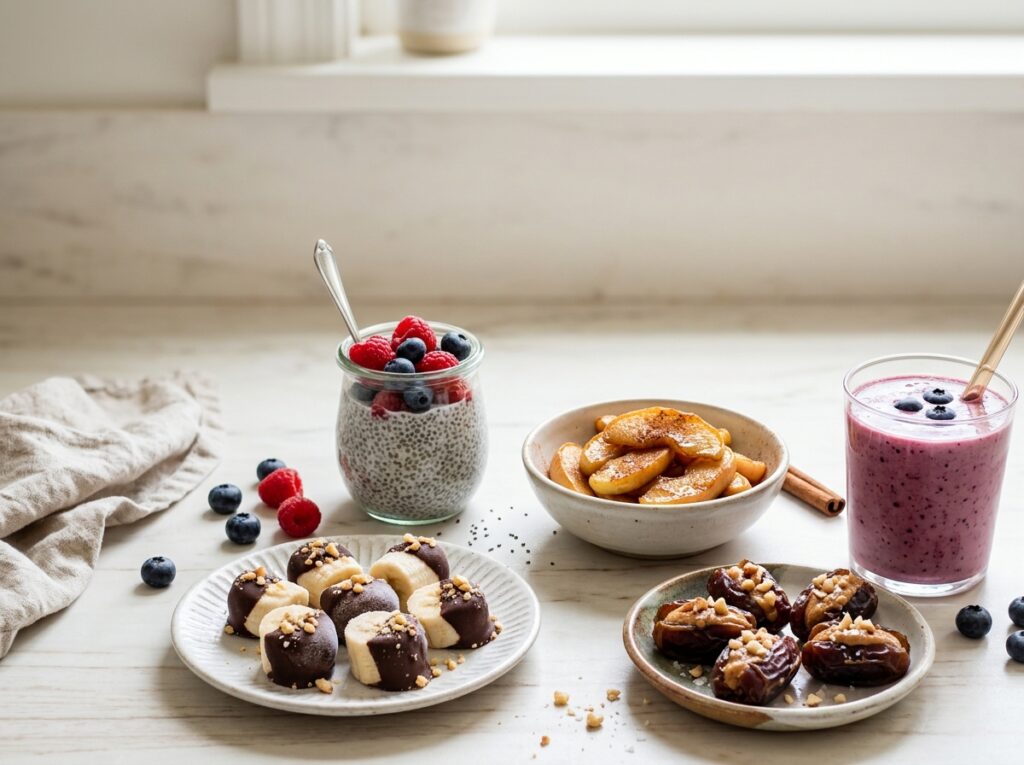
15. Frozen Banana Bites
<text color=”secondary” size=”sm”>Prep time: 10 minutes, plus freezing</text>
Ingredients
- 1 banana
- 1–2 teaspoons peanut butter, optional
- A small amount of chopped nuts, optional
How to make it
- Slice the banana into rounds.
- Add a small dab of peanut butter to some slices.
- Sprinkle with chopped nuts if desired.
- Freeze on a lined tray until firm.
Serve the bites slightly softened if they’re too hard to chew straight from the freezer.
16. Chia Seed Pudding
<text color=”secondary” size=”sm”>Prep time: 5 minutes, plus chilling</text>
Ingredients
- 2 tablespoons chia seeds
- ½ cup milk or unsweetened fortified plant milk
- ¼ teaspoon cinnamon
- A few pieces of fruit
How to make it
- Mix the chia seeds and milk in a jar.
- Stir well and wait a few minutes.
- Stir again to break up clumps.
- Cover and refrigerate for at least 2 hours, or overnight.
- Add fruit before serving.
Chia seeds absorb liquid and create a thick pudding. If the mixture becomes too firm, stir in a little more milk.
17. Baked Cinnamon Apples
<text color=”secondary” size=”sm”>Prep time: 5 minutes; cooking time: 20–30 minutes</text>
Ingredients
- 1 apple
- ¼ teaspoon cinnamon
- 1 teaspoon water
How to make it
- Heat the oven to 180°C.
- Core and slice the apple.
- Place it in a small oven-safe dish with water and cinnamon.
- Bake until tender.
- Let it cool slightly before eating.
The apple’s natural sweetness and warm cinnamon flavor make this a comforting snack. Serve with plain yogurt if you want more protein.
18. Date and Nut Butter Bites
<text color=”secondary” size=”sm”>Prep time: 5 minutes</text>
Remove the pits from two or three dates and fill each with a small amount of peanut or almond butter. Add a few chopped nuts if desired.
Dates provide natural sweetness and some fiber. They’re concentrated in energy, so a small serving may be enough for many people.
19. Berry Smoothie
<text color=”secondary” size=”sm”>Prep time: 5 minutes</text>
Ingredients
- ½ cup berries
- ½ banana
- ½ cup plain yogurt
- ½ cup milk or unsweetened fortified plant milk
How to make it
- Add all ingredients to a blender.
- Blend until smooth.
- Add a little more milk if needed.
- Serve immediately.
Using whole fruit rather than large amounts of juice helps retain the fruit’s fiber. You can also use frozen berries to reduce waste and make the smoothie cold without much added ice.
5. Which Healthy Snacks Are Best for Work and School?
The best portable snacks are easy to pack, simple to eat, and suitable for the time you’ll spend away from home.
Think about temperature, storage, allergies, and mess before choosing a snack for a commute, school bag, or office drawer.
20. Overnight Oats in a Small Jar
Mix rolled oats, milk, plain yogurt, and cinnamon in a covered jar. Refrigerate overnight and add fruit before eating.
Although overnight oats can also serve as breakfast, a smaller portion makes a useful snack. Keep the jar cold during transport.
21. Whole-Wheat Mini Sandwich
Fill a small whole-wheat sandwich with egg, hummus, cheese, or mashed chickpeas. Add lettuce or cucumber for crunch.
Cut it into halves or small pieces for easy packing. If it contains perishable ingredients, keep it refrigerated or use an insulated lunch bag with a cold pack.
22. Roasted Seeds and Nuts
Prepare small portions of pumpkin seeds, sunflower seeds, or mixed nuts in reusable containers.
They travel well and don’t require refrigeration when kept dry. Unsalted varieties can help you control sodium intake.
For young children, consider choking risks and use age-appropriate textures and portions. Whole nuts are not suitable for every age.
23. Fruit and Cheese Box
Pack apple slices, grapes cut appropriately for the eater’s age, cheese cubes, and a few whole-grain crackers.
This snack provides a mix of food groups without requiring much preparation. Use a cold pack to keep cheese safe during transport.
24. Whole-Grain Toast With Hummus
Spread hummus over a slice of whole-grain toast and add cucumber or tomato.
For a portable version, pack the hummus separately and spread it just before eating to help prevent the toast from becoming soggy.
25. Homemade Oat and Peanut Butter Bites
Ingredients
- ½ cup rolled oats
- ¼ cup peanut butter
- 2 tablespoons mashed banana
- 1 tablespoon ground flaxseed, optional
- A little cinnamon
How to make it
- Mix all ingredients in a bowl.
- Add a little more mashed banana if the mixture feels too dry.
- Shape into small balls.
- Refrigerate until firm.
- Store covered in the refrigerator.
These no-bake bites are convenient for busy days. They still contain energy-dense ingredients, so choose a serving that suits your appetite.

6. What Are the Best Healthy Snacks for Weight Management?
If you’re trying to manage your weight, focus on snacks that satisfy your hunger and fit into your overall eating pattern. You don’t need to avoid all carbohydrates, fruit, or fats to make nutritious choices.
The most useful snack is one that matches your needs rather than leaving you hungry again a few minutes later.
Choose foods with fiber and protein
Try combinations such as:
- Plain yogurt with berries.
- Apple slices with peanut butter.
- Hummus with carrots and cucumber.
- A boiled egg with whole-grain toast.
- Cottage cheese with tomatoes.
- Roasted chickpeas with a piece of fruit.
Protein and fiber can contribute to fullness, but individual responses vary. No single snack guarantees weight loss or prevents hunger.
Watch portions without becoming overly strict
Some nutritious foods, including nuts, seeds, nut butters, and dried fruit, contain concentrated energy. A small portion may be satisfying, but the amount you need depends on your appetite and activity.
Instead of banning these foods, serve an amount that works for you and eat slowly enough to notice when you’re satisfied.
Replace habits, not every favorite food
If you usually reach for chips while watching television, try serving a bowl of homemade popcorn or pairing crackers with hummus. If you want something sweet after lunch, fruit and yogurt may be a useful alternative.
You can still enjoy your favorite treats. A balanced eating pattern is about what you eat regularly, not whether every snack meets a perfect standard.
7. Which Budget-Friendly Snacks Can You Make at Home?
Healthy eating doesn’t need to be expensive. Everyday ingredients such as bananas, seasonal fruit, oats, eggs, lentils, chickpeas, yogurt, and homemade popcorn can form the basis of affordable snacks.
What are the cheapest ingredients for healthy snacks?
| Ingredient | Easy Snack | Money-Saving Tip |
|---|---|---|
| Bananas | Banana with peanut butter | Buy ripe bananas and freeze extras |
| Oats | Overnight oats | Buy plain oats in larger packages |
| Chickpeas | Roasted chickpeas | Cook dried chickpeas in batches or use canned |
| Eggs | Hard-boiled eggs | Cook several at once |
| Seasonal fruit | Fresh fruit bowl | Choose fruit that’s in season locally |
| Plain yogurt | Yogurt with fruit | Buy a larger tub if you’ll use it safely |
| Popcorn kernels | Homemade popcorn | Make only what you need |
| Lentils | Spiced cooked lentils | Use leftovers from a home-cooked meal |
How can you reduce food waste?
Use frozen fruit in smoothies, turn soft bananas into banana bites, and add leftover vegetables to hummus plates or savory wraps.
You can also wash and cut sturdy vegetables in advance. Store them in clean, covered containers in the refrigerator and use them while they’re fresh.
The American Heart Association’s <Link url=”https://www.heart.org/en/healthy-living/healthy-eating/cooking-skills/meal-planning/5-pantry-staples” title=”guide to pantry staples”/> offers additional ideas for keeping versatile ingredients on hand.
What if fresh produce is expensive?
Frozen and canned produce can be useful alternatives. Choose frozen fruit without added sugar and canned fruit packed in water or its own juice when possible.
For canned vegetables and beans, compare sodium levels and rinse them when appropriate. This can help make affordable pantry foods easier to use in balanced meals and snacks.
8. How Can You Prepare Healthy Snacks Ahead of Time?
Planning a few snacks before the week starts can save time and reduce the temptation to buy whatever is available when hunger strikes.
You don’t have to prepare every snack in advance. Start with two or three options that suit your routine.
A simple weekly snack-prep plan
Step 1: Choose a few snack types.
Select one fruit option, one protein-rich option, and one crunchy or savory option.
For example:
- Apples and bananas.
- Boiled eggs or plain yogurt.
- Roasted chickpeas or homemade popcorn.
Step 2: Check what you already have.
Look through your fridge, freezer, and pantry before shopping. This helps prevent duplicate purchases.
Step 3: Prepare ingredients.
Wash fruit, cut suitable vegetables, boil eggs, or make a batch of roasted chickpeas.
Step 4: Portion snacks if helpful.
Put trail mix, nuts, and seeds into small containers. Keep portions flexible enough to match your hunger.
Step 5: Store food safely.
Refrigerate perishable items promptly. Keep cut fruit, dairy products, eggs, and cooked foods at safe temperatures. Use insulated bags and cold packs when transporting food that needs refrigeration.
How long can prepared snacks last?
Storage time depends on the ingredients, temperature, and preparation method. Follow reliable food-safety guidance and product labels rather than assuming every homemade snack will last the same number of days.
Discard food that has been stored unsafely or shows signs of spoilage. Smell and appearance alone cannot always reveal whether food is safe.

9. How Do You Build a Balanced Snack Plate?
A balanced snack plate brings together different textures and food groups without requiring a complicated recipe.
One easy approach is to choose:
- A fruit or vegetable.
- A protein-rich food.
- A whole grain or another food that suits your appetite.
You can add a small amount of healthy fat when it complements the other ingredients.
Example 1: A sweet snack plate
- Apple slices.
- Plain Greek yogurt.
- A sprinkle of oats or chopped nuts.
Example 2: A savory snack plate
- Cucumber and carrot sticks.
- Hummus.
- Whole-grain crackers.
Example 3: A filling afternoon snack
- Whole-wheat toast.
- Peanut butter.
- Banana slices.
Why does variety matter?
Different foods provide different nutrients. Fruit and vegetables contribute vitamins, minerals, and fiber; beans and dairy products can supply protein; and whole grains add carbohydrates and often fiber.
Variety also makes snacks more enjoyable. If you dislike yogurt, you can choose eggs, beans, nuts, or another food that fits your needs.
If you have a medical condition that affects your diet, such as diabetes or kidney disease, your ideal snack combinations may differ. A qualified healthcare professional or registered dietitian can help you adjust portions and ingredients.
10. What Healthy Snacks Can You Make for Kids?
Children often enjoy snacks that are colorful, easy to handle, and familiar. Involving them in simple preparation can make nutritious foods more appealing.
Try these family-friendly ideas:
- Banana slices with yogurt.
- Whole-grain crackers with cheese.
- Apple slices with a suitable nut or seed butter.
- Mini whole-wheat sandwiches.
- Homemade fruit smoothies without added syrup.
- Soft, cooked chickpeas.
- Oat bites made with mashed banana.
- Fresh fruit salad.
How can you make snacks more appealing?
Offer a choice between two options, such as yogurt with berries or apple slices with cheese. Let children help wash fruit, stir yogurt, or arrange vegetables on a plate when age-appropriate.
Avoid turning food into a reward or punishment. Encourage children to notice hunger and fullness while providing regular meals and snacks suited to their age and activity.
What about allergies and choking risks?
Always check for food allergies and follow school rules about nuts and other allergens. Young children need age-appropriate textures and close supervision when eating.
Avoid whole nuts and other choking hazards for children who aren’t developmentally ready for them. Cut round foods, such as grapes, appropriately and prepare firm foods according to pediatric safety guidance.
11. What Common Snacking Mistakes Should You Avoid?
Even nutritious foods may not work well for every person or situation. A few practical adjustments can make healthy snacking easier.
Mistake 1: Eating only low-fiber, highly refined snacks
Some packaged snacks contain plenty of energy but little fiber or protein. You don’t need to avoid them completely, but try alternating them with fruit, vegetables, whole grains, nuts, or yogurt.
Mistake 2: Ignoring added sugar
Flavored yogurt, granola bars, sweetened cereals, and packaged drinks may contain more added sugar than you expect. Compare labels and choose lower-sugar options when they suit your taste.
Mistake 3: Assuming every healthy snack is low in calories
Nuts, seeds, nut butters, and dried fruit can all provide valuable nutrients. They also contain concentrated energy. Choose portions that match your appetite rather than labeling these foods as bad.
Mistake 4: Forgetting food safety
A yogurt cup or egg sandwich may be convenient, but it needs proper refrigeration. Use a cold pack for packed lunches and don’t leave perishable snacks unrefrigerated for extended periods.
Mistake 5: Treating snacks as a replacement for every meal
Snacks can help fill the gap between meals, but they don’t always provide everything a full meal needs. If you’re consistently very hungry between meals, consider whether your meals are filling enough or whether your daily schedule needs adjusting.
Mistake 6: Following rules that are too strict
Healthy eating should be practical and flexible. You can enjoy sweet, salty, crunchy, and creamy foods while making nutrient-rich choices regularly.
The goal is to build habits you can maintain, not to make every food decision perfectly.
12. Frequently Asked Questions About Healthy Snacks Ideas
What are the healthiest snacks to eat every day?
Good options include whole fruit, vegetables with hummus, plain yogurt with berries, unsalted nuts, eggs, whole-grain crackers, and homemade popcorn. Rotate your choices to get a wider variety of nutrients.
What are some quick healthy snacks that take less than five minutes?
Try apple slices with peanut butter, banana with nuts, Greek yogurt with berries, cucumber with cottage cheese, or whole-grain crackers with hummus. Most require little or no cooking.
What are good high-protein snacks?
Eggs, Greek yogurt, cottage cheese, edamame, roasted chickpeas, tuna, and nut butter are useful options. Protein content varies by serving size and product, so check labels when exact amounts matter.
What healthy snacks are good for weight management?
Choose snacks that fit your appetite and daily needs. Fruit with yogurt, vegetables with hummus, boiled eggs, and whole-grain toast with peanut butter are examples that combine useful nutrients and different textures.
No single food guarantees weight loss; overall eating patterns and lifestyle matter more.
What are healthy snacks for work?
Portable options include trail mix, whole fruit, roasted chickpeas, whole-grain crackers, and homemade oat bites. For perishable foods such as yogurt, eggs, and cheese, use suitable refrigeration.
What are healthy late-night snacks?
If you’re hungry in the evening, consider a small bowl of plain yogurt with fruit, a banana with peanut butter, or whole-grain toast with cheese. Choose an amount that feels comfortable and avoid following rigid rules about when you’re allowed to eat.
What are affordable healthy snacks for students?
Bananas, seasonal fruit, boiled eggs, homemade popcorn, roasted chickpeas, oats, and peanut butter toast are practical choices. Buying basic ingredients and preparing them at home can reduce costs.
Are dried fruits healthy snacks?
Unsweetened dried fruits provide fiber and nutrients, but they are more concentrated than fresh fruit because much of their water has been removed. A small portion paired with nuts or yogurt can be a convenient option.
Are smoothies healthy snacks?
Smoothies can be nutritious when they contain whole fruit and suitable ingredients such as plain yogurt, milk, or unsweetened fortified plant milk. Large amounts of juice, syrup, or sweetened additions can increase the sugar content.
How many snacks should I eat each day?
There is no single ideal number for everyone. Some people prefer three meals with no snacks, while others feel better with one or two snacks between meals. Consider your hunger, activity, schedule, and overall dietary needs.
13. Semantic SEO Keywords and Related Topics
The following keyword ideas support the main topic, healthy snacks ideas. They can help organize related articles, recipe pages, and category content. They are semantic suggestions, not verified search-volume measurements.
Primary and secondary keywords
- healthy snacks ideas
- healthy snack ideas
- easy healthy snacks
- nutritious snack ideas
- healthy snacks at home
- quick healthy snacks
- simple healthy snacks
- homemade healthy snacks
- healthy snack recipes
- everyday healthy snacks
Long-tail keyword ideas
- healthy snacks ideas for work
- healthy snacks ideas for school
- easy high-protein snacks
- healthy sweet snacks to make at home
- healthy snacks for weight management
- cheap healthy snacks for students
- healthy snacks for busy days
- easy snacks with few ingredients
- healthy after-school snack ideas
- make-ahead healthy snack recipes
- healthy snacks for evening cravings
- healthy snacks without added sugar
- healthy snacks with protein and fiber
- healthy lunchbox snacks for kids
- healthy snacks for travel
Semantic and related food terms
- fresh fruit and vegetables
- whole-grain crackers
- Greek yogurt
- cottage cheese
- hummus and chickpeas
- peanut butter and nut butter
- nuts and seeds
- roasted edamame
- overnight oats
- chia seed pudding
- air-popped popcorn
- homemade trail mix
- fruit smoothies
- boiled eggs
- fiber-rich foods
- protein-rich snacks
- nutrient-dense foods
- added sugar
- sodium content
- food storage and meal preparation
Semantic relationships
Understanding how these terms relate can help you build a stronger content structure.
- Hypernym: Snacks and small meals.
- Hyponyms: Fruit snacks, high-protein snacks, sweet snacks, savory snacks, and lunchbox snacks.
- Related ingredients: Apples, bananas, berries, oats, yogurt, eggs, chickpeas, nuts, and whole grains.
- Part-to-whole relationship: A balanced snack plate may contain fruit or vegetables, a protein-rich food, and a whole-grain food.
- Preparation concepts: Washing, slicing, roasting, blending, portioning, refrigerating, and packing.
- User-intent terms: Quick snacks, affordable snacks, portable snacks, after-school snacks, and make-ahead snacks.
Use these phrases where they genuinely help explain a recipe or answer a reader’s question. Avoid repeating the focus keyword unnaturally.
14. Suggested Internal Links for a Healthy Food Website
A strong topical structure can help readers find related information without overwhelming them.
| Suggested Page | Natural Anchor Text | Best Placement |
|---|---|---|
| Protein-rich foods | Easy high-protein snack ideas | Protein section |
| Fruit recipes | Fresh fruit snack recipes | Sweet snacks section |
| Meal preparation | Healthy meal prep for beginners | Preparation section |
| Kids’ recipes | Healthy snacks for kids | Family snacks section |
| Smoothies | Easy fruit smoothie recipes | Sweet snacks section |
| Whole grains | Benefits of whole-grain foods | Everyday snacks section |
| Budget recipes | Affordable healthy meals and snacks | Budget section |
| Lunchbox planning | Healthy lunchbox ideas | Work and school section |
| Hummus recipe | How to make homemade hummus | Savory snacks section |
| Oat recipes | Easy overnight oats recipes | Preparation section |
Add these links only when relevant pages exist on your website. Use descriptive anchor text so readers know what they’ll find when they click.
15. Conclusion: Which Healthy Snacks Ideas Will You Try First?
Healthy snacking doesn’t need to be expensive, complicated, or boring. With familiar ingredients such as fruit, yogurt, oats, eggs, chickpeas, nuts, and whole grains, you can prepare a wide range of nutritious snacks for home, work, school, or travel.
Start with two or three options you genuinely enjoy. Try apple slices with peanut butter, Greek yogurt with berries, or homemade roasted chickpeas. If you have a busy week ahead, prepare a few ingredients in advance and keep suitable snacks ready to grab.
Most importantly, choose foods that fit your appetite, preferences, budget, and daily routine. Mix sweet and savory flavors, explore new combinations, and keep your approach flexible.
A few simple changes can make nutritious snacking easier to maintain. Pick one recipe from this guide, gather the ingredients you already have, and give it a try today.
Sources and Further Reading
- American Heart Association — Healthy Snacking: Practical examples of fruit, vegetables, nuts, yogurt, and other nutritious snack choices.
https://www.heart.org/en/healthy-living/healthy-eating/add-color/healthy-snacking - American Heart Association — Fuel Your Body Right: An overview of key nutrients and food groups.
https://www.heart.org/en/healthy-living/healthy-eating/eat-smart/nutrition-basics/fuel-your-body-right - American Heart Association — Five Pantry Staples: Ideas for affordable, versatile ingredients and practical food storage.
https://www.heart.org/en/healthy-living/healthy-eating/cooking-skills/meal-planning/5-pantry-staples - Nutrition.gov — Recipes: A collection of recipes from government and Cooperative Extension resources, including snack and budget-friendly options.
https://www.nutrition.gov/recipes - American Heart Association — Healthy Snacks for Kids and Teens: Snack suggestions for families and school-age children.
https://www.heart.org/en/healthy-living/healthy-eating/eat-smart/nutrition-basics/healthy-snacks-for-kids-and-teens
This article provides general food and nutrition information, not individualized medical advice. People with food allergies, special dietary requirements, or medical conditions may need to adapt these suggestions with guidance from a qualified healthcare professional.