Thanksgiving Sangria: The Make-Ahead Fall Pitcher Your Holiday Table Needs
What Makes This Thanksgiving Sangria the Best Holiday Drink?
Picture this: the turkey is resting, the rolls are warm, and your guests are gathered around the table while you pour a ruby-red pitcher that smells like autumn in a glass. That is exactly what this thanksgiving sangria delivers. It takes ten minutes of actual work, then the refrigerator does the rest, turning an affordable bottle of red wine into a festive, fruit-packed drink that tastes like you spent all afternoon on it.
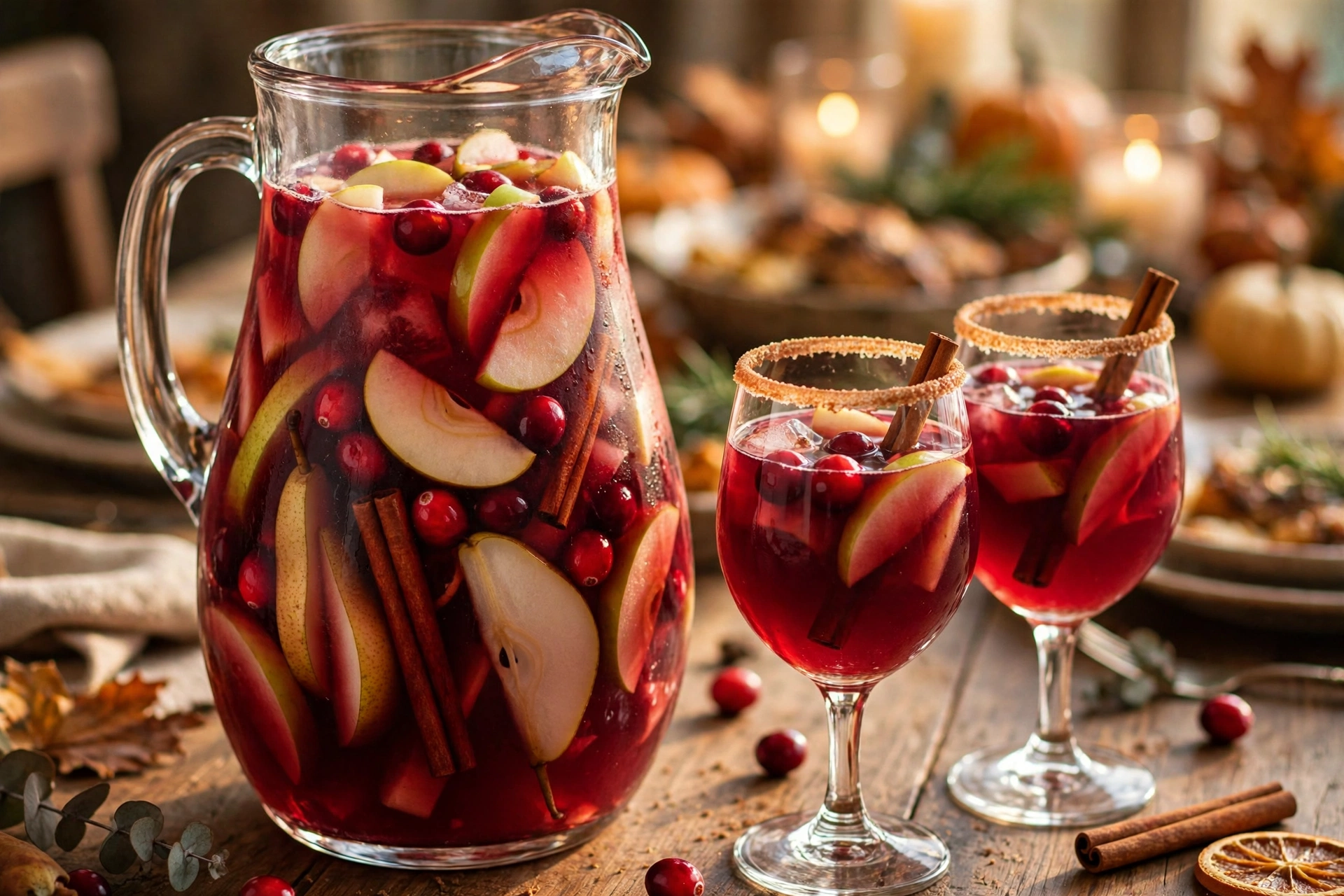
What sets this version apart from every other holiday punch on the internet? Balance. Many sangria recipes lean too sweet or too tart, but this one layers crisp apple cider, bright cranberry juice, and warm cinnamon against a dry, fruity red wine. A splash of orange liqueur adds a sunny citrus glow that cuts through rich Thanksgiving food without overpowering anything. Fresh apples, pears, whole cranberries, and orange slices do double duty — they infuse the wine with real fruit flavor and they look absolutely stunning in the pitcher.
This is a make-ahead hero, and that matters on Thanksgiving more than any other day of the year. Your oven is booked, your stovetop is a war zone, and your attention is split in twelve directions. You can mix this thanksgiving sangria the night before — or even two days ahead — and it only gets better as the fruit and spices work their magic. When the doorbell rings, all you do is pour over ice, add a fizzy topper, and hand a glass to each guest with a smile.
It also solves the great Thanksgiving drink dilemma: what do you serve a crowd with totally different tastes? Beer drinkers, cocktail lovers, and wine people all reach for this pitcher. It feels special without requiring a single bartending skill, and one recipe stretches into eight generous servings, which keeps the cost per glass wonderfully low. If you want a signature holiday drink that looks gorgeous, tastes even better, and practically makes itself, this is it.
Why Is Thanksgiving Sangria So Popular at Fall Gatherings?
Sangria has been winning over crowds since long before it became a patio staple. The drink traces its roots to Spain and Portugal, where the name comes from "sangre," the Spanish word for blood — a nod to its deep red color. For centuries, people have been stretching wine with fruit, spices, and a little sweetener to make it go further and taste even better. It is one of the oldest party tricks in the book, and it happens to fit Thanksgiving perfectly.
Why does it work so well on this particular holiday? First, the flavor profile matches the meal. Apple, pear, cranberry, orange, and cinnamon are already starring in Thanksgiving dishes — cranberry sauce, apple pie, roasted squash — so a drink built on the same ingredients tastes like it belongs on the table. It does not clash with the turkey or the sides the way an aggressive cocktail might. Instead, it echoes them.
Second, it is social. Sangria begs to be served in a big, beautiful pitcher or a clear drink dispenser where guests can see the fruit floating inside. It becomes a centerpiece before anyone takes a sip. On a day built around gathering, a shared pitcher feels right in a way that individual bottles do not.
Third, it is forgiving. Unlike a delicate cocktail that falls apart if your measurements are off, sangria welcomes improvisation. Missing pears? Use extra apples. Out of orange liqueur? A splash of brandy works. Guests arrive early and you need to stretch it? Top each glass with sparkling water or ginger beer. This flexibility is why hosts come back to it year after year — it never judges your pantry, and it never fails the crowd.
Finally, there is the make-ahead factor, which cannot be overstated on Thanksgiving. You stir everything together, slide the pitcher into the fridge, and forget about it until showtime. The wine extracts flavor from the fruit and cinnamon overnight, and the result tastes deeper, warmer, and more complex than anything you could mix at the last minute. It is the rare holiday recipe that improves when you ignore it.
What Ingredients Do You Need for Thanksgiving Sangria?
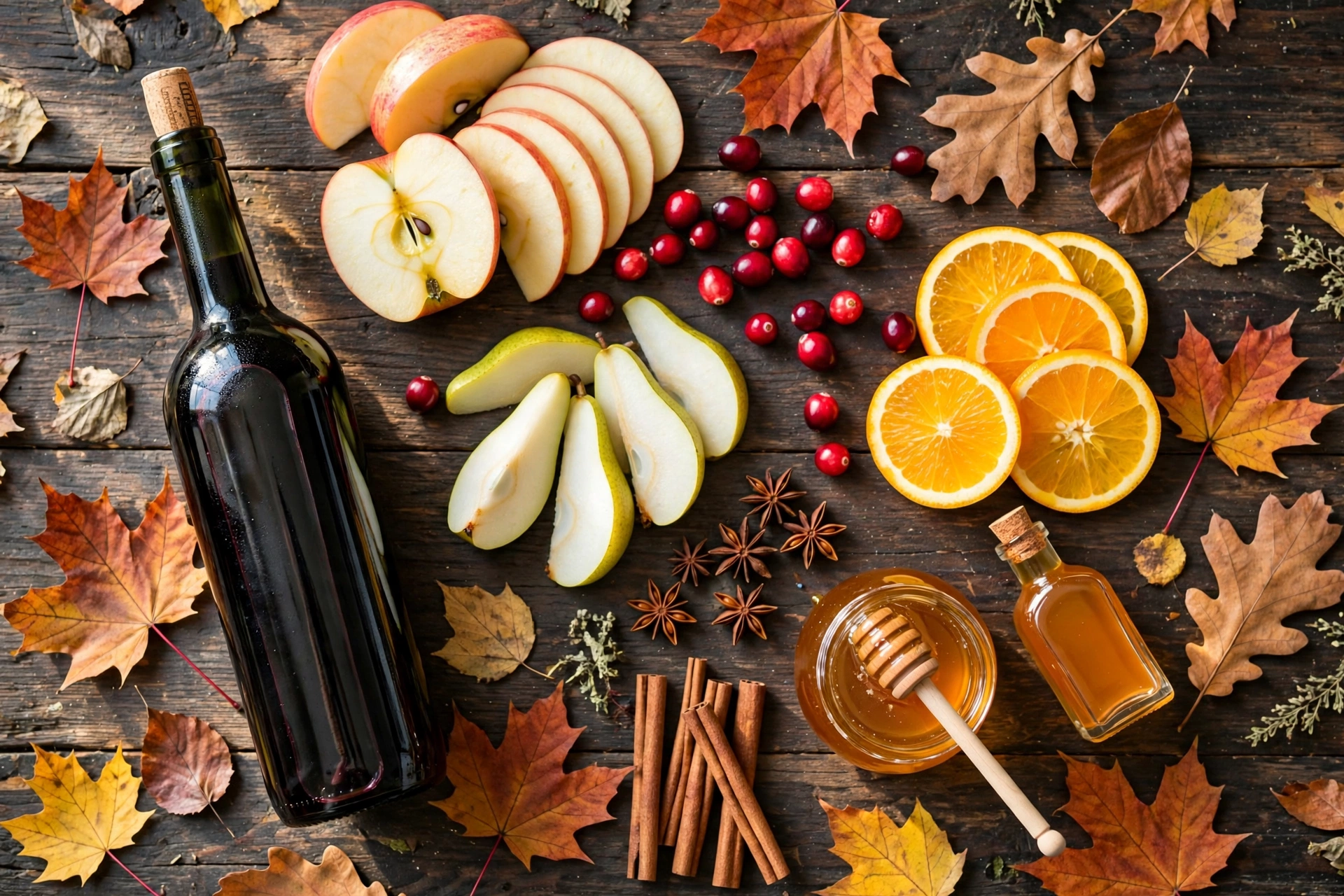
Great sangria starts with honest ingredients. Nothing here is exotic or hard to find — every item sits on a regular grocery store shelf in November. Here is exactly what goes into one pitcher, which serves about eight guests.
The Base
- 1 bottle (750 ml) dry, fruity red wine — Garnacha, Tempranillo, Pinot Noir, or a red blend all shine. Choose something you would happily drink on its own; cheap cooking wine makes dull sangria.
- 1 cup apple cider — the soft, cloudy, non-alcoholic kind sold in the produce section, not apple juice and not hard cider.
- 1 cup 100% cranberry juice — unsweetened or cranberry cocktail both work; adjust the sweetener depending on which you use.
- 1/2 cup orange liqueur — Triple Sec, Cointreau, or Grand Marnier. Grand Marnier adds a richer, warmer flavor if you want to splurge.
The Sweetener
- 2 to 3 tablespoons honey or pure maple syrup — start with two and add more to taste. Skip it entirely if your juices run sweet.
The Fruit and Spice
- 1 large Honeycrisp or Granny Smith apple, cored and thinly sliced (leave the peel on for color)
- 1 ripe but firm pear, cored and thinly sliced (Bartlett or Bosc)
- 1 orange, thinly sliced into rounds, plus 1 extra orange cut into wedges for rimming glasses
- 1 cup fresh or frozen cranberries — no need to thaw frozen ones
- 3 to 4 cinnamon sticks — whole sticks, not ground
- 2 star anise (optional, but they add gorgeous warm spice and look stunning)
For Serving
- Ginger beer or club soda, chilled, for topping each glass
- Ice cubes, or better yet, cranberry-orange juice ice cubes (see pro tips)
- Cinnamon sugar for rimming glasses — 1/4 cup granulated sugar mixed with 2 teaspoons ground cinnamon
A quick note on choosing your wine: you do not need anything expensive, but you do need something drinkable. A wine that tastes harsh or vinegary on its own will taste harsh and vinegary in the pitcher. Aim for a fruity, medium-bodied red in the eight-to-twelve-dollar range. Spanish Garnacha is the classic sangria pick for a reason — it is juicy, affordable, and built for fruit.
What Equipment Do You Need to Make Thanksgiving Sangria?
The beauty of this recipe is how little gear it demands. You probably own everything already.
- A large pitcher or drink dispenser — at least 2 quarts, glass if possible so the fruit shows through. A pitcher with a wide mouth makes it easier to add fruit and stir.
- A long-handled spoon — for stirring without knocking fruit out of the pitcher.
- A sharp chef's knife and a cutting board — for slicing the apples, pears, and oranges.
- An ice cube tray — optional but recommended for making juice ice cubes the night before.
- A shallow plate — for the cinnamon sugar rim mixture.
- Wine glasses or stemless glasses — eight of them for a full batch.
- A small strainer or slotted spoon — if you want to strain the sangria when serving, though most people love the fruit in their glass.
That is genuinely the whole list. No shaker, no blender, no special bar tools. If you can slice an apple and stir a pitcher, you can make this thanksgiving sangria.
How Do You Make Thanksgiving Sangria?
This recipe breaks into two phases: the five-minute mix and the patient chill. The method is simple, but each step has a purpose. Follow it once and you will never need to look at it again.
- Step 1: Prep the fruit. Wash the apple, pear, orange, and cranberries under cold water and pat them dry. Core the apple and pear, then slice both into thin, even pieces about a quarter-inch thick. Thin slices look elegant and release their flavor faster than chunky pieces. Slice the orange into rounds, and cut the second orange into wedges for rimming the glasses later. Keep the peels on the apples and pears — they hold the slices together and add beautiful color.
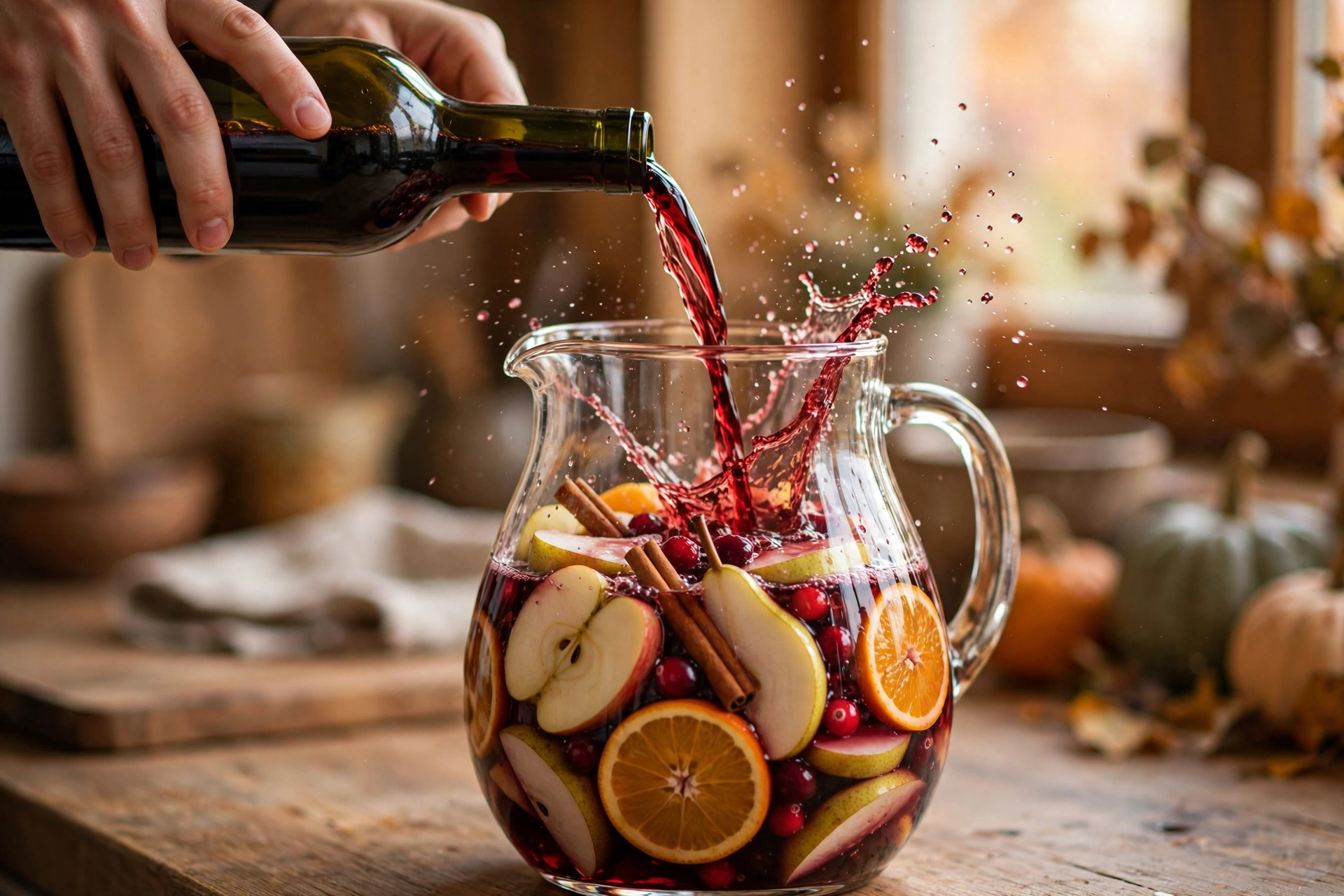
- Step 2: Build the base in the pitcher. Pour the entire bottle of red wine into your large pitcher. Add the apple cider, cranberry juice, and orange liqueur. If you are using honey, drizzle it in now. Give everything a long, slow stir with your spoon until the honey fully dissolves. Taste a spoonful at this point — it should taste balanced, with the wine still leading and the juices playing backup. Add a little more honey or maple syrup only if the mixture tastes sharply tart.
- Step 3: Add the fruit and spices. Drop the apple slices, pear slices, orange rounds, and cranberries into the pitcher. Tuck in the cinnamon sticks and the star anise if you are using them. Stir gently so the fruit gets coated in the wine mixture. Some cranberries will float and some will sink — both are fine, and the floating ones look gorgeous.
- Step 4: Chill and let the flavors marry. Cover the pitcher tightly with plastic wrap or a lid and slide it into the refrigerator. Let it rest for a minimum of 4 hours, but aim for 8 to 12 hours for the best flavor. The wine slowly pulls juice and aroma out of the fruit while the cinnamon warms the whole mixture. This waiting period is not optional garnish time — it is the step that turns good sangria into unforgettable sangria.
- Step 5: Make the juice ice cubes (optional but brilliant). While the sangria chills, pour a mix of cranberry and orange juice into an ice cube tray, drop a couple of cranberries into each well, and freeze until solid. These keep every glass cold without watering the drink down, and they look festive melting in the glass.
- Step 6: Prepare the cinnamon sugar rims. Shortly before your guests arrive, mix 1/4 cup of sugar with 2 teaspoons of ground cinnamon on a shallow plate. Run an orange wedge around the rim of each glass, then dip the rim into the cinnamon sugar. The sugar sparkles, the cinnamon smells incredible, and this small touch makes the drink feel like a true holiday cocktail.
- Step 7: Serve it right. Fill each rimmed glass with ice (or your juice ice cubes). Pour the sangria over the ice, making sure each glass gets a few pieces of the wine-soaked fruit — that fruit is a treat, not a garnish to skip. Top each glass with a splash of chilled ginger beer or club soda for a little fizz. Slide a cinnamon stick into each glass as a stir stick and serve immediately.
What Are the Best Pro Tips for Perfect Thanksgiving Sangria?
After years of making holiday sangria for crowds, I have learned that a few small moves separate a good pitcher from a great one. These are the tricks I swear by.
Chill every single component before mixing. Warm sangria needs ice to cool it down, and ice melts and dilutes. If your wine, cider, and juices go into the pitcher already cold, the finished drink stays bold and bright. On Thanksgiving morning, stick the bottle of wine and the juice cartons in the fridge the moment you wake up.
Slice the fruit thin and keep the peels on. Thin slices infuse faster and look more elegant than rough chunks. The peels add color and keep the slices from falling apart during the long soak. Apples turn brown in air, but submerged in wine they stay fresh-looking for hours, so do not stress about that.
Add the fizzy topper only at serving time. Ginger beer, club soda, or sparkling water goes flat in the fridge. The pitcher holds the still ingredients; the bubbles get added glass by glass. This keeps every pour lively, even for the guest who arrives late.
Taste and adjust sweetness after chilling, not before. Cold mutes sweetness, and the fruit releases natural sugars overnight. A batch that tastes perfectly balanced at room temperature can taste syrupy-sweet the next day, or vice versa. Always taste the chilled sangria before serving and adjust with a little more juice or honey if needed.
Use juice ice cubes instead of plain ice. This is the single best upgrade you can make. Freeze cranberry juice, orange juice, or a mix of both in an ice cube tray with a few whole cranberries in each well. They chill the drink without diluting it, and as they melt they add flavor instead of water.
Do not be shy with the cinnamon sticks. Two or three sticks per pitcher give you a gentle background warmth. If you love that cozy fall spice, use four or five and let them steep the full 24 hours. Cinnamon is one of the few spices that gets better with a long soak rather than bitter.
Double the batch in a drink dispenser for big crowds. This recipe scales perfectly. For a crowd of fifteen or more, make two pitchers or one giant drink dispenser. The dispenser with a spigot is actually easier for guests to serve themselves, and it looks stunning on a drink table surrounded by fall leaves or mini pumpkins.
What Common Mistakes Should You Avoid When Making Sangria?
Even an easy recipe has traps. Here are the six mistakes I see most often — and how to dodge every one of them.
1. Using cheap, harsh wine. The most common sangria mistake is grabbing the cheapest bottle on the shelf because "it is going in a pitcher anyway." Bad wine does not hide behind fruit; it announces itself. You do not need anything fancy — a ten-dollar Garnacha or Merlot works beautifully — but the wine must taste decent on its own.
2. Serving it immediately after mixing. Sangria needs time. A just-mixed pitcher tastes like wine with fruit floating in it. A pitcher that has rested eight hours tastes like sangria — the flavors marry, the cinnamon blooms, and the whole drink smooths out. Mix it the night before or first thing Thanksgiving morning, never thirty minutes before guests arrive.
3. Adding the sparkling topper to the pitcher. Ginger beer and club soda lose their fizz within an hour in the fridge. Add them to the pitcher and you end up with flat, slightly diluted sangria. Keep the pitcher still and add the bubbles to each individual glass right before serving.
4. Over-sweetening at the start. It is tempting to keep adding honey or sugar until the first taste makes you happy, but remember that fruit and juice release more sweetness as they soak, and cold dulls your perception of sugar. Start with less sweetener than you think you need. You can always stir in more before serving; you cannot easily take it out.
5. Using ground cinnamon instead of whole sticks. Ground cinnamon does not dissolve in cold liquid — it clumps, floats in gritty patches, and makes the sangria cloudy and muddy. Whole cinnamon sticks release their flavor cleanly and look beautiful in the pitcher. Save the ground cinnamon for the glass rims.
6. Letting the fruit soak too long. Up to 24 hours is the sweet spot. Past 48 hours, apple and pear slices get mushy and the whole batch can take on a slightly fermented, tired flavor. If you need to prep more than a day ahead, mix the liquids and add the fruit and spices the day before serving instead.
How Can You Customize This Thanksgiving Sangria?
One recipe, endless personalities. These five variations keep the same easy method but change the character of the drink completely. Pick the one that matches your crowd — or set out two pitchers and let guests choose.
Variation 1: White Wine Autumn Sangria
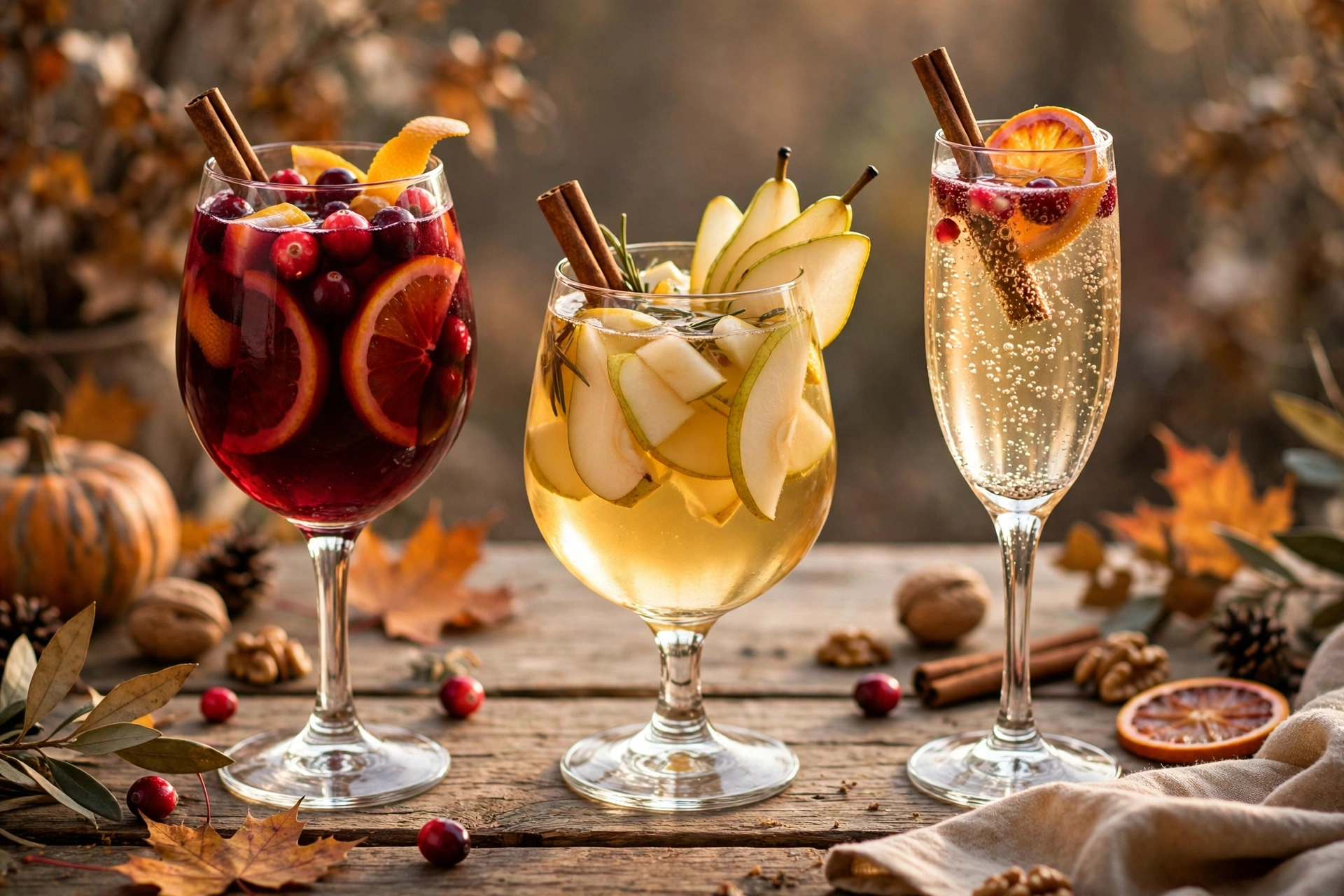
Swap the red wine for a crisp, unoaked white like Pinot Grigio or Sauvignon Blanc, and replace the cranberry juice with pear nectar or white grape juice. The drink turns golden instead of ruby, with a lighter, brighter flavor that white wine lovers adore. Keep the apples, pears, cinnamon sticks, and orange liqueur exactly the same. This variation pairs especially well with the lighter starters of the meal — salads, shrimp cocktail, and cheese boards.
Variation 2: Sparkling Celebration Sangria
Want something that feels like a toast in a glass? Build the base with just the wine, liqueur, juices, fruit, and spices, then chill as usual. When serving, fill each glass only halfway with sangria and top the rest with chilled Prosecco, Cava, or champagne. The bubbles lift the fruit flavors and turn the whole drink festive. This is the version to make when you want the table to feel like a celebration from the first pour.
Variation 3: Bourbon-Maple Harvest Sangria
Trade the orange liqueur for 1/2 cup of bourbon and swap the honey for pure maple syrup. Bourbon's vanilla and caramel notes wrap around the apple cider like a warm blanket, and the maple syrup deepens the fall flavor. This version skews richer and slightly stronger, so serve it in smaller pours. It is a guaranteed hit with the whiskey drinkers at the table who usually skip the sangria pitcher.
Variation 4: Zero-Proof Thanksgiving Sangria
Not everyone drinks alcohol, and everyone deserves a beautiful glass. Replace the red wine with 3 cups of unsweetened grape juice plus 1 cup of pomegranate juice, skip the orange liqueur, and add an extra splash of orange juice. Keep all the fruit and cinnamon sticks. The result looks identical to the original — deep red, fruit-studded, gorgeous — and tastes like a festive fall punch. Label the pitcher clearly so guests know which one is which.
Variation 5: Spiced Pear and Ginger Sangria
Lean into the spice cabinet. Add 4 to 5 thin slices of fresh ginger and 3 whole cloves to the pitcher along with the cinnamon sticks, and swap the club soda topper for a bold ginger beer. The ginger adds a warming heat that plays beautifully against the sweet pear and apple. This variation tastes like the coziest version of fall you can pour, and it is the one I make when the weather turns properly cold.
How Do You Store Leftover Thanksgiving Sangria?
Good news: this drink keeps well, so a half-finished pitcher is never a problem.
Refrigerator: Pour any leftover sangria into a sealed pitcher or a large mason jar and refrigerate for up to 3 days. The fruit will keep infusing, so the flavor actually deepens on day two. By day three the apple and pear slices start to soften, but the drink itself still tastes great — just fish out the tired fruit before serving. Always store the sangria without the fizzy topper mixed in; add fresh ginger beer or club soda to each glass when you serve the leftovers.
Freezer: Yes, you can freeze sangria, and it works surprisingly well. Pour the liquid into freezer-safe containers or zip-top bags, leaving an inch of headspace for expansion, and freeze for up to 3 months. Skip freezing the fruit — it turns mushy when thawed. Thaw the sangria in the refrigerator overnight, give it a good stir, and add fresh sliced fruit and a splash of bubbles before serving. Frozen sangria also makes an incredible base for slushies: blend the thawed mixture with ice for a frosty holiday drink.
Serving cold after storage: Sangria should always be served well chilled. If your leftovers have been in the fridge, they are ready to pour — just add ice or juice cubes to each glass. If you froze the batch, make sure it thaws completely in the refrigerator (never on the counter) and taste it before serving; you may want to brighten it with a fresh squeeze of orange or a little extra cranberry juice after its time in the freezer.
A note on food safety: Because this contains fresh cut fruit, treat it like any fresh food. Do not leave the pitcher sitting out at room temperature for more than 2 hours during the party. If the drink table is out for the whole afternoon, set the pitcher over a bowl of ice or refill it in smaller batches from the fridge.
What Should You Serve with Thanksgiving Sangria?
This thanksgiving sangria was born for the holiday table, and it pairs with almost everything on it. The fruity acidity cuts through rich, buttery dishes, while the warm spice echoes the seasonings in the meal itself.
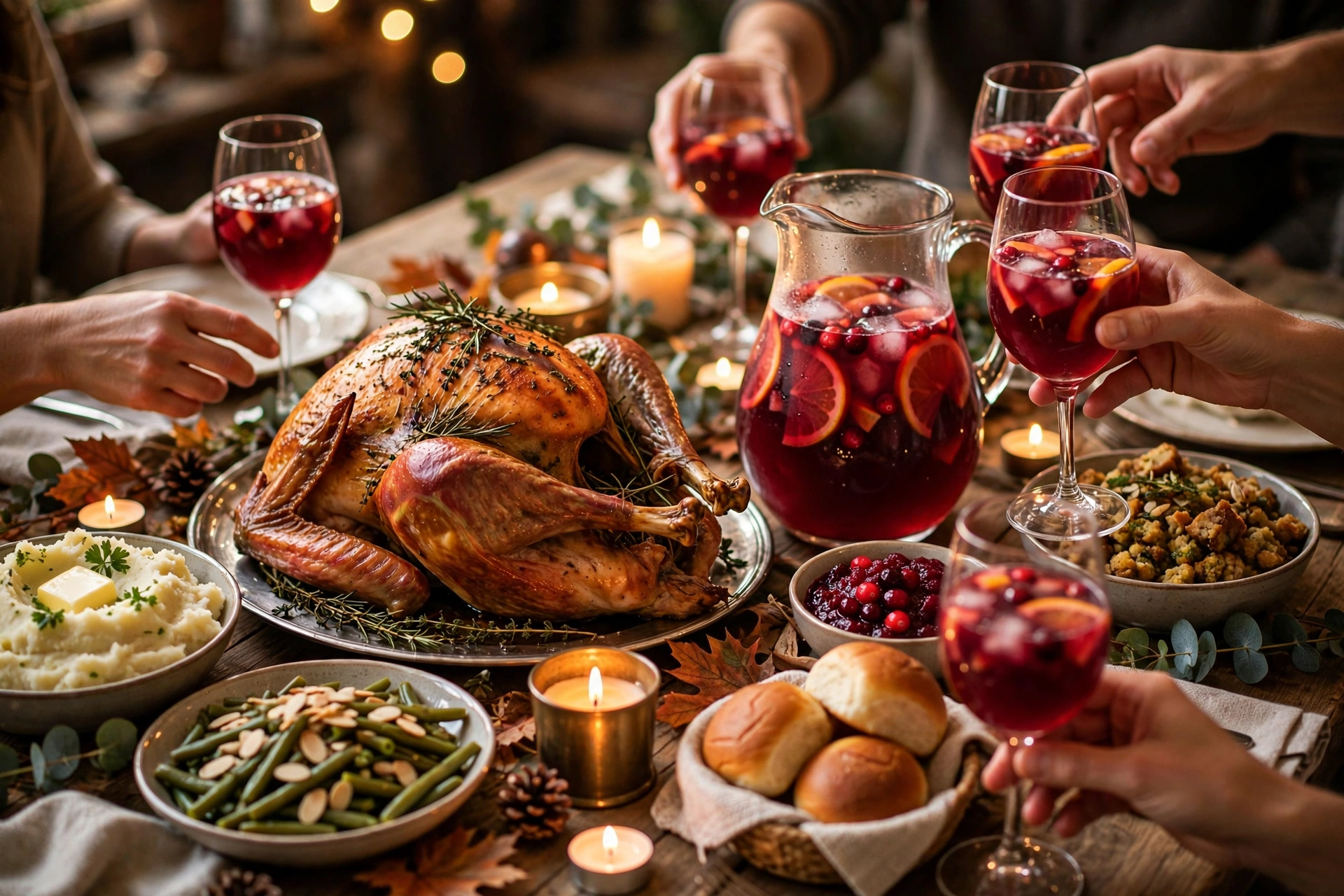
With the main meal: Pour it alongside the turkey dinner. The cranberry notes in the glass mirror the cranberry sauce on the plate, and the bright fruit lifts heavy sides like mashed potatoes, stuffing, and gravy. It works with roasted turkey, glazed ham, and even vegetarian mains like butternut squash lasagna.
With appetizers: Set the pitcher out an hour before dinner with a spread of starters. It loves cheese boards — especially sharp cheddar, creamy brie, and blue cheese — plus spiced nuts, figs, and crusty bread with honey butter. The wine-soaked fruit from the pitcher makes a fun addition to the cheese board too; just fish some out with a slotted spoon.
With dessert: The cinnamon-sugar rim makes this a natural partner for apple pie, pecan pie, and pumpkin cheesecake. Pour a small glass with dessert instead of coffee for guests who want something festive. The apple and pear notes in the sangria tie the whole dessert course together.
As a welcome drink: This is my favorite way to serve it. Greet guests at the door with a finished glass — rimmed, iced, topped with ginger beer, cinnamon stick in place. It instantly sets a celebratory mood, gives people something to hold while they mingle, and buys you time in the kitchen. First impressions matter, and a beautiful glass of sangria is a great one.
Snack pairings for the drink table: If you are setting up a dedicated drink station, surround the pitcher with small bowls of spiced pecans, dark chocolate squares, dried figs, and orange slices. Guests can nibble while they pour, and the whole setup looks like something out of a magazine with almost no effort.
Frequently Asked Questions About Thanksgiving Sangria
Can you make thanksgiving sangria ahead of time?
Absolutely — you should. This drink is designed for making ahead. Mix the wine, juices, liqueur, fruit, and spices 8 to 24 hours before serving for the best flavor. You can even mix the liquids up to 3 days in advance and add the fruit and cinnamon sticks the day before the party. Just wait to add any fizzy topper until you pour each glass.
What is the best red wine for thanksgiving sangria?
A dry, fruity, medium-bodied red wine. Spanish Garnacha and Tempranillo are the classic choices because they are juicy, affordable, and practically made for fruit. Pinot Noir, Merlot, and fruit-forward red blends also work beautifully. Avoid heavy, tannic wines like bold Cabernet Sauvignon — tannins turn bitter against the fruit — and avoid anything oaky, sweet, or expensive. The ten-dollar bottle you enjoy on a weeknight is perfect.
How long should sangria chill before serving?
Give it at least 4 hours in the refrigerator, but 8 to 12 hours is the sweet spot. That overnight rest lets the wine absorb the fruit juices and lets the cinnamon fully bloom. Do not go past 48 hours with the fruit in the pitcher, though — the apples and pears will get mushy and the flavor can turn tired.
Can you use frozen fruit in sangria?
Yes, and cranberries are actually ideal frozen. Frozen cranberries hold their shape, chill the drink, and release their color beautifully as they thaw. Frozen apple or pear slices work in a pinch too, though fresh slices look and taste better. Never use frozen fruit that has added sugar or syrup — plain frozen fruit only.
How do you keep sangria from getting watery?
Three tricks. First, chill every ingredient before mixing so you need less ice. Second, freeze juice ice cubes — cranberry, orange, or apple juice frozen in a tray with a few cranberries in each well — instead of using plain water ice. Third, add the ginger beer or club soda to each glass at serving time rather than to the pitcher, so nothing dilutes the base.
Is thanksgiving sangria very alcoholic?
Each serving lands roughly where a generous glass of wine would — the juices and liqueur dilute the wine slightly, but the orange liqueur adds some strength back. Expect around 10 to 12 percent alcohol by volume per glass, depending on your wine and ratios. It tastes smooth and fruity, which makes it easy to drink quickly, so remind guests (and yourself) that it still packs the punch of wine. Always offer the zero-proof variation for non-drinkers and designate drivers.
What can you substitute for orange liqueur?
Brandy is the traditional sangria spirit and makes an excellent swap — use the same 1/2 cup. Bourbon or dark rum also work and add their own character. For a lighter touch, use 1/4 cup of liqueur plus 1/4 cup of fresh orange juice. In a pinch, you can skip the spirits entirely and add an extra 1/2 cup of orange juice; the sangria will be a bit lighter but still delicious.
Why does my sangria taste bitter?
Bitterness almost always comes from one of three culprits. Tannic or oaky wine is the most common — switch to a fruitier, softer red. The white pith of citrus can also turn bitter during a long soak, so slice oranges thin and consider removing them after 24 hours. Finally, over-steeped spices (especially star anise or cloves left for days) can add a bitter edge; stick to the recommended amounts and timing.
Can kids drink thanksgiving sangria?
No — this is an alcoholic drink and it is not for children, even though it tastes fruity. Make the zero-proof variation in a separate, clearly labeled pitcher so kids and non-drinkers have their own festive option. Better yet, check out a dedicated non-alcoholic holiday punch recipe for the little ones at the table.
How many servings does one pitcher make?
One batch using a full 750 ml bottle of wine makes about 8 servings of roughly 6 ounces each, plus the fizzy topper. For a Thanksgiving crowd, plan on one to one-and-a-half glasses per adult drinker over the course of the gathering. The recipe doubles and triples cleanly, so scale up confidently for a big Friendsgiving.
Final Thoughts
Every Thanksgiving has a moment when the host finally sits down, looks around the table, and breathes. This thanksgiving sangria is built for that moment — and for every moment leading up to it. It asks almost nothing of you on the busiest cooking day of the year: ten minutes of slicing and stirring, one night in the refrigerator, and a pitcher that pours itself into beautiful glasses.
What you get in return is disproportionate. A drink that tastes like fall, looks like a centerpiece, stretches one bottle of wine into eight generous servings, and makes every guest feel welcomed the second they walk in. It pairs with the turkey, it pairs with the pie, and it pairs with the beautiful chaos of a house full of people you love.
So this year, skip the stress of playing bartender. Mix the pitcher the night before, rim the glasses with cinnamon sugar, and let the sangria do the talking. Your future self — the one finally sitting down with a glass of her own — will thank you. Happy Thanksgiving, and cheers to the easiest impressive drink you will make all season.
Planning the full holiday menu? Our Thanksgiving brunch roundup pairs beautifully with this pitcher, and pumpkin baked brie makes an irresistible appetizer while guests mingle.