What Makes This Yokan Recipe So Special?
Some desserts impress with richness. Yokan impresses with restraint. It is a firm, glossy slab of sweetened red bean jelly — smooth, sliceable, and deeply satisfying in a quiet way. One small slice with a cup of hot tea feels like a small ceremony in the middle of an ordinary day.
What makes this yokan recipe special is how approachable it is. Traditional Japanese confectionery (wagashi) can feel intimidating, full of specialized tools and years of training. This recipe strips yokan down to its essence: three ingredients, one saucepan, and about fifteen minutes of active work. If you can stir a pot, you can make yokan.
The result looks like something from a Kyoto sweet shop. The jelly sets firm enough to slice into perfect rectangles, with a beautiful sheen and a clean, sweet red bean flavor. It keeps for a week in the fridge, needs no baking, and is naturally vegan and gluten-free. This guide covers everything — what yokan is, the exact technique, how to get that flawless glossy finish, five variations, mistakes to avoid, and how to serve it like you mean it.
What Is Yokan, Exactly?
Yokan is a traditional Japanese sweet made from red bean paste, sugar, and agar-agar, set into a firm jelly and sliced into neat bars or cubes. It is one of the most famous forms of wagashi — Japanese confectionery — and it has been served alongside tea for centuries.
Its story starts in China, where the original version was a steamed jelly made with mutton broth. When the recipe traveled to Japan with Zen Buddhist monks, meat was off the table — literally — so cooks replaced the animal gelatin with agar-agar, a plant-based gelling agent made from seaweed. The result was the yokan we know today: smooth, firm, and completely plant-based.
There are two main styles. Neri yokan is the classic firm version — dense, sweet, and sliceable, the kind sold in beautiful boxes as gifts. Mizu yokan (water yokan) is a lighter, softer version with more water, served chilled in summer. This recipe teaches you neri yokan, the traditional firm style, and Variation 3 shows you how to make mizu yokan too.
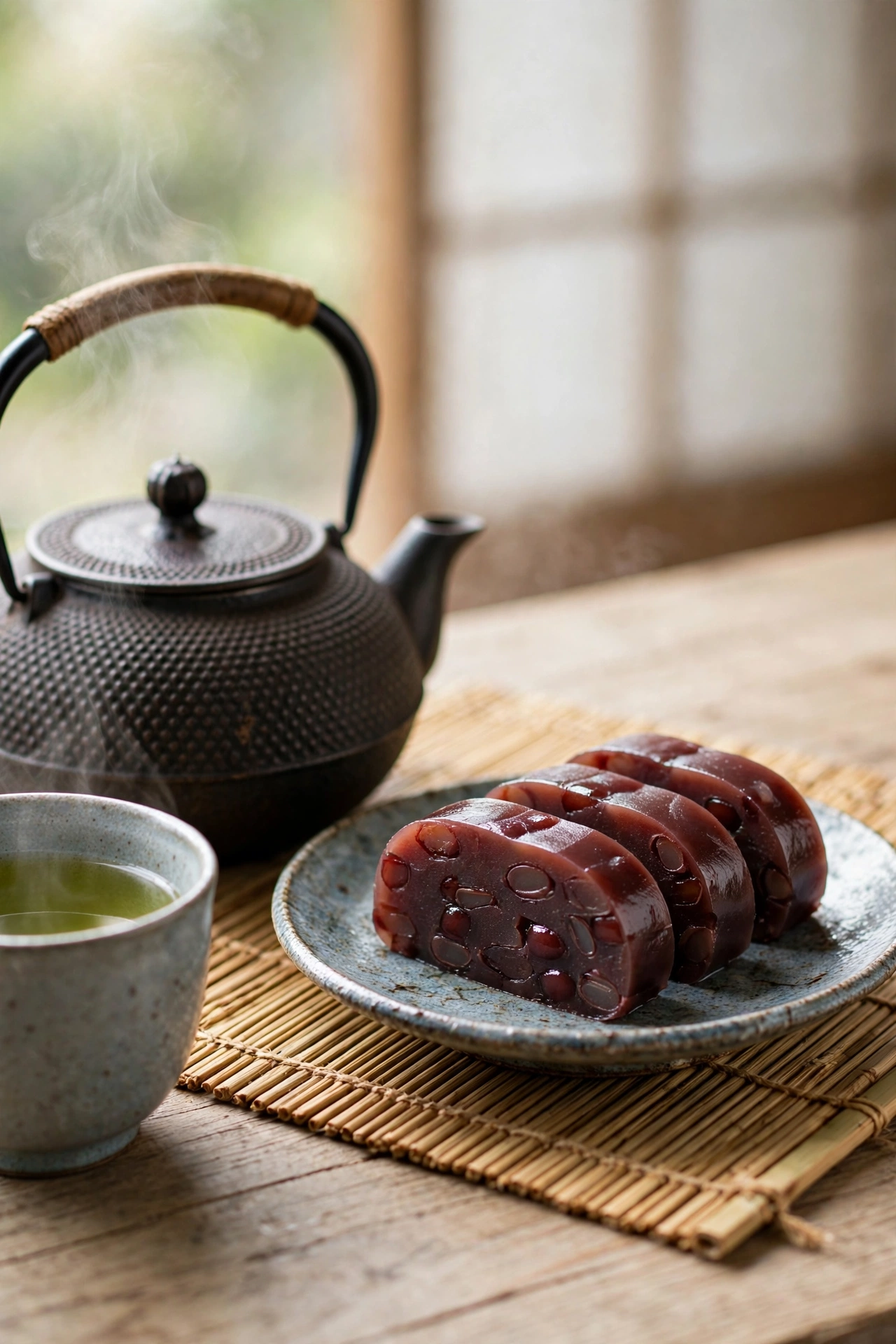
In Japan, yokan is deeply tied to the tea ceremony. Its firm sweetness is designed to balance the bitterness of matcha. Even if you never attend a tea ceremony, that pairing — sweet jelly, bitter green tea — is one of the great flavor combinations in the world, and you can recreate it in your own kitchen today.
What Ingredients Do You Need for Yokan?
Yokan needs only three core ingredients, which is part of its magic. This recipe makes one standard block (about 8 servings).
You will need:
- 1 pound (450g) koshian — smooth, sweetened red bean paste
- 2 teaspoons (about 4g) agar-agar powder
- 1 1/2 cups (300g) granulated sugar
- 1 1/4 cups (300ml) water
- 1/4 teaspoon salt
Each ingredient has a job. The koshian provides the deep, earthy-sweet red bean flavor and the dark ruby color. Agar-agar is the gelling agent — it sets the mixture firm at room temperature, which gelatin cannot do. Sugar sweetens and gives the jelly its characteristic firm, almost chewy bite. Water dissolves the agar and loosens the thick bean paste into a pourable liquid. The salt is tiny but essential — it sharpens the sweetness and makes the red bean flavor taste more like itself.
Choosing your red bean paste: Buy koshian (smooth red bean paste), not tsubuan (chunky). The smooth paste gives yokan its signature silky texture. Look for it in Asian grocery stores or online, usually in cans or vacuum-sealed bags. Taste it before you start — it should be sweet but not cloying, with a deep, almost chocolatey bean flavor. If you can only find unsweetened paste, add an extra 1/4 cup of sugar to the recipe.
Choosing your agar-agar: Use agar-agar powder, not flakes or bars. Powder dissolves cleanly and measures precisely — flakes and bars vary too much in strength and can leave your yokan too soft or rubbery. Agar powder is sold in small packets in Asian grocery stores, health food stores, and online.

What Equipment Do You Need to Make Yokan?
Almost nothing — this is a wonderfully low-equipment dessert:
- A medium heavy-bottomed saucepan
- A wooden spoon or silicone spatula
- A fine-mesh strainer
- A rectangular mold — a small loaf pan, a glass food storage container, or a traditional nagashikan mold all work
- Plastic wrap
- A sharp, thin knife (for clean slices)
About the mold: A container about 7 x 4 inches (18 x 10 cm) gives you a classic thick block. If you only have a standard 9×5-inch loaf pan, the yokan will be thinner — still delicious, just slice it into smaller pieces. Line any mold with plastic wrap or lightly dampen it with water so the set jelly releases cleanly.
How Do You Make Yokan Step by Step?
Total active time is about 15 minutes, plus 3 to 4 hours of chilling. The technique is simple, but each step matters.
Step 1: Dissolve the agar. Pour the water into the saucepan and sprinkle the agar-agar powder evenly over the surface. Let it sit for 5 minutes to hydrate, then bring it to a gentle boil over medium heat, stirring constantly. Keep it at a gentle boil for 2 full minutes, stirring the whole time. The liquid should look completely clear with no grainy specks — if you see specks, the agar has not fully dissolved, and your yokan will not set properly.
Step 2: Add the sugar and salt. Stir in the sugar and salt. Keep stirring over medium heat until the sugar dissolves completely, about 2 minutes. The mixture will look like a clear, slightly thick syrup.
Step 3: Add the red bean paste. Add the koshian to the pan. Switch to a spatula and stir constantly over medium-low heat, breaking up the paste and folding it into the syrup. This takes 5 to 7 minutes. Keep stirring the entire time — the paste scorches easily on the bottom. You are done when the mixture is completely smooth, glossy, and thick enough that the spatula leaves a slow-closing trail when you drag it through.
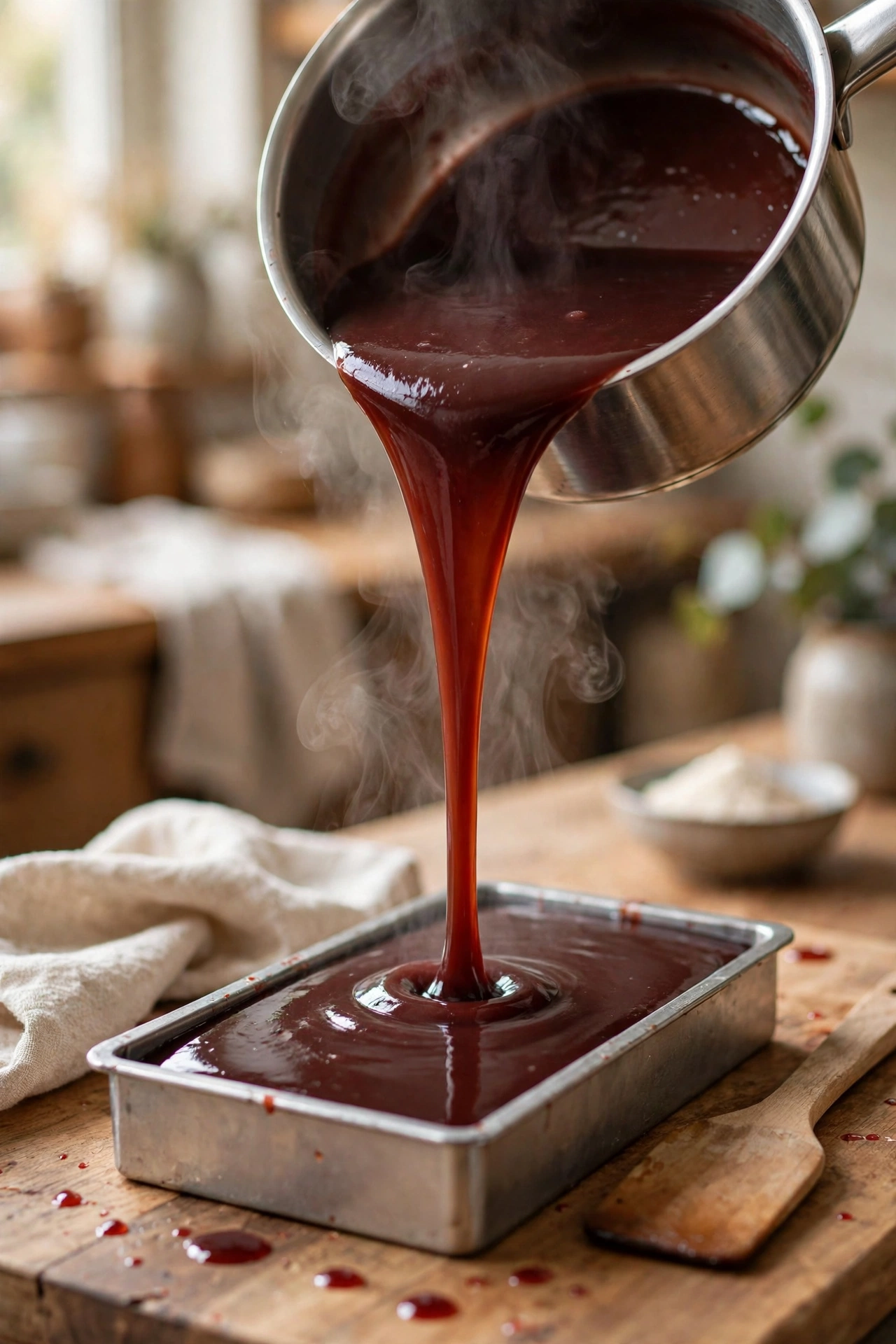
Step 4: Strain for silkiness. Pour the hot mixture through a fine-mesh strainer into a clean bowl or measuring jug with a spout, pressing it through with the spatula. This catches any stubborn lumps of bean paste and any undissolved bits, and it is the secret to a perfectly smooth finish. Skim off any foam from the surface with a spoon.
Step 5: Pour into the mold. Pour the strained mixture into your prepared mold. Tap the mold firmly on the counter two or three times to release trapped air bubbles. If a few bubbles remain on the surface, pop them with a toothpick.
Step 6: Chill until firm. Let the mold cool at room temperature for 30 minutes, then refrigerate for at least 3 hours, or until completely firm. The yokan is ready when it feels solid to the touch and pulls cleanly away from the sides of the mold.
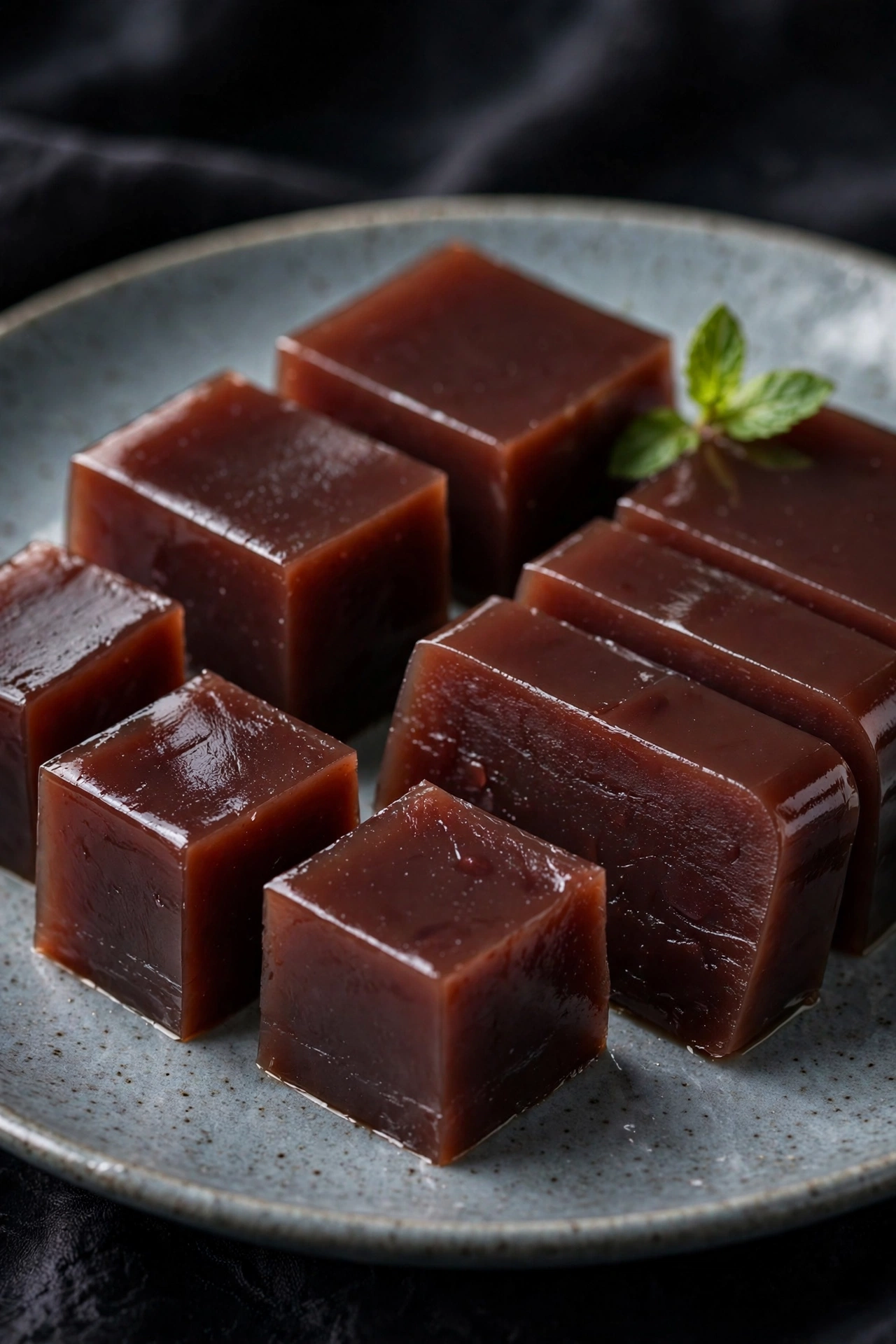
Step 7: Unmold and slice. Run a thin knife around the edges, invert the mold onto a cutting board, and lift it away. If you lined the mold with plastic wrap, just lift the whole block out. Slice with a sharp, thin knife, wiping the blade clean between cuts for the neatest edges. Cut into bars about 2 inches long, or into bite-size cubes.
What Is Agar-Agar, and Can You Substitute Gelatin?
Agar-agar is a natural gelling agent made from red seaweed. It has been used in Asian cooking for centuries, and it behaves very differently from gelatin.
The most important difference: agar sets firmly at room temperature and stays firm. Gelatin melts around body temperature, which is why gelatin desserts feel soft and wobbly. Yokan needs agar's firm, sliceable set — that satisfying clean cut is the whole point of the dessert.
Can you substitute gelatin? Technically yes, practically no. You would need about 4 times the amount of gelatin by weight, and the result would be a soft, jiggly red bean jelly that melts in your mouth — pleasant, but not yokan. It also would not be vegan, and it would need to stay refrigerated or it would collapse. If you want real yokan, buy the agar powder. One small packet costs very little and makes many batches.
Bonus: Because agar is plant-based, this recipe is naturally vegan — a rare thing for a traditional dessert this elegant.
How Do You Get That Perfect Smooth, Glossy Finish?
The difference between homemade-looking yokan and sweet-shop yokan comes down to finish. These four habits get you there:
1. Strain, always. The fine-mesh strainer step is non-negotiable. Even good-quality bean paste has tiny lumps, and straining is what creates that flawless, uniform surface.
2. Skim the foam. After pouring, tiny bubbles and foam rise to the surface and set into the top layer. Skim them off with a spoon before chilling, and your yokan will have a mirror-smooth top.
3. Do not stir after pouring. Once the mixture is in the mold, leave it alone. Stirring or jiggling introduces air and disturbs the setting surface. Pour, tap out bubbles, and walk away.
4. Wipe the knife between cuts. A clean blade makes clean cuts. Keep a damp cloth beside your cutting board and wipe the knife after every single slice. This one habit is what gives you those sharp, professional edges.
What Are the Most Common Yokan Mistakes?
Yokan is simple, but it is precise. These are the mistakes that trip people up:
Not fully dissolving the agar. If you rush the 2-minute boil or stop stirring, grainy specks of undissolved agar remain. The jelly sets unevenly — firm in spots, soft in others. The fix is patience: boil gently, stir constantly, and look for a completely clear liquid before moving on.
Boiling the mixture too hard. Once the bean paste goes in, the heat should stay at medium-low. A rolling boil scorches the paste on the bottom of the pan and dulls the flavor. Gentle heat and constant stirring — that is the whole technique.
Wrong agar ratio. Agar strength varies slightly by brand, but 2 teaspoons of powder per 1 1/4 cups of liquid is the tested sweet spot. Too little and the yokan will not hold its shape; too much and it turns rubbery. Measure the powder with real measuring spoons, not a dinner spoon.
Unmolding too early. If the center still feels soft or jiggly, it needs more time. Rushing this step gives you a sad, slumped block. Three hours minimum in the fridge; overnight is even better.
Cutting with a dull or dirty knife. A dull knife drags and tears the jelly instead of slicing it. A dirty knife leaves streaks on every cut. Sharp, thin, wiped clean between slices — every time.
Using chunky red bean paste. Tsubuan (chunky paste) makes a rustic, hearty sweet, but it will never give you the smooth, refined texture of real yokan. For this recipe, koshian (smooth paste) is the only choice.
Variation 1: How Do You Make Matcha Yokan?
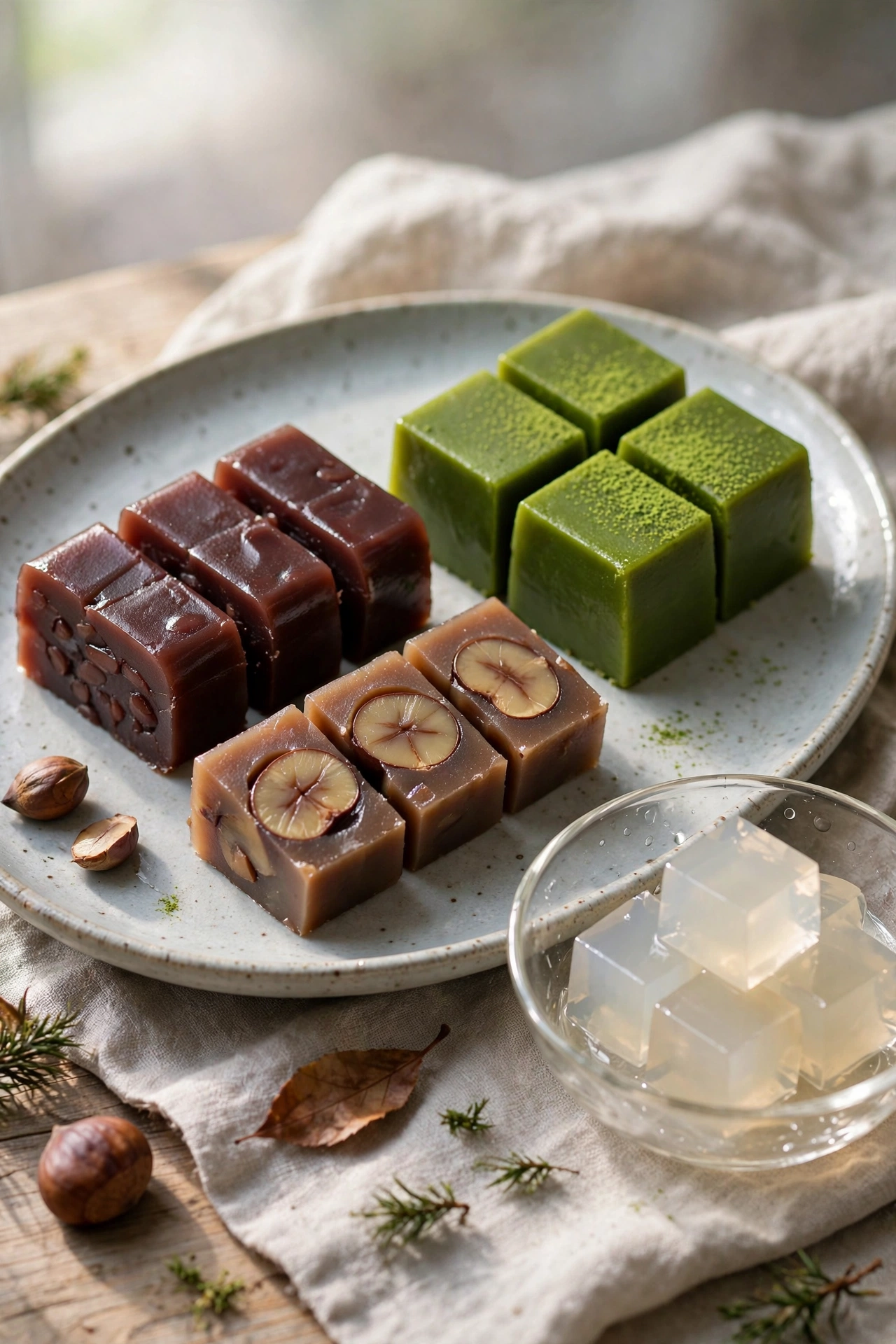
Replace 2 tablespoons of the water with 2 tablespoons of hot water whisked with 2 teaspoons of ceremonial-grade matcha. Add the matcha liquid at the same time as the red bean paste and strain as usual. The result is a stunning deep green jelly with the earthy bitterness of matcha balancing the sweet bean paste.
Use good matcha — culinary grade tastes flat and dull here. The vibrant color fades with time, so serve matcha yokan within 2 days for the prettiest presentation. This is the variation to make for tea lovers.
Variation 2: How Do You Make Chestnut Yokan?
Fold 1 cup of cooked, peeled whole chestnuts (vacuum-packed or canned in water, drained) into the mixture just before pouring it into the mold. The chestnuts suspend in the jelly and reveal themselves in beautiful cross-sections when you slice the block.
Chestnut yokan, called kuri yokan, is a beloved autumn sweet in Japan. The nutty, creamy chestnuts pair perfectly with red bean. For extra luxury, soak the chestnuts in a tablespoon of rum or brandy for 30 minutes before adding them.
Variation 3: How Do You Make Mizuyokan (Water Yokan)?
Increase the water to 2 cups and reduce the sugar to 1 cup, keeping the agar and bean paste the same. The extra water makes a softer, lighter jelly that wobbles gently instead of slicing firmly. Pour into small cups or a shallow dish and chill until set.
Mizuyokan is the summer version — served ice cold, often with a little kuromitsu (brown sugar syrup) drizzled over the top. It is refreshing rather than rich, and it melts on the tongue. Do not try to unmold and slice it like neri yokan; serve it in the dish.
Variation 4: How Do You Make Black Sesame Yokan?
Toast 1/3 cup of black sesame seeds in a dry pan until fragrant, then grind them to a fine powder in a spice grinder. Stir the powder into the mixture along with the red bean paste. The sesame turns the jelly a dramatic deep gray-black with an intensely nutty, almost savory depth.
This variation tastes sophisticated and looks striking on a plate. A tiny pinch of extra salt makes the sesame flavor pop. Serve it with unsweetened green tea — the pairing is outstanding.
Variation 5: How Do You Make Coffee Yokan?
Dissolve 2 tablespoons of instant espresso powder in the hot water along with the agar at the very start. Proceed with the recipe as written. The coffee deepens the color to near-black and adds a roasted bitterness that makes the yokan taste almost like chocolate.
Coffee yokan is the most modern-tasting variation here, and it is a fantastic gateway for anyone who thinks they do not like red bean desserts. Serve small cubes with a dollop of lightly sweetened whipped cream for a Japanese-Italian fusion moment.
How Do You Store Yokan?
Yokan is one of the easiest desserts to store — it was practically designed for keeping.
In the refrigerator: Wrap the uncut block tightly in plastic wrap, or store sliced pieces in an airtight container with parchment between the layers. It keeps beautifully for 5 to 7 days. The flavor actually deepens slightly after a day or two.
At room temperature: Thanks to the sugar and agar, yokan is shelf-stable for a day or two in cool weather — this is why it became a famous travel gift (omiyage) in Japan. But the refrigerator keeps the texture and color fresher, so chill it when you can.
One rule: Keep it away from strong-smelling foods. Agar-based jellies absorb odors easily, and nobody wants onion-flavored yokan. A sealed container solves this completely.
Can You Freeze Yokan?
Yes, with a small texture trade-off. Wrap individual slices tightly in plastic wrap, then place them in a freezer bag with the air pressed out. Freeze for up to 2 months.
Thaw slices overnight in the refrigerator. The texture softens very slightly after freezing — most people cannot tell the difference, especially in the matcha and coffee variations. Do not refreeze thawed yokan.
Honestly, though, yokan keeps so well in the fridge that freezing is rarely necessary. Make a block, slice what you need, and enjoy it through the week.
What Do You Serve With Yokan?
Yokan is traditionally a tea sweet, and the pairing matters as much as the dessert:
- Matcha — the classic pairing. Bitter, frothy matcha against sweet, smooth yokan is the combination the dessert was born for.
- Sencha or other green tea — lighter than matcha but the same beautiful bitter-sweet contrast.
- Hojicha (roasted green tea) — toasty and mellow, wonderful with chestnut yokan.
- Black tea — a strong Assam or Earl Grey stands up nicely to the dense sweetness.
- Coffee — especially good with the coffee yokan variation, naturally.
For presentation: Slice yokan into neat rectangles and arrange them on a small ceramic plate, slightly overlapping like dominoes. Add one simple garnish — a mint leaf, a dusting of matcha, or a single candied chestnut. Japanese aesthetics favor restraint: one beautiful plate, one thoughtful detail.
For gatherings, offer an assortment of two or three variations on one platter — classic red bean, matcha, and chestnut together look stunning and let guests compare. Put out a pot of green tea and let the afternoon slow down.
Yokan FAQs
Where can I buy agar-agar powder?
Asian grocery stores are the best bet — look in the baking or dessert aisle for small packets of agar powder. Health food stores and well-stocked supermarkets carry it too, and it is easy to find online. Make sure the package says "powder," not flakes or bars, since powder measures most reliably.
What is the difference between koshian and tsubuan?
Koshian is smooth red bean paste with the skins removed; tsubuan is chunky with whole or partial beans. Koshian gives yokan its silky, refined texture. Tsubuan makes a heartier sweet (like dorayaki filling) but will never set into smooth yokan. Check the label carefully when you buy.
My yokan is too soft. What went wrong?
The agar probably did not fully dissolve, or the ratio was off. Next time, boil the agar-water mixture for the full 2 minutes while stirring constantly, and measure the powder with real measuring spoons. You can rescue a too-soft batch by melting it down, adding another teaspoon of dissolved agar, and re-setting it.
My yokan is rubbery. What went wrong?
Too much agar. Measure precisely — 2 teaspoons of powder for this recipe. Different brands vary slightly in strength, so if your brand consistently sets too firm, reduce to 1 3/4 teaspoons next time and note the adjustment.
Is yokan vegan?
Yes, this recipe is naturally vegan. Agar-agar comes from seaweed, and the other ingredients are red beans, sugar, water, and salt. It is also naturally gluten-free. One note: some sugars are processed with bone char, so strict vegans may want to use certified vegan sugar.
Can I reduce the sugar?
You can cut it to 1 cup, but expect a softer set and a less traditional texture — sugar contributes to the firmness, not just the sweetness. Do not go below 3/4 cup or the jelly may not set properly. The red bean paste already contains sugar, so taste your paste first before deciding.
Why can I not just use gelatin?
Gelatin melts at body temperature, so a gelatin version would be soft, wobbly, and melt in your mouth — pleasant, but not yokan. Only agar gives the firm, clean-slicing set that defines this dessert. It also keeps yokan stable at room temperature and vegan.
I do not have a yokan mold. What can I use?
Any small, smooth-sided container works: a mini loaf pan, a glass food storage container, even a deep square ramekin. Line it with plastic wrap for easy release. Silicone molds also work beautifully and need no lining — they are great for making individual portions.
How do I give yokan as a gift?
Wrap individual slices in wax paper or cellophane, tie with string, and pack in a small box. Yokan's firmness and shelf stability made it Japan's classic travel gift for a reason. A handwritten note with the flavor (matcha, chestnut, classic) makes it feel truly special.
Final Thoughts
Yokan proves that simplicity can be luxurious. Three ingredients, one pot, and a few hours in the fridge — and you have a dessert with centuries of history behind it, elegant enough for guests and easy enough for a Tuesday.
Start with the classic red bean version and nail the technique: fully dissolved agar, gentle heat, a good strain, clean slices. Then play. Matcha for the tea lovers, chestnut for autumn, mizuyokan when summer arrives.
Make a block this week. Pour the tea. Slow down for ten minutes. That is what yokan is really for.
If yokan has you curious about more make-ahead sweets, try our homemade peppermint bark for a crisp, chocolatey holiday treat, and don’t miss our pecan pumpkin pie bars when you are craving cozy spiced pumpkin with a buttery pecan crunch.
📌 Love this recipe? Pin it on Pinterest to save it for later!