
Caramel Apple Bark
SEO Title: Easy Caramel Apple Bark Recipe — Fall Candy in 20 Minutes
Meta Description: This caramel apple bark recipe layers rich chocolate, gooey caramel & dried apples into an irresistible fall treat. No baking, 20 minutes, 5 variations included.
Why Is This the Best Caramel Apple Bark You'll Ever Make?
Some desserts try too hard. They demand candy thermometers, double boilers, and a pastry degree. Caramel apple bark is the opposite — it's the dessert equivalent of a great shortcut that tastes like you took the long way. Melted chocolate, ribbons of gooey caramel, chewy dried apple pieces, and a pinch of flaky salt, all broken into rustic shards. It takes 20 minutes of actual work, needs zero baking, and looks like it came from a fancy chocolate shop.
What makes this caramel apple bark recipe the best version isn't complicated technique — it's balance. A lot of bark recipes drown in sweetness: too much caramel, cheap chocolate, and toppings that slide off. This one builds in layers that actually stick together. The chocolate base is thick enough to hold everything. The caramel gets swirled while it's warm so it marries into the chocolate instead of sitting on top like a separate layer. And the dried apple pieces are chopped small enough to distribute through every bite, so you taste apple in the shard, not just on it.
Then there's the salt. A pinch of flaky sea salt over the top cuts through the richness and makes the caramel taste more like caramel — deeper, almost buttery. It's the difference between candy that's merely sweet and candy you can't stop eating. I've brought this to three fall gatherings now, and every single time someone asks for the recipe before they've finished chewing.
It's also ridiculously forgiving. Chocolate seized a little? Stir in a teaspoon of coconut oil and it smooths right out. Caramel too thick to drizzle? Warm it for ten seconds. Uneven swirls? They look artisanal anyway. This is the rare treat that's genuinely hard to mess up, which makes it perfect for baking with kids, gifting to neighbors, or making at 10 p.m. when a craving hits and the stores are closed.
What Is Caramel Apple Bark and Why Is It So Popular?
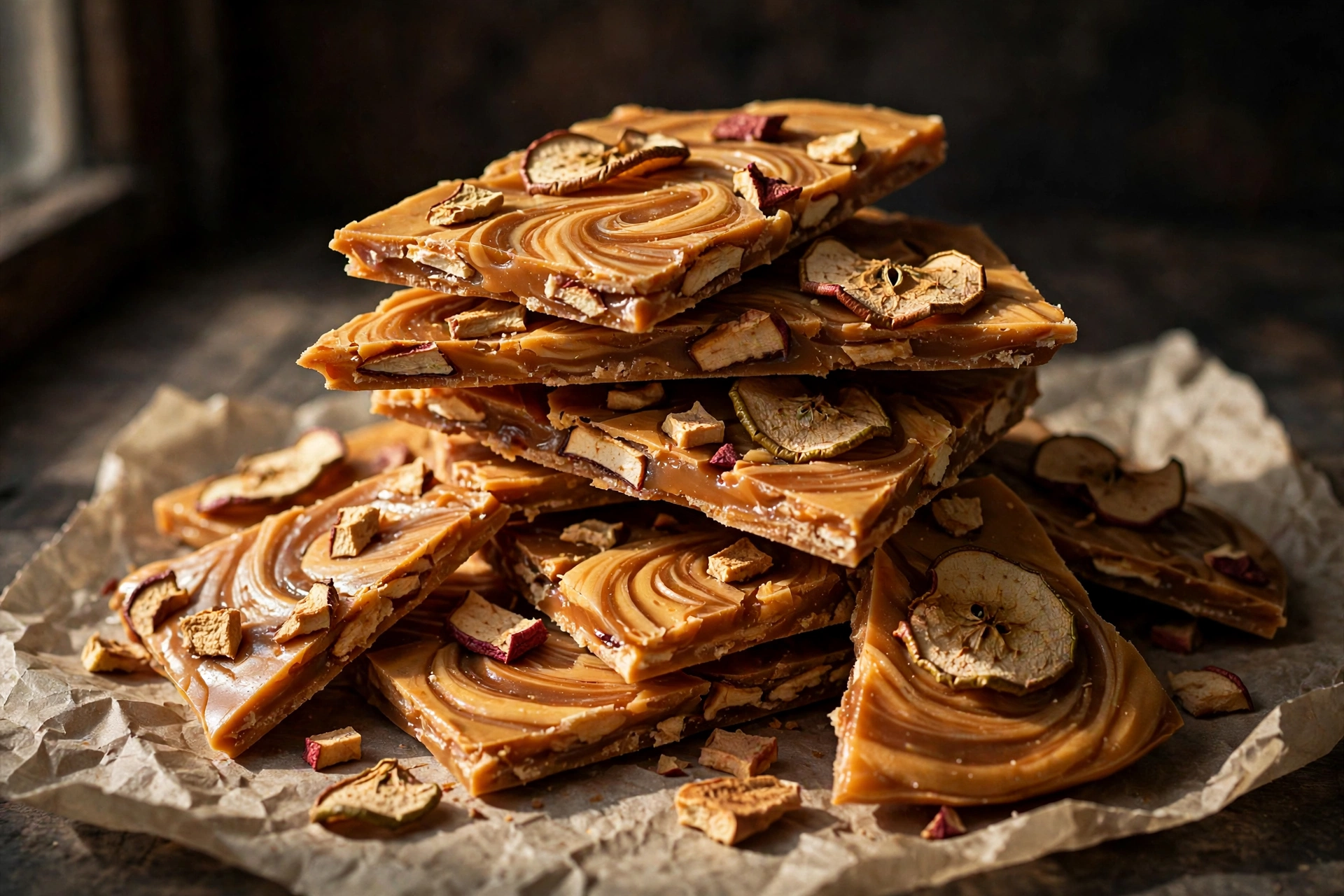
Caramel apple bark is a no-bake chocolate bark studded with caramel and apple — essentially all the flavors of a classic caramel apple, reimagined as easy-to-eat candy shards. A layer of melted chocolate forms the base, caramel gets swirled through it, dried apple pieces and toppings press into the top, and the whole slab gets chilled, then broken into irregular pieces. No sticks, no biting into a whole apple, no caramel pulling your fillings out. Just the flavor, in the most convenient possible form.
Its popularity rides on the coattails of two beloved things: chocolate bark (which blew up as the ultimate easy homemade candy) and the caramel apple (the undisputed icon of fall treats). Combining them was inevitable, and the result fixed the caramel apple's biggest flaw. Traditional caramel apples are delicious but impractical — they're sticky, hard to eat gracefully, and the caramel often slides right off the waxy apple skin. Bark keeps every flavor and ditches every annoyance.
Social media did the rest. Broken bark photographs beautifully — those jagged edges, the caramel swirls, the contrast of toppings against dark chocolate. It's the kind of treat that looks impressive in a gift bag or on a dessert board with almost no effort. Food bloggers and home bakers embraced it because it's endlessly customizable: swap the chocolate, change the toppings, and you've got a "new recipe" that takes the same 20 minutes.
But the real reason it stuck around is taste. The combination of rich chocolate, buttery caramel, chewy-tart apple, and salt hits every craving at once — sweet, salty, fruity, rich. It's nostalgic (hello, fall festivals and orchard visits) without being old-fashioned. One batch makes a generous pile of candy, it keeps well, and it scales effortlessly for parties or gifts. Popular isn't quite the word — it's become a fall staple.
What Ingredients Do You Need?
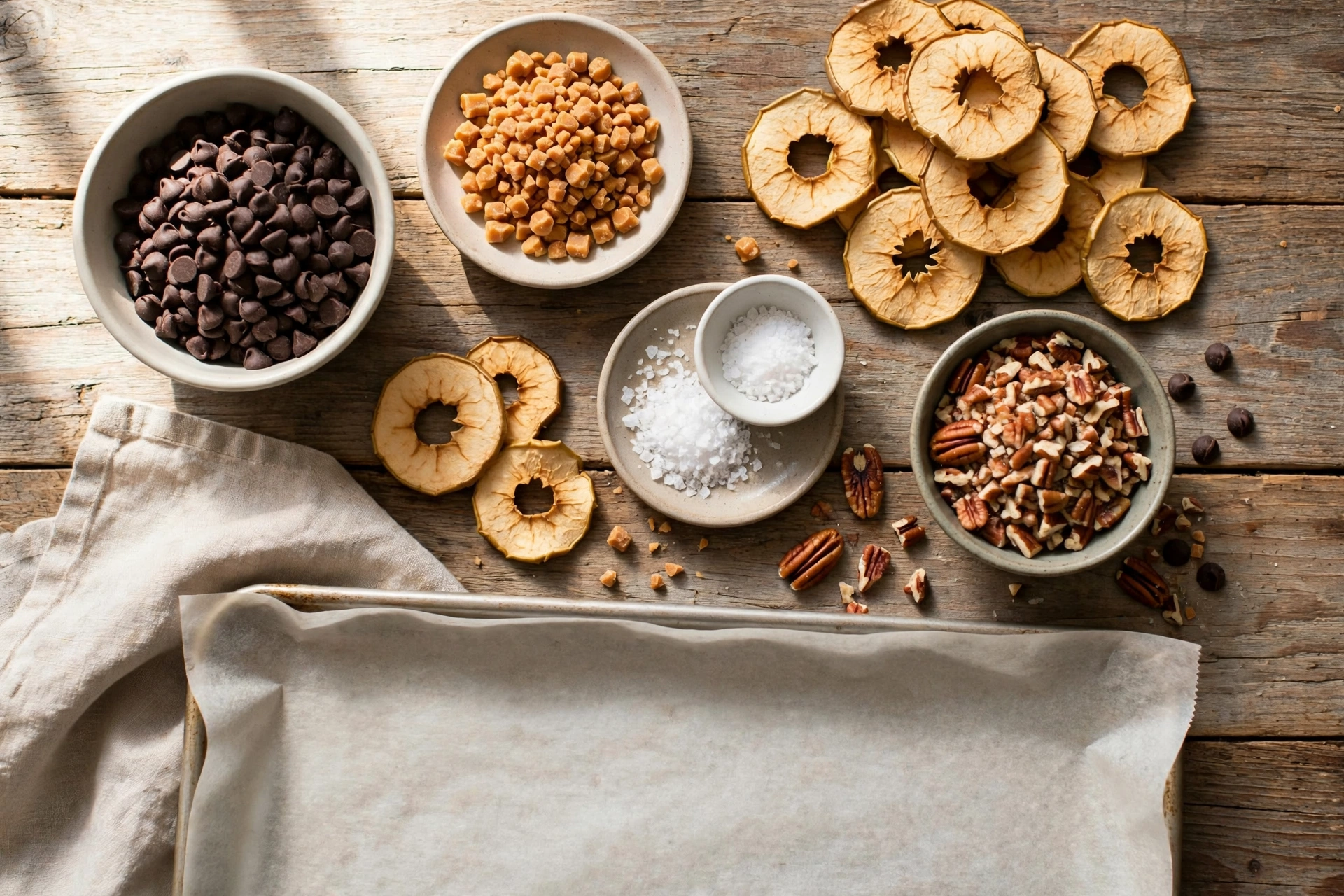
This caramel apple bark recipe keeps the ingredient list short and the quality high. Since there are so few components, each one matters — especially the chocolate. Here's everything with exact amounts:
- 12 ounces semi-sweet chocolate chips (or chopped bar chocolate; use a brand you enjoy eating plain)
- 11 ounces caramel bits (such as Kraft; or 25 soft caramels, unwrapped) plus 2 tablespoons heavy cream
- 1 cup dried apple rings or apple chips, chopped into small pieces (unsweetened preferred; freeze-dried apples work great for extra crunch)
- ½ cup chopped pecans or walnuts, toasted (optional but recommended)
- 2 tablespoons toffee bits (optional; adds buttery crunch)
- 1 teaspoon coconut oil (optional; for thinning chocolate if needed)
- ½ teaspoon flaky sea salt (such as Maldon; for finishing)
- ¼ teaspoon ground cinnamon (optional; for dusting)
A few notes on choosing well. For the chocolate, semi-sweet is the sweet spot — milk chocolate can push the whole thing into candy-bar territory, while dark chocolate (60-70%) gives a more grown-up, less sweet bark. Use real chocolate chips or a chopped bar, not candy melts; the flavor difference is enormous. The caramel bits melt faster and more evenly than whole caramels, but either works — if using wrapped caramels, unwrap them all before you start melting anything, because you won't have a free hand later.
For the apples, dried (not fresh) is essential. Fresh apple slices release water and would make the bark soggy and spoil quickly. Chewy dried apple rings give that classic caramel-apple flavor; freeze-dried apple pieces stay crisp and add a delightful crunch. Either is delicious — I've even mixed half and half. Just chop them into pea-sized pieces so every shard gets apple in every bite rather than one giant chunk per piece.
What Equipment Do You Need?
The beauty of bark is that it asks almost nothing of your kitchen. Gather these before you start, because melted chocolate waits for no one:
- Rimmed baking sheet (quarter-sheet or half-sheet; the rim contains the chocolate)
- Parchment paper (essential — the bark releases cleanly; wax paper can stick)
- Microwave-safe bowls (2: one large for chocolate, one medium for caramel; or use a double boiler)
- Rubber spatula (for spreading chocolate and swirling caramel)
- Small spoon or fork (for drizzling caramel)
- Chef's knife and cutting board (for chopping apples and nuts)
- Measuring cups and spoons
That's genuinely everything. No candy thermometer, no special molds, no stand mixer. If you can melt chocolate in a microwave, you can make this bark. One tip: have your toppings chopped and measured before the chocolate melts. Once chocolate is melted and spread, you have a short window before it starts setting — mise en place turns a potentially frantic five minutes into a calm one.
How Do You Make Caramel Apple Bark Step by Step?
From first melt to finished bark, you're looking at about 20 minutes of active work plus chilling time. Read through once before starting — the steps move fast when chocolate is involved.
- Step 1: Prep your pan and toppings. Line a rimmed baking sheet with parchment paper, letting the paper overhang the edges slightly for easy lifting later. Chop the dried apples into small pieces, toast and chop the nuts if using, and measure out the toffee bits, cinnamon, and flaky salt. Set everything within arm's reach of where you'll spread the chocolate. This prep takes five minutes and saves the batch.
- Step 2: Melt the chocolate. Place the chocolate chips in a large microwave-safe bowl. Microwave in 30-second bursts, stirring well with the rubber spatula between each burst. It'll look lumpy and unpromising for the first two rounds — that's normal. Keep going until it's about 90% melted, then stir the residual heat through until completely smooth. This usually takes 90 seconds to 2 minutes total. If the chocolate looks thick, stir in the teaspoon of coconut oil. (Stovetop alternative: melt in a heatproof bowl set over simmering water, stirring until smooth.)
- Step 3: Spread the chocolate base. Pour the melted chocolate onto the prepared baking sheet. Using the spatula, spread it into an even rectangle about ¼-inch thick — roughly 10 by 12 inches on a half-sheet pan. Don't spread it paper-thin; a sturdy base holds the toppings and gives the bark a satisfying snap. Work fairly quickly but don't panic — you have a few minutes before it firms up.
- Step 4: Melt the caramel. While the chocolate is still fluid, combine the caramel bits and heavy cream in the medium microwave-safe bowl. Microwave in 20-second bursts, stirring between each, until smooth and pourable — usually 40 to 60 seconds total. The cream keeps the caramel soft and drizzleable rather than stiff. If it seizes or looks grainy, stir vigorously; the cream will bring it back. Work quickly from here.
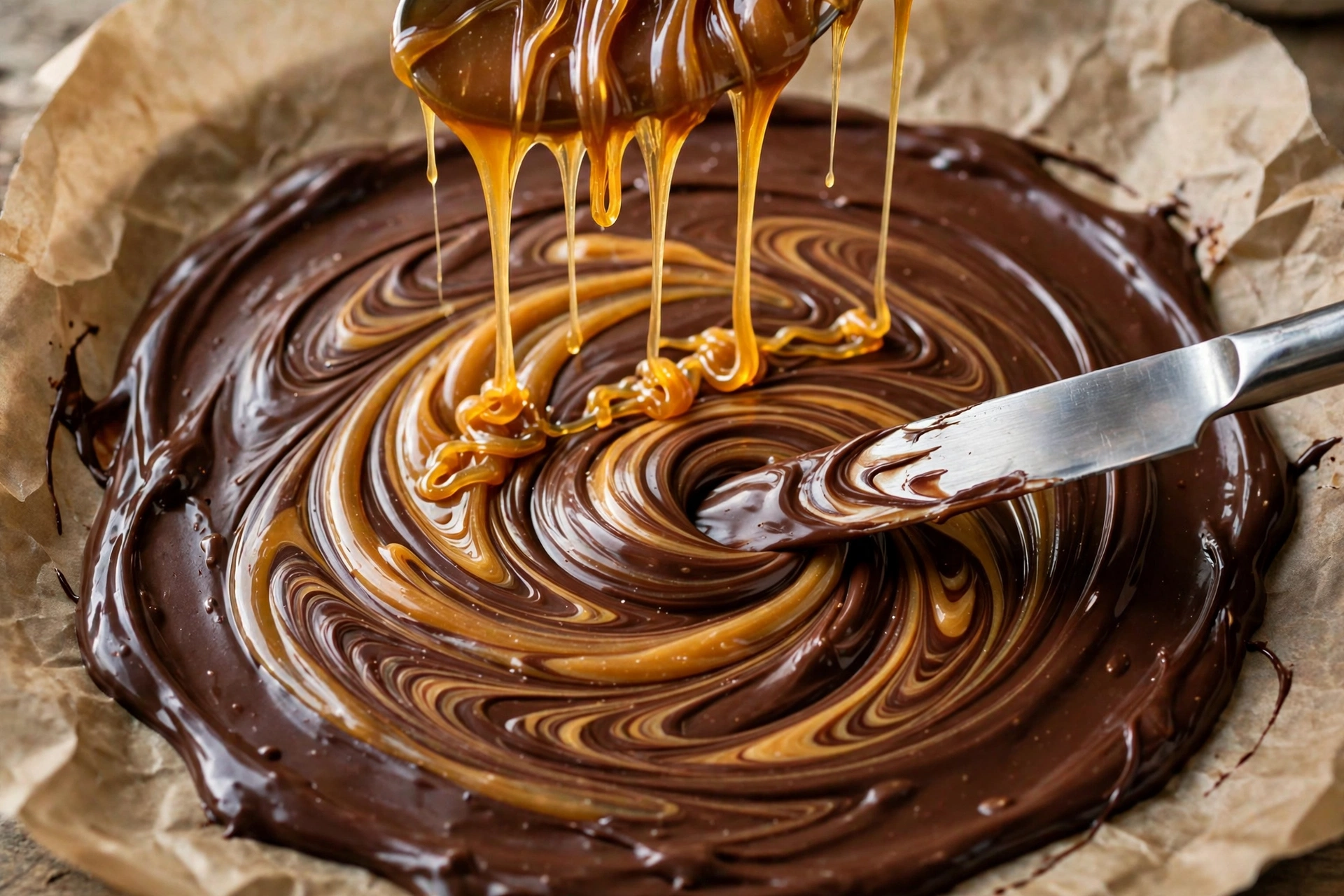
- Step 5: Swirl the caramel through the chocolate. Drizzle the warm caramel back and forth over the chocolate in ribbons. Then take a butter knife or skewer and drag it through the chocolate in loose figure-eights, marbling the caramel into the surface. Don't overmix — you want distinct ribbons and swirls, not a uniform caramel-chocolate blend. Three or four passes is plenty. The marbling looks gorgeous and ensures caramel in every bite.
- Step 6: Add the toppings. While everything is still wet, scatter the chopped dried apples evenly over the surface, pressing them in gently with your fingertips or the back of a spoon so they anchor into the chocolate. Follow with the toasted nuts, toffee bits, a light dusting of cinnamon, and finally the flaky sea salt. Press everything down lightly — toppings that sit on top without contact will pop off when you break the bark.
- Step 7: Chill until firm. Slide the baking sheet into the refrigerator and chill for at least 1 hour, until the bark is completely firm and snaps cleanly. Don't rush this with the freezer — rapid freezing can cause the chocolate to bloom (develop white streaks). An hour in the fridge gives you a clean snap and a glossy finish.
- Step 8: Break into pieces. Lift the bark out using the parchment overhang and set it on a cutting board. Break it into rustic, irregular pieces with your hands — varying sizes look the best. If it's stubborn, score lightly with a knife first, then snap along the lines. Aim for pieces roughly 2 to 3 inches across: big enough to show off the swirls, small enough to eat in a few bites.
What Are the Pro Tips for Perfect Caramel Apple Bark?
Bark is forgiving, but these tips take it from good to gift-worthy.
Buy chocolate you'd eat plain. Bark is 70% chocolate by weight, so the chocolate IS the recipe. If you wouldn't happily eat a square of it on its own, don't build your bark on it. Mid-range baking bars and quality chips both work beautifully.
Keep water away from melting chocolate. Even a drop of water makes chocolate seize into a grainy lump. Make sure bowls and spatulas are bone dry, and don't let steam from a double boiler touch the chocolate. If seizing happens anyway, stir in warm cream a teaspoon at a time — it won't be perfect for bark, but it salvages into a fine ganache.
Melt low and slow. Chocolate scorches faster than you'd think. Those 30-second bursts with stirring aren't optional — the chips hold their shape even when the insides are molten, so stirring reveals the true state. Pull it at 90% melted and let residual heat finish the job.
Warm caramel, fluid chocolate. The swirl step only works if both layers are still soft. Melt the caramel immediately after spreading the chocolate, and swirl right away. If the chocolate has started to set, rewarm it for 10 seconds in the microwave on the tray (only if your tray is microwave-safe) or just drizzle the caramel on top without swirling — it'll still taste great.
Chop toppings small. Big apple chunks create weak spots where the bark breaks unpredictably, and they make pieces awkward to eat. Pea-sized pieces distribute evenly and anchor better. Same for nuts — a rough chop beats whole halves.
Salt at the end, not the start. Flaky salt pressed onto the wet surface stays visible and crunchy, giving little pops of saltiness. Mixed into the chocolate, it just dissolves and disappears. Finish with it, and be a touch generous — salt is what makes people reach for a second piece.
Chill, don't freeze. The fridge gives chocolate time to crystallize properly for that clean snap. The freezer rushes it and can cause fat bloom — those harmless but unattractive white streaks. One hour in the fridge is all it takes.
Break, don't cut. Clean knife cuts look manufactured; hand-broken shards look artisanal and give you those beautiful jagged edges that show off the layers. Embrace the rustic look — it's the whole charm of bark.
What Are the Most Common Mistakes When Making Caramel Apple Bark?
Bark is simple, but these six mistakes can dull the shine on your batch. All are easy to avoid once you know them.
- 1. Using candy melts instead of real chocolate. Candy melts are waxy, overly sweet, and taste artificial — and since chocolate dominates the bark, the whole batch tastes like them. Real chocolate chips or chopped baking bars cost a little more and taste ten times better. This single swap makes the biggest quality difference in the recipe.
- 2. Spreading the chocolate too thin. A whisper-thin layer shatters into sad little flakes that can't hold toppings, and the chocolate-to-topping ratio goes off. Aim for a solid ¼-inch thickness. The bark should feel substantial when you pick up a piece — that's what gives the satisfying snap.
- 3. Letting the chocolate set before adding toppings. Once chocolate firms up, toppings just sit on the surface and fall off at the slightest touch. Everything — caramel swirl, apples, nuts, salt — needs to go on while the chocolate is still fluid so it all fuses into one slab. Have toppings ready before you melt, not after.
- 4. Overheating the chocolate. Blasting chocolate on high heat or skipping the stirring between bursts scorches it — it turns thick, dull, and slightly bitter, and no amount of stirring fixes scorched chocolate. Low power, short bursts, constant stirring. Patience here is the whole game.
- 5. Using fresh apple slices. It seems intuitive — caramel apple bark with actual apples, right? But fresh apples weep moisture, which makes the bark soggy, prevents clean snapping, and shortens shelf life dramatically. Dried or freeze-dried apples give you concentrated apple flavor with zero water. Save the fresh apples for eating alongside.
- 6. Skipping the salt. Without salt, caramel apple bark is just sweet on sweet — pleasant but one-dimensional, and easy to stop eating after one piece. The flaky salt finish balances the richness, sharpens the caramel flavor, and adds tiny crunchy bursts. It's a small step with an outsized impact. Don't skip it.
What Are the Best Variations of Caramel Apple Bark?
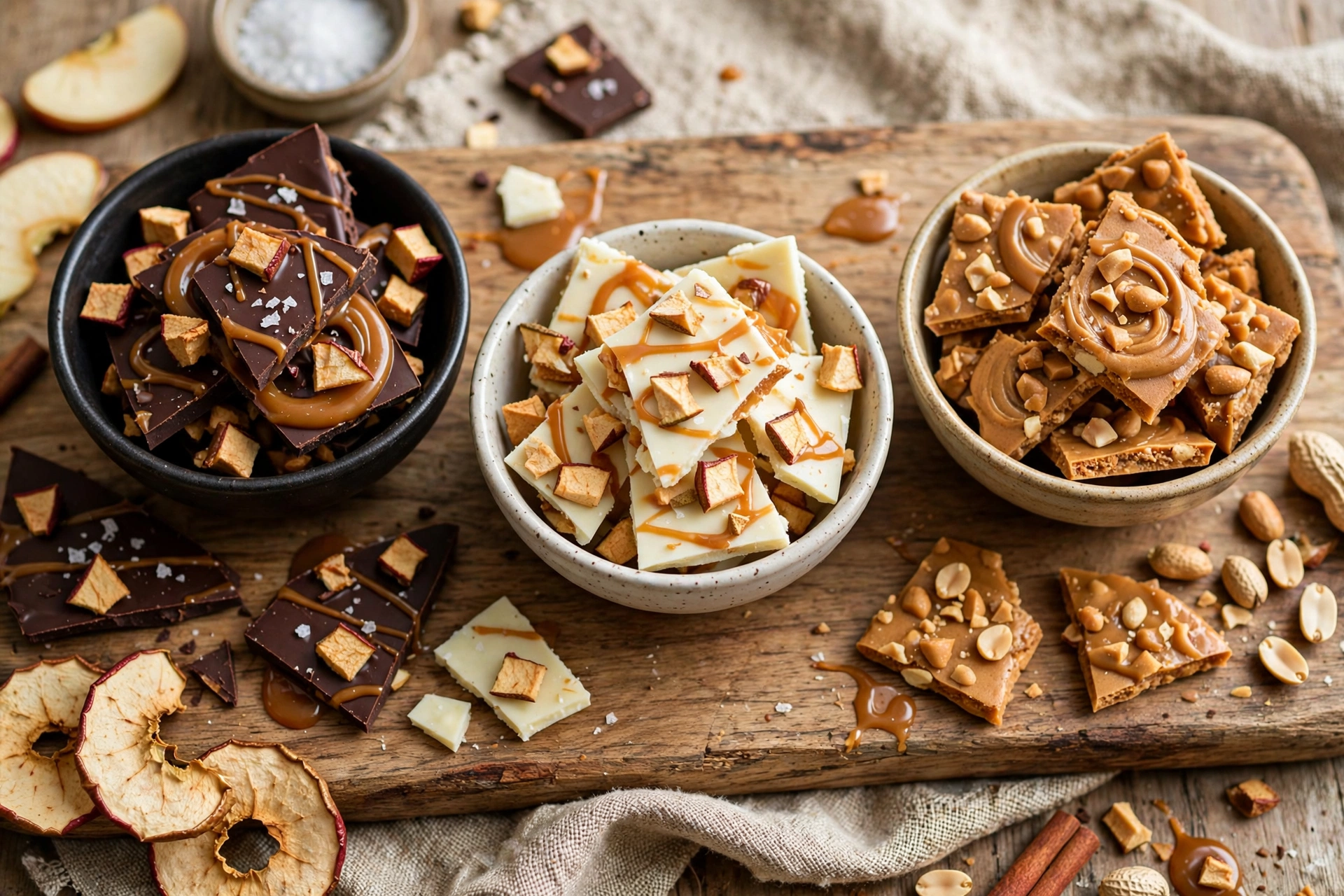
The base method stays the same for every variation — melt, spread, swirl, top, chill, break. Only the chocolate, caramel, and toppings change. Here are five reader-tested favorites.
Variation 1: How Do You Make Classic Double-Caramel Apple Bark?
For the true caramel devotee: use the standard semi-sweet base, but double the caramel drizzle and add a layer of caramel in the middle. Spread half the chocolate, drizzle half the caramel, spread the remaining chocolate over it, then swirl the rest of the caramel on top. Finish with dried apples, flaky salt, and nothing else — let the caramel be the star. Each shard has a gooey caramel ribbon running through its center. Rich, unapologetic, unforgettable.
Variation 2: How Do You Make White Chocolate Caramel Apple Bark?
Swap the semi-sweet chocolate for 12 ounces of white chocolate chips (use a good brand — cheap white chocolate tastes like wax). Swirl with the standard caramel, then top with dried apples, dried cranberries, and a pinch of cinnamon instead of nuts. The white chocolate's creamy sweetness pairs beautifully with tart apple and cranberry, and the pale bark with golden caramel swirls looks stunning in a gift bag. Reduce microwave bursts to 20 seconds — white chocolate scorches even faster than dark.
Variation 3: How Do You Make Dark Chocolate Sea Salt Caramel Apple Bark?
Use 12 ounces of 60-70% dark chocolate for the base — its slight bitterness is the perfect counterweight to sweet caramel. Swirl with salted caramel (add an extra pinch of salt to the caramel itself), top with dried apples and toasted pecans, and finish with a generous sprinkle of flaky sea salt. This is the grown-up version: less sweet, more complex, and the kind of bark that disappears at dinner parties while the milk-chocolate version sits untouched.
Variation 4: How Do You Make Peanut Butter Caramel Apple Bark?
Melt ½ cup of creamy peanut butter with the caramel bits and cream in step 4 — it blends into a peanut-butter caramel that's dangerously good. Swirl through the semi-sweet base, then top with dried apples, chopped roasted peanuts, and mini chocolate chips instead of toffee bits. The peanut butter adds richness and a salty depth that plays perfectly against the sweet apple. Fair warning: this variation has never survived more than 48 hours in any kitchen I've shared it with.
Variation 5: How Do You Make Spiced Chai Caramel Apple Bark?
Stir 1 teaspoon of chai spice blend (or ½ teaspoon cinnamon, ¼ teaspoon ginger, ⅛ teaspoon cardamom, and a pinch of cloves) directly into the melted chocolate before spreading. Swirl with the standard caramel, top with dried apples and chopped pistachios, and finish with flaky salt. The warm spices bloom in the chocolate and make the whole bark taste like fall in candy form — cozy, aromatic, and completely different from the classic. It pairs ridiculously well with hot apple cider.
How Do You Store Caramel Apple Bark?
Room temperature (up to 2 weeks): Once broken into pieces, layer the bark in an airtight container with parchment paper between layers so the pieces don't stick together. Store in a cool, dry spot away from sunlight and heat — a pantry or cupboard is perfect. It keeps beautifully for up to 2 weeks, with the chocolate staying snappy and the caramel soft. Keep it below 70°F if you can; warm kitchens soften the chocolate.
Refrigerator (up to 3 weeks): If your house runs warm, the fridge is safer. Same airtight container, same parchment layers. Cold bark tastes great — the chocolate snaps even more crisply — but let it sit at room temperature for 10 minutes before serving so the caramel softens to its ideal gooey texture. Condensation is the enemy, so don't open the container until it reaches room temp.
Freezer (up to 3 months): For long-term storage or make-ahead gifts, freeze the bark in a freezer-safe bag or container with parchment between layers. It freezes exceptionally well. Thaw in the refrigerator overnight, then bring to room temperature before serving for the best texture.
What about reheating? Bark isn't reheated — it's served at cool room temperature. If your bark softened in a warm car or kitchen, just rechill it for 20 minutes in the fridge and the snap returns. Never microwave bark to "fix" it; you'll melt the whole structure.
Gifting tip: The bark's 2-week room-temperature life makes it an ideal homemade gift. Pack pieces in a cellophane bag or tin with parchment, tie with ribbon, and it travels well without refrigeration — perfect for holiday cookie boxes, teacher gifts, or fall party favors.
What Are the Best Ways to Serve Caramel Apple Bark?
Bark is party food by nature — it wants to be shared, displayed, and eaten with your hands. Here's how to serve it at its best:
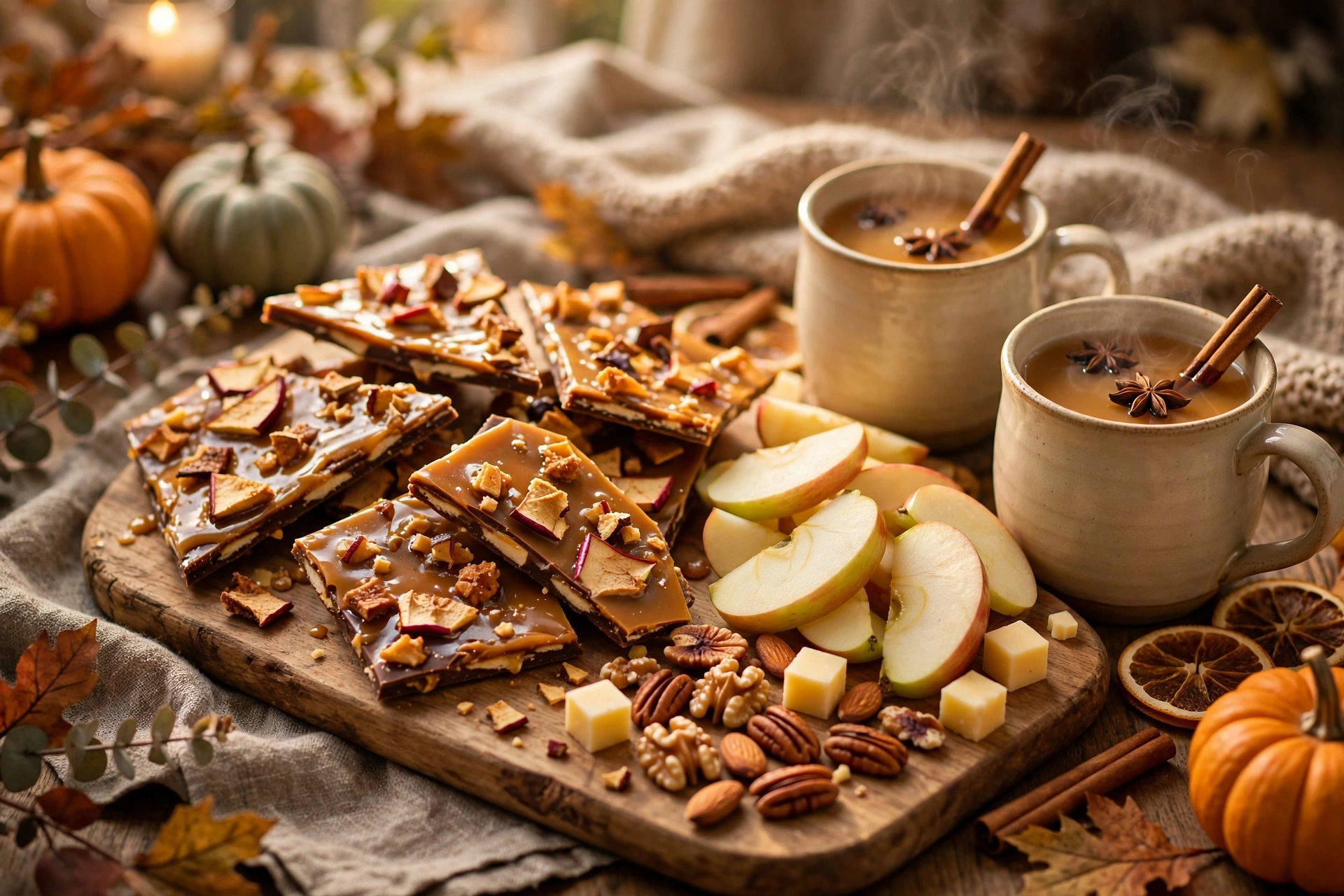
On a dessert board: Arrange bark shards alongside fresh apple slices, grapes, cheese cubes, and nuts on a large board. The jagged pieces add height and visual drama, and guests love mixing sweet bark with savory cheese. It's the easiest impressive dessert board you'll ever build.
With hot drinks: Serve a small plate of bark next to mugs of hot apple cider, coffee, or hot chocolate. The warm drink slightly softens the chocolate as you nibble, and the flavor pairing — especially the chai variation with cider — is pure fall comfort.
As an ice cream topping: Roughly chop a few pieces and scatter over vanilla or cinnamon ice cream. The cold ice cream keeps the chocolate snappy while the caramel bits turn chewy. It's a sundae topping that beats hot fudge on effort-to-impact ratio.
In gift bags and boxes: Layer pieces in small cellophane bags tied with twine for party favors, or pack an assortment of two or three variations in a tin for a standout homemade gift. Add a handwritten tag with the flavor — people remember food with a name.
Crumbled over desserts: Crush bark into coarse crumbs and sprinkle over cheesecake, apple pie à la mode, or yogurt parfaits. It adds chocolate, caramel, crunch, and apple in one move — a four-ingredient garnish from one ingredient.
At a Halloween or fall party: Pile shards high on a cake stand as the centerpiece of the dessert table. Make the classic version plus one variation (the peanut butter one is always the first to vanish) and watch them disappear. No plates or forks needed — it's built for mingling.
Lunchbox treat: Tuck two or three small pieces into lunchboxes. They're sturdy, not too messy once set, and feel like a real treat without any morning effort.
Frequently Asked Questions
How long does caramel apple bark last?
Stored in an airtight container with parchment between layers, caramel apple bark keeps for up to 2 weeks at cool room temperature, up to 3 weeks in the refrigerator, and up to 3 months in the freezer. The dried apple toppings mean there's no fresh fruit to spoil, so shelf life is generous. Keep it away from heat and humidity, which soften the chocolate.
Can you use fresh apples in caramel apple bark?
It's not recommended. Fresh apples release moisture that makes the bark soggy, prevents the chocolate from snapping cleanly, and cuts shelf life to just a couple of days in the fridge. Dried apple rings or freeze-dried apple pieces give you concentrated apple flavor and a pleasant chew or crunch with none of the water. If you want fresh apple flavor, serve fresh slices alongside the bark instead.
Why did my chocolate seize, and can I fix it?
Chocolate seizes when it contacts even a tiny amount of water — wet utensils, steam from a double boiler, or condensation. It turns grainy and stiff almost instantly. To prevent it, keep everything bone dry and melt gently. If it happens, you can sometimes rescue it by stirring in warm heavy cream a teaspoon at a time until smooth — though the result works better as ganache drizzle than as a bark base. Prevention beats cure here.
Can you make caramel apple bark without a microwave?
Absolutely. Melt the chocolate in a heatproof bowl set over a pot of barely simmering water (don't let the bowl touch the water), stirring until smooth. Melt the caramel bits with cream the same way. The stovetop method actually gives you more control and a lower scorch risk — it just takes a few minutes longer. Everything else in the recipe stays exactly the same.
What's the best chocolate for caramel apple bark?
Use real chocolate you enjoy eating plain — semi-sweet chips or chopped baking bars in the 50-60% cacao range are the crowd-pleasing default. Dark chocolate (60-70%) makes a less sweet, more sophisticated bark; white chocolate makes a sweeter, creamier one. Avoid candy melts and "chocolate-flavored" coatings, which taste waxy. Quality matters enormously here because chocolate is the main ingredient.
How do you keep the toppings from falling off the bark?
Two things: timing and pressure. Add all toppings while the chocolate is still fluid — not after it starts setting — and press them in gently with your fingertips or the back of a spoon so they make real contact with the chocolate. Chopping toppings small also helps, since smaller pieces anchor more easily than big chunks. If a few pieces pop off when breaking, just press them onto a dab of melted chocolate as "glue."
Can you make caramel apple bark ahead of time?
Yes — it's an ideal make-ahead treat. It keeps 2 weeks at room temperature, so you can make it well before a party or event. For longer planning, freeze it up to 3 months and thaw overnight in the fridge. Many people find the flavor even better on day two, once the caramel and chocolate have fully settled together. Just keep it airtight and away from strong odors, which chocolate absorbs.
Is caramel apple bark gluten-free?
It can be, easily. Chocolate, caramel, dried apples, nuts, and salt are naturally gluten-free — just check labels for cross-contamination warnings if you're serving someone with celiac disease, and skip the toffee bits unless they're certified gluten-free (some contain flour). Made with verified ingredients, this is a naturally gluten-friendly treat.
Can kids help make caramel apple bark?
It's one of the best kid-friendly candy recipes. Kids can chop soft dried apples with a safe knife, sprinkle toppings, swirl the caramel with a skewer, and break the finished bark — the most fun step. An adult should handle the hot melted chocolate and caramel, but everything else is fair game. The swirling step especially delights younger kids, and imperfect swirls just look more artisanal.
Final Thoughts
Caramel apple bark is proof that the best desserts aren't always the most complicated ones. Twenty minutes, one baking sheet, no oven — and you end up with candy that looks like a chocolate shop made it and tastes like the best parts of fall. The salty-sweet balance, the chew of dried apple against the snap of chocolate, the ribbons of caramel in every shard — it's the kind of treat that earns a permanent spot in your autumn rotation.
Make the classic version first to learn the rhythm: melt, spread, swirl, top, chill, break. Then play. The five variations are starting points, not limits — white chocolate, dark chocolate, peanut butter, chai spice, double caramel. Package it for gifts, pile it on dessert boards, or just keep a container in the pantry for the 9 p.m. sweet tooth. However you serve it, one batch is never quite enough. You've been warned.
If this sweet-and-salty bark disappeared from your dessert table in minutes, you’re not alone — it’s dangerously easy to make and even easier to share. For more crowd-pleasing Halloween treats, try my Halloween Popcorn Bar or a batch of spooky Eyeball Cookies next.


