Easy Chocolate Cake Recipe (One Bowl, No Mixer Needed)
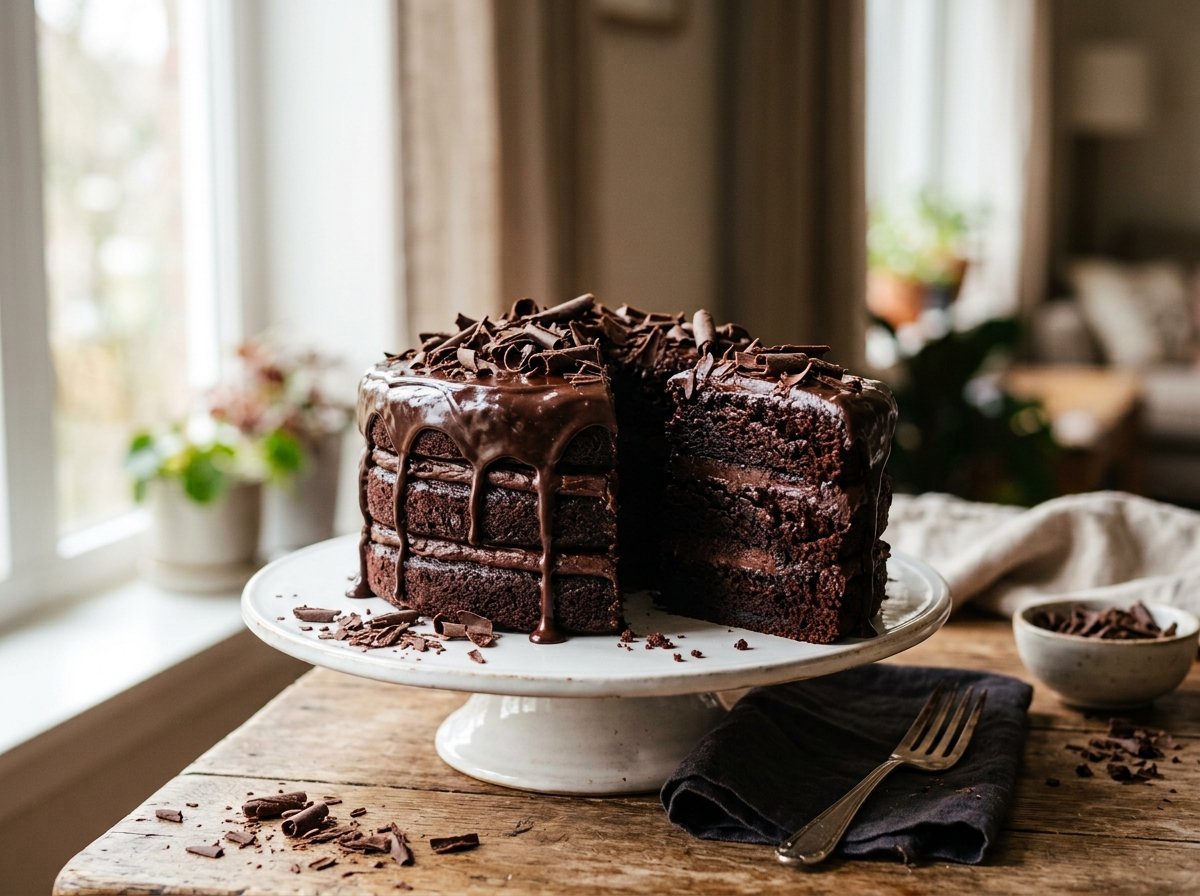
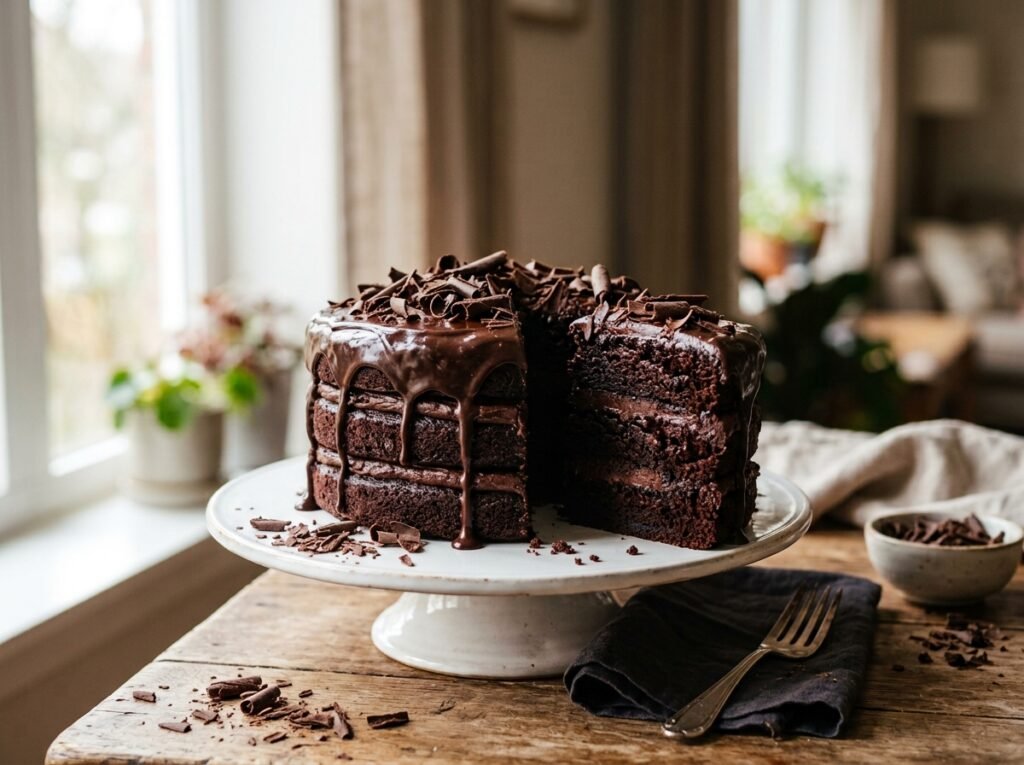
There’s a specific kind of disappointment that comes from a dry chocolate cake. You cut into it expecting something rich and a little fudgy, and instead you get crumbs that need a glass of milk just to go down easy. This recipe is the opposite of that. It’s dense in the right places, tender in every bite, and it comes together in a single bowl with nothing more complicated than a whisk.
I’ve made a lot of chocolate cakes over the years, chasing that bakery-style richness without the fuss of creaming butter or babysitting a stand mixer. This version leans on a trick a lot of professional bakers use: boiling water added to the batter at the end. It sounds strange, but it blooms the cocoa powder and thins the batter just enough to bake into something incredibly moist, almost like a cross between a cake and a brownie.
The best part is how forgiving it is. There’s no creaming step to mess up, no risk of overbeating the butter, and the batter is thin enough that it’s genuinely hard to overmix. If you’ve ever felt intimidated by baking a layer cake from scratch, this is the one to start with.
Why You’ll Love This Cake
- Made in one bowl, with no stand mixer or hand mixer required
- Incredibly moist thanks to the boiling water added at the end
- Simple pantry ingredients — nothing you need a specialty store for
- Easy to make as a layer cake, sheet cake, or cupcakes with the same batter
A Quick Note on Ingredients
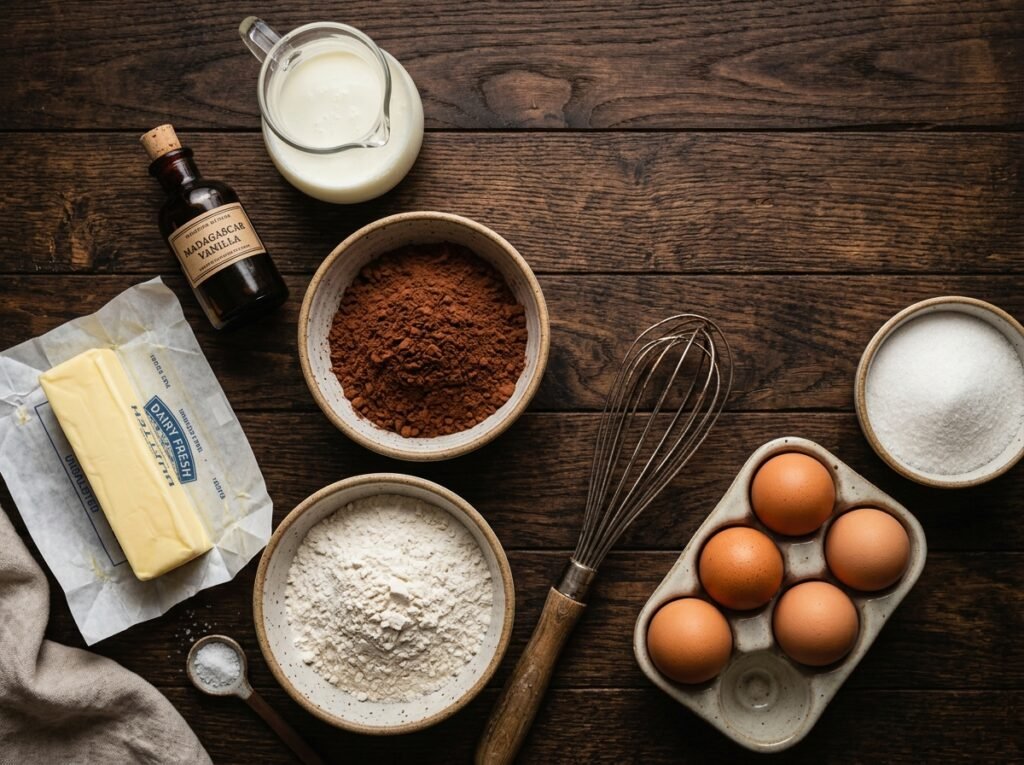
Cocoa powder is the backbone of this cake, so it’s worth using a good one — natural unsweetened cocoa powder works well here, and either Dutch-process or natural will give good results since this recipe uses baking soda and baking powder together to balance the acidity either way.
Buttermilk adds tang and helps keep the crumb tender. If you don’t have any on hand, make a quick substitute by adding a tablespoon of white vinegar or lemon juice to a cup of regular milk and letting it sit for five minutes before using. The boiling water at the end isn’t optional — it’s what gives this cake its signature moist texture, so don’t be tempted to skip it or use room-temperature water instead.
Ingredients
For the cake:
- 2 cups granulated sugar
- 1 3/4 cups all-purpose flour
- 3/4 cup unsweetened cocoa powder
- 1 1/2 teaspoons baking powder
- 1 1/2 teaspoons baking soda
- 1 teaspoon salt
- 2 large eggs
- 1 cup buttermilk
- 1/2 cup vegetable oil
- 2 teaspoons vanilla extract
- 1 cup boiling water
For the chocolate frosting:
- 1 cup unsalted butter, softened
- 1 1/2 cups cocoa powder
- 5 cups powdered sugar
- 1/2 cup milk (plus more as needed)
- 2 teaspoons vanilla extract
- 1/4 teaspoon salt
Instructions
1. Preheat and prep. Preheat your oven to 350°F. Grease two 9-inch round cake pans and line the bottoms with parchment paper — this cake is moist enough that a little insurance against sticking goes a long way.
2. Mix the dry ingredients. In a large bowl, whisk together the sugar, flour, cocoa powder, baking powder, baking soda, and salt until well combined and no cocoa clumps remain.
3. Add the wet ingredients. Add the eggs, buttermilk, oil, and vanilla to the dry ingredients. Whisk until just combined — the batter will be thick at this stage, and that’s normal.
4. Stir in the boiling water. Carefully pour in the boiling water and whisk gently until the batter is smooth. It will become quite thin — again, this is exactly what you want, since it’s what makes the finished cake so moist.
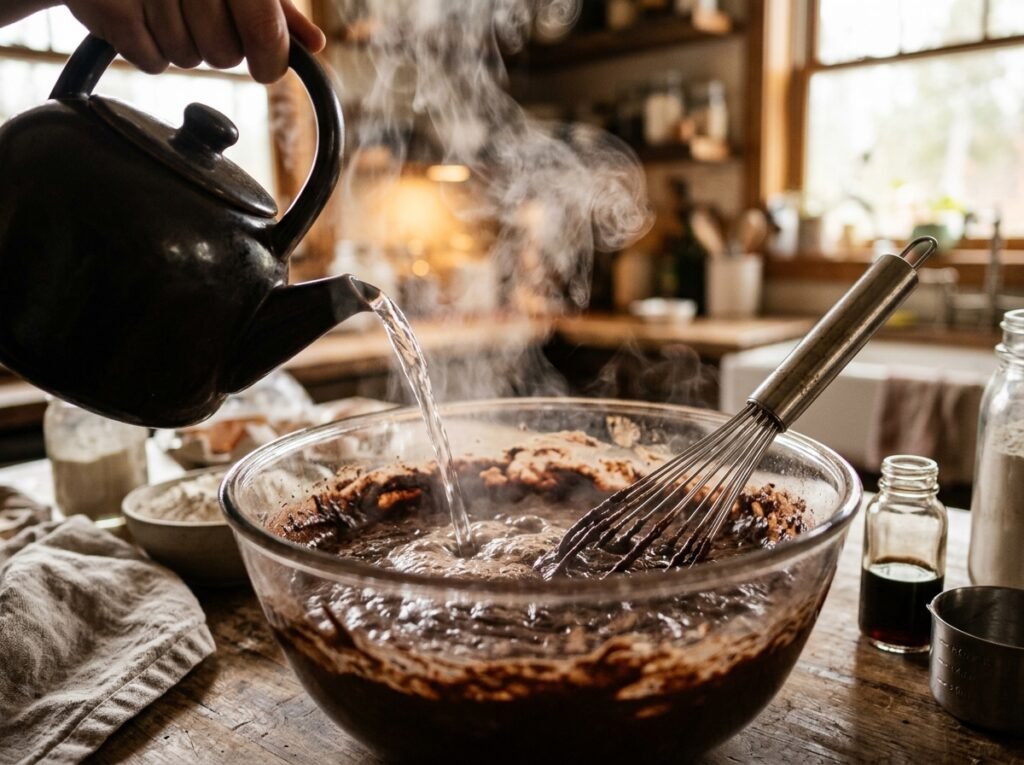
5. Divide and bake. Divide the batter evenly between the prepared pans and bake for 30-35 minutes, or until a toothpick inserted in the center comes out with just a few moist crumbs.
6. Cool completely. Let the cakes cool in their pans for 10 minutes, then turn them out onto a wire rack to cool completely before frosting. Frosting a warm cake will melt the frosting right off.
7. Make the frosting. Beat the softened butter until smooth, then add the cocoa powder and beat to combine. Add the powdered sugar a cup at a time, alternating with splashes of milk, until fully incorporated. Beat in the vanilla and salt, then whip for another minute until light and fluffy.
8. Assemble the cake. Place one cake layer on your serving plate and spread a generous layer of frosting on top. Add the second layer and frost the top and sides of the whole cake.
Tips for the Best Chocolate Cake
- Don’t skip the boiling water. It thins the batter and blooms the cocoa, which is the whole reason this cake stays so moist — cooler water won’t have the same effect.
- Measure flour correctly. Spoon the flour into your measuring cup and level it off rather than scooping directly from the bag, which can pack in extra flour and dry out the cake.
- Line your pans. A parchment circle in the bottom of each pan makes turning the layers out much easier, especially since this batter is thinner than a typical cake batter.
- Cool completely before frosting. Even slightly warm cake layers will melt buttercream frosting, so be patient here even if it’s tempting to rush.
Variations
This batter is flexible enough to work in a few different formats. For a sheet cake, pour the full batter into a greased 9×13-inch pan and bake for about 35-40 minutes. For cupcakes, divide the batter among lined muffin tins and bake for 18-20 minutes, which yields about 24 cupcakes. You can also swap the frosting for a simple ganache (equal parts chopped chocolate and warmed heavy cream, stirred until smooth) if you want something glossier and less sweet.
Storage and Make-Ahead Tips
The unfrosted cake layers can be baked up to two days ahead — wrap them tightly in plastic wrap and store at room temperature, or freeze for up to three months. Once frosted, store the cake in an airtight container at room temperature for up to three days, or in the refrigerator for up to five days. If refrigerated, let slices come to room temperature before serving for the best texture and flavor.
Frequently Asked Questions
Why is boiling water added to the batter?
Boiling water blooms the cocoa powder, intensifying the chocolate flavor, and thins the batter enough to bake into an especially moist, tender cake.
Can I make this cake ahead of time?
Yes — bake the layers up to two days ahead and store wrapped at room temperature, or freeze for longer storage, then frost the day you plan to serve it.
Can I use this batter for cupcakes?
Yes, divide the batter among lined muffin tins and bake for 18-20 minutes for about two dozen cupcakes.
What can I use instead of buttermilk?
Add a tablespoon of white vinegar or lemon juice to a cup of regular milk and let it sit for five minutes before using as a substitute.
Why did my cake sink in the middle?
This usually means it was slightly underbaked or the oven door was opened too early — check for doneness with a toothpick and avoid opening the oven during the first 25 minutes of baking.
If you bake this one, I’d love to hear how it turns out — leave a comment and a star rating below, and let me know if you tried the sheet cake or cupcake version.