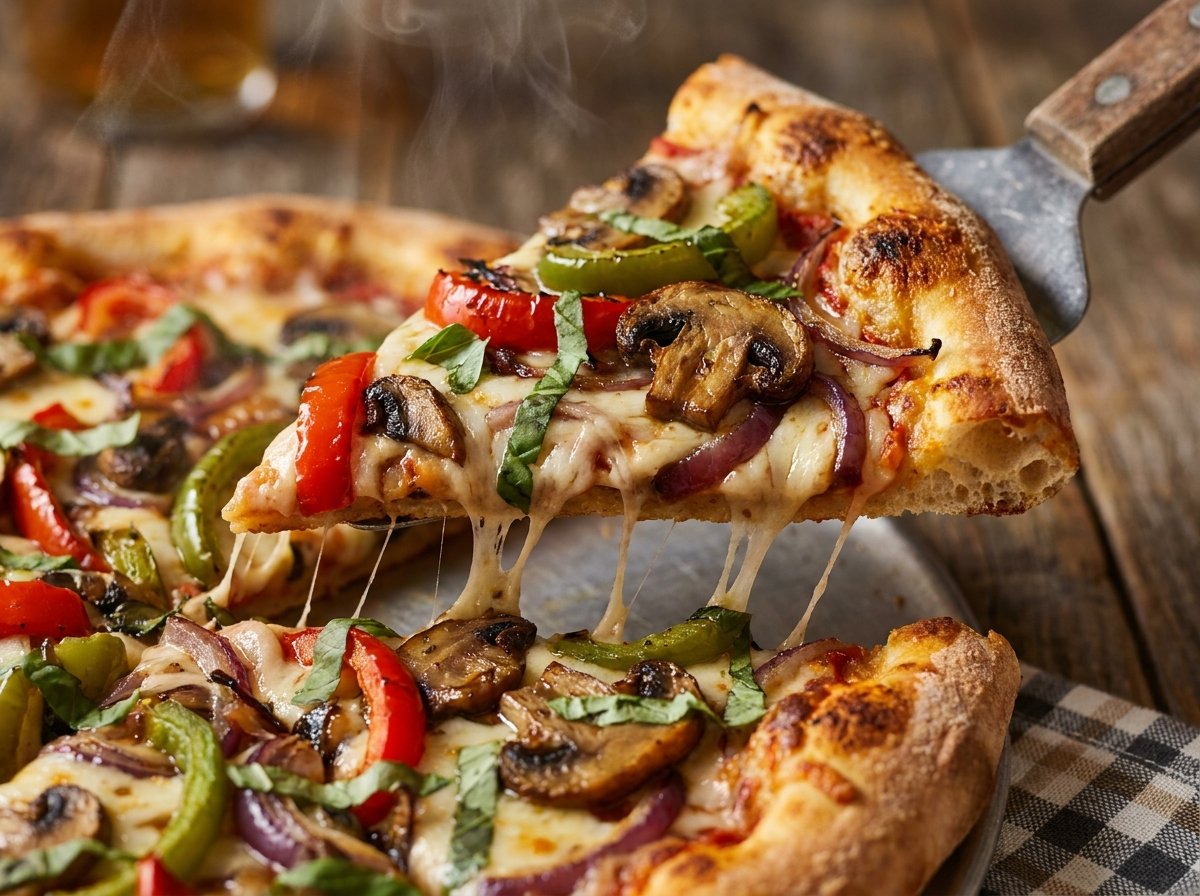
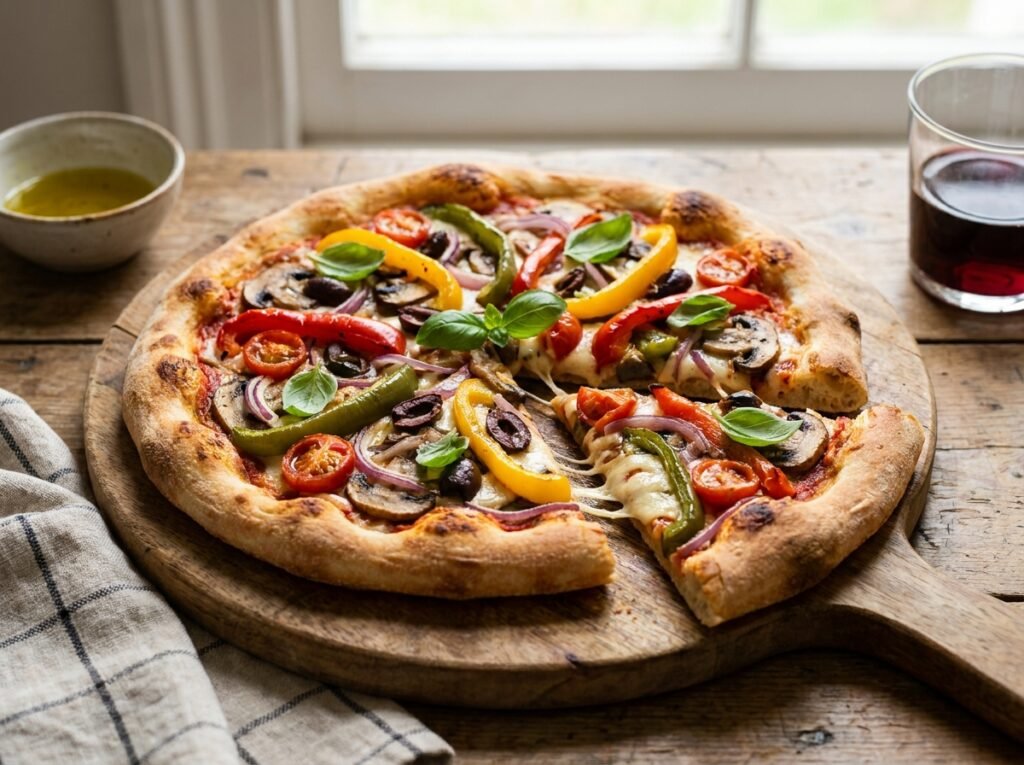
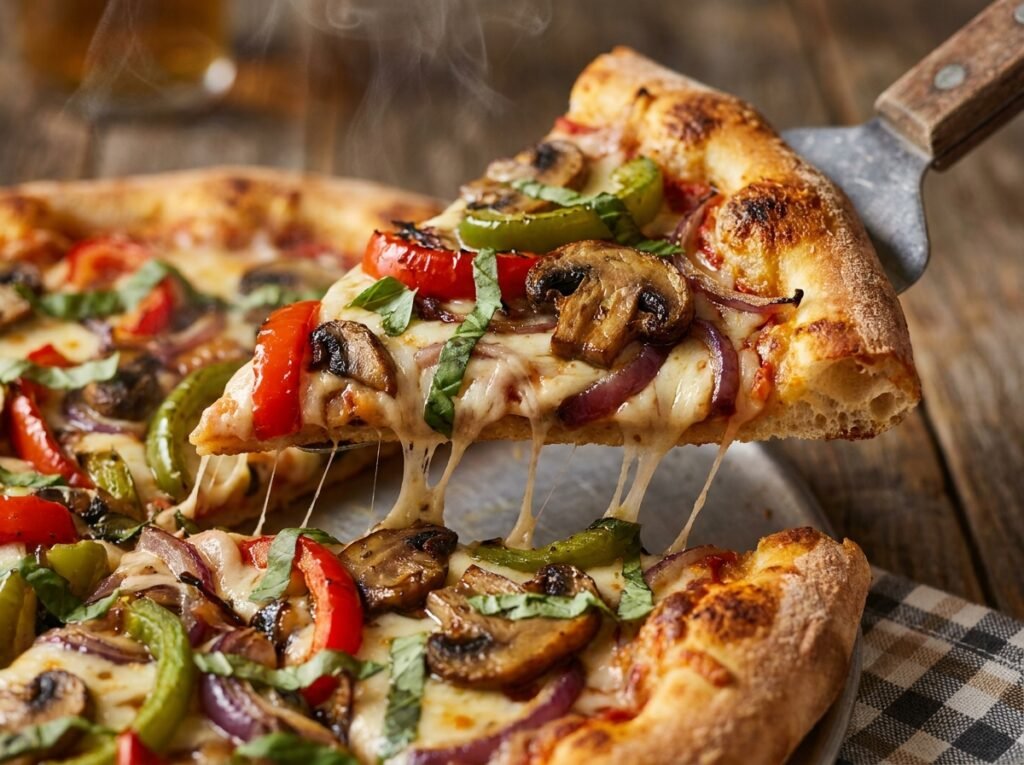
The Best Vegan Pizza is crispy on the outside, soft and chewy in the center, and loaded with colorful vegetables and creamy dairy-free cheese. It is easy to customize, making it perfect for family dinners, pizza nights, or weekend gatherings.
This homemade vegan pizza has everything you want: a flavorful crust, rich tomato sauce, melted vegan cheese, and fresh toppings. You can use store-bought pizza dough to save time or make your own dough from scratch.
Why This Recipe Works
- Completely dairy-free and plant-based
- Crispy, golden pizza crust
- Loaded with fresh vegetables
- Easy to customize
- Great for family pizza night
- Ready in about 30 minutes with prepared dough
- Perfect for leftovers
Ingredient List
For the Pizza
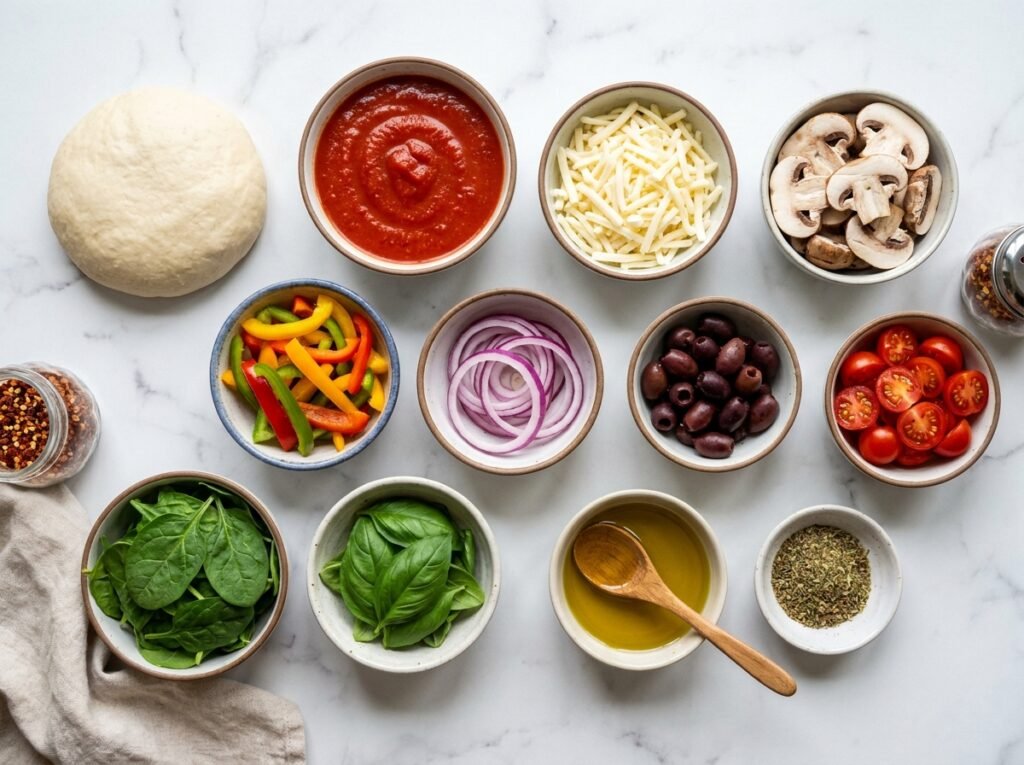
- 1 pound prepared pizza dough
- ½ cup pizza sauce or marinara sauce
- 1 to 1½ cups shredded vegan mozzarella cheese
- 1 tablespoon olive oil
- ½ teaspoon Italian seasoning
- ¼ teaspoon garlic powder
Vegetable Toppings
- ½ cup sliced mushrooms
- ½ cup sliced bell peppers
- ¼ cup thinly sliced red onion
- ¼ cup black olives
- ½ cup fresh spinach
- ½ cup cherry tomatoes, sliced
Optional Toppings
- Fresh basil leaves
- Red pepper flakes
- Vegan Parmesan cheese
- Fresh arugula
- Roasted garlic
- Pineapple
- Jalapeño slices
Recommended Tools
Before starting, gather these kitchen tools:
- Pizza pan, pizza stone, or baking sheet
- Rolling pin
- Large mixing bowl
- Measuring cups and spoons
- Cutting board
- Sharp knife
- Pizza cutter
- Parchment paper
The Best Vegan Pizza: Step-by-Step
Step 1: Preheat the Oven
Preheat your oven to 475°F (245°C).
If using a pizza stone, place it in the oven while it heats.
A hot baking surface helps create a crisp, golden crust.
Step 2: Prepare the Pizza Dough
Place the pizza dough on a lightly floured surface.
Allow refrigerated dough to rest at room temperature for about 20–30 minutes so it becomes easier to stretch.
Roll or gently stretch the dough into a 12-inch circle.
Step 3: Prepare the Pizza Base
Transfer the dough to a parchment-lined baking sheet or pizza pan.
Brush the edges lightly with olive oil.
This helps the crust become golden and crisp.
Step 4: Add the Pizza Sauce
Spread the pizza sauce evenly across the dough.
Leave about a 1-inch border around the edges for the crust.
Avoid using too much sauce because it can make the center soft.
Step 5: Add Vegan Cheese
Sprinkle the shredded vegan mozzarella evenly over the sauce.
Choose a vegan cheese made for melting if possible.
Step 6: Add the Vegetables
Add the mushrooms, bell peppers, red onion, olives, spinach, and cherry tomatoes.
Spread the toppings evenly so the pizza cooks properly.
Do not overload the pizza because too many toppings can make the crust soggy.
Step 7: Season the Pizza
Sprinkle Italian seasoning and garlic powder over the toppings.
Add red pepper flakes if you enjoy a little heat.
Step 8: Bake
Bake for 12–15 minutes, or until:
- The crust is golden brown
- The edges are crisp
- The vegan cheese is melted
- The vegetables are tender
Cooking time may vary depending on your oven and the thickness of the crust.
Step 9: Add Fresh Toppings
Remove the pizza from the oven.
Add fresh basil, arugula, or vegan Parmesan if desired.
Allow the pizza to rest for 3–5 minutes before slicing.
Step 10: Slice and Serve
Cut the pizza into slices using a pizza cutter.
Serve warm with a fresh salad, roasted vegetables, or your favorite dipping sauce.
Spicy Vegan Pizza
Add jalapeños, red pepper flakes, and a drizzle of hot sauce.
Vegan BBQ Pizza
Replace the tomato sauce with vegan barbecue sauce.
Top with mushrooms, red onions, corn, and plant-based chicken.
Vegan Margherita Pizza
Use tomato sauce, vegan mozzarella, fresh tomatoes, basil, and a drizzle of olive oil.
Vegan Mediterranean Pizza
Add olives, artichokes, roasted red peppers, spinach, and dairy-free feta.
High-Protein Vegan Pizza
Add seasoned tofu, chickpeas, tempeh, or plant-based meat.
Common Mistakes to Avoid
Using Too Much Sauce
Too much sauce can make the pizza crust soggy. Use a thin, even layer.
Overloading the Pizza
Too many vegetables release moisture during baking and may prevent the crust from becoming crisp.
Skipping the Preheat
A fully heated oven helps the pizza cook quickly and evenly.
Using Cold Dough
Cold dough can shrink and become difficult to stretch. Let it rest at room temperature first.
Cutting the Pizza Immediately
Allow the pizza to rest for a few minutes so the toppings settle before slicing.
Storage and Reheating Tips
Refrigerator
Store leftover vegan pizza in an airtight container for up to 4 days.
Freezer
Wrap individual slices tightly and freeze for up to 2 months.
Reheating in the Oven
Bake at 375°F (190°C) for 8–10 minutes.
Reheating in a Skillet
Place a slice in a dry skillet over medium-low heat.
Cover with a lid and heat for 4–6 minutes.
This method helps keep the crust crisp.
Frequently Asked Questions
What is the best vegan cheese for pizza?
Choose a dairy-free mozzarella-style cheese labeled for melting. Different brands melt differently, so follow the package instructions for the best results.
Can I make vegan pizza without vegan cheese?
Yes. You can use dairy-free pesto, hummus, cashew cream, or extra vegetables instead of vegan cheese.
Can I make the pizza ahead of time?
Yes. Prepare the pizza, cover it, and refrigerate it for several hours before baking. You can also prepare the dough and toppings one day ahead.
Is store-bought pizza dough vegan?
Many store-bought pizza doughs are vegan, but always check the ingredient label. Some may contain milk, eggs, honey, or other animal-based ingredients.
Final Thoughts
The Best Vegan Pizza proves that a dairy-free pizza can still be rich, cheesy, flavorful, and satisfying. With a crispy homemade crust, savory tomato sauce, melted vegan cheese, and fresh vegetables, this recipe is perfect for any pizza night.
Make it your own by changing the toppings, adding more protein, or trying a different sauce. Once you try this easy homemade vegan pizza, it may become a regular part of your weekly meal plan.