
Sirloin Tip Roast Recipe: How to Make It Tender, Juicy, and Full of Flavor
If you’ve ever searched for a sirloin tip roast recipe and worried it might turn out dry or tough, you’re not alone. This cut has a reputation for being tricky—but when it’s cooked the right way, it becomes one of the most satisfying, budget-friendly roasts you can serve.

This guide walks you through exactly how to cook sirloin tip roast so it’s tender, juicy, and packed with flavor. You’ll learn oven, slow cooker, and alternative methods, plus tips for leftovers, marinades, and common mistakes to avoid.
Whether you want an easy weeknight dinner or a comforting Sunday roast, this recipe has you covered.
What Is a Sirloin Tip Roast?
Sirloin tip roast, sometimes called beef sirloin tip roast or sirloin beef tip roast, comes from the round section of the cow. It’s lean, affordable, and full of beefy flavor—but it needs proper cooking to shine.
This cut differs from rib roast or chuck roast. It doesn’t have much fat, which means moisture control matters. That’s why techniques like slow cooking, braising, or careful oven roasting work best.
Why This Sirloin Tip Roast Recipe Works
Many recipes skip key steps that actually make this roast tender. This method focuses on:
- Proper seasoning and timing
- Controlled heat
- Moisture retention
- Correct slicing direction
That’s why this approach consistently ranks among the best sirloin tip roast recipes for home cooks.
Ingredients You’ll Need
This easy sirloin tip roast recipe uses simple ingredients you likely already have:

- 3–4 lb boneless sirloin tip roast
- Olive oil
- Kosher salt
- Black pepper
- Garlic (fresh or powdered)
- Onion powder
- Dried rosemary or thyme
- Beef broth (or stock)
Optional additions:
- Worcestershire sauce
- Dijon mustard
- Carrots and potatoes for roasting
How to Prepare Sirloin Tip Roast for Maximum Tenderness
Preparation is the secret to a tender sirloin tip roast recipe.
- Remove the roast from the fridge 30–45 minutes before cooking.
- Pat dry thoroughly.
- Rub with oil and season generously.
- Let it rest at room temperature before cooking.
This simple step helps the roast cook evenly and prevents toughness.
Oven Roasted Sirloin Tip Roast Recipe
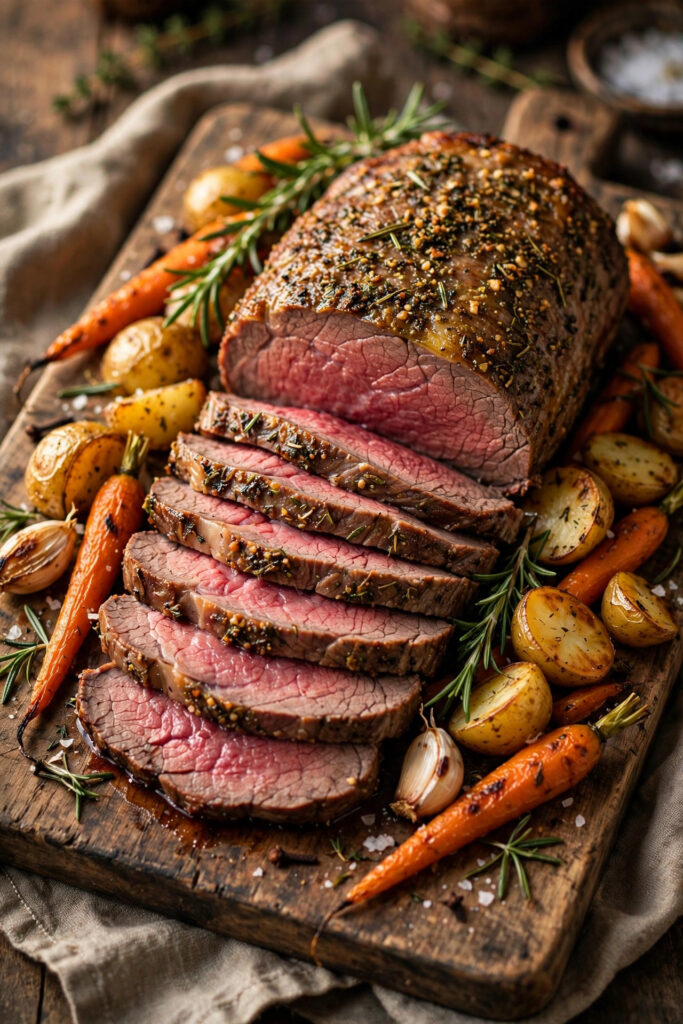
This oven roasted sirloin tip roast recipe delivers firm slices with deep flavor.
Instructions
- Preheat oven to 450°F.
- Place roast on a rack in a roasting pan.
- Roast for 15 minutes to develop a crust.
- Reduce heat to 325°F.
- Add broth to the pan and cover loosely.
- Roast 20 minutes per pound for medium doneness.
- Remove and rest for 15 minutes before slicing.
This method works well for anyone looking for a sirloin tip oven roast recipe that still feels special.
Sirloin Tip Roast Recipe Crock Pot Method
If you prefer hands-off cooking, the sirloin tip roast recipe slow cooker method is ideal.
Crock Pot Instructions
- Sear roast in a hot skillet for 3–4 minutes per side.
- Place in crock pot with broth and seasonings.
- Cook on LOW for 7–8 hours.
- Shred slightly or slice gently before serving.
This is one of the most reliable beef sirloin tip roast slow cooker recipes, especially for busy days.
Slow Cooker vs Oven: Which Is Better?
Both methods work—it depends on your goal.

- Oven: Firmer slices, classic roast texture
- Slow cooker: Softer, fall-apart tenderness
If you want gravy and comfort food vibes, the best slow cooker sirloin tip roast recipe wins. For presentation, oven roasting shines.
Sirloin Tip Roast Marinade Recipe
A marinade adds moisture and flavor to lean cuts.
Simple Marinade
- Olive oil
- Soy sauce
- Garlic
- Black pepper
- Worcestershire sauce
Marinate 4–12 hours for best results. This pairs well with grilled sirloin tip roast recipes or rotisserie cooking.
How to Tell When Sirloin Tip Roast Is Done
Use a meat thermometer:
- Rare: 125°F
- Medium rare: 135°F
- Medium: 145°F
Overcooking is the fastest way to ruin even the best recipe for sirloin tip roast.
Resting and Slicing for Juicy Results
Always rest your roast. This step matters more than people realize.
- Rest 15–20 minutes
- Slice against the grain
- Use a sharp knife
This technique alone can save a roast that feels too firm.
Leftover Sirloin Tip Roast Recipes
Leftovers are a bonus, not an afterthought.
Try:
- Beef sandwiches
- Stir-fries
- Tacos
- Beef and vegetable soup
These recipes for leftover sirloin tip roast stretch your meal into several days.
Common Mistakes That Make Roast Tough
Avoid these issues:

- Skipping rest time
- Cooking at high heat too long
- Cutting with the grain
- Not using enough liquid
Fixing these turns a basic sirloin tip roast recipe into a reliable favorite.
Variations and Cooking Methods
This roast adapts well to many styles:
- Dutch oven: Great for braised sirloin tip roast recipes
- Instant Pot: Faster, tender results
- Sous vide: Precision cooking for perfect doneness
- Smoker: Adds deep flavor for special occasions
Each method suits different kitchens and schedules.
Frequently Asked Questions
Is sirloin tip roast the same as chuck roast?
No. Chuck has more fat. Sirloin tip is leaner and needs gentler cooking.
Can I cook sirloin tip roast rare?
Yes, but only with proper temperature control and slicing.
What’s the best seasoning?
Salt, pepper, garlic, and herbs work best. Keep it simple.
Conclusion
This sirloin tip roast recipe proves that lean beef doesn’t have to be dry or boring. With the right method—oven, slow cooker, or braised—you can serve a tender, flavorful roast that feels both comforting and impressive.
Save this recipe, use it again, and make it your go-to for family dinners, meal prep, or special occasions. Once you master it, sirloin tip roast becomes one of the most reliable cuts in your kitchen.

Pro Tips for a Juicier Sirloin Tip Roast
Dry-brine the roast the night before. Rub it generously with kosher salt, wrap it loosely, and refrigerate overnight. The salt pulls moisture out and then back in, which seasons the meat all the way through instead of just the surface. Pat it dry before cooking so the outside browns properly.
Sear every side of the roast before it goes into the oven or slow cooker. A hot skillet and three to four minutes per side build a browned crust that adds deep flavor. Do not skip this for the slow cooker version either. The crust is what separates a flat-tasting roast from one that tastes slow-cooked and rich.
Trust a meat thermometer, not the clock. Pull the roast five to ten degrees before your target temperature, because the temperature keeps rising while it rests. For oven roasting, cover the pan loosely with foil only after the first crust-building phase, so the outside stays firm while the inside cooks gently. Finally, tent the roast with foil during the rest and leave it alone. Cutting too early lets the juices run out onto the board instead of staying in the meat.
Easy Gravy from the Pan Drippings
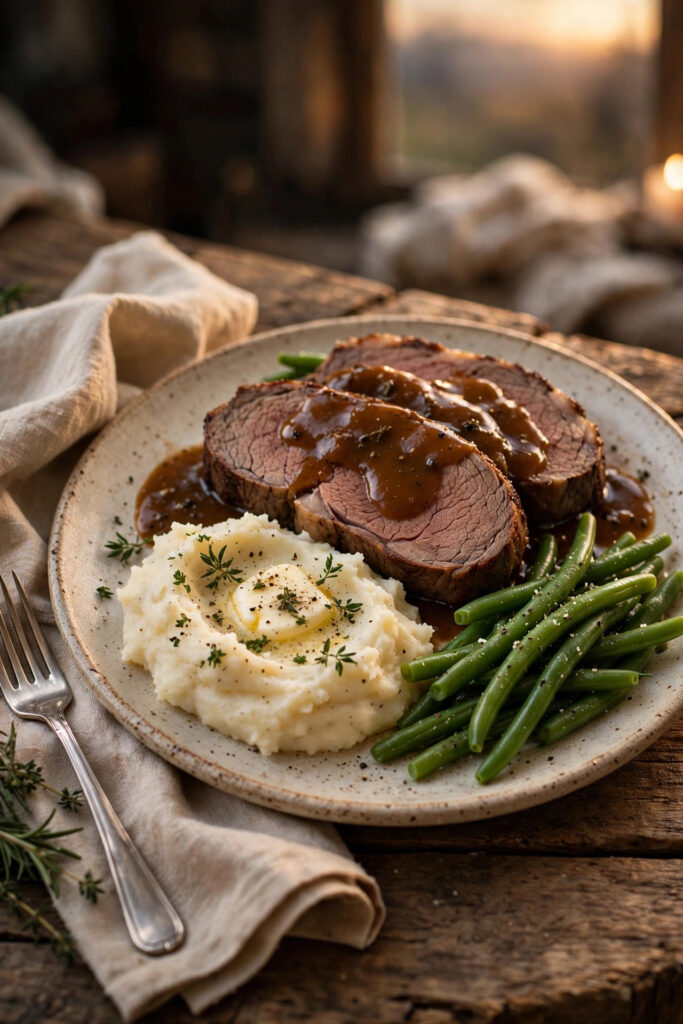
Do not waste the drippings in the roasting pan. Place the pan over medium heat on the stove and whisk in two tablespoons of flour. Stir for one minute so the flour cooks through and the raw taste disappears. Slowly pour in two cups of warm beef broth while whisking constantly. Simmer for five minutes until it thickens enough to coat a spoon.
Season with salt, pepper, and a splash of Worcestershire sauce. If lumps appear, pour the gravy through a fine mesh strainer and press out the bits. This takes about ten minutes and tastes far better than anything from a packet. Serve it warm alongside the sliced roast, or drizzle it over everything on the plate.
More Leftover Ideas
Thin slices of leftover roast make excellent French-dip sandwiches. Pile the meat onto crusty rolls, add melted provolone, and serve warm beef broth on the side for dipping. Our salted honey butter Parker House rolls are soft enough for this and hold up to the juices.
Dice the roast for a hearty beef hash. Crisp diced potatoes in a skillet, add the beef and chopped onion, and cook until everything browns. Top with a fried egg for a full breakfast. You can also fold leftover roast into shepherd’s pie. Chop it small, layer it with peas and carrots under brown butter garlic herb mashed potatoes, and bake until the top turns golden.
For a soup night, simmer chopped roast with beef broth, barley, carrots, and celery for 40 minutes. Our golumpki soup shows how leftover beef turns into a completely different comfort meal. And if you want another hands-off roast option for the week, our crockpot turkey breast follows the same set-it-and-forget-it approach.
Storage and Freezing
Cool the roast completely before storing. Slice what you need and keep the rest in one piece, since whole meat stays juicier than slices. Refrigerate in an airtight container for up to four days. Keep a little of the cooking juices with the meat so it reheats moist instead of dry.
For longer storage, freeze sliced roast in portion-sized bags with a few spoonfuls of broth. Press out the air, label the bag, and freeze for up to three months. Thaw overnight in the fridge, never on the counter. Reheat gently in a covered skillet over low heat with the reserved broth. High heat toughens lean beef, so patience pays off here.
Serving Ideas
Serve the roast family-style on a platter with the sides around it. Classic pairings include mashed potatoes, roasted carrots, and green beans. Our cornbread stuffing also sits well next to roast beef, especially for a Sunday dinner that feels a little special. A simple horseradish sauce or mustard on the side lets guests add their own bite.
Set out extra gravy in a small pitcher so people can add more as they eat. Warm plates keep everything at a good temperature through the meal, which matters for lean beef that cools quickly.
More Sirloin Tip Roast FAQs
Can I cook a sirloin tip roast from frozen?
You can in the slow cooker, but it needs extra time and the texture will not be as even. Thawing overnight in the fridge gives better, more predictable results, so plan ahead when you can.
Why is my roast chewy even at the right temperature?
Slicing direction is usually the cause. Sirloin tip has long muscle fibers, so cutting with the grain leaves long, chewy strands. Slice thinly against the grain and the same roast suddenly feels tender.
Should I cover the roast in the oven?
Start uncovered at high heat to build a crust, then cover loosely with foil for the rest of the cook. This gives you browning on the outside and gentle heat on the inside.
Can I use a leave-in thermometer probe in the slow cooker?
Yes, as long as the probe cable fits under the lid without breaking the seal. It lets you track the temperature without lifting the lid and losing heat, which is the whole point of slow cooking.