
How Do You Make the Best Turkey Brine for a Juicy Thanksgiving Turkey?
SEO Title: Turkey Brine Recipe: Juicy Thanksgiving Turkey Every Time
Meta Description: This easy turkey brine recipe keeps your Thanksgiving turkey juicy and flavorful. Learn the wet-brining method, timing, safety tips, and roasting steps.
There is nothing worse than carving into a beautiful Thanksgiving turkey and watching the knife drag through dry, chalky breast meat. I know that disappointment well. Years ago, my turkey looked like a magazine cover but tasted like sawdust, and half the pan ended up in the trash. That failure sent me down a rabbit hole of testing brines, and what I found changed my holiday cooking forever.
This turkey brine is the reason my turkey now comes out juicy every single year. It is a wet brine built on a simple salt solution, sharpened with fresh herbs, cracked peppercorns, garlic, and bright citrus. The salt unwinds the proteins in the meat so the turkey holds onto its own juices, while the aromatics perfume the flesh from the outside in. The result is breast meat that slices cleanly and glistens, legs that pull apart without a fight, and pan drippings worth writing home about.
The best part? The process is forgiving. You mix the brine the day before, submerge the bird, and let time do the heavy lifting. No fancy equipment. No chef tricks. Just salt, water, herbs, and a plan. Follow the steps below and you will serve the juiciest turkey you have ever made.
What Is a Turkey Brine and Why Does Everyone Swear by It?
A turkey brine is a saltwater solution that you soak a whole turkey in before roasting. The salt works on the meat through osmosis and diffusion. It dissolves some of the muscle proteins, which lets the cells absorb and hold more water. When the turkey hits the hot oven, it loses less moisture, so the finished bird tastes juicier and more seasoned all the way through.
Home cooks and professional chefs both swear by brining because turkey is a lean bird with very little fat, especially in the breast. Roasting naturally dries lean meat out. A brine is basically an insurance policy against that. It cannot make an overcooked turkey perfect, but it widens your margin of error dramatically. A brined turkey roasted five degrees too far still tastes better than an unbrined turkey cooked perfectly.
Wet brining, which is what this recipe does, soaks the bird in liquid. Dry brining rubs salt directly onto the skin and rests the bird in the fridge. Wet brining gives you the juiciest possible meat, which is why I recommend it for anyone who has ever served a dry Thanksgiving turkey. The skin needs a little extra attention afterward to crisp up, and I will show you exactly how to handle that.
This particular turkey brine has become a Thanksgiving favorite because it balances savory and bright flavors. Bay leaves, thyme, and rosemary give it that classic holiday aroma. Orange and lemon peels cut through the richness. A handful of brown sugar rounds everything out and helps the skin turn a deep, golden brown. It tastes like Thanksgiving should taste.
What Ingredients Do You Need for This Turkey Brine?
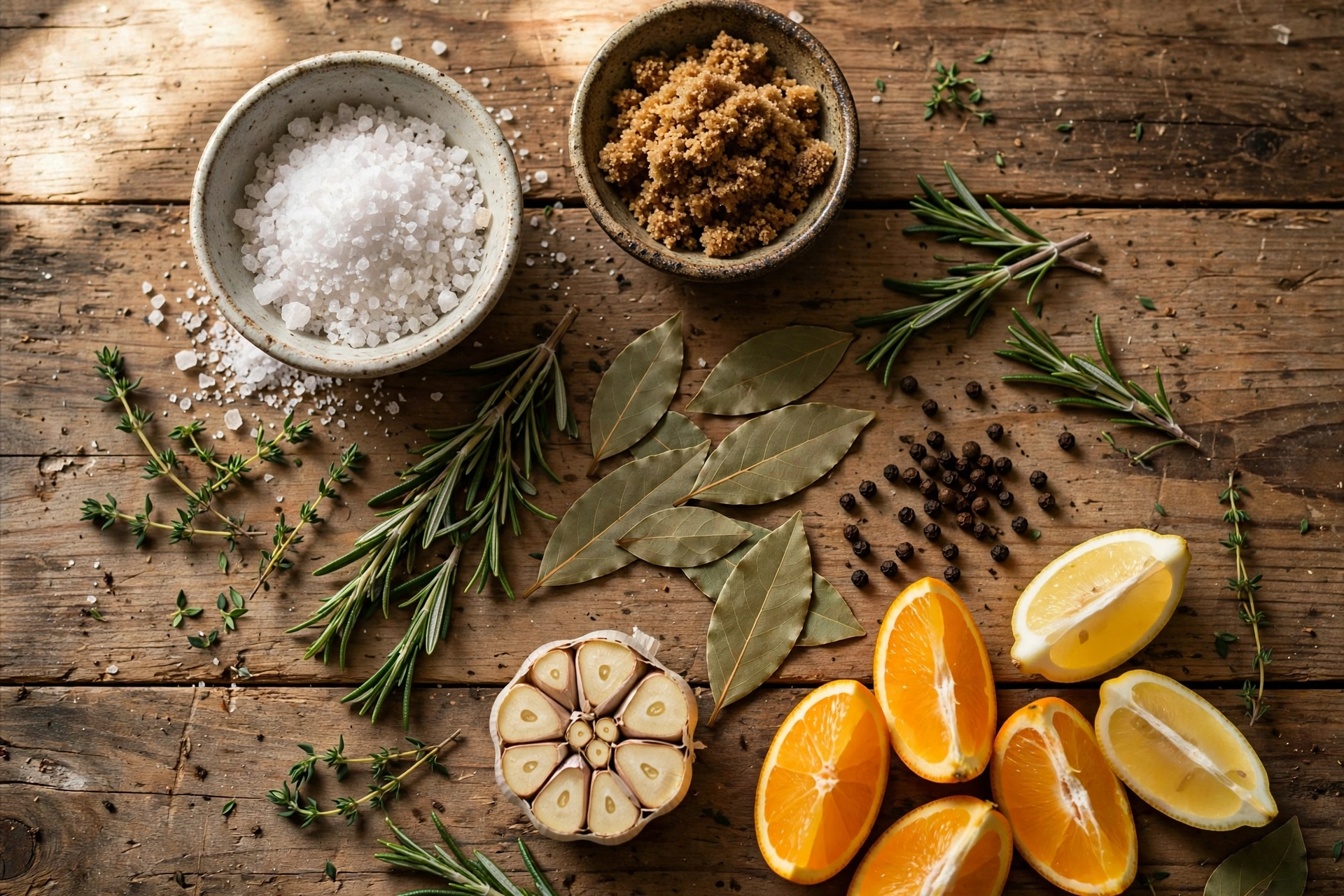
Everything on this list is easy to find at a regular grocery store. Buy the herbs fresh if you can; they release far more flavor than dried ones. And reach for kosher salt, not table salt — table salt packs denser and will make your brine far too salty.
- 1 gallon (16 cups) cold water, divided — the base of the brine
- 1 cup Diamond Crystal kosher salt (or 3/4 cup Morton kosher salt — see note below)
- 1/2 cup packed light brown sugar — balances the salt and helps browning
- 2 tablespoons whole black peppercorns — lightly crushed
- 6 bay leaves — dried is fine here
- 1 bunch fresh thyme (about 8–10 sprigs)
- 4 sprigs fresh rosemary
- 1 head garlic — cut in half crosswise, no need to peel
- 1 large orange — cut into quarters, peel and all
- 1 large lemon — cut into quarters, peel and all
- 1 tablespoon whole allspice berries (optional but lovely)
- 6 quarts ice water — for cooling the brine and covering the bird
A note on the salt, because it matters more than anything else in this recipe. Kosher salt brands have different crystal sizes. Diamond Crystal is light and fluffy, so you need a full cup. Morton kosher salt is denser, so use only 3/4 cup. If you use table salt by mistake, the brine will be harshly salty. Stick with kosher.
What Equipment Do You Need to Brine a Turkey?
You do not need anything fancy, but you do need a container big enough to hold a turkey and enough liquid to cover it. Here is the setup that works:
- A large brining container — a 5-gallon food-safe bucket, a large stockpot, or an extra-large brining bag
- A refrigerator shelf or cooler — the turkey must stay at or below 40°F the entire time
- A large pot — for heating the brine ingredients (at least 2 quarts)
- A long wooden spoon — for stirring the salt into the hot water
- Paper towels — lots of them, for drying the bird after brining
- A roasting pan with a rack — for the big day
- An instant-read meat thermometer — non-negotiable for food safety
- Aluminum foil — for tenting the breast if it browns too fast
No room in the fridge? A clean cooler works beautifully. Fill it with the turkey and brine, then pack ice around the container. Check it every few hours and add ice as needed to keep everything at 40°F or below.
How Do You Brine a Turkey Step by Step?
Read through all the steps once before you start. The method is simple, but the timing matters, so plan to make the brine the day before you want to roast.
Step 1: Make the brine base. Pour 4 cups of the cold water into your large pot. Add the kosher salt, brown sugar, peppercorns, bay leaves, allspice berries, and the thyme and rosemary sprigs. Set the pot over medium-high heat.
Step 2: Dissolve the salt and sugar. Stir constantly as the water heats. You are not boiling the mixture for a long time — just bring it to a gentle simmer until every crystal of salt and sugar disappears. This takes about 5 minutes. The water will smell incredible from the herbs.
Step 3: Add the aromatics off the heat. Pull the pot off the burner. Toss in the halved garlic head, the orange quarters, and the lemon quarters. Let everything steep for 15 minutes, like a big savory tea. The citrus oils will bloom into the warm brine.
Step 4: Cool the brine completely. This step is critical for safety. Pour the warm brine concentrate into your brining container, then add the remaining cold water (12 cups) plus the 6 quarts of ice water. Stir well. The brine must be fully cold — below 40°F — before the turkey goes in. If you are short on time, stir in a tray of ice cubes.
Step 5: Prep the turkey. Remove the turkey from its packaging. Pull out the neck and the giblet bag from the cavities (check both ends; giblets hide). Rinse the bird quickly under cold water and pat it dry with paper towels. Leave the skin intact.
Step 6: Submerge the bird. Lower the turkey into the cold brine, breast side down. The breast is the leanest part, so it benefits most from full contact with the brine. The liquid should cover the turkey completely. If a wing tip pokes out, set a heavy plate on top to keep the bird submerged.
Step 7: Refrigerate for the right amount of time. Slide the container into the fridge (or pack your cooler with ice). Brine a 12- to 16-pound turkey for 12 to 24 hours. Go 8 to 12 hours for a smaller bird under 12 pounds, and up to 24 hours for a big 18- to 20-pounder. Set a timer so you do not forget.
Step 8: Rinse and dry the turkey. Lift the turkey out of the brine and rinse it briefly under cold water to wash off excess surface salt. Then pat it completely dry with paper towels, inside and out. Dry skin is the secret to crispy skin, so do not skip this.
Step 9: Air-dry in the fridge (optional but recommended). Set the dried turkey on a rack over a sheet pan and refrigerate it uncovered for 8 to 12 hours, or overnight. The cold air dries the skin further, and drier skin roasts up crackling and golden. If you are short on time, even 2 hours helps.
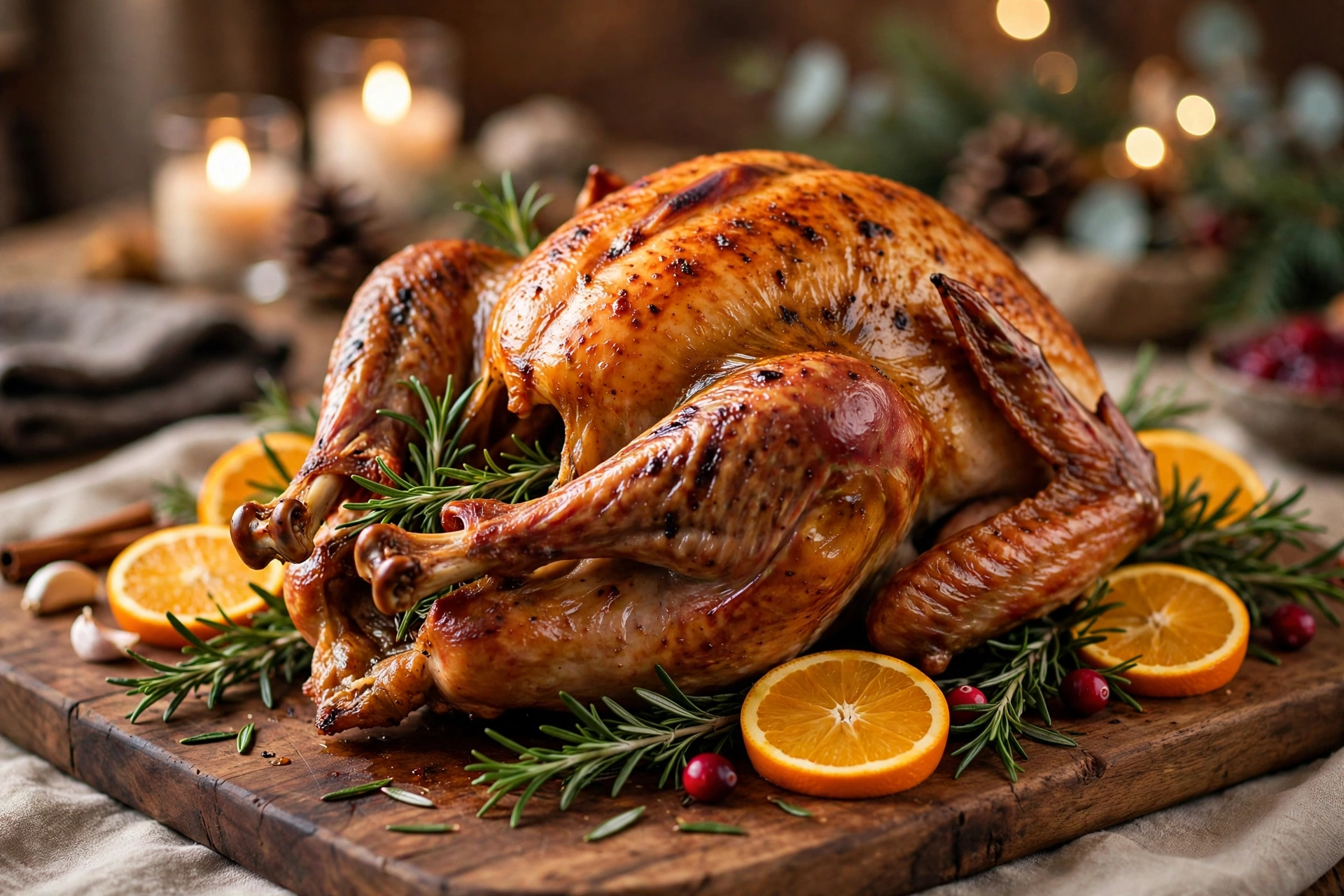
Step 10: Roast as usual. Bring the turkey to room temperature for 30 to 45 minutes. Rub the skin lightly with softened butter or oil, season the outside with pepper (go easy on extra salt — the bird is already seasoned), and roast at 325°F until the thickest part of the thigh reads 165°F on your thermometer. Rest the turkey 20 to 30 minutes before carving.
What Are the Best Pro Tips for a Perfect Turkey Brine?
These are the small things that separate a good brined turkey from a great one. I learned most of them the hard way.
- Weigh your salt if you can. A kitchen scale removes all the guesswork between salt brands. You want 10 ounces (about 280 grams) of kosher salt for this recipe. That is the most reliable way to nail the salinity.
- Always brine below 40°F. Bacteria multiply fast in the danger zone between 40°F and 140°F. Keep the turkey cold from the moment it enters the brine until it enters the oven. When in doubt, add more ice.
- Do not brine a pre-brined bird. Many store turkeys are labeled “enhanced,” “injected,” or “contains up to 8% solution.” Those birds are already brined at the factory. Brining them again makes the meat mushy and far too salty. Check the label first.
- Pat the skin bone-dry. Moisture is the enemy of crisp skin. After rinsing, press paper towels all over the bird until they come away barely damp. The overnight uncovered rest in the fridge does the rest.
- Skip extra salt in your seasoning. The brine seasons the meat from within. When you rub the bird before roasting, use pepper, herbs, and butter, but hold back on the salt shaker. Taste your gravy before salting it, too.
- Save the neck and giblets. They make a rich stock for gravy. Simmer them while the turkey roasts and you will have the base for the best gravy of your life.
- Let the turkey rest. Cutting too early lets the juices run all over the cutting board instead of staying in the meat. Twenty to thirty minutes of rest makes a visible difference in juiciness.
What Are the Most Common Turkey Brine Mistakes to Avoid?
Mistake 1: Using the wrong amount of salt. This is the number one way brines go wrong. Table salt, Morton kosher, and Diamond Crystal all measure differently by volume. Using a full cup of table salt creates a brine twice as salty as intended, and the turkey comes out inedible. Match the salt to the brand called for, or weigh it.
Mistake 2: Brining at room temperature. Leaving a turkey in brine on the counter is a food safety disaster. The danger zone between 40°F and 140°F lets bacteria double every 20 minutes. Always brine in the fridge or in a cooler packed with ice, and verify the temperature with a thermometer.
Mistake 3: Brining for too long. More time is not always better. Past 24 hours, the salt starts breaking down the meat’s texture, and the breast turns spongy instead of juicy. Set a timer. For a standard 14-pound bird, 12 to 18 hours is the sweet spot.
Mistake 4: Skipping the rinse. The surface of the bird picks up extra salt during the soak. A quick rinse washes it off so the skin and outer meat do not taste harshly salty. Do not soak the turkey in fresh water — just a brief rinse under the tap.
Mistake 5: Roasting a wet turkey. A brined bird that goes into the oven dripping wet will steam instead of roast. The skin turns pale and rubbery instead of golden and crisp. Pat the turkey dry, then give it that uncovered rest in the fridge if you have time.
Mistake 6: Adding more salt to the drippings. Brined turkey drippings are already well seasoned. If you salt your gravy the way you normally would, it will be overpowering. Always taste the drippings first, then season carefully.
What Are the Best Turkey Brine Variations to Try?
Once you master the classic recipe, these twists keep things interesting. Each variation below replaces the herb-and-citrus profile of the base brine — the salt, sugar, and water ratios stay the same.
Variation 1: Apple Cider Turkey Brine. Swap 4 cups of the water for fresh apple cider and add 2 cinnamon sticks and 4 whole cloves to the simmer. The cider adds gentle sweetness and a gorgeous amber color to the skin. This is my pick for a cozy, autumn-forward Thanksgiving table.
Variation 2: Smoky Chipotle Turkey Brine. Add 3 dried chipotle peppers and 2 tablespoons of smoked paprika to the hot brine base. Drop the citrus and replace the thyme with oregano. The finished turkey carries a warm, smoky heat that pairs beautifully with cornbread dressing.
Variation 3: Garlic and Herb Butter Turkey Brine. Double the garlic to two whole heads and add a full bunch of sage alongside the thyme and rosemary. Finish with a stick of butter melted into the warm brine. The result tastes rich and savory, like the turkey basted itself from the inside.
Variation 4: Citrus and Juniper Turkey Brine. Add a second orange, a grapefruit cut into quarters, and 2 tablespoons of juniper berries. Skip the allspice. The juniper gives the meat a piney, almost gin-like brightness that cuts through heavy side dishes.
Variation 5: Spicy Cajun Turkey Brine. Stir 3 tablespoons of Cajun seasoning and 2 bay leaves into the brine base, and add a quartered onion and a halved head of garlic. Reduce the brown sugar to 1/4 cup. The turkey comes out boldly seasoned with a slow-building warmth — fantastic for anyone bored of traditional flavors.

How Do You Store and Reheat Brined Turkey?
Storing the brine (before use): You can make the brine base up to 3 days ahead. Cool it completely, pour it into a sealed container, and refrigerate. Add the ice water and submerge the turkey when you are ready to start brining. Never reuse brine that has held a raw turkey — discard it after the bird comes out.
Storing leftover turkey: Carve the meat off the bone within 2 hours of roasting. Pack it into airtight containers with a spoonful of the pan juices or a splash of warm broth to keep it moist. Refrigerate for up to 4 days. Brined turkey actually holds its moisture better than unbrined turkey, so leftovers reheat beautifully.
Freezing: Wrap portions tightly in plastic wrap, then slide them into freezer bags with the air pressed out. Label with the date. Frozen turkey keeps its quality for up to 3 months. Thaw overnight in the refrigerator, never on the counter.
Reheating: The gentlest method wins. Place sliced turkey in a baking dish, add a few tablespoons of broth or gravy, cover tightly with foil, and warm at 325°F for 15 to 20 minutes until steaming. For single servings, the microwave works — cover the plate and heat in 1-minute bursts so the meat does not toughen. Avoid blasting it at high heat, which squeezes moisture out of even a well-brined bird.
What Should You Serve with a Brined Turkey?
A juicy brined turkey deserves sides that match its effort. Classic pairings never fail: creamy mashed potatoes with giblet gravy, sausage cornbread stuffing, green bean casserole, and roasted sweet potatoes with marshmallows. The salt in the brine means your gravy needs less seasoning, so taste as you go.
For something fresher, add a bright cranberry-orange relish and a simple arugula salad with shaved Parmesan. The acidity cuts the richness of the meal and keeps the plate from feeling heavy. Warm dinner rolls are mandatory in my house — someone always needs one to mop up gravy.
Drinks matter too. A dry hard cider echoes the apple notes if you used the cider variation. A medium-bodied Pinot Noir flatters the herbs without overwhelming the bird. And for the non-drinkers at the table, sparkling apple cider with a cinnamon stick feels festive and grown-up.
Turkey Brine FAQs
How long should you brine a turkey?
Brine a 12- to 16-pound turkey for 12 to 24 hours. Smaller birds under 12 pounds need 8 to 12 hours, while large birds up to 20 pounds can go the full 24 hours. Never brine longer than 24 hours, or the texture turns mushy.
Can you brine a frozen turkey?
No — thaw the turkey completely first. A frozen bird cannot absorb the brine evenly, and the frozen center keeps the brine in the temperature danger zone too long. Thaw in the fridge, allowing 24 hours for every 4 to 5 pounds.
Should you rinse a turkey after brining?
Yes. Give the turkey a quick rinse under cold water to remove excess surface salt, then pat it completely dry. Skipping the rinse can leave the skin tasting harshly salty.
Can you brine a turkey in a cooler?
Absolutely. A clean cooler works great when fridge space is tight. Place the turkey and cold brine inside, then pack ice around the container. Keep a thermometer in there and add ice as needed to stay at or below 40°F.
Does brining make the turkey too salty?
Not if you follow the salt measurements and rinse afterward. The meat tastes seasoned, not salty. Problems only come from using the wrong salt, brining too long, or brining a bird that was already injected with salt solution at the factory.
Can you reuse turkey brine?
No. Once raw poultry has soaked in it, the brine is contaminated with bacteria. Discard it after the turkey comes out. You can, however, make the brine base up to 3 days ahead and refrigerate it before the turkey ever touches it.
Do you need to baste a brined turkey?
Basting is optional. The brine already keeps the meat juicy, so you will not gain much moisture from basting. Opening the oven door repeatedly actually slows cooking. If you love the ritual, baste once or twice in the last hour.
Will brining make the skin soggy?
Only if you roast the bird wet. Pat the turkey thoroughly dry after brining and rest it uncovered in the fridge for several hours. Dry skin plus a hot oven gives you crisp, golden skin every time.
Can you dry brine instead of wet brine?
Yes, and it is simpler — just salt the bird and refrigerate it uncovered for 1 to 3 days. Dry brining gives you crispier skin with less fuss, but the meat is not quite as juicy as with a wet brine. Pick wet brining when juiciness is the top priority.
What size container do you need to brine a turkey?
Use a 5-gallon food-safe bucket, a large stockpot, or an extra-large brining bag. The turkey must fit with room for liquid to cover it completely. For a 14-pound bird, you need roughly 2 to 2.5 gallons of total brine.
Final Thoughts
Brining a turkey sounds like a project, but it is really just mixing salt water and waiting. The brine does the work while you sleep, and the payoff shows up at the carving board: slices of breast meat that glisten, drumsticks that pull clean from the bone, and a table full of people asking what your secret is.
Make the brine the day before Thanksgiving. Keep everything cold. Dry the bird well before it roasts. Those three habits will carry you to a great result every single year. And once you have tasted a properly brined turkey, you will never go back to roasting one naked.
Happy Thanksgiving — may your turkey be juicy, your gravy be smooth, and your leftovers be legendary.
Once your turkey is brined and roasting, round out the menu with our juicy crockpot turkey breast guide for gravy tips, and don’t forget a pan of golden cornbread stuffing.