

Homemade English muffins are soft, chewy, and full of little air pockets that hold melted butter, jam, honey, or eggs perfectly. They are cooked on a skillet or griddle instead of baked like regular bread, giving them their classic golden outside and tender inside.
This easy English Muffins Recipe uses simple pantry ingredients and is perfect for breakfast, brunch, or meal prep. Once you make them at home, you may want to skip the store-bought version.

Why This Recipe Works
- Soft and chewy inside
- Golden and lightly crisp outside
- Made with simple ingredients
- No special bread machine needed
- Great for breakfast sandwiches
- Easy to freeze
- Perfect for meal prep
Ingredient List
For the English Muffins
- 3 cups all-purpose flour
- 2¼ teaspoons active dry yeast
- 1 tablespoon granulated sugar
- 1 teaspoon salt
- 1 cup warm milk
- ¼ cup warm water
- 2 tablespoons unsalted butter, melted
- Cornmeal or semolina, for dusting
Optional Serving Ideas
- Butter
- Strawberry jam
- Honey
- Peanut butter
- Fried or scrambled eggs
- Cheese
- Bacon or sausage
- Avocado

Recommended Tools
Gather these kitchen essentials before you begin:
- Large mixing bowl
- Measuring cups and spoons
- Wooden spoon or stand mixer
- Rolling pin
- Round biscuit cutter
- Large nonstick skillet or griddle
- Spatula
- Clean kitchen towel
- Wire cooling rack
English Muffins Recipe: Step-by-Step
Step 1: Activate the Yeast
Combine the warm milk, warm water, sugar, and active dry yeast in a large mixing bowl.
Let the mixture rest for 5–10 minutes.
The yeast should become foamy. If it does not, the yeast may be old or the liquid may have been too hot or too cold.
Step 2: Make the Dough
Add the melted butter and salt to the yeast mixture.
Gradually stir in the flour until a soft dough forms.
The dough should feel slightly sticky but still be easy to handle.
Step 3: Knead the Dough
Transfer the dough to a lightly floured surface.
Knead for 8–10 minutes until smooth and elastic.
You can also use a stand mixer with a dough hook and knead for about 5–6 minutes.
Step 4: Let the Dough Rise
Place the dough in a lightly greased bowl.
Cover it with a clean kitchen towel or plastic wrap.
Allow it to rise in a warm place for 1–1½ hours, or until doubled in size.
Step 5: Shape the English Muffins
Gently press down the risen dough.
Roll it out to about ½ inch thick.
Use a round biscuit cutter to cut out circles.
Place the dough rounds on a tray dusted with cornmeal or semolina.
Sprinkle a little more cornmeal over the tops.
Step 6: Let Them Rise Again
Cover the shaped muffins loosely.
Allow them to rise for another 30–40 minutes.
They should look slightly puffy before cooking.
Step 7: Cook the English Muffins
Preheat a large skillet or griddle over low heat.
Place the muffins on the dry skillet, leaving space between them.
Cook for approximately 6–8 minutes per side.
Turn them carefully when the bottoms are golden brown.
Cook slowly so the centers become fully cooked without burning the outside.
Step 8: Cool and Split
Transfer the cooked English muffins to a wire rack.
Allow them to cool for at least 15 minutes.
Use a fork to split them around the edges. This helps preserve the classic nooks and crannies inside.
Toast and serve with your favorite toppings.

Easy Ingredient Swaps
Dairy-Free Option
Use unsweetened plant-based milk and replace butter with vegan butter or neutral oil.
Whole Wheat Option
Replace up to half of the all-purpose flour with whole wheat flour.
Honey Instead of Sugar
Use 1 tablespoon of honey in place of granulated sugar.
Instant Yeast
Instant yeast can be mixed directly with the dry ingredients. You may not need to activate it first.
Common Mistakes to Avoid
Cooking Over High Heat
High heat can burn the outside while leaving the center undercooked. Keep the skillet on low heat.
Adding Too Much Flour
Too much flour can make the muffins dense and dry. Add only enough flour to make the dough manageable.
Skipping the Second Rise
The second rise helps create a lighter, softer texture.
Cutting Them with a Knife
A knife can flatten the air pockets. Use a fork to split the muffins for the best texture.
Cooking Too Quickly
Slow cooking is important. Give the muffins enough time to cook through.
Storage and Freezing Tips
Room Temperature
Store cooled English muffins in an airtight container for up to 2 days.
Refrigerator
Keep them in a sealed container for up to 5 days.
Freezer
Freeze the muffins in a freezer-safe bag for up to 3 months.
For easier use, split them with a fork before freezing.
Reheating
Toast frozen English muffins directly from the freezer or allow them to thaw first.
Frequently Asked Questions
Can I make the dough ahead of time?
Yes. Prepare the dough, cover it tightly, and refrigerate overnight. Let it sit at room temperature for about 30–45 minutes before shaping.
Why are my English muffins dense?
Dense muffins may result from inactive yeast, insufficient rising time, or adding too much flour.
Can I bake English muffins instead?
Traditional English muffins are cooked on a skillet or griddle. Baking may change their texture and reduce the classic golden crust.
Why should I split English muffins with a fork?
Fork-splitting creates rough edges and preserves the small air pockets inside, which are perfect for holding butter, jam, or other toppings.
Final Thoughts
This homemade English Muffins Recipe is simple, comforting, and perfect for everyday breakfasts. With a soft, chewy center and a lightly crisp golden crust, these muffins are delicious toasted and topped with anything you enjoy.
Make a batch for the week, freeze the extras, and enjoy
fresh homemade English muffins whenever you want.
How Can You Get Perfect Nooks and Crannies Every Time?
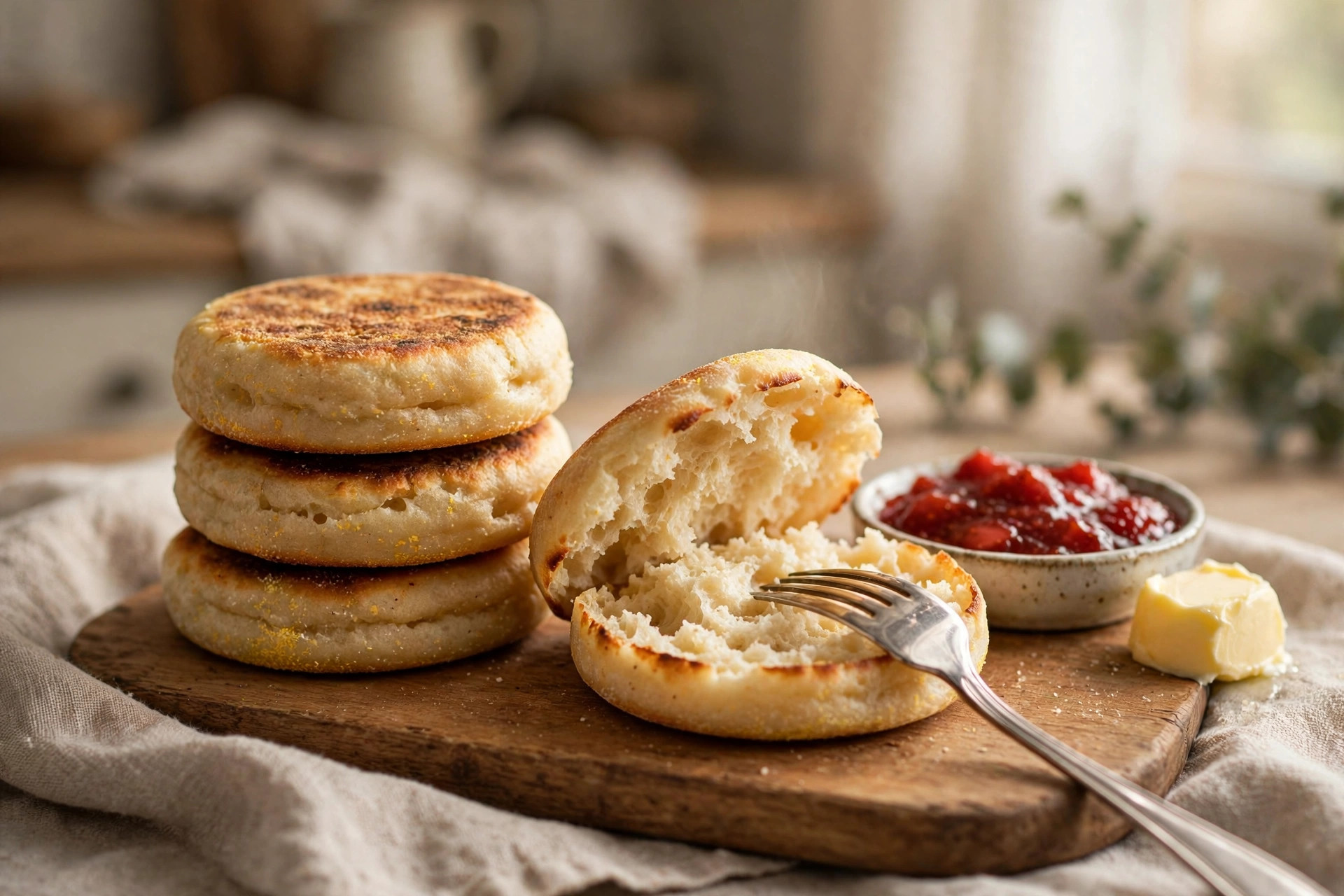
Those famous nooks and crannies come from air bubbles trapped in the dough, and a few details make all the difference. First, do not over-knead. Knead just until the dough is smooth and elastic — about eight to ten minutes by hand. Overworked dough becomes tight and dense, which squeezes out the air pockets you want.
The rise matters just as much. Let the dough rise in a genuinely warm spot, around 75 to 80°F. A cold kitchen slows the yeast down and gives you a tight, heavy crumb. If your house is cool, put the covered bowl in the oven with just the light on — the gentle warmth is perfect.
Do not roll the dough too thin. Half an inch is the sweet spot. Thinner muffins cook through faster, but they lose the tall, airy interior. And always split with a fork, never a knife. The fork tears the soft interior into rough peaks and valleys, while a knife slices them flat and seals the texture shut.
What Are the Best Ways to Use English Muffins?
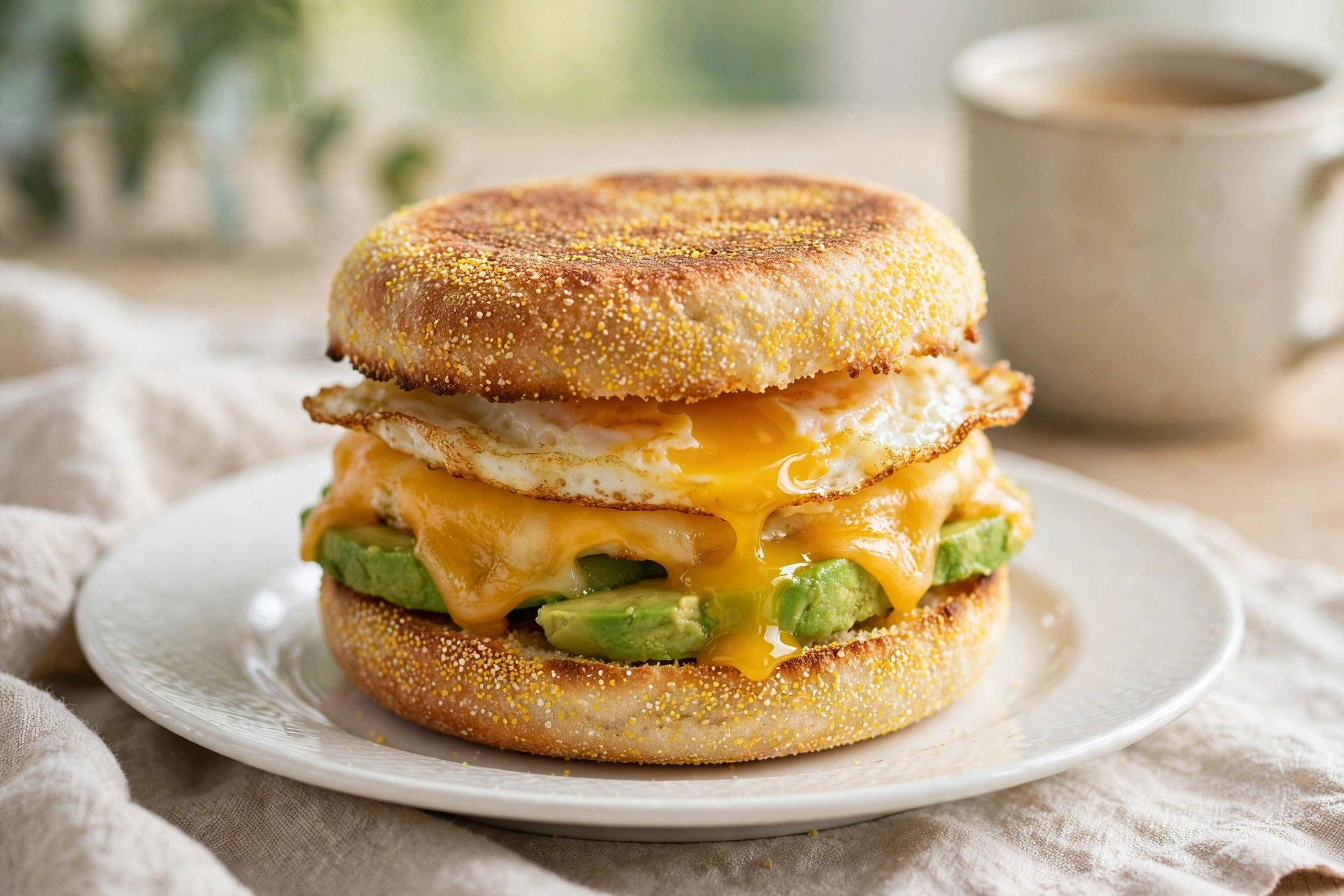
Toasted English muffins are far more versatile than most people realize. The obvious move is a breakfast sandwich: a fried egg, a slice of cheese, and bacon or sausage on a buttered, toasted muffin beats any drive-through version. Make a batch on Sunday and reheat them all week for grab-and-go breakfasts.
For a fancier brunch, turn them into eggs Benedict. The nooks and crannies were practically designed to hold hollandaise sauce. Or go sweet — split, toast, and top with peanut butter and sliced banana, or ricotta and honey with a sprinkle of cinnamon.
English muffins also make excellent mini pizzas. Split them, add a spoonful of marinara, some mozzarella, and your favorite toppings, then broil until bubbly. Kids love building their own. And if you are planning a full breakfast spread, pair them with something cool and creamy like these 8 easy overnight oats recipes for a no-cook contrast. For another homemade breakfast bake worth trying, these old fashioned cinnamon rolls are a weekend favorite.
How Do You Store and Reheat English Muffins Like a Pro?
The article’s storage basics work well, but a few pro habits keep muffins tasting fresh longer. Always split the muffins with a fork before freezing — pre-split muffins go straight into the toaster from frozen, no thawing needed. Slide a small square of parchment between stacked muffins so they never freeze together in a clump.
To reheat, the toaster is king. Toast frozen muffins on a medium setting, and they come out crisp outside and soft inside. A toaster oven works too, especially for breakfast sandwiches — assemble the sandwich, wrap it in foil, and warm it at 350°F for ten minutes.
To revive day-old muffins that have gone a little stale, sprinkle them lightly with water and toast them. The steam refreshes the crumb. Never microwave English muffins unless you like them chewy and tough — the microwave turns that lovely texture gummy in seconds.
What Variations Can You Try?
Once you master the basic recipe, small changes create entirely new muffins. For a heartier version, replace up to half the all-purpose flour with whole wheat flour. The muffins will be slightly denser with a nutty flavor — perfect for savory sandwiches. If whole wheat baking is your thing, try this whole wheat bread recipe next.
Cinnamon-raisin English muffins are a breakfast classic. Knead half a cup of raisins and two teaspoons of cinnamon into the dough after the first rise. They taste amazing toasted with butter — no jam needed. For a savory twist, fold in shredded sharp cheddar and chopped fresh rosemary or chives.
Sourdough fans can replace half the flour and liquid with active sourdough starter and skip the commercial yeast, though the rise will take longer. And if you love homemade breads in general, this easy focaccia bread recipe is the next project to try, or go high-protein with this high protein cottage cheese bread.
Still Have Questions? Here Are a Few More
Can I use bread flour instead of all-purpose flour?
Yes. Bread flour has more protein, so the muffins will be chewier with a slightly taller rise. Use the same amount by weight, or reduce by about two tablespoons per cup if measuring by volume, since bread flour packs a bit differently.
Why are my muffins flat?
Flat muffins usually mean the dough was rolled too thin or over-proofed during the second rise. Keep the dough at half an inch thick, and bake — or rather, griddle — them when they look puffy but still hold their shape when poked gently.
Can I add mix-ins like cheese or herbs?
Definitely. Fold shredded cheese, chopped herbs, or even cooked bacon bits into the dough after kneading. Keep add-ins to about half a cup total so the dough still holds together and cooks through evenly.
Do I need cornmeal, or can I use something else?
Cornmeal is traditional, but semolina or farina work just as well and give the same golden, lightly crunchy exterior. In a pinch, you can dust with plain flour, though you will miss that classic texture and look.